Walk into any store selling Moroccan argan oil, and you’ll likely see two very different bottles.
One sits in the food aisle, the other in the beauty section, and mixing them up is more than just a minor mistake.
Understanding the difference matters, both for your safety and for getting the results you actually want.
This guide breaks down the topic culinary argan oil vs cosmetic argan oil, exactly how culinary and cosmetic argan oil differ, from production to use.
The Short Answer
Culinary argan oil is made from roasted argan kernels and is meant to be eaten. Cosmetic argan oil is made from raw, unroasted kernels and is meant to be applied to skin and hair.
They come from the same tree, but from that point forward, everything about their processing and purpose diverges.
Confusing the two isn’t just a matter of taste, it can also be a matter of safety.
Where Both Oils Start: The Argan Tree
Both types of argan oil come from the kernels found inside the fruit of the argan tree, a species that grows almost exclusively in southwestern Morocco.
This region is protected as a UNESCO Biosphere Reserve, partly because these trees don’t grow reliably anywhere else in the world.
Local Berber communities have harvested argan fruit for generations, and much of the modern oil industry still relies on traditional, hand-based methods.
From here, though, the path for culinary and cosmetic oil splits.
How Culinary Argan Oil Is Made
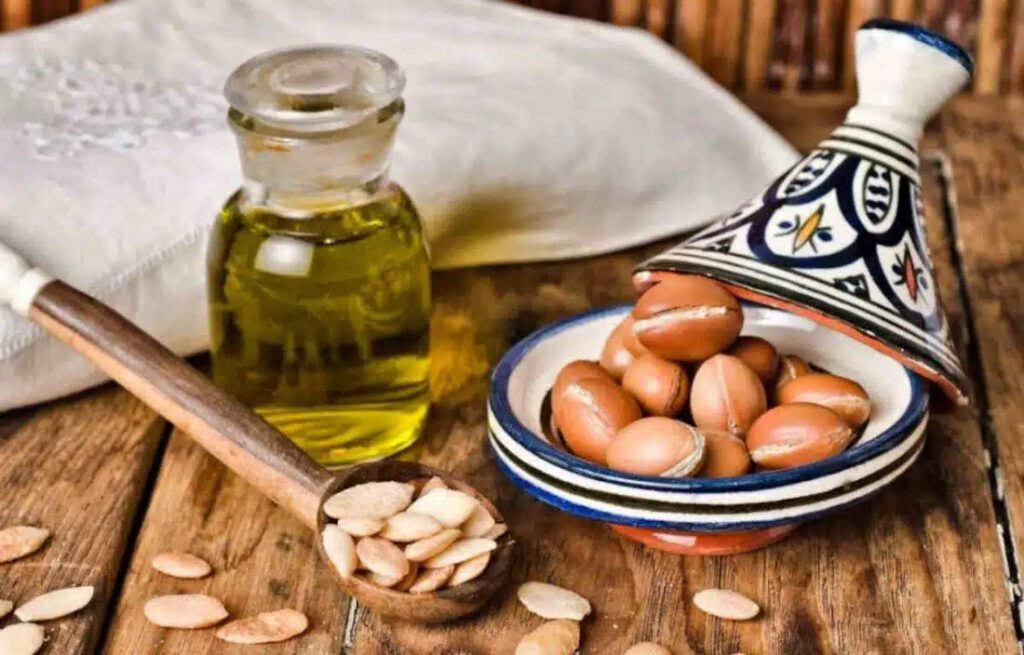
To produce culinary argan oil, the extracted kernels are lightly roasted before pressing.
This roasting step is the single biggest factor separating it from the cosmetic version.
Roasting develops a nutty, toasty aroma and deepens the oil’s color to a rich amber.
It also changes the flavor profile significantly, giving the oil the warm, roasted taste people associate with Moroccan cuisine.
After roasting, the kernels are cold-pressed to extract the oil. This method helps preserve flavor compounds and nutrients that would otherwise be lost to high heat.
How Cosmetic Argan Oil Is Made
Cosmetic argan oil skips the roasting step entirely. The kernels are pressed raw, which results in a lighter-colored oil with a much more neutral, faint scent.
This unroasted process is intentional. Roasting can slightly alter the fatty acid and antioxidant profile in ways that are less desirable for topical use, where absorption and skin compatibility matter more than flavor.
Because there’s no roasting involved, cosmetic argan oil tends to have a thinner texture and absorbs more easily into skin and hair. This is part of why it’s favored in moisturizers, serums, and hair treatments.
Taste and Smell: A Clear Giveaway
If you’re ever unsure which bottle you’re holding, taste and smell are the easiest way to tell. Culinary argan oil has a distinctly nutty, toasted aroma, similar to roasted sesame oil or hazelnuts.
Cosmetic argan oil, by contrast, is nearly odorless or has only a faint, earthy scent. It also has a noticeably lighter taste, which makes sense, since it was never intended to be flavorful in the first place.
Nutritional and Chemical Differences
Both oils contain beneficial compounds, but in different concentrations depending on processing.
Culinary argan oil retains many of its antioxidant properties from roasting, along with a strong vitamin E content and a healthy balance of unsaturated fats.
Cosmetic argan oil is also rich in vitamin E and fatty acids, but its unroasted composition is generally considered gentler and more stable for repeated skin contact.
Some formulations are further refined to remove impurities that could irritate sensitive skin.
Neither version is “better” in an absolute sense. They’re simply optimized for different outcomes, one for internal nutrition and flavor, the other for external absorption and skin benefit.
Is It Safe to Eat Cosmetic Argan Oil?
This is one of the most common questions people ask, and the answer is straightforward: no, cosmetic argan oil is not intended for consumption. It isn’t processed or regulated as a food product.
Cosmetic-grade oils can sometimes include added fragrances, stabilizers, or other ingredients meant to improve shelf life or skin feel.
These additions are completely unnecessary and potentially unsafe in food.
Always check the label. Culinary oil should be marked “food-grade” or “edible,” while cosmetic oil is typically labeled for topical use only.
Can You Use Culinary Argan Oil on Your Skin?
Technically, yes, since it’s a natural, unadulterated oil derived from the same source. However, most people find it less ideal for skin or hair care.
Its heavier texture and toasted scent make it feel greasier on skin compared to the lighter cosmetic version. It’s not unsafe, just not optimized for the same purpose, similar to using olive oil on your face instead of a dedicated facial oil.
Price Differences Between the Two
Authentic argan oil, whether culinary or cosmetic, is labor-intensive to produce, which keeps prices relatively high across both categories.
That said, pricing can vary based on purity, sourcing, and whether it’s fair-trade certified.
Culinary argan oil is often sold in smaller bottles, since it’s typically used sparingly as a finishing oil rather than an everyday cooking staple.
Cosmetic argan oil is more frequently found in larger bottles or blended into other beauty products, which can affect price per ounce.
How to Choose the Right One for Your Needs
If you’re shopping for argan oil, start by asking what you actually plan to do with it. That single question determines almost everything else.
For cooking: Look for oil specifically labeled “culinary” or “edible,” with a visible amber color and a nutty aroma. Moroccan origin, ideally tied to a known cooperative, is a good sign of authenticity.
For skin and hair: Look for “cosmetic-grade” or “100% pure argan oil” labeling, typically in a lighter shade with minimal scent. Avoid products with long ingredient lists if you’re seeking a pure, unblended oil.
If a bottle doesn’t specify either use clearly, it’s best to avoid it. Reputable producers are almost always explicit about which category their product falls into.
Final Thoughts
Culinary and cosmetic argan oil share a common origin but serve entirely different purposes once processing begins. One is roasted for flavor and made for the kitchen, the other is kept raw for gentleness and made for skin and hair.
Knowing the difference isn’t just about getting better results, it’s also about using each product safely and as intended. When in doubt, check the label, trust the scent test, and choose the version built specifically for your goal.
This article is for general informational purposes and isn’t a substitute for professional dietary, medical, or dermatological advice.