
Culinary argan oil is a traditional Moroccan food oil with a distinctive toasted, nutty flavor and a nutritional profile that includes unsaturated fatty acids, vitamin E, and other antioxidant compounds.
Unlike the argan oil commonly found in hair and skincare products, culinary argan oil is specifically prepared for eating and cooking.
For centuries, communities in southwestern Morocco have used this golden oil with bread, salads, couscous, vegetables, sauces, and other foods.
Today, culinary argan oil is gaining attention outside Morocco as a specialty ingredient for people interested in healthy fats, Mediterranean and North African cuisine, antioxidant-rich foods, and traditional Moroccan cooking.
But what exactly is culinary argan oil? Is it healthy? How is it different from cosmetic argan oil? And what is the best way to use it in your kitchen?
This guide explains the benefits, nutrition, uses, preparation, cooking methods, and important differences between culinary and cosmetic argan oil.
What Is Argan Oil?
Argan oil is a plant-based oil produced from the kernels of the fruit of the argan tree (Argania spinosa), a tree native to Morocco.
The argan tree is particularly associated with southwestern Morocco, where traditional argan oil production has been part of local food culture for generations.
The oil is naturally rich in oleic acid, linoleic acid, vitamin E, tocopherols, polyphenols, and other plant compounds. Its composition is one reason argan oil has attracted interest in both nutrition and cosmetic research.
Argan oil is available in two broad categories:
- Culinary argan oil for food and consumption
- Cosmetic argan oil for skin and hair
Although both come from the same argan tree, their production and intended uses can differ.
What Is Culinary Argan Oil?
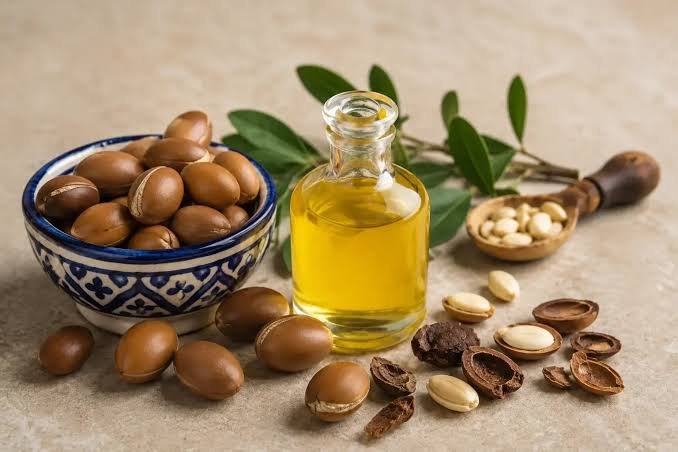
Culinary argan oil is food-grade argan oil made specifically for eating.
Traditionally, argan kernels used for food are roasted before they are pressed. This roasting process gives the finished oil its characteristic golden-brown color, toasted aroma, and nutty flavor.
Commercial production can involve hand-cracking the hard fruit, selecting the kernels, roasting them, pressing the oil, filtering it, and packaging the finished product.
The exact production process varies between producers.
One important point is that culinary argan oil should be purchased as a food-grade product intended for consumption.
Cosmetic argan oil should not simply be assumed to be interchangeable with an edible product.
Why Is Culinary Argan Oil Different From Cosmetic Argan Oil?
The biggest difference is intended use and processing.
Culinary argan oil is prepared as a food ingredient and is valued for its roasted, nutty taste.
Cosmetic argan oil is generally produced for topical applications such as:
- Skin moisturization
- Hair conditioning
- Scalp care
- Nail and cuticle care
Culinary argan oil is commonly made using roasted kernels, while cosmetic argan oil is often made from unroasted kernels.
Because processing methods and formulations can differ, always check the label and use the product according to its intended purpose.
The Nutritional Profile of Culinary Argan Oil
Argan oil is primarily a source of dietary fat.
Its fatty-acid profile includes substantial amounts of oleic acid and linoleic acid, along with smaller amounts of other fatty acids.
WebMD lists approximately 72 calories and 8 grams of fat per tablespoon of culinary argan oil, with very little protein, carbohydrate, fiber, or sugar.
Argan oil also contains compounds such as:
- Vitamin E
- Tocopherols
- Polyphenols
- Plant sterols
- Oleic acid
- Linoleic acid
- Other antioxidant compounds
The exact nutritional composition can vary depending on the variety of argan kernels, processing method, and product.
10 Potential Benefits of Culinary Argan Oil
Culinary argan oil has a long history as a traditional Moroccan food. Modern research has also investigated its fatty acids and antioxidant compounds.
However, it is important to distinguish potential health effects from proven medical treatments.
1. Provides Unsaturated Fatty Acids
One of the most notable features of argan oil is its relatively high proportion of unsaturated fats.
It contains oleic acid, a monounsaturated omega-9 fatty acid, and linoleic acid, an omega-6 fatty acid.
These fatty acids are important components of a balanced diet.
Replacing some sources of saturated fat with unsaturated fats can be beneficial for cardiovascular health, although the overall dietary pattern matters more than any single oil.
2. Contains Vitamin E and Antioxidants
Argan oil contains vitamin E and polyphenolic compounds, which have antioxidant properties.
Antioxidants help protect cells from oxidative stress caused by reactive molecules.
WebMD identifies vitamin E and polyphenols among the important compounds found in argan oil.
This antioxidant profile is one reason culinary argan oil is often described as a nutrient-rich specialty oil.
3. May Support Heart Health
Argan oil has been studied for possible cardiovascular benefits.
Its oleic acid and linoleic acid content, along with antioxidant compounds, may be relevant to blood lipid profiles and cardiovascular health.
Small human studies have reported reductions in LDL cholesterol and triglycerides following argan oil consumption, but larger studies are needed before stronger conclusions can be made.
So, culinary argan oil can be part of a balanced eating pattern, but it should not be considered a treatment for heart disease.
4. May Help Maintain Healthy Cholesterol Levels
Cholesterol is another area of interest in argan oil research.
Some small studies have associated argan oil consumption with lower LDL cholesterol, sometimes called “bad” cholesterol, and improvements in other cardiovascular markers.
However, individual studies are not enough to establish a medical treatment effect.
A diet rich in vegetables, fruits, whole grains, legumes, nuts, seeds, and appropriate sources of unsaturated fats remains the foundation of cardiovascular nutrition.
5. Provides Antioxidant Compounds
Beyond vitamin E, argan oil contains several phenolic and other plant compounds.
These compounds contribute to its antioxidant activity and may help explain some of the biological effects being investigated in laboratory and human studies.
Research has also examined argan oil’s potential anti-inflammatory properties, although much of the evidence remains preliminary.
6. May Support Healthy Blood Sugar Metabolism
Researchers have investigated argan oil in relation to glucose metabolism and insulin sensitivity.
Some early findings are promising, but evidence remains insufficient to recommend argan oil as a treatment for diabetes.
If you have diabetes, culinary argan oil can be considered as part of your overall diet, but it should not replace prescribed medication or your diabetes management plan.
7. May Support Digestive Health
Argan oil has traditionally been consumed as part of Moroccan cuisine, often with bread or in dishes.
Modern research has also explored the relationship between argan oil’s fatty acids, polyphenols, and digestive health.
However, claims that argan oil directly treats digestive disorders or “cleanses” the gut are not well established.
A balanced diet containing fiber-rich foods is much more important for healthy digestion.
8. May Support Skin Health
Argan oil is particularly famous for topical skincare, but its nutritional components are also relevant to skin health.
Vitamin E and essential fatty acids contribute to normal skin structure and function.
Research on argan oil has investigated skin hydration, elasticity, oxidative stress, and inflammation. Some evidence is promising, although topical and dietary uses should not be treated as identical.
9. May Benefit Hair and Scalp Health
Argan oil is widely used in hair products because of its emollient properties and fatty-acid content.
Topical argan oil may help condition dry hair, reduce the feeling of roughness, and improve the appearance of shine.
However, eating culinary argan oil is not the same as applying cosmetic argan oil directly to the hair.
Evidence for argan oil as a treatment for hair growth or hair loss remains limited. WebMD notes that research on hair benefits is mixed and does not establish a clear hair-growth effect.
10. May Contribute to an Overall Healthy Diet
Perhaps the most practical benefit of culinary argan oil is that it can provide a flavorful source of unsaturated fat.
Its toasted, nutty taste can make simple foods more enjoyable without requiring large amounts.
Like olive oil, avocado oil, or other plant oils, argan oil is calorie-dense, so portion size still matters.
The Traditional Moroccan Story Behind Culinary Argan Oil
Culinary argan oil is more than a modern wellness trend.
The argan tree and its oil are deeply connected with Moroccan food culture, particularly communities in southwestern Morocco.
Traditional production has historically involved extracting kernels from argan fruit and pressing them to obtain oil.
The oil has been used with bread, couscous, vegetables, salads, and traditional preparations such as amlou, a Moroccan spread made with argan oil, almonds, and honey.
The cultural importance of argan oil is also connected with local communities and traditional production practices. Some modern producers work with women-led cooperatives and emphasize hand harvesting and sustainable sourcing.
Why Is Culinary Argan Oil Considered a Moroccan Specialty?
Several characteristics make culinary argan oil unusual.
Its Distinctive Flavor
Unlike neutral cooking oils, culinary argan oil has a recognizable roasted flavor.
Depending on the product, you may notice:
- Toasted nuts
- Hazelnut-like notes
- Sesame-like flavors
- A mild roasted aroma
- A rich finish
This makes it particularly useful as a finishing oil.
Its Limited Production
Argan trees have a relatively restricted natural range, and traditional production is labor-intensive.
The kernels must be extracted from the fruit before the oil can be pressed.
This contributes to culinary argan oil’s status as a specialty ingredient rather than a mass-market cooking oil.
How Is Culinary Argan Oil Made?
Traditional production generally involves several stages.
1. Harvesting the Argan Fruit
Argan fruit is collected from argan trees.
2. Removing the Fruit
The outer fruit is separated from the hard nut containing the oil-rich kernels.
3. Cracking the Nuts
The hard shells are opened to obtain the kernels.
4. Roasting the Kernels
For culinary oil, the kernels are typically roasted to develop the characteristic flavor and aroma.
5. Pressing the Kernels
The roasted kernels are pressed to release the oil.
6. Filtering and Bottling
The oil may then be filtered and packaged for food use.
Modern producers may use mechanical equipment while retaining traditional roasting and quality-control practices.
How to Use Culinary Argan Oil in Cooking
Culinary argan oil is extremely versatile.
Because of its strong flavor, you often do not need much.
Use It as a Salad Dressing
Mix culinary argan oil with:
- Lemon juice
- Vinegar
- Herbs
- Garlic
- Black pepper
- A small amount of salt
The nutty flavor works particularly well with green salads and roasted vegetables.
Drizzle It Over Roasted Vegetables
A small drizzle over roasted carrots, potatoes, squash, peppers, or other vegetables can add richness and a toasted flavor.
Add It to Couscous
Argan oil pairs naturally with couscous and other North African dishes.
Add a small amount after cooking to preserve its distinctive aroma.
Use It With Bread
One of the simplest traditional ways to enjoy culinary argan oil is to dip bread into it.
You can also combine it with spices or serve it alongside olives and other Moroccan-inspired foods.
Add It to Hummus
A drizzle of culinary argan oil can give hummus a richer, nuttier finish.
Use It With Fish
Culinary argan oil works well as a finishing oil for grilled or baked fish, particularly when paired with lemon and herbs.
Drizzle It Over Yogurt
A small amount of argan oil can be combined with plain yogurt, herbs, honey, or nuts for a sweet or savory preparation.
Use It in Amlou
Amlou is a traditional Moroccan spread made using argan oil, almonds, and honey.
Its creamy texture and nutty flavor make it one of the best-known culinary uses of argan oil.
Can You Cook With Culinary Argan Oil?
Yes, culinary argan oil is edible and can be incorporated into cooking, but its strong flavor and relatively delicate nature make it particularly useful as a finishing oil or for lower-temperature applications.
WebMD notes that culinary argan oil is commonly eaten cold or added to warm foods near the end of cooking because it can burn relatively easily.
For this reason, you may get more value from using it to:
- Finish cooked dishes
- Dress salads
- Drizzle over vegetables
- Flavor couscous
- Make sauces
- Add to dips
- Pair with bread
rather than using it as your main high-heat frying oil.
Culinary Argan Oil Recipes to Try
Moroccan-Style Argan Oil Salad Dressing
Combine culinary argan oil with lemon juice, garlic, black pepper, and herbs.
Whisk until combined and drizzle over a fresh salad.
Argan Oil Roasted Vegetables
Roast vegetables using an appropriate cooking oil, then add a small drizzle of culinary argan oil after cooking.
This allows the toasted flavor to stand out.
Amlou
Combine toasted almonds, culinary argan oil, and honey to create a traditional Moroccan-style spread.
Argan Oil Couscous
Prepare couscous normally and finish it with a small amount of culinary argan oil, fresh herbs, vegetables, and lemon.
Culinary Argan Oil Nutrition vs. Olive Oil
Both argan oil and olive oil are plant oils containing substantial amounts of unsaturated fatty acids.
Argan oil is particularly notable for its oleic acid, linoleic acid, vitamin E, and polyphenol content.
Olive oil, especially extra-virgin olive oil, has a much larger body of research supporting its role in cardiovascular health.
That does not mean argan oil is inferior; rather, the two oils have different culinary traditions, flavors, compositions, and evidence bases.
Argan oil is best appreciated as a distinctive Moroccan specialty rather than as a replacement for every other healthy cooking oil.
Culinary Argan Oil vs. Cosmetic Argan Oil
| Feature | Culinary Argan Oil | Cosmetic Argan Oil |
|---|---|---|
| Main purpose | Eating and cooking | Hair and skin care |
| Typical flavor | Toasted and nutty | Usually mild or neutral |
| Common processing | Often roasted kernels | Commonly unroasted kernels |
| Used on food | Yes, when labeled food-grade | No, unless specifically labeled edible |
| Used for hair | Not the intended use | Common |
| Used for skin | Not the intended use | Common |
| Main appeal | Flavor and nutrition | Conditioning and moisturization |
Always read the product label before consuming or applying argan oil.
Is Culinary Argan Oil Healthy?
Culinary argan oil can fit into a healthy diet because it provides predominantly unsaturated fats and contains vitamin E and other bioactive compounds.
However, healthy does not mean unlimited.
All oils are calorie-dense, so portion size matters.
The strongest approach is to use culinary argan oil alongside a varied diet rather than relying on it as a single “superfood.”
Is Culinary Argan Oil Good for Weight Loss?
Argan oil is sometimes promoted as a weight-loss food, but it should not be considered a fat-burning ingredient.
One tablespoon contains roughly 72 calories according to WebMD, so adding large amounts of any oil can increase total calorie intake.
If your goal is weight management, use culinary argan oil in modest portions as part of a balanced diet.
What Does Culinary Argan Oil Taste Like?
Culinary argan oil is known for a rich, toasted, nutty flavor.
Depending on the product and roasting level, it may have notes reminiscent of:
- Hazelnuts
- Toasted seeds
- Sesame
- Roasted nuts
- Warm bread
The flavor is much stronger than many neutral cooking oils, which is why a small drizzle can be enough.
How to Choose High-Quality Culinary Argan Oil
When buying culinary argan oil, look for:
- Clear labeling that says culinary, food-grade, or edible
- A reputable producer
- Ingredient lists containing only argan oil when pure oil is intended
- Appropriate packaging
- Information about origin and processing
- Freshness and expiration information
- Organic certification if that is important to you
A product marketed only as cosmetic argan oil should not be assumed to be suitable for consumption.
How Should Culinary Argan Oil Be Stored?
Keep culinary argan oil in a cool, dark place, away from direct sunlight and excessive heat.
Light, oxygen, and heat can contribute to oxidation and changes in flavor over time.
Follow the manufacturer’s storage instructions and keep the bottle tightly closed when not in use.
Potential Side Effects and Precautions
Culinary argan oil is generally used as a food ingredient, but that does not mean more is always better.
Possible concerns include:
- Digestive discomfort in some people
- Allergic reactions in susceptible individuals
- High calorie intake when consumed in large amounts
- Potential medication or health-condition considerations when using concentrated amounts
People with food allergies should check product labeling carefully.
If you have a medical condition or take medication and plan to consume large or concentrated amounts of argan oil, speak with a qualified healthcare professional.
Is Argan Oil Safe for Everyone?
For most people, food-grade culinary argan oil can be used as part of a normal diet.
However, safety depends on the product, quantity, individual health status, and how it is consumed.
Pregnant or breastfeeding individuals, people with chronic medical conditions, and anyone taking several medications should seek individualized medical advice before using concentrated oils as supplements.
Frequently Asked Questions About Culinary Argan Oil
What is culinary argan oil?
Culinary argan oil is edible argan oil prepared specifically for food use. It is commonly made from roasted argan kernels and has a distinctive toasted, nutty flavor.
Can you eat argan oil?
Yes, food-grade culinary argan oil is edible. It is traditionally consumed in Morocco with bread, salads, couscous, vegetables, sauces, and other dishes.
Can you cook with argan oil?
Yes, but it is generally better suited to finishing dishes or lower-temperature applications than high-heat frying. Its delicate flavor and relatively low smoke tolerance make it particularly useful as a finishing oil.
What are the benefits of culinary argan oil?
Culinary argan oil provides unsaturated fatty acids, vitamin E, and antioxidant compounds. Research has investigated potential effects on cholesterol, cardiovascular health, inflammation, and metabolic health, although many studies are small and more research is needed.
Is culinary argan oil the same as cosmetic argan oil?
No. Both come from the argan tree, but they can differ in processing and intended use. Culinary argan oil is produced for eating, while cosmetic argan oil is intended for topical applications.
What does Moroccan argan oil taste like?
Authentic culinary argan oil typically has a roasted, nutty, slightly rich flavor with notes that can resemble toasted nuts and seeds.
What is amlou?
Amlou is a traditional Moroccan spread made with ingredients such as argan oil, almonds, and honey. It is commonly eaten with bread.
Is argan oil better than olive oil?
Neither should automatically be considered “better.” Olive oil has a much larger research base, while culinary argan oil offers a distinctive flavor and a different nutritional profile. Both can be sources of unsaturated fat in a balanced diet.
Can you use culinary argan oil on your hair?
Culinary argan oil is intended for food, not cosmetic use. For hair care, choose a product specifically labeled and formulated for cosmetic or topical use.
The Bottom Line
Culinary argan oil is a traditional Moroccan food oil made from the kernels of the argan tree. Its toasted, nutty flavor makes it a distinctive ingredient for salads, bread, couscous, roasted vegetables, sauces, dips, and finishing dishes.
Nutritionally, it provides unsaturated fatty acids, vitamin E, polyphenols, and other antioxidant compounds. Early research suggests potential cardiovascular and metabolic benefits, but many studies are small, and culinary argan oil should not be presented as a treatment for disease.
Its biggest advantage may be its combination of Moroccan culinary heritage, distinctive flavor, and nutritional value.
If you want to try it, choose a clearly labeled food-grade culinary argan oil, use it in modest amounts, and let its nutty flavor complement—not overpower—the food.
Evidence & Editorial Note
The health claims surrounding argan oil vary considerably in strength. Some competitor articles make broad claims about diabetes, cancer prevention, immunity, circulation, and disease treatment.
Current evidence is more cautious: research supports interest in argan oil’s fatty acids, vitamin E, antioxidants, and possible cardiovascular effects, but stronger human studies are still needed for many proposed benefits.
For that reason, this article distinguishes traditional uses, nutritional properties, early research, and established medical evidence rather than presenting every claimed benefit as a proven treatment.
One Comment