
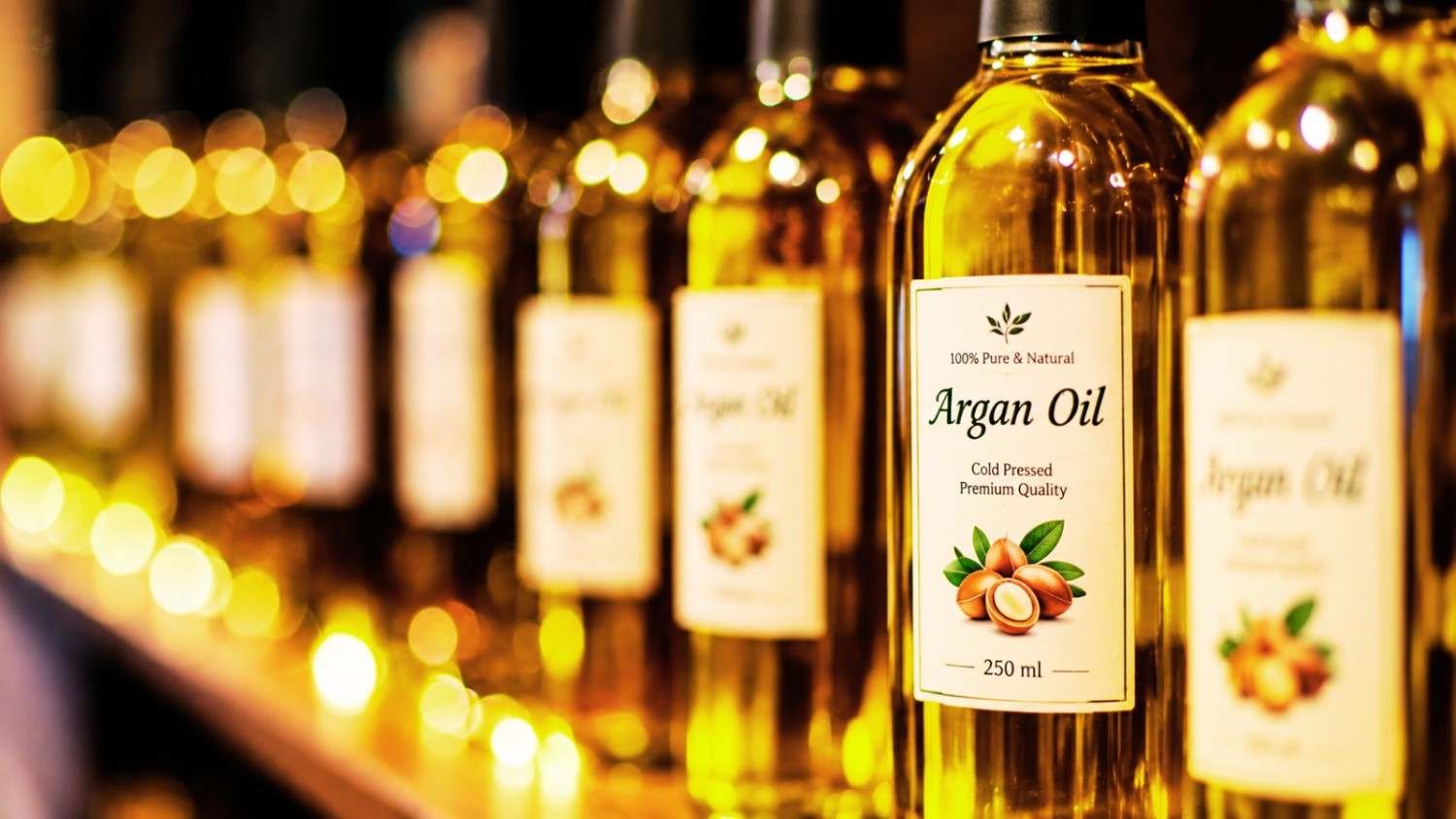
Walk into any pharmacy or scroll any beauty site today and you’ll find dozens of bottles promising “100% pure argan oil” — some for $8, others for $80. That price gap alone tells you something is off in this industry, and most articles never explain why. Before we get into what argan oil actually does for your hair and skin, it’s worth understanding what this oil really is, where it truly comes from, and how to tell the real thing from the diluted, adulterated versions flooding the market.
What Is Argan Oil?
Argan oil is a plant-based oil pressed from the kernels found inside the fruit of the argan tree (Argania spinosa) — a tree that grows almost exclusively in the semi-arid region of southwestern Morocco. It’s a rich source of essential fatty acids, vitamin E, and antioxidant plant compounds, and it comes in two distinct grades: a cosmetic (unroasted) oil used in hair and skin products, and a culinary (roasted) oil used as a food ingredient. In Urdu and Hindi contexts, it’s often described simply as “Morocco ka tail” or “argan ka tail” (argan oil in hindi / argan oil ko hindi mein kya kahate hain) — there isn’t a separate native name for it, since the tree itself doesn’t grow outside Morocco.
Where Does Argan Oil Come From? (Origin & How It’s Made)
Argan oil is made from (argan oil made from / argan oil kis chij se banta hai) the kernels inside the nut of the argan tree, a species that has grown in the Souss Valley of Morocco for millions of years and is now protected as a UNESCO Biosphere Reserve.
The extraction process is genuinely labor-intensive: the fruit is dried, the outer pulp removed, the hard nut cracked by hand to expose the kernels inside, and those kernels are then pressed — either mechanically for cosmetic-grade oil, or after light roasting for culinary-grade oil.
What makes this origin story different from most oils you’ll read about is who does this work.
Argan oil production is almost entirely run by women’s cooperatives in rural Morocco, many of which were established specifically to give local women independent income and legal ownership over the profits — a rare example in the global beauty industry where the origin of an ingredient is tied directly to a documented social and economic movement, not just a marketing story.
Do Goats Really Climb Trees for the Argan Oil You Buy? Setting the Record Straight
If you’ve ever seen the viral photos of goats perched high in argan trees, you’ve probably wondered whether that’s actually part of how your bottle of argan oil gets made. It’s a fair question, and it’s one that’s almost never addressed directly in articles about argan oil — which is surprising, because the honest answer matters for anyone concerned about hygiene and quality.
Here’s the reality: goats do climb argan trees, and they do eat the fruit, and traditionally, some rural communities did collect the kernels from goat droppings as a byproduct source of oil. However, the commercial argan oil sold internationally today — including virtually everything you’ll find in stores or online — is not made this way. Modern argan oil intended for cosmetic or culinary sale is regulated and produced from kernels harvested directly from fallen fruit, cracked and pressed by cooperatives under hygiene standards required for export. The goat-tree photos are real, but they’re largely a tourism and folklore image at this point, not a description of your bottle’s supply chain. If a product ever markets itself with “goat-processed” as a selling point, that’s a red flag rather than a mark of authenticity.
What Types of Argan Oil Are There?
There are two main grades of argan oil, and confusing them is one of the most common mistakes buyers make:
- Cosmetic argan oil — pressed from raw, unroasted kernels. It has a light, nutty scent and is used in hair oils, face serums, and skin moisturizers.
- Culinary/edible argan oil — pressed from lightly roasted kernels, giving it a deeper, toasted flavor. This is the type used in cooking and traditional Moroccan dishes.
Using culinary oil on your skin isn’t harmful, but it won’t be formulated or filtered the same way, and using cosmetic-grade oil in food is not recommended, since it isn’t processed or certified for ingestion.
Argan Oil Nutrition
Argan oil’s benefits come down to its composition. It’s rich in oleic and linoleic fatty acids, vitamin E (a natural antioxidant), polyphenols, and plant sterols unique to argan oil — compounds not typically found in more common oils like olive or sunflower oil. This specific nutrient profile is what gives argan oil its reputation for supporting skin barrier function and hair strand health, rather than just acting as a generic moisturizing oil.
Argan Oil Benefits
Is Argan Oil Good for Your Hair?
Yes — argan oil is genuinely good for hair (what does argan oil do for hair / argan oil is good for what), primarily because of its fatty acid and vitamin E content. It coats the hair shaft to reduce moisture loss, smooths the outer cuticle layer to cut down on frizz, and adds shine without the heavy, greasy feel of thicker oils like castor or coconut oil. It’s commonly used as a leave-in treatment, a pre-styling protectant, or mixed into shampoos and masks.
For Skin
On skin, argan oil functions as an emollient and mild antioxidant. It helps soften rough patches, supports the skin’s natural barrier, and its vitamin E content may help reduce the visible impact of everyday environmental exposure.
Additional Health Benefits
Beyond hair and skin, a handful of smaller studies have looked at argan oil’s role in general health when consumed as a dietary fat:
- May counter effects of aging in skin — some research links its antioxidant content to reduced oxidative skin damage over time.
- May help support healthy cholesterol levels — its fatty acid profile is similar to other heart-healthy plant oils.
- May help with joint comfort, including knee osteoarthritis — early research has explored argan oil’s anti-inflammatory compounds in this context, though this is not a substitute for medical treatment.
These are supportive findings, not guarantees — argan oil should be considered a complementary addition to a healthy routine, not a treatment for any diagnosed condition.
How to Incorporate Argan Oil Into Your Skincare and Hair Routine
A little goes a long way. For hair, 2–3 drops rubbed between palms and worked through mid-lengths to ends (avoiding the roots, to prevent a greasy scalp) works well on damp or dry hair. For skin, 1–2 drops pressed into a cleansed face at night — either alone or mixed into a moisturizer — lets it absorb without leaving a heavy residue. Because it’s a lightweight oil, it layers well underneath other products rather than requiring a routine built entirely around it.
Cooking With Argan Oil: Taste, Recipes & Food Sources
Culinary argan oil has a distinct, toasted, slightly nutty flavor — closer to sesame oil than to olive oil. In Morocco, it’s traditionally used as a finishing oil rather than a cooking oil, since heat can break down its beneficial compounds and its low smoke point makes it prone to burning. Popular ways to prepare and use it include amlou (a dip made with roasted almonds, honey, and argan oil), drizzling it over grilled fish or vegetables, whisking it into salad dressings, or stirring it into couscous just before serving. As a food source, it’s typically found in Moroccan and North African grocery stores, specialty health food retailers, and online sellers that clearly label their product as food-grade.
Argan Oil Dosage & Supplements
When taken as a dietary oil rather than applied topically, most traditional and available guidance suggests roughly 1–2 tablespoons a day as part of a meal, similar to how olive oil is used. Argan oil is also sold in softgel supplement form for those who prefer a measured, consistent dose rather than cooking with the liquid oil. There’s no well-established data on a maximum safe amount, but using excessive quantities of any dietary fat — including argan oil — can contribute to unwanted calorie intake or digestive discomfort, so moderation is the practical rule rather than a strict cap.
Side Effects & Precautions
Common Side Effects
Topically, argan oil is well tolerated by most people. Rare, mild reactions can include itching, redness, or breakouts in those sensitive to plant oils generally.
Severe Side Effects
True allergic reactions are uncommon but possible, especially in people with existing tree nut allergies, since argan is botanically related to other nut-bearing plants. Severe symptoms like hives, swelling, or difficulty breathing warrant immediate medical attention.
Precautions & Interactions
There’s limited formal research on argan oil interacting with medications when used topically or in normal culinary amounts. As with any new oil, those with known nut allergies, pregnant or nursing individuals, or anyone taking cholesterol-related medication should check with a doctor before adding culinary-dose argan oil or supplements to their routine — this is a sensible precaution rather than a documented widespread risk.
The Truth About the Argan Oil Industry: How Adulteration Happens
Because genuine argan oil is expensive to produce — the hand-cracking process alone takes hours of skilled labor per liter — it has become one of the most commonly diluted oils in the beauty industry. Some manufacturers cut it with cheaper oils like sunflower or soybean oil, or use chemically extracted, lower-quality argan oil and market it as “pure.” This is possible largely because there’s no single global certification that consumers can quickly check at a glance, and argan oil’s mild, nutty scent is easy to mimic or mask with fragrance.
How to Identify Pure, Non-Adulterated Argan Oil
A few practical checks can help you avoid buying diluted product:
- Check the ingredient list — it should say only “Argania Spinosa Kernel Oil” with nothing else listed for a 100% pure product.
- Be cautious of very low prices for large bottles — genuine argan oil is labor-intensive to produce and rarely cheap in bulk.
- Look for sourcing transparency — brands that name the specific Moroccan cooperative or region they source from tend to be more accountable.
- Check for a light amber color and a mild, nutty (not strongly perfumed) smell — an overly fragrant oil is often masking a lower-quality base.
Where to Buy Argan Oil & How to Store It
Argan oil is widely available at pharmacies, health food stores, Moroccan grocers, and online retailers — look for sellers who disclose sourcing and grade (cosmetic vs. culinary) clearly. Once purchased, store it in a cool, dark place away from direct sunlight, ideally in the dark glass bottle it usually comes in, since light and heat speed up oxidation. Properly stored, an unopened bottle typically stays fresh for around two years; once opened, try to use it within six months to a year for the best quality.
Similar Natural Oils Worth Knowing
Argan oil isn’t the only plant oil worth having in your routine, and depending on your specific hair or skin goal, one of these may complement or even outperform it for certain uses: Amla oil (traditionally used for hair strength and shine), Black Seed oil (known for scalp and anti-inflammatory support), Pumpkin Seed oil (linked to hair thickness and growth support), Peppermint oil (used for scalp stimulation), Castor oil (a thicker oil often used for hair growth and thickness), and Jojoba oil (closest in molecular structure to natural sebum, making it a gentle daily option). Each of these has its own strengths worth exploring on its own.
Supporting Argan Oil’s Origins: Why Sourcing Matters
Beyond the ingredient itself, argan oil carries a genuinely rare story in the beauty world: buying from cooperative-sourced, fair-trade argan oil directly supports the rural Moroccan women who do the physical labor of cracking every single kernel by hand — work that has historically been undervalued despite being the entire foundation of the global argan oil supply chain. Choosing hand-crafted, cooperative-sourced oil over anonymously mass-produced alternatives isn’t just an ethical nicety; it’s one of the few beauty ingredient choices where the sourcing decision has a direct, traceable impact on the people who made the product possible.
Argan Oil in Other Languages (Pronunciation & Translations)
Argan oil is pronounced AR-gan oil (how to pronounce argan oil) — the emphasis falls on the first syllable. In Spanish, it’s referred to as aceite de argán (argan oil en español / argan oil que es / argan oil in spanish), and it’s described the same way it is in English: an oil pressed from the kernel of the Moroccan argan tree. In Hindi, it’s typically just referred to by its English/transliterated name, “argan oil” or “argan ka tail” (what is argan oil in hindi / argan oil in hindi), since there’s no traditional Hindi term for a tree that doesn’t grow in South Asia. The same applies in Urdu (what is argan oil in urdu) — it’s referred to as “argan oil” or “argan ka tail” as well. In Indonesian and Malay contexts, people often search for what it’s used for specifically — “argan oil untuk apa” (what argan oil is used for) and “argan oil untuk rambut” (argan oil for hair) — and the answer is the same core oil described throughout this guide, used for hair conditioning, skin hydration, and occasionally cooking.
Key Takeaways
Argan oil is a genuinely nutrient-rich, dual-purpose oil — one grade for cosmetic use, one for cooking — pressed by hand from a tree that grows almost nowhere outside Morocco. Its real value lies in its fatty acid and vitamin E content, but the industry around it is also one of the more heavily adulterated corners of the beauty world, so knowing how to check sourcing and purity matters just as much as knowing its benefits. And if you’ve ever wondered about those viral goat photos — now you know the real story behind the bottle on your shelf.
One Comment