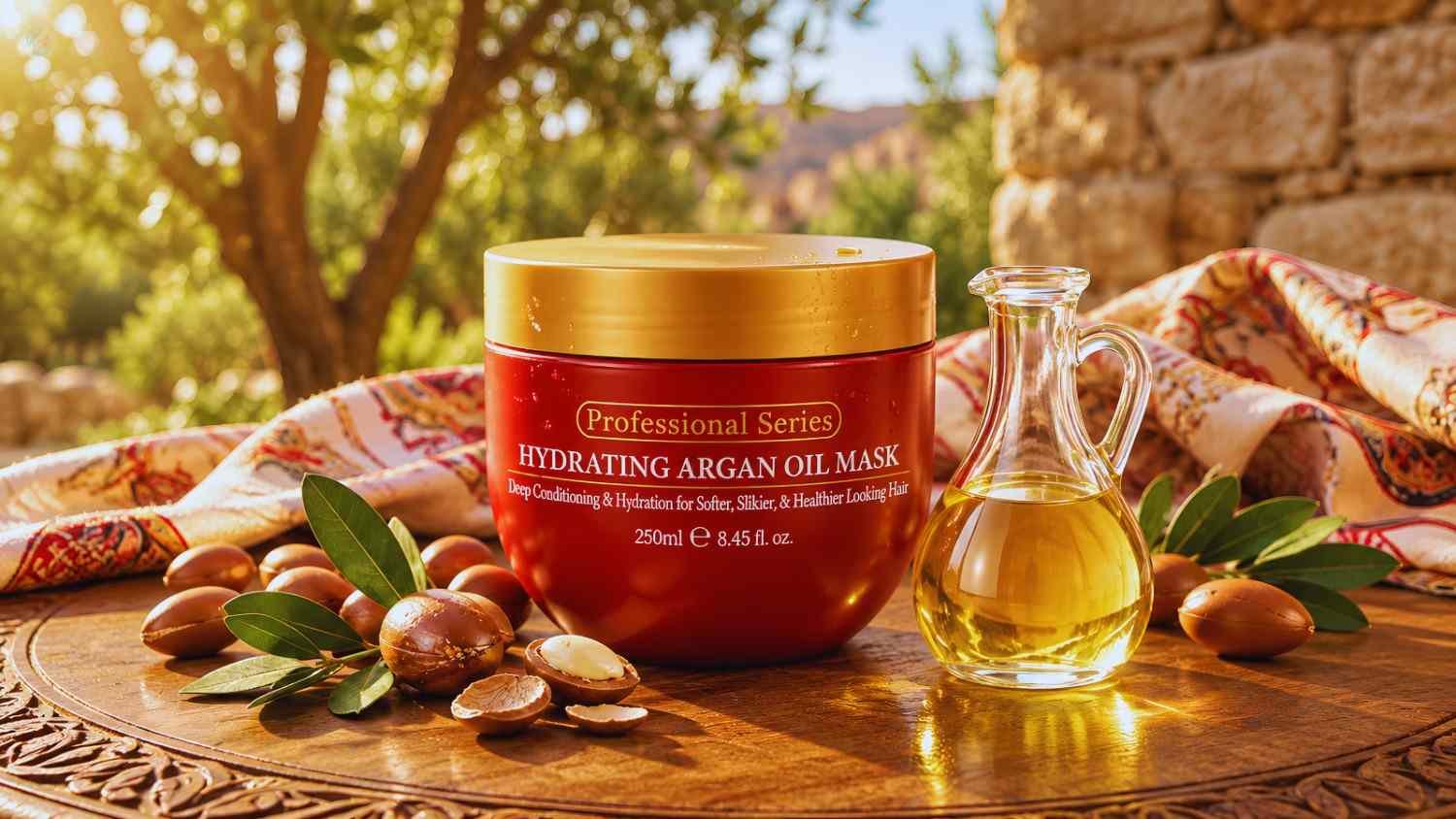
If your hair feels dry, frizzy, or just generally tired no matter what you try, argan oil hair mask is a homemade version of this treatment might be the simplest fix you haven’t gotten around to yet.
It takes minutes to put together, uses ingredients you probably already have, and delivers a noticeably softer, shinier result without a trip to the salon.
What Makes Argan Oil the Right Base for a Hair Mask
Argan oil comes from the kernels of the argan tree, a species found almost exclusively in Morocco’s Souss Valley, a region protected under UNESCO Biosphere Reserve status.
For hair care, the cold-pressed, unroasted version is used, prized for its concentration of vitamin E, oleic acid, linoleic acid, and antioxidant polyphenols.
These compounds are exactly why argan oil works so well as a mask base. Unlike heavier oils, it absorbs relatively quickly while still delivering deep conditioning, which is why it pairs well with other mask ingredients instead of overwhelming them.
Basic Argan Oil Hair Mask Recipe
This simple version argan oil hair mask works as a solid starting point for most hair types.
What you’ll need:
- 2 tablespoons pure argan oil
- 1 tablespoon honey
- 1 egg yolk (optional, for extra protein)
How to make it:
- Warm the argan oil slightly between your palms or in a bowl of warm water.
- Mix in the honey until fully combined, adding the egg yolk if using it.
- Apply the mixture from mid-length to ends, avoiding the scalp if you have naturally oily roots.
- Leave it on for 20 to 30 minutes, then rinse thoroughly with a mild shampoo.
Mask Variations for Different Hair Concerns
For Dry Hair
Combine argan oil with mashed avocado and a tablespoon of plain yogurt. The fatty acids in avocado, alongside argan oil’s moisture-sealing properties, make this combination especially effective for hair that feels straw-like or over-dried from heat styling.
You are ready to use your argan oil hair mask.
For Frizzy Hair
Mix argan oil with aloe vera gel in equal parts. Aloe’s smoothing, hydrating properties work alongside argan oil’s cuticle-smoothing effect to calm flyaways, particularly useful in humid climates where frizz tends to return quickly.
For Curly Hair
Blend argan oil with coconut milk and a small amount of shea butter for a richer, more intensive treatment. Curly and coily textures typically need more moisture than straight hair, since natural scalp oils travel less efficiently down a curved hair shaft.
For Color-Treated Hair
Combine argan oil with a tablespoon of apple cider vinegar diluted in water. This helps restore shine dulled by coloring or chemical processing, while argan oil’s vitamin E content helps offset some of the oxidative stress that comes with these treatments.
Should You Leave This Treatment on Overnight?
For an overnight argan oil hair mask treatment, apply a slightly more generous amount, focusing on dry ends, and cover your hair with a shower cap or old T-shirt to protect your pillow. This longer application time allows for deeper penetration, particularly useful for very dry or damaged hair that a 20-minute treatment doesn’t fully address.
Just keep in mind that overnight treatments work best occasionally, once every week or two, rather than as a nightly routine, since daily heavy oiling can lead to buildup over time.
How Often Should You Use argan oil hair mask?
Once or twice a week is generally the sweet spot for most hair types. Using it too frequently, especially on fine or low-porosity hair, can leave strands feeling weighed down rather than nourished.
If your hair tends to get oily quickly, focus the mask on your ends only and skip the scalp entirely, adjusting frequency based on how your hair responds over the first few weeks.
Pure vs Blended Argan Oil: Which Should You Use for a Mask?
For a DIY mask, pure, cold-pressed argan oil is generally the better choice over blended or fragranced versions, since you’re already adding other ingredients and don’t need extra additives competing for absorption. Organic argan oil, when genuinely certified, offers the added benefit of being free from synthetic pesticide residue, which matters more in a leave-on treatment than in a quickly rinsed product.
If you’re comparing it to other base oils, argan oil tends to feel lighter than heavier options, while offering a different nutrient profile than something like jojoba oil, which is prized more for mimicking natural scalp sebum than for argan’s antioxidant content.
Common Mistakes to Avoid
A few small errors can quietly reduce how effective your mask actually is. Using the oil cold rather than slightly warmed reduces absorption, and applying too close to the roots on already-oily hair can leave your scalp looking greasy rather than nourished.
Rinsing with water that’s too hot can also strip away some of the very moisture you just applied, so lukewarm water is the safer choice when washing the mask out.
Final Thoughts
This kind of DIY treatment is one of the simplest, most adaptable options you can make at home, easily adjusted for dry, frizzy, curly, or color-treated hair with just a few extra pantry ingredients.
Whether you stick to the basic recipe or tailor it to your specific hair concern, consistency, using it once or twice a week, matters far more than any single application.
This article is for general informational purposes and isn’t a substitute for professional dermatological advice. If you have a nut allergy or sensitive scalp, patch-test any new ingredient before applying a full mask.