Argan oil for different hair types is one of the most searched topics in hair care, yet most advice treats it as a one-size-fits-all fix. It isn’t. The same few drops that make curls glossy can leave fine hair limp and low porosity hair coated. This guide explains who benefits, who should be careful, and exactly how to adjust your routine.
Why Argan Oil Works for (Almost) Every Hair Type
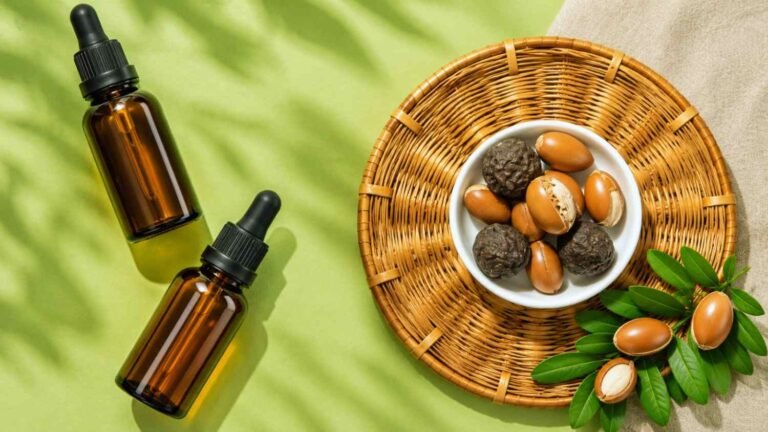
Argan oil comes from the kernels of the argan tree, native to Morocco. It is mostly unsaturated fat, which is why it feels lighter than many heavy butters and oils. Here is why it suits argan oil for different hair types better than most alternatives.
Lightweight absorption
Compared with coconut or castor oil, argan oil spreads thinly and feels less sticky. That makes it easier to dose in small amounts on hair that gets weighed down easily.
High vitamin E content
Argan oil contains tocopherols (vitamin E), which act as antioxidants and help protect the hair surface and the oil itself from oxidation.
Essential fatty acids (omega-6 and omega-9)
Linoleic acid (omega-6) and oleic acid (omega-9) help soften the hair surface and reduce moisture loss, so hair feels smoother and less frizzy.
Natural antioxidants
Antioxidants help limit surface damage from sun, heat and pollution. They protect the hair’s appearance, but they don’t repair split ends, since hair is not living tissue.
How to Use Argan Oil for Different Hair Types
Curly hair: fighting frizz without losing bounce
The challenge: Curly hair needs deep moisture, but too much oil weighs down the curl pattern and looks greasy instead of glossy.
The solution:
- Cleanse gently with a sulfate-free shampoo and condition well so curls are hydrated first.
- Apply argan oil on damp hair, not dry, so it seals in water rather than sitting on top.
- Use 2-3 drops warmed between your palms, then scrunch from mid-length to ends.
For a full breakdown, see our guide on argan oil for curly hair.
Fine hair: nourishment without the weight
Fine strands have less volume to carry oil. Use 1-2 drops only, applied to ends, and keep it away from roots. If hair falls flat by evening, halve the dose.
Color-treated hair: protecting vibrancy and repairing damage
Colored or bleached hair is more porous and loses moisture quickly. A few drops on damp ends before heat styling reduces rough texture and helps keep shine. Pair with a color-safe shampoo, since the oil does not replace one.
Is Argan Oil Right for Oily Hair and Scalp?
Argan oil is better used on lengths than on an oily scalp. If your roots get greasy within a day, keep oil from mid-length down and avoid scalp massage unless you have a dry scalp.
What Is Low Porosity Hair?
Low porosity hair has tightly packed cuticle layers that lie flat. Water and products struggle to get in, but once moisture is in, it stays there. Signs: water beads on the hair, products sit on top, and hair takes a long time to dry.
Why Moisture Retention Is Crucial for Low Porosity Hair
Because the cuticle resists entry, low porosity hair often feels dry even when it holds moisture well. The goal is not adding more oil but helping water in first and then sealing lightly.
Why heavy oils (like coconut) often fail low porosity hair
Heavy oils and butters can sit on the surface, build up, and make hair stiff or greasy. A lighter oil used in small amounts usually performs better. We tested the question directly in argan oil for low porosity hair.
How to apply oils without making your hair greasy
- Start with damp, warm, product-free hair.
- Warm 1-2 drops in your palms.
- Smooth over mid-lengths and ends, never clumped.
- Stop when hair feels slightly slick, not coated.
When to use oils in your low porosity routine
Use oil after a water-based leave-in or light moisturiser, as a final sealing step. Using it before can block moisture from entering at all.
Your Hair Type Isn’t Fixed: The Angle Most Guides Miss
Almost every article labels you “curly”, “fine” or “low porosity” as if it were permanent. In practice, porosity and oil tolerance shift with hard water, heat tools, bleaching, seasons and even a change in shampoo. That means argan oil for different hair types should be re-checked, not decided once.
A simple monthly check:
- Float test or water-bead test: do strands absorb water fast or bead up?
- Hand-feel test: after oiling, if hair feels coated rather than soft, reduce the dose.
- Season check: dry winters and humid summers need different amounts.
Hard water is a quiet factor too. Mineral buildup can mimic low porosity, so oiling harder won’t help. A clarifying wash once or twice a month often fixes it.
The Weekly Ritual: Argan Oil for Different Hair Types
Ritual for curly hair
Wash day: cleanse, condition, apply 2-3 drops on damp curls, scrunch, air dry or diffuse. Mid-week: refresh ends with a tiny amount on a damp hand.
Ritual for fine hair
Use 1-2 drops on ends after washing. Skip mid-week oiling unless ends feel dry.
Ritual for color-treated hair
Apply on damp ends before heat styling after each wash, and do a deeper conditioning step weekly.
Who Should Be Careful?
- Anyone with a nut or kernel allergy should patch test first.
- Dandruff is not cured by oil. See does argan oil help with dandruff.
- For children, use very little and patch test: argan oil for kids’ hair.
- Persistent hair loss or scalp irritation needs a dermatologist, not a product swap.
Conclusion
Argan oil for different hair types works best when you adjust amount, placement and timing rather than copying a single routine. Start small, check your hair monthly, and let results decide your dose.