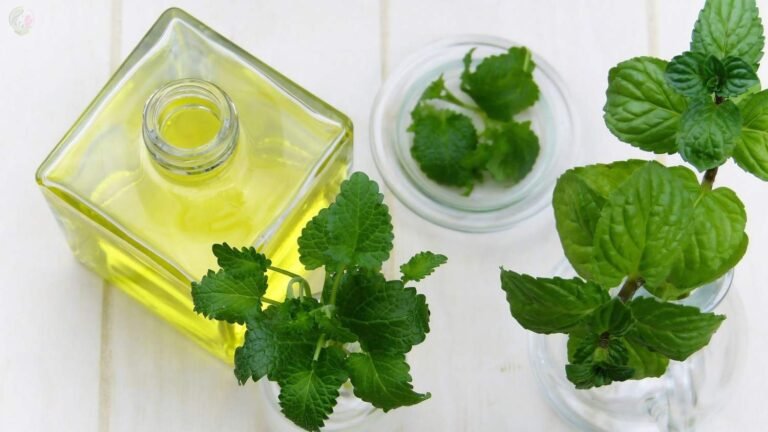
Peppermint Oil for Hair Growth
If you are searching for peppermint oil for hair growth, you want a straight answer: does this cooling, minty oil actually help hair grow, or is it just a pleasant tingle that feels productive? The honest answer sits in the middle. Peppermint oil for hair growth has real, published research behind it, but that research is narrower than most blog posts admit, and the results depend heavily on why your hair is thinning in the first place. This guide explains what peppermint oil for hair growth can and cannot do, how the science works, how to dilute and apply it safely, what results to expect week by week, and the mistakes that turn a promising routine into an irritated scalp.
What Peppermint Oil for Hair Growth Actually Means
Peppermint oil is a concentrated essential oil steam-distilled from the leaves of Mentha piperita, the peppermint plant. Its dominant compound is menthol, followed by menthone and smaller amounts of limonene and other plant chemicals. Menthol is what creates the cold, tingling feeling on the skin. That tingle is not just a sensation. It is a signal that menthol has activated cold-sensitive nerve receptors in the scalp, and that activation is linked to widened blood vessels in the skin underneath. When people talk about peppermint oil for hair growth, they are usually talking about this chain of effects: menthol widens vessels, more blood reaches the follicles, follicles receive more oxygen and nutrients, and hair is better supported through its growth phase.
It is important to separate two different jobs here. Some oils mainly condition the hair shaft, making existing hair look fuller, shinier, and less prone to breakage. Peppermint oil is different. Its main claim is at the follicle level, in the scalp itself. That is why peppermint oil for hair growth is applied to the scalp, not just smoothed over the lengths. If you only coat the ends of your hair with peppermint oil, you will get a nice scent and very little of the growth-related benefit. The scalp is where the action is, and every method in this article is built around getting a properly diluted dose to the scalp skin.
The Science Behind Peppermint Oil for Hair Growth
The most cited study on peppermint oil for hair growth was published in 2014 in the journal Toxicological Research. Researchers applied peppermint oil, diluted in jojoba oil, to the shaved backs of mice, and compared it with saline, jojoba oil alone, and minoxidil 3 percent, a well-known hair growth treatment. After four weeks, the mice treated with peppermint oil showed faster and more complete hair regrowth than the other groups, along with an increase in the number and depth of hair follicles and in dermal thickness. The authors linked these changes to increased expression of growth-related signals in the skin, including insulin-like growth factor 1, a protein involved in the active growth phase of the hair cycle.
That study is genuinely encouraging, but it has limits that honest coverage must state. It was an animal study, not a human trial. Mice skin and human scalps differ, and a four-week mouse study cannot prove long-term results in people with pattern hair loss, hormonal thinning, or stress-related shedding. There is currently no large, standalone human trial proving that peppermint oil for hair growth works as well as minoxidil in people. What human evidence exists is mechanistic: we know menthol increases skin blood flow in humans, we know peppermint oil has antimicrobial and anti-inflammatory properties, and we know a healthy, well-circulated scalp supports better growth. Those are meaningful building blocks, but they are not the same as proof of regrowth in humans. Anyone who tells you peppermint oil for hair growth is proven to regrow human hair is overstating the evidence.
There is also a second, smaller body of evidence worth knowing. Peppermint oil has been studied for its effects on skin penetration and blood flow, and menthol is widely used in topical products precisely because it changes how the skin behaves. Increased local blood flow is a plausible mechanism for supporting follicles, especially follicles that are underperforming because of poor scalp circulation, tightness, buildup, or chronic low-grade inflammation. For a general overview of peppermint oil beyond hair, see our guide to peppermint oil uses and benefits, which covers its wider properties and safety profile.
How Peppermint Oil for Hair Growth Works on the Follicle
To understand peppermint oil for hair growth, it helps to know the hair growth cycle. Each follicle moves through three main phases: anagen, the active growth phase that lasts years; catagen, a short transition phase; and telogen, a resting phase that ends in shedding. At any time, most scalp follicles are in anagen, while a smaller share rest in telogen. Thinning happens when follicles spend less time in anagen, more time in telogen, or gradually shrink, a process called miniaturization that is driven in pattern hair loss by sensitivity to the hormone DHT.
Peppermint oil for hair growth is thought to work mainly on the first two parts of that picture. By widening blood vessels, menthol increases delivery of oxygen and nutrients to the follicle base, which is the most metabolically active part of the hair system during anagen. By stimulating the skin, peppermint oil may also help nudge resting follicles back into anagen sooner. In the 2014 mouse study, the peppermint group entered anagen earlier than the control groups, which is consistent with this idea. What peppermint oil does not do, based on current evidence, is block DHT. That distinction matters enormously, because it tells you who is most likely to benefit, a point we return to below.
Who Benefits Most from Peppermint Oil for Hair Growth
Peppermint oil for hair growth is most promising when slow growth is linked to scalp conditions rather than to strong hormonal miniaturization. If your scalp feels tight, your growth seems sluggish after illness, stress, or heavy product buildup, or your hair sheds more when your scalp is itchy and flaky, then improving circulation and calming the scalp environment addresses a real bottleneck. Many people in this group report that their hair feels fuller over two to three months, not because new follicles were created, but because existing follicles stayed in anagen longer and shed less.
If your thinning follows a clear pattern, such as a receding hairline or widening part that runs in your family, peppermint oil for hair growth may still help as a supporting treatment, but it is unlikely on its own to reverse the hormonal process. In that situation, peppermint oil is best seen as a scalp-health companion to treatments with stronger evidence for pattern loss, such as minoxidil or treatments prescribed by a dermatologist. Framing it that way protects you from disappointment and from delaying medical care that could preserve follicles while they are still recoverable. For comparison, our article on argan oil for hair growth explains how a conditioning oil supports existing hair differently from a follicle-stimulating approach.
Benefits of Peppermint Oil for Hair Growth Beyond New Growth
Even before any new growth appears, peppermint oil for hair growth offers supporting benefits that make the scalp a better place for hair to grow. Its antimicrobial properties help keep the scalp ecosystem balanced, which matters because overgrowth of the yeast Malassezia is linked to dandruff and flaking. Its anti-inflammatory compounds can calm redness and irritation that, left unchecked, disturb follicles. Its ability to balance sebum, the scalp natural oil, helps both oily scalps that feel greasy within a day and dry scalps that flake. And the cooling sensation itself, while not a treatment, makes the routine pleasant enough to stick with, which is a real advantage, since consistency is the main predictor of any hair routine working.
There is also a cosmetic benefit that people notice early. By improving scalp circulation and reducing buildup, peppermint oil for hair growth can make hair at the roots look lifted and less flat, and the lengths often feel cleaner between washes. That early lift is sometimes mistaken for new growth. It is not new hair, but it is a genuine improvement in hair appearance, and it is a reasonable sign that your scalp is responding. True new growth, fine baby hairs along the hairline or part, takes longer, and you should judge it with photos, not with how your hair feels on a given morning.
How to Dilute Peppermint Oil for Hair Growth Safely
Peppermint oil for hair growth must always be diluted. Undiluted peppermint oil is far too strong for scalp skin and can cause burning, redness, rash, and a sensitivity reaction that makes the scalp worse, not better. The standard safe range for scalp use is 1 to 3 percent. In practical terms, that means about 6 drops per ounce, or 30 milliliters, of carrier oil for 1 percent, and about 12 to 18 drops per ounce for 2 to 3 percent. Beginners should start at 1 percent for the first two weeks, then move to 2 percent only if the scalp feels comfortable. More is not better with peppermint oil for hair growth. A stronger tingle does not mean stronger growth, and pushing past comfort is the most common cause of people quitting.
Choose a carrier oil that suits your scalp and hair type. Jojoba oil is the most popular choice for peppermint oil for hair growth because its composition is close to the scalp natural sebum, it absorbs well, and it rarely feels heavy. Coconut oil is a good option for dry or coarse hair, though it can feel heavy on fine hair. Argan oil adds conditioning and shine, which makes it a good partner if your lengths are dry. Learn how carriers change the result in our guide to how to use argan oil for hair, and for jojoba specifically, see jojoba oil benefits and uses. Whatever carrier you choose, mix the blend fresh in a small bottle, label it with the dilution and date, and keep it in a cool, dark place.
Step by Step: Applying Peppermint Oil for Hair Growth
Start with a patch test. Apply a small amount of your diluted blend to the skin behind your ear or on your inner forearm, wait 24 hours, and check for redness, itching, or swelling. If the patch test is clear, you can begin scalp treatments. Part your hair into four to six sections so the blend reaches the scalp rather than sitting on top of the hair. Using a dropper or your fingertips, apply the blend along each part line, focusing on thinning areas without flooding one spot. Massage with your fingertips, not your nails, in slow circles for three to five minutes. This massage matters: it spreads the blend evenly and adds its own circulation benefit on top of the menthol effect.
Leave the treatment on for 20 to 30 minutes, then shampoo as usual. Some people prefer an overnight treatment, but that should only be tried after several weeks of comfortable shorter treatments, and only at a low dilution, because a long contact time increases irritation risk. Use peppermint oil for hair growth two to three times per week, not daily, at least at first. Hair responds to routine, not to intensity. Wash your hands after application, keep the blend away from your eyes, and never apply it to broken, sunburned, or freshly scratched scalp skin. If you use other scalp treatments, apply peppermint oil on different days until you know how your scalp reacts to each one.
Recipes for Peppermint Oil for Hair Growth
The simplest effective recipe for peppermint oil for hair growth is the basic scalp blend: 2 tablespoons of jojoba oil with 6 drops of peppermint oil for a gentle 1 percent blend, or 12 drops for a 2 percent blend once tolerance is established. Massage into the scalp, leave for 20 to 30 minutes, and shampoo out. This is the recipe to start with, and many people never need anything more complicated.
A second option is a growth-supporting mask for dry hair: mix 2 tablespoons of castor oil, 1 tablespoon of coconut oil, and 8 to 10 drops of peppermint oil, warm the mixture slightly between your palms, apply to the scalp and roots, cover with a shower cap for 30 to 40 minutes, then wash thoroughly. Castor oil is thick and can be hard to wash out, so use it sparingly and shampoo twice if needed. Read more about its properties in castor oil benefits, uses, and side effects before making it a regular habit. A third option is a shampoo boost: add 2 to 3 drops of peppermint oil to the shampoo in your palm, not to the whole bottle, lather, massage for a minute, and rinse. This gives a light, refreshing dose on days when you do not have time for a full treatment.
A fourth method, a scalp spray for between washes, suits oily scalps: add 8 drops of peppermint oil and 1 tablespoon of aloe vera gel to 8 ounces of distilled water in a spray bottle, shake well before each use, spritz lightly onto the scalp, and massage briefly. Because oil and water separate, shake vigorously every time, and make a fresh batch weekly. Whichever recipe you choose for peppermint oil for hair growth, keep the dilution in the safe range and keep the routine consistent for at least eight weeks before judging it.
Realistic Timeline: What to Expect from Peppermint Oil for Hair Growth
Honest timelines protect you from quitting too early or believing hype. In the first two weeks of peppermint oil for hair growth, the most likely changes are a cleaner, calmer scalp, less itching, and hair that feels lighter at the roots. These are scalp-health wins, not new growth. Between weeks four and eight, shedding may stabilize, and some people notice less hair in the shower drain and on the brush. This is the stage where follicles spending longer in anagen would first show up as reduced shedding.
Visible new growth, if it comes, usually appears from week eight to week twelve as short, fine hairs along the hairline, temples, or part. These baby hairs are easy to miss, which is why photos matter. Take a photo of your part line and hairline in the same light, at the same distance, every four weeks. Do not compare a good hair day with a bad one. Between months three and six, any real improvement in density becomes easier to see, and at that point you can decide whether peppermint oil for hair growth earns a permanent place in your routine. If nothing has changed after three consistent months, it is reasonable to conclude that your thinning has a different primary cause, and to seek dermatology advice rather than increasing the dose.
The New Angle: The Anagen-Shift Shedding Phase Nobody Warns You About
Here is an angle most articles on peppermint oil for hair growth miss entirely, and it explains why some people quit just before the treatment starts working. When a treatment nudges resting follicles into the growth phase sooner, the old resting hair in those follicles must shed first to make room for the new hair. Dermatologists see the same pattern with minoxidil, where an early increase in shedding, often called shedding phase, is actually a sign that follicles are cycling. With peppermint oil for hair growth, a mild, temporary increase in shedding during weeks two to six may have the same explanation: follicles are resetting their cycle, not being damaged.
The science behind this is straightforward. A telogen hair is already detached from its blood supply and waiting to fall. Pushing its follicle into anagen does not save that old hair; it replaces it. So a short shedding uptick, followed by stabilization and then fine regrowth, fits the mechanism of peppermint oil for hair growth far better than the assumption that any extra shedding means the oil is harming you. The distinction that matters is duration and pattern. Shedding that lasts more than six weeks, shedding in patches, shedding with redness, burning, or scaling, or shedding that leaves smooth bald patches is not an anagen shift and needs medical review. But a mild, diffuse, short-lived increase in shedding without scalp symptoms, in the first month of peppermint oil for hair growth, should not on its own make you stop. Track it with weekly shower-drain counts or brush counts for four weeks, note whether it settles, and judge the routine at eight to twelve weeks, not at week three. This single reframing prevents the most common self-sabotage in natural hair growth routines.
Peppermint Oil for Hair Growth by Hair Type
Fine and thin hair benefits from the lightest approach to peppermint oil for hair growth. Use a 1 percent blend in jojoba oil, apply only to the scalp, and wash thoroughly, because residue weighs fine hair down and makes it look thinner even when the scalp is healthier. Thick and coarse hair can handle a 2 percent blend and a richer carrier such as coconut or argan oil, and may need a longer massage to reach the scalp through dense hair. Curly and coily hair, types 3 and 4, often have drier scalps and more fragile strands, so peppermint oil for hair growth should be paired with a moisturizing carrier and a gentle, sulfate-free shampoo, and the scalp should be sectioned carefully to avoid tangling during massage.
Oily scalps often respond well to peppermint oil for hair growth because menthol balancing effect and the clarifying massage help with buildup, but oily scalps should still avoid daily use, which can trigger rebound oiliness. Dry scalps need the opposite emphasis: a lower peppermint concentration, a richer carrier, and a shorter leave-on time until comfort is confirmed. Color-treated hair can use peppermint oil for hair growth safely on the scalp, but keep the blend off the lengths as much as possible and avoid overnight treatments that could dry color-treated ends. Our guide to argan oil for different hair types gives a useful framework for matching any oil routine to your hair type.
Combining Peppermint Oil for Hair Growth with Other Oils
Peppermint oil for hair growth pairs well with rosemary oil, the other essential oil with growth-related research, because the two work through different mechanisms. Rosemary is studied for its effects on follicle protection and circulation over months, while peppermint acts faster on blood flow. A combined blend, for example 6 drops of rosemary and 4 drops of peppermint per ounce of carrier oil, gives both mechanisms at a safe total essential oil concentration. Our article on argan and rosemary oil for hair growth shows how a carrier plus rosemary routine is structured, and you can adapt that structure with peppermint added at a low dose.
Peppermint also pairs well with tea tree oil for scalps where dandruff or itch is part of the problem, since both have antimicrobial properties. Keep the total essential oil concentration at or below 2 to 3 percent when combining, and introduce one new oil at a time so you can identify the culprit if irritation appears. For dandruff-prone scalps, see argan oil for dandruff for how a soothing carrier approach differs from a stimulating one. Amla oil, covered in amla oil for hair growth, is a traditional growth-supporting oil that can serve as a nourishing carrier base for a peppermint blend in dry hair, though its scent and texture are heavier than jojoba.
Side Effects and Safety of Peppermint Oil for Hair Growth
The main side effect of peppermint oil for hair growth is scalp irritation: burning, redness, itching, or rash, almost always from using too much, using it undiluted, or leaving it on too long. If irritation appears, wash the scalp with a gentle shampoo, skip peppermint treatments for at least a week, and restart at half the previous concentration. Allergic reactions are uncommon but possible; a patch test reduces this risk. Peppermint oil should not be applied to the face or scalp of infants or young children, because menthol can irritate their airways and skin, and it should be kept away from the eyes and mucous membranes at all ages.
Pregnant and breastfeeding readers should check with a clinician before starting any concentrated essential oil routine, including peppermint oil for hair growth, because safety data in pregnancy are limited even for widely used oils. People with eczema, psoriasis, or seborrheic dermatitis on the scalp should also get medical advice first, since a stimulating oil can aggravate an inflamed scalp even while it helps a healthy one. If you are using medicated scalp treatments, prescription hair loss treatments, or have a scalp condition that is worsening, treat peppermint oil for hair growth as a complement to medical care, not a replacement for it, and tell your dermatologist you are using it.
Mistakes That Ruin Peppermint Oil for Hair Growth Results
The most common mistake with peppermint oil for hair growth is using it undiluted or at a very high concentration because the tingle feels like proof it is working. The tingle is proof of menthol activity, not of growth, and beyond a comfortable tingle it becomes irritation that damages the scalp environment you are trying to improve. The second mistake is inconsistency: using it intensely for a week, forgetting it for a month, then declaring it failed. Hair cycles run in months, and peppermint oil for hair growth needs eight to twelve weeks of steady use before a fair verdict.
The third mistake is judging results without photos, which leads to both false hope and false disappointment. The fourth is ignoring the rest of the picture: poor sleep, iron deficiency, thyroid problems, crash dieting, and harsh styling can all cause shedding that no scalp oil will fix. If shedding is sudden, patchy, or accompanied by fatigue, weight change, or other symptoms, see a clinician for blood work and a scalp examination rather than adding more products. The fifth mistake is buying low-quality oil. Choose peppermint oil labeled Mentha piperita, 100 percent pure essential oil, with no added fragrance or carrier already mixed in, from a brand that provides batch testing. A cheap fragrance oil that smells minty is not peppermint oil for hair growth, and it will not deliver menthol in a reliable dose.
Frequently Asked Questions About Peppermint Oil for Hair Growth
How long does peppermint oil for hair growth take to work?
Scalp comfort often improves within two weeks, shedding may stabilize by weeks four to eight, and visible fine regrowth, if it occurs, usually appears from week eight to twelve. Judge peppermint oil for hair growth at three months of consistent use, with photos, not at two weeks.
Can peppermint oil for hair growth regrow a bald patch?
There is no reliable evidence that peppermint oil for hair growth regrows fully bald, scarred, or long-miniaturized areas. It is most plausible for slowing shedding and supporting follicles that are still active. Smooth, long-standing bald patches need dermatology evaluation.
Is peppermint oil for hair growth better than minoxidil?
No fair comparison supports that claim in humans. Minoxidil has large human trials behind it; peppermint oil for hair growth has a promising animal study and mechanistic human data. Peppermint oil can complement, but should not replace, proven treatment for pattern hair loss without medical advice.
Can I leave peppermint oil for hair growth on overnight?
Only after weeks of comfortable 20 to 30 minute treatments, and only at a low dilution. Overnight use increases irritation risk without a proven extra benefit, because most volatile menthol evaporates or absorbs within the first hour.
Does peppermint oil for hair growth work for women and men equally?
The mechanism, improved scalp blood flow and follicle support, is not sex-specific, so peppermint oil for hair growth is relevant to both. The underlying cause of thinning differs by person, and that cause, not sex, is what predicts response.
Final Verdict on Peppermint Oil for Hair Growth
Peppermint oil for hair growth is a reasonable, low-cost, well-tolerated scalp treatment with a plausible mechanism and encouraging animal research, but without the human trial proof that would justify calling it a regrowth cure. Used properly, diluted to 1 to 2 percent, massaged into the scalp two to three times per week, and judged over three months with photos, it is a sensible addition to a hair care routine, especially when slow growth is tied to scalp circulation, buildup, or mild inflammation. Used improperly, undiluted, daily, or as a substitute for medical care, it can irritate the scalp and delay the treatment that would actually help. Start low, stay consistent, track honestly, and let peppermint oil for hair growth earn its place in your routine on evidence from your own scalp, not from hype.