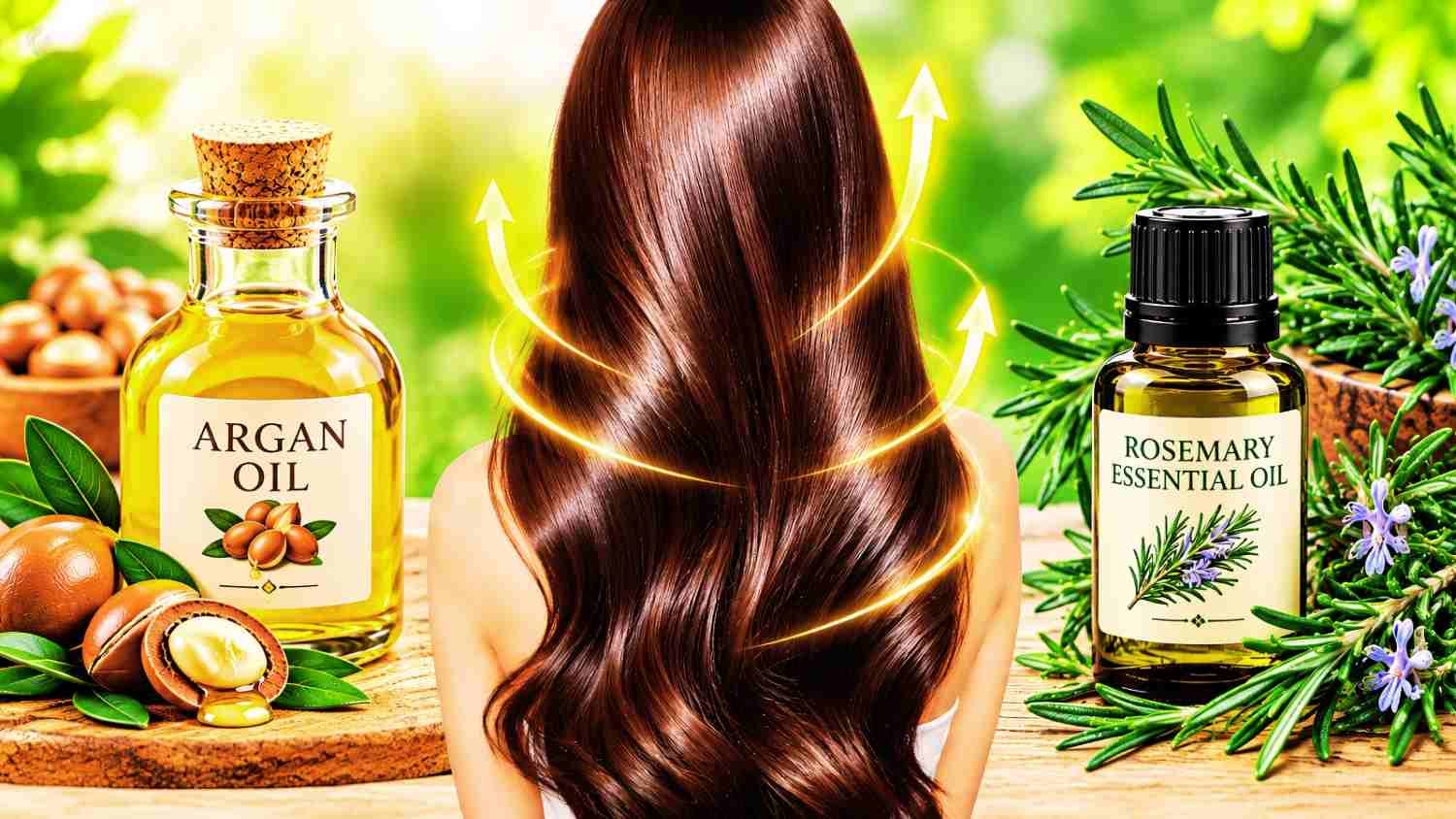
Rosemary oil has become one of the most talked-about natural hair growth remedies in recent years, and argan oil has long held its own reputation for shine and conditioning. Combine the two, and you get a blend people are increasingly curious about: does the argan oil and rosemary essential oil benefits for hair growth claim actually hold up, or is this just another trending oil pairing? Here’s an honest, ingredient-level look at what each oil brings to the table, and whether using them together genuinely makes a difference.
What Each Oil Brings to the Blend
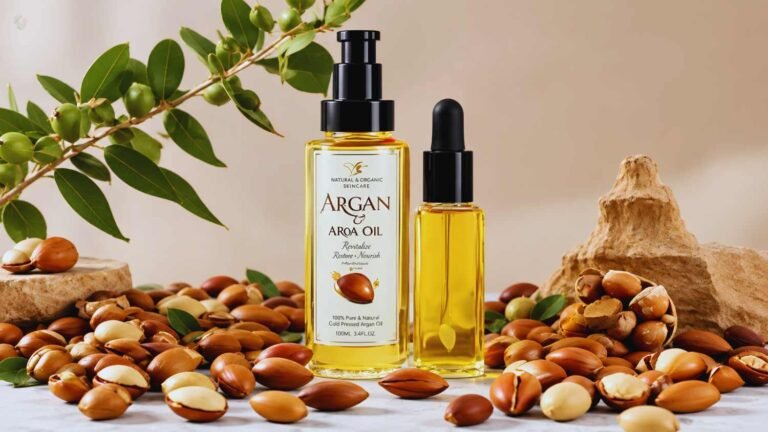
Argan oil is pressed from the kernels of the argan tree, grown almost exclusively in Morocco’s Souss Valley, a region protected under UNESCO Biosphere Reserve status. It’s rich in vitamin E, oleic acid, linoleic acid, and antioxidant polyphenols, compounds well known for smoothing the hair cuticle, sealing in moisture, and reducing breakage caused by dryness.
Rosemary essential oil, distilled from the Rosmarinus officinalis plant, works through a different mechanism entirely. Its active compounds, including carnosic acid and rosmarinic acid, are associated with improved microcirculation at the scalp and antioxidant protection for hair follicles, mechanisms that have made rosemary oil the subject of genuine clinical interest, including a widely cited 2015 study comparing it favorably to low-dose minoxidil for androgenetic alopecia.
Argan Oil and Rosemary essential Oil for Hair: How They Work Together
Because these two oils target different parts of the hair growth equation, argan oil conditioning the strand, rosemary oil stimulating the scalp, combining them creates a more complete routine than either oil manages alone. Argan oil isn’t associated with direct growth stimulation, but it plays a supporting role by reducing the breakage that causes hair to appear thinner or shorter than it actually is.
Rosemary oil, meanwhile, is one of the few natural oils with actual research behind its growth-supporting effects, making it the more active ingredient in this pairing, while argan oil functions as both a carrier and a conditioning agent.
Is Argan Oil and Rosemary Oil Good for Hair Growth?
Based on current evidence, yes, though the two ingredients contribute in different ways. Rosemary oil’s scalp-stimulating properties are the primary driver of any growth-related benefit, while argan oil supports the outcome indirectly by keeping existing hair strong enough to avoid breaking off before it has a chance to grow out.
This distinction matters because it sets realistic expectations. The combination isn’t a guaranteed growth accelerant, but it’s a reasonably well-supported, low-risk addition to a hair care routine focused on both scalp health and strand strength.
Argan Oil and Rosemary Oil Ratio: Getting the Mix Right
Since rosemary is used as an essential oil and argan oil serves as the carrier, the ratio matters for both safety and effectiveness. A commonly recommended starting point is 3 to 5 drops of rosemary essential oil per tablespoon of argan oil, which keeps the rosemary concentration within a safe, non-irritating range for scalp application.
For a larger batch, roughly 15 to 20 drops of rosemary oil per quarter cup of argan oil follows the same ratio. Essential oils should never be applied undiluted directly to the scalp, so argan oil’s role as a carrier is just as important as its own conditioning properties.
How to Mix and Use This Blend
- Measure your argan oil into a small, clean bottle, roughly one to two tablespoons depending on hair length.
- Add rosemary essential oil at a ratio of 3 to 5 drops per tablespoon of argan oil.
- Shake well to combine before each use, since the oils can separate slightly over time.
- Massage into the scalp for 5 to 10 minutes using circular motions to improve circulation and distribution.
- Work any remainder through the length of your hair, focusing on dry or damaged ends.
- Leave on for at least 30 minutes, or overnight for a deeper treatment, then rinse with a mild shampoo.
Using this blend 2 to 3 times a week is generally enough, with most people needing 8 to 12 weeks of consistent use before judging results, in line with typical hair growth research timelines.
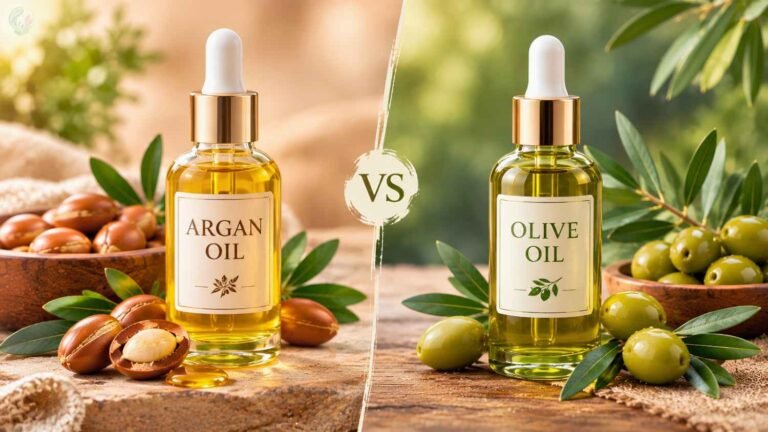
Is Argan Oil or Rosemary Oil Better for Hair Growth?
If you had to choose only one, rosemary oil has the stronger, more direct research backing for growth specifically. Argan oil’s benefits are real but indirect, centered on strand strength and moisture rather than follicle stimulation.
That said, this isn’t really an either-or decision. Since argan oil is needed as a safe carrier for rosemary’s concentrated essential oil anyway, using them together is often more practical than trying to apply rosemary oil undiluted or using argan oil without any active growth-support ingredient at all.
A Few Safety Notes
Rosemary essential oil is potent and should always be diluted, never applied directly to the skin or scalp on its own. Pregnant individuals, and those with a history of seizures, should consult a healthcare provider before using rosemary oil, since high concentrations have occasionally been linked to concerns in these groups.
As with any new topical product, patch-test the diluted blend on your inner arm 24 hours before applying it to your scalp.
Final Thoughts
Argan oil and rosemary essential oil bring genuinely different strengths to a hair growth routine, one supports the scalp and follicles, the other protects and conditions the strand itself. Used together in the right ratio, they offer a well-rounded, reasonably evidence-backed approach for anyone looking to support healthier, fuller-looking hair over time, provided expectations stay realistic and the routine stays consistent.
This article is for general informational purposes and isn’t a substitute for professional dermatological advice. If you’re experiencing significant hair thinning or loss, consult a dermatologist to identify the underlying cause.