Does Argan Oil Grow Hair? The Science, the Myths, and the Real Routine
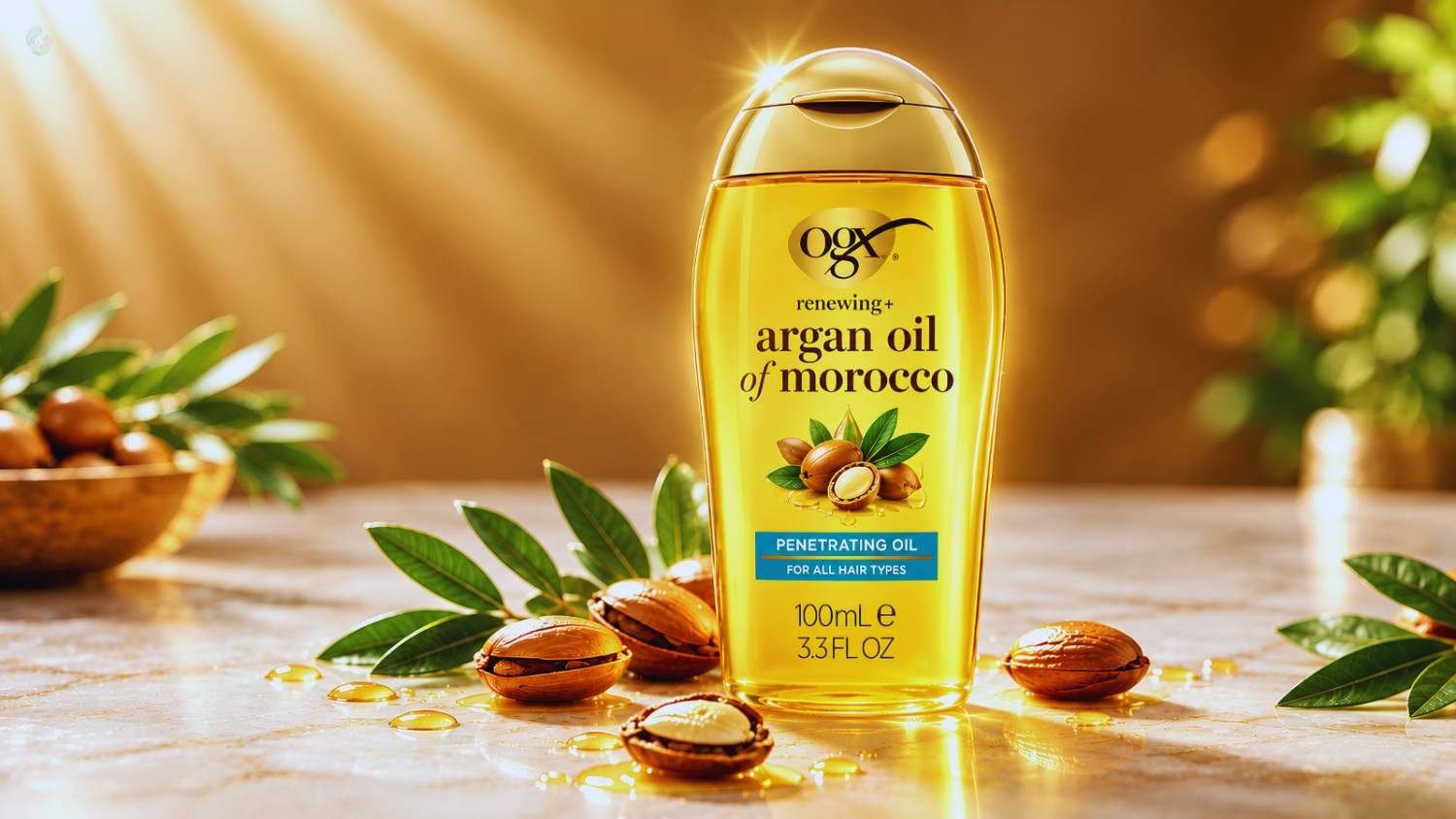
If you are asking, does argan oil grow hair, you deserve a straight answer before you buy another bottle or add another step to your routine. The short answer is that argan oil does not stimulate new hair from the follicle in the way a proven treatment does, but that is not the whole story. Many people who use it do end up with visibly longer hair, and the reason is worth understanding, because it changes how you should use it, how long you should wait, and what you should pair it with.
This guide keeps the practical routine from the live page and adds what most growth articles skip: what the evidence actually says, what it does not say, and how to tell whether you are retaining length. So, does argan oil grow hair? The honest answer is no, not directly, and yes, indirectly, in a way that still matters.
Where Argan Oil Comes From, and Why Origin Matters
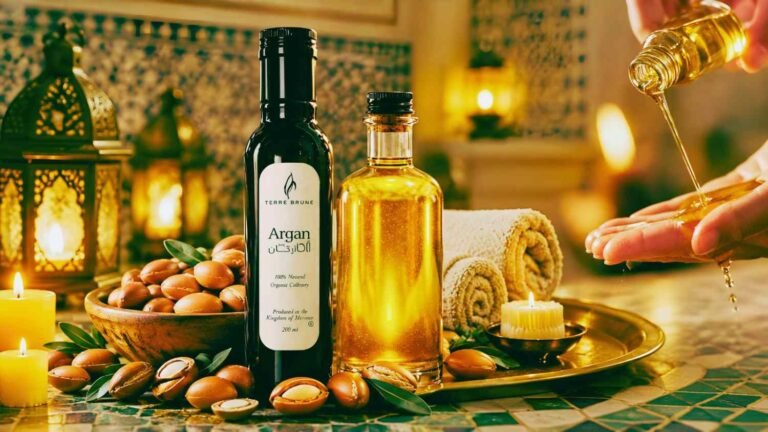
Argan oil is pressed from the kernels of the argan tree, which grows almost exclusively in southwestern Morocco. The cosmetic version for hair is cold-pressed from raw, unroasted kernels, and a genuine bottle should list only Argania Spinosa Kernel Oil.
The oil is rich in oleic acid and linoleic acid, vitamin E, and plant sterols and polyphenols. None is a follicle stimulant. Together, they make argan oil a useful protective oil: it smooths the cuticle, helps hair hold moisture, and adds slip so strands glide instead of snagging. For background, see our guide to what argan oil is and how to spot a genuine bottle.
Does Argan Oil Grow Hair? The Direct Answer
So, does argan oil grow hair in the sense most people mean when they ask the question? If you mean, will it switch on dormant follicles, create new hairs, or speed up the rate at which each follicle produces hair, then the answer is no. There is no strong clinical evidence that argan oil stimulates new growth from the follicle, and it has no minoxidil-like action and no DHT-blocking action. Minoxidil works by prolonging the growth phase and improving blood flow around the follicle, and DHT-blocking treatments work by reducing the hormonal signal linked to pattern hair loss. Argan oil does neither of those things.
That does not make argan oil useless. It makes it a different kind of tool. Think of length as a balance: how much your follicles produce each month, minus how much you lose to breakage and split ends. If you grow half an inch a month but break off half an inch, your hair never looks longer, even though your follicles work perfectly. Reduce breakage, and the same growth becomes visible.
This is also why the question, does argan oil grow hair, is so often answered badly online. A yes-or-no answer hides the mechanism. A careful answer separates regrowth, which argan oil does not deliver, from retention, which it genuinely supports. If your problem is breakage, argan oil may be exactly what you need. If your problem is thinning or shedding, argan oil alone will not fix the cause.
Before going further, it helps to ask again, plainly: does argan oil grow hair, or does it help you keep hair? Everything that follows depends on that distinction.
So, does argan oil grow hair, or does it protect hair? Holding both ideas at once is the key to using it well.
Growth Versus Retention: The Distinction That Changes Everything
Regrowth means new hairs where follicles were inactive, or existing hairs growing faster because the follicle has been stimulated. Retention means keeping the hair you already grow, so it survives long enough to be seen as length.
Argan oil helps retention in three ways. Conditioned hair is more flexible, so it stretches instead of snapping. Smoother cuticles create less friction during brushing and sleeping. And a calmer scalp is a more comfortable base, with massage itself supporting circulation.
None of this should be oversold. Argan oil will not increase the number of hairs on your head or reverse pattern hair loss. What it can do, used consistently and in the right amount, is help you keep more of the length your body is already producing.
Does Argan Oil Grow Hair? What the Studies Actually Tested
This is the signature section of this guide, because it asks what the research actually tested: was it tested on hair, on skin, or in a laboratory dish; on people or on isolated cells; and did it measure new growth, or moisture, elasticity, or breakage?
Most quoted research falls into the first two groups, not the third. Hair-fiber studies measure moisture, elasticity, breakage, and protein loss during washing or heat styling. They are relevant to retention and broadly favorable to conditioning oils, but they do not test whether a follicle produces a new hair, and they should never be presented as growth evidence.
Skin studies are the second group, and they are easy to misread. Argan oil has been studied for skin hydration and antioxidant activity, and a healthier scalp surface is a reasonable supporting goal. But scalp skin is not the follicle, and an antioxidant effect on skin does not prove that dormant follicles will reactivate.
Follicle-growth studies are the third group, and this is where the gap appears. A growth claim would need controlled human trials counting hairs or measuring density over months, with a comparison group. Minoxidil and rosemary oil have at least some human research in this category, though rosemary research is still small. Argan oil does not have a comparable body of follicle-growth trials.
Laboratory studies on isolated cells or animals are also sometimes quoted as if they were human hair results. A compound that affects cells in a dish may behave very differently on a human scalp, so until a claim has been tested in people, with hair counts or density measurements, it should be described as preliminary, never as proven. So, does argan oil grow hair according to those lab studies? No, because they did not test follicle growth in people at all.
Does argan oil grow hair if you use it perfectly? Perfect use still does not turn a conditioner into a follicle stimulant, but it does maximize retention.
What Argan Oil Can Honestly Support
It is a conditioner and protector with a retention benefit, not a regrowth treatment.
Once the regrowth claim is set aside, argan oil has genuinely useful honest benefits. It supports scalp comfort, reduces breakage, adds shine through a smoother cuticle, and offers light protection before heat or sun exposure, though it is not a substitute for a dedicated heat protectant.
Those benefits add up over time. Less breakage means fewer split ends travelling up the strand and fewer trims to remove damage, so more length is kept over a year. Better shine also means hair looks healthier within weeks, long before any length change could be measured.
For a broader picture, see our guide to argan oil for hair and its real benefits. A weekly argan oil hair mask for dry and damaged hair gives a deeper step, while a light argan oil hair serum for frizz control and shine is often the better daily finish for fine hair.
Myths About Argan Oil
Each myth below starts from the same question readers keep asking: does argan oil grow hair in the way the claim suggests? Testing each claim against the evidence gives a clearer answer than any single yes or no.
and Hair Growth, Debunked One by One
Myths survive because they sound plausible and promise a simple fix. Each one below explains why it is misleading and replaces it with the version that holds up.
Does argan oil grow hair by waking follicles? That is the claim tested first, and it fails the evidence test.
Myth 1: Argan oil wakes up dormant follicles
This is the biggest myth, and the answer is plain: no ingredient in argan oil has been shown to reactivate dormant follicles. Follicle miniaturization in pattern hair loss is driven by hormones, genetics, and time, and it is not reversed by a conditioning oil. If you are asking, does argan oil grow hair back in thinning areas, the honest answer is that it does not regrow hair there, though it may make the hair you still have look and feel better.
Before this myth, remember the test: does argan oil grow hair faster with a larger dose? No, dose changes buildup, not follicle activity.
Myth 2: More oil means faster growth
Using more oil does not speed up anything, because growth is not the mechanism being affected. Heavy application usually causes buildup and a greasy scalp, and the harsh clarifying washes that follow can dry hair out and increase breakage. The right dose is a few drops, not a palmful.
Does argan oil grow hair by blocking hormones? That claim is tested next, and it also lacks reliable evidence.
Myth 3: Argan oil blocks DHT
There is no reliable evidence that topical argan oil blocks DHT, the hormone linked to pattern hair loss. Treatments that genuinely target DHT are medicines, with their own evidence and side effects. Argan oil should never be presented as a natural substitute for them.
Ask again here: does argan oil grow hair in two weeks? No timeline for new follicle growth fits in fourteen days.
Myth 4: You will see new growth in two weeks
Two weeks is too short to judge any hair routine. Hair grows about half an inch a month, and strands already in the resting phase will shed on their own schedule. Early wins such as less breakage can appear within weeks, but visible length retention needs months.
Does argan oil grow hair as a complete treatment on its own? No, and the routine around it matters more than the bottle alone.
Myth 5: Argan oil alone is a complete growth treatment
Argan oil works best as one layer in a routine, not as the whole routine. Diet, gentle handling, limited heat, and regular trims all matter more for follicle health than any single oil. If you want a growth-focused pairing, our guide to argan oil and rosemary oil for hair growth explains why rosemary is the more active partner and how to dilute it safely.
Does argan oil grow hair through technique alone? Technique protects length, which is why the routine below is worth following exactly.
How to Use Argan Oil for Hair Growth:
A practical question follows the science: if the answer to does argan oil grow hair is retention, not regrowth, what routine best protects length? The steps below are built for exactly that job.
Since argan oil supports retention rather than stimulation, this routine is built around protecting length and keeping the scalp comfortable.
- Start clean and slightly damp. Wash first, or use the oil as a pre-wash treatment, so buildup does not block even distribution.
- Massage a small amount into the scalp for three to five minutes. Warm three to five drops between your palms and use your fingertips, not your nails, in gentle circles.
- Apply a light layer through the mid-lengths and ends. This is where hair is oldest and most likely to snap, so protection pays off most there.
- Use a pre-wash or overnight treatment once or twice a week. Leave it for twenty to thirty minutes before shampooing, or overnight under a soft bonnet for thicker, drier hair.
- Seal in moisture after washing. On damp hair, after conditioner or a water-based leave-in, smooth one or two drops over the lengths. Oil seals in water; it does not replace it.
- Protect hair daily. A tiny amount before heat styling or sun exposure reduces the daily wear that undoes a weekly treatment.
For the full step-by-step version, see our guide on how to use argan oil for hair growth. Curly and coily hair needs a slightly different dose and order, covered in our guide to argan oil for curly hair and the best way to use it.
Does argan oil grow hair differently when another ingredient is added? The next section separates what argan oil does from what its partner does.
Does Argan Oil Grow Hair Faster With Rosemary Oil or Minoxidil?
Many readers do not want argan oil alone, so it is fair to ask whether adding something else changes the answer. Adding a studied active can change the follicle side, while argan oil continues to handle retention. So, does argan oil grow hair faster when paired with rosemary oil? The honest answer is that the pair may support growth better than argan oil alone, but the growth contribution comes mainly from rosemary.
Rosemary oil has small human studies comparing it favorably with low-dose minoxidil for pattern hair loss, though the evidence base is still limited. If you try the blend, always dilute rosemary essential oil in argan oil, typically three to five drops per tablespoon, never apply it undiluted, and patch-test first. Avoid rosemary oil if you are pregnant or breastfeeding, or have a history of seizures, without medical advice.
Minoxidil is a clinically studied medicine with measured effects on the growth phase, and also with possible side effects. Argan oil can sit alongside it as a conditioning layer, but it does not replace it or boost its drug action. If you are considering minoxidil, that decision belongs with a dermatologist.
Does argan oil grow hair on a two-week clock? No, and the timeline below explains why patience is part of the method.
A Realistic Routine and Timeline
It is also worth asking, does argan oil grow hair faster if you use it every day? No. Daily heavy use adds buildup without adding growth, which is why the timeline below is measured in months, not days.
for Judging Results
A routine you cannot judge is one you will abandon, so set the timeline before you start. Hair grows about half an inch a month, and the hair cycle means some strands are always resting and shedding, which is why the first two months can look disappointing even when the routine is working.
Weeks one to four are for early signals, not length: less breakage, softer strands, less frizz, and a calmer scalp. Weeks four to eight are for early retention, with less ragged ends and fewer snapped hairs when detangling. Weeks eight to twelve are when resting strands finish shedding, so new growth should start to outpace visible shedding. Months three to six are the first fair point to judge length, at roughly one and a half to three inches of new growth.
To judge retention honestly, take a photo in the same light and style once a month, and note broken hairs after detangling each wash day. If breakage falls and length holds, you are retaining well. If breakage falls but length still does not hold, look at heat, chemical processing, and tight hairstyles.
If you notice sudden shedding, patchy loss, a widening part, or a receding hairline, or if shedding does not settle after three months, see a dermatologist.
Still wondering, does argan oil grow hair in any hidden way the sections above missed? The sections above cover the honest mechanisms, and the questions below recap them.
Frequently Asked Questions
Does argan oil grow hair on its own?
No, not as regrowth. If you ask, does argan oil grow hair by itself, the evidence-based answer is that it supports length retention, scalp comfort, and breakage reduction, but it does not stimulate new follicle growth on its own.
Does argan oil grow hair faster if I leave it on overnight?
Overnight use can deepen conditioning and may reduce breakage, but it does not make follicles produce hair faster. Once or twice a week is enough for most hair types, and fine hair often does better with a shorter pre-wash treatment.
Does argan oil grow hair thicker?
It does not increase the number of hairs, so it does not increase true density. It can make each strand look fuller, because a smooth, well-conditioned cuticle reflects more light, but that should not be confused with new hair.
How long before I know whether it is working?
Give it at least twelve weeks, and judge it on breakage and retention first, not on length alone. Less breakage in weeks one to four, steadier ends in weeks four to eight, and visible length holding by months three to six is a realistic pattern. If shedding is sudden or patchy, see a dermatologist rather than waiting out the timeline.
Does argan oil grow hair worth recommending to a friend with breakage? Yes, with the retention explanation attached, not a regrowth promise.
Final Thoughts
One last check before you commit to a routine: does argan oil grow hair enough, on its own, to justify the purchase? If your goal is retention, shine, and scalp comfort, yes. If your goal is regrowth in thinning areas, no oil alone will do that job.
So, does argan oil grow hair? In the strict, follicle sense, no, and saying otherwise would be dishonest. In the practical sense most readers care about, keeping the length you grow, calming the scalp, and reducing breakage, argan oil earns its place. Use it consistently, in small amounts, and judge it on retention over three to six months, not on a two-week miracle.
That honest framing is what makes argan oil worth recommending: it does not need an exaggerated claim to be useful. A few drops, used well, can be the difference between hair that grows and breaks at the same rate and hair that finally shows its length. If you want to go deeper, start with the argan and rosemary blend for growth support and a weekly argan oil hair mask.
This article is for general informational purposes and is not a substitute for professional dermatological advice. If you are experiencing significant hair thinning or loss, consult a dermatologist to identify the underlying cause.