Argan oil and Jojoba oil are the most talked-about natural oils in hair care rarely get compared head-to-head, mostly because people assume you have to pick one. But these two actually work well together, and understanding why can save you from choosing the wrong one, or missing out on a combination that covers more ground than either does alone.
What Makes These Two Oils So Different
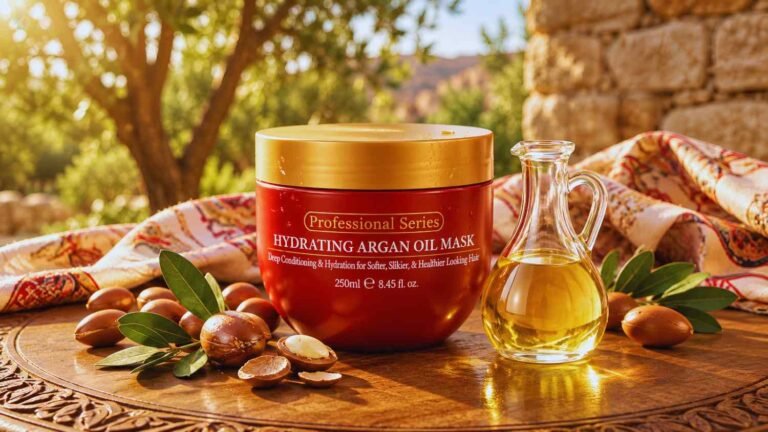
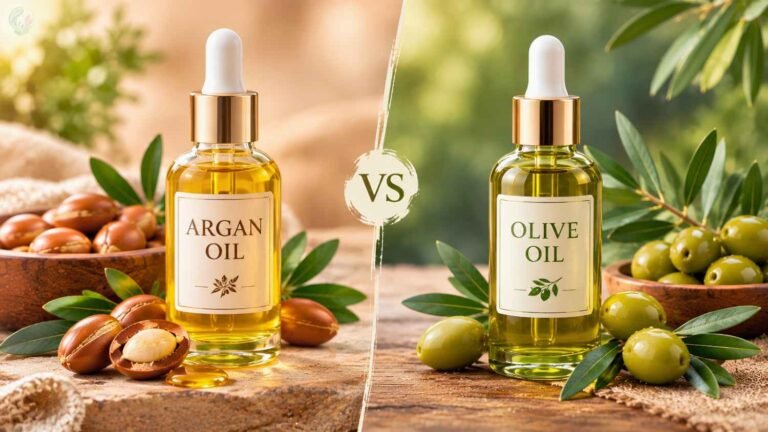
Argan oil is pressed from the kernels of the argan tree, grown almost exclusively in Morocco’s Souss Valley, and is rich in vitamin E, oleic acid, linoleic acid, and antioxidant polyphenols. It’s prized for smoothing the hair cuticle, sealing in moisture, and adding shine, particularly for dry or frizzy hair.
Jojoba oil, despite its name, is technically a liquid wax extracted from the seeds of the Simmondsia chinensis shrub, native to the southwestern United States and northern Mexico. Its molecular structure closely resembles sebum, the natural oil your scalp already produces, which is why it’s often described as balancing rather than simply moisturizing.
This structural difference is the key to understanding how they complement each other. Argan oil works primarily on the hair shaft, while jojoba oil works primarily with the scalp’s own oil production.
Argan Oil and Jojoba Oil for Hair: What Each One Actually Does
Argan Oil’s Role
Argan oil’s fatty acid content helps smooth the outer cuticle layer of each strand, reducing frizz and adding visible shine. It’s particularly effective for dry ends, color-treated hair, and hair that’s been damaged by heat styling.
Jojoba Oil’s Role
Because jojoba oil mimics natural sebum so closely, it’s absorbed by the scalp without triggering the excess oil production that heavier, more foreign oils sometimes cause. This makes it a popular choice for people with oily scalps who still want the benefits of oiling without added greasiness, as well as for those dealing with a dry, flaky scalp that needs gentle rebalancing rather than heavy conditioning.
Why Combining Them Makes Sense
Using argan oil and jojoba oil together essentially covers both ends of the hair care equation at once, scalp balance from jojoba, and shaft conditioning and shine from argan. Rather than layering two separate products or picking one and missing the other’s benefit, a blended approach lets you address both in a single step.
This is particularly useful for people with combination hair and scalp concerns, such as an oily scalp paired with dry, frizzy ends, a common combination that’s genuinely difficult to treat with just one oil alone.
How to Make an Argan Oil and Jojoba Oil Mix for Hair
Combining argan oil and jojoba oil is straightforward and doesn’t require any special equipment.
- Mix equal parts of both oils in a small bottle or bowl, roughly one to two tablespoons of each depending on your hair length.
- Shake or stir well before each use, since natural oils can occasionally separate slightly over time.
- Apply to the scalp first, using gentle circular motions to work the jojoba-heavy mixture in without over-saturating.
- Work the remainder through the length of your hair, focusing more on the ends where argan oil’s conditioning effect matters most.
- Leave in for at least 30 minutes, or overnight for a deeper treatment, then wash out with a mild shampoo.
Adjusting the Ratio Based on Your Hair and Scalp
The one-to-one ratio works well as a starting point, but it’s worth adjusting based on your specific needs. If your scalp tends to get oily quickly, increase the proportion of jojoba oil and apply it mainly to the roots, saving argan oil for the ends only.
If your main concern is dry, damaged, or frizzy hair rather than scalp balance, lean more heavily toward argan oil, using jojoba oil in a smaller supporting role.
Who Benefits Most From This Combination
This blend tends to work particularly well for people with normal to dry hair and a scalp that swings between oily and flaky, since jojoba oil helps regulate the scalp environment while argan oil handles the visible dryness along the length of the hair. It’s also a solid option for curly or coily hair types, which often need both scalp balance and extra shaft moisture simultaneously.
People with very fine, straight hair should use a lighter hand with both oils, applying primarily to the ends to avoid a weighed-down look.
Final Thoughts
These two oils aren’t competing for the same job, they’re solving two different problems that often show up together. Argan oil brings shine and shaft conditioning, while jojoba oil brings scalp balance that closely mimics your hair’s own natural oils.
Used together, either as a simple mixed treatment or layered depending on your needs, they offer a more complete approach to hair care than either oil manages entirely on its own.
This article is for general informational purposes and isn’t a substitute for professional dermatological advice. If you have a scalp condition or known allergies, patch-test any new oil before regular use.