Lavender Oil for Hair Growth
If you are considering lavender oil for hair growth, you deserve a straight answer before you buy a bottle or change your routine. Lavender oil for hair growth is one of the most searched natural hair remedies, and it is also one of the most overstated. The scent is lovely, the scalp massage feels wonderful, and the oil is gentle compared with many stronger essential oils. What it has not done, in any published human trial, is prove that it regrows hair. That distinction matters, because it changes how you should use it, what you should expect, and when you should see a doctor instead of reaching for another bottle.
This guide keeps both sides in view. It explains what lavender oil for hair growth can plausibly do for your scalp and your hair, what the famous animal study actually showed, how to use the oil safely, and how to build a routine that helps your hair look fuller even if the oil itself is not growing new strands. You will also learn how lavender compares with better-studied options, which mistakes quietly undo its benefits, and how to judge your own results over eight to twelve weeks without fooling yourself.
What Lavender Oil for Hair Growth Can and Cannot Do
Lavender oil is steam-distilled from the flowers of Lavandula angustifolia, and its main compounds are linalool and linalyl acetate. Those compounds give lavender its familiar floral scent and much of its calming, antimicrobial, and anti-inflammatory activity in laboratory tests. When people talk about lavender oil for hair growth, they usually mean one of three different hopes: that new hairs will sprout, that existing hair will shed less, or that hair will simply look thicker, shinier, and healthier. Only the third hope is well supported by everyday experience, and the second is plausible only in narrow situations, such as when an irritated scalp or stress-related shedding is part of the problem.
A calmer scalp is not a trivial benefit. Itching, flaking, and tightness make people scratch, pick, and wash aggressively, and that mechanical damage breaks hair at the surface. A gentle, well-diluted scalp massage can reduce that cycle. It improves the feeling of the scalp, distributes natural oils more evenly, and gives you a reason to slow down for five minutes, which matters more than most product labels admit. But a calmer scalp is not the same as a new follicle, and honest writing about lavender oil for hair growth has to keep that line clear.
It helps to think of lavender as a supporting player rather than a lead treatment. If your shedding comes from a medical cause, such as thyroid trouble, iron deficiency, a hormonal condition, or scarring hair loss, no essential oil will correct it. If your shedding follows illness, childbirth, a crash diet, or a period of intense stress, time and the removal of the trigger usually matter far more than any oil. Lavender oil for hair growth fits best as part of a gentle scalp-care routine while you address the real cause, not as a replacement for diagnosis.
The Mouse Study Behind Lavender Oil for Hair Growth, Explained Honestly
Almost every claim about lavender oil for hair growth traces back to a single animal study published in 2016 in Toxicological Research. Researchers shaved the backs of mice, applied lavender oil diluted in jojoba oil daily, and compared the results with a control group and with a minoxidil group. After four weeks, the lavender group showed more hair follicles, deeper follicles, and a thicker dermal layer than the control group, with results broadly comparable to minoxidil in those mice. That is a real finding, and it is worth knowing about, but it is also the whole foundation, and foundations that narrow deserve caution.
Mice are not small humans. Their hair cycles run faster, their skin is thinner, and their follicles respond differently to topical compounds. A four-week mouse experiment cannot tell you whether lavender oil for hair growth works in a woman with female pattern thinning, a man with a receding hairline, or a teenager shedding after exams. There has been no randomised human trial testing lavender alone for hair growth, and the often-quoted alopecia areata study from the 1990s tested a blend of several essential oils, including lavender, thyme, rosemary, and cedarwood, not lavender on its own. That blend study is interesting, but it cannot be used to credit lavender alone.
Here is the unique angle most lavender articles skip: the gap between that mouse study and a human recommendation is not just about species. It is about dose, duration, and what was actually measured. The mice received daily application under controlled conditions, and the researchers measured follicle number and depth under a microscope, not the kind of visible regrowth a person hopes to see in a mirror. Human hair also grows in a mosaic pattern, with individual follicles in different phases at any time, so a short trial can easily look better or worse than the truth. Until a proper human trial exists, the honest summary of lavender oil for hair growth is that it is biologically plausible, traditionally popular, and unproven as a regrowth treatment in people.
That honesty should not put you off lavender entirely. It should change your goal. Instead of asking whether lavender oil for hair growth will regrow a hairline, ask whether a gentle lavender scalp routine improves your scalp comfort, reduces breakage, and makes your existing hair easier to keep. Those are outcomes you can actually observe, and they are worth pursuing.
How Lavender Oil for Hair Growth Might Help Your Scalp
Lavender’s laboratory properties suggest several indirect routes to healthier-looking hair. Its antimicrobial activity may help keep a scalp that is prone to mild irritation cleaner between washes, and its anti-inflammatory compounds may calm the redness and itch that lead to scratching. The massage that accompanies any good scalp oil routine also increases blood flow to the skin temporarily, which feels pleasant and may support the follicle environment, even though a brief increase in circulation is not proof of new growth.
Stress is the other indirect route, and it is often underestimated. Stress-related shedding, known as telogen effluvium, pushes more hairs than usual into the resting phase, and shedding follows a few months later. Lavender’s scent is genuinely relaxing for many people, and a short evening scalp massage can become a wind-down ritual that helps sleep. Better sleep and lower stress will not reverse genetic hair loss, but they can reduce one contributor to shedding. If you use lavender oil for hair growth mainly as a calming bedtime ritual, you are using it in the way its evidence best supports.
There is also a practical benefit that has nothing to do with biology. A pleasant-smelling routine is a routine you will actually keep. Many hair treatments fail because they are greasy, smelly, or complicated, so people abandon them after two weeks. Lavender is easy to tolerate, blends well with lighter carrier oils, and leaves hair smelling fresh rather than medicinal. Consistency is the quiet ingredient in almost every successful hair routine, and lavender helps with consistency.
How to Use Lavender Oil for Hair Growth Safely
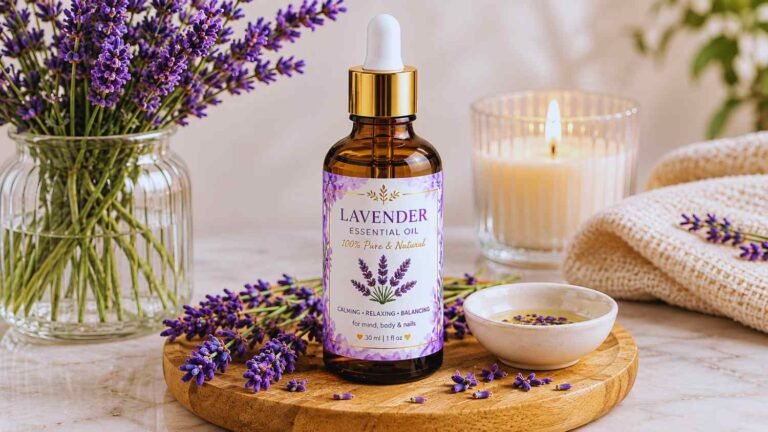
Never apply lavender oil neat to your scalp. Essential oils are concentrated, and undiluted application is the most common cause of irritation, even with an oil as gentle as lavender. For regular scalp use, a one to two percent dilution is sensible, which means roughly six to twelve drops of lavender oil per ounce, or about thirty millilitres, of carrier oil. If your scalp is sensitive, start at one percent and stay there. You can work out exact amounts with a dilution calculator for essential oils rather than guessing with drops, because drop sizes vary between bottles.
Choose a carrier oil that suits your hair. Jojoba oil is a popular choice because it feels light and resembles the scalp’s own sebum, while sweet almond oil is another gentle option. Coconut oil works well for thicker or drier hair but can feel heavy on fine hair and may clog pores for some people. Argan oil is a good partner too, and our guide to argan oil for hair growth explains how that carrier oil is used on its own. Whatever carrier you choose, mix the blend fresh in a small clean bottle, shake it gently, and store it away from heat and sunlight.
Before your first full application, patch test. Dab a small amount of your diluted blend on the inside of your forearm, cover it loosely, and wait a full day. If you notice redness, itching, swelling, or a rash, do not use the blend on your scalp. A patch test timer can help you track that waiting period without forgetting it. Patch testing feels like a delay when you are eager to start, but it is the single cheapest way to avoid a week of scalp irritation.
For the massage itself, part your hair in sections and apply the blend to the scalp with your fingertips, not your nails. Massage gently for three to five minutes in small circles, moving across the whole scalp rather than scrubbing one spot. Leave the blend on for thirty to sixty minutes, then wash with a gentle shampoo. You may need two washes if your hair is fine or if you used a heavier carrier. Two to three times a week is plenty. Daily use is not better, and it increases the chance of build-up and irritation. If you want a broader routine around this step, read our guide on how to use hair oil properly, which covers washing, frequency, and common mistakes.
A Simple Weekly Routine Using Lavender Oil for Hair Growth
A routine that survives real life is better than a perfect routine you abandon. Start with two scalp sessions a week, spaced a few days apart, on evenings when you are not rushing. On each session day, mix your diluted blend, massage it in, and leave it while you read, cook, or wind down. Wash it out before bed if you dislike sleeping with oil on your pillow, or leave a lighter application overnight only if your scalp tolerates it and you protect your pillowcase with an old towel or a satin cap.
Between sessions, keep washing simple. Use lukewarm water rather than very hot water, which strips the scalp, and avoid piling on strong clarifying shampoos, dry shampoo, and heavy styling products at the same time. If you colour, bleach, or heat-style your hair, give your scalp rest days after those treatments rather than adding an oil massage on top of an already stressed scalp. Knowing your hair type and your porosity also helps, because fine, low-porosity hair needs far less oil than thick, high-porosity hair, and our hair porosity test explains how to check.
Keep a simple record. Take a photo of your parting and hairline in the same light once a month, note how often you shed in the shower, and note any itching or flaking. Hair grows slowly, roughly half an inch a month for most people, so weekly mirror checks will only frustrate you. Monthly photos give you a fair comparison, and they protect you from both false hope and false disappointment. If you are using lavender oil for hair growth alongside another treatment, change only one thing at a time, or you will never know what helped.
Lavender Oil for Hair Growth Compared With Other Oils
Rosemary oil has stronger human evidence than lavender, including a trial comparing rosemary oil with two percent minoxidil for androgenetic alopecia, where both groups improved similarly over six months. Peppermint oil has promising animal data and a cooling sensation that some people prefer, while castor oil is valued more for coating and protecting the hair shaft than for stimulating follicles. Lavender’s advantage is gentleness and scent rather than potency, and that is a legitimate reason to choose it, provided you choose it for that reason.
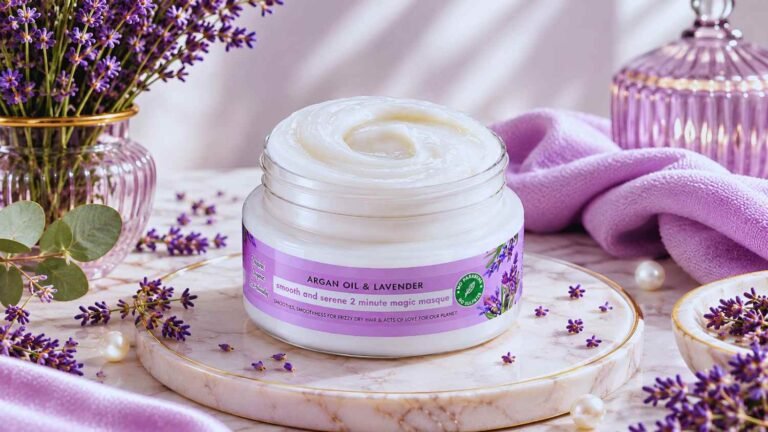
Blending is another option, but it needs care. A blend of lavender and rosemary, for example, combines lavender’s calming scent with rosemary’s better-studied profile, yet it also combines two essential oils, so your total essential oil concentration must stay within the one to two percent range. Do not add five drops of each oil and call it a two percent blend, because you have doubled the dose. If you prefer a ready-made approach, our argan and lavender hair mask shows how lavender is paired with a nourishing carrier in a wash-off treatment rather than a leave-on scalp oil.
For a wider picture of how hair oils differ, our hair oil comparison guide walks through carrier oils and essential oils side by side, and our general benefits of lavender oil overview covers uses beyond hair, including skin and relaxation. Reading those alongside this article will help you place lavender oil for hair growth in context instead of treating it as a miracle in isolation.
Mistakes That Undermine Lavender Oil for Hair Growth
The most common mistake is using too much. More drops do not mean more growth, and a strong blend is more likely to irritate your scalp, which can increase shedding rather than reduce it. The second mistake is impatience. People try an oil for ten days, see no new hair, and declare it useless, when even proven treatments like minoxidil need months to show a visible change. Give any scalp routine at least eight to twelve weeks before judging it, and judge it on scalp comfort and breakage first, not on regrowth.
The third mistake is ignoring the cause of shedding. If you are losing hair in patches, losing eyebrows or eyelashes as well, noticing scalp pain, scarring, or a sudden dramatic increase in shedding, see a clinician rather than experimenting. The same applies if you are taking medication, have a hormonal condition, or have recently started or stopped a medicine that lists hair loss as a side effect. Lavender oil for hair growth is a cosmetic scalp routine, not a diagnostic tool, and delaying proper care can cost you hair that early treatment might have saved.
Another quiet mistake is using old or oxidised oil. Essential oils degrade with heat, light, and air, and oxidised lavender oil is more likely to cause allergic reactions. Buy small bottles, keep the cap tightly closed, store the bottle in a cool dark place, and replace it if the scent turns sharp, flat, or unusually harsh. If a blend ever smells off, discard it rather than trying to rescue it. For more on safe handling, see our essential oil safety guide.
When to See a Doctor Instead of Trying Lavender Oil for Hair Growth
See a doctor or dermatologist promptly if you notice patchy bald spots, scalp inflammation that does not settle, sores or scaling that spreads, hair loss along with fatigue, weight change, or irregular periods, or shedding that continues to worsen after three months of gentle care. A clinician can check for nutritional deficiencies, thyroid problems, hormonal causes, and scalp conditions that need prescription treatment, and they can tell you whether a proven treatment such as minoxidil is appropriate for you. Bringing a short note about what you have tried, including lavender oil for hair growth, helps them give you useful advice rather than starting from scratch.
Pregnancy, breastfeeding, and childhood need extra caution too. Lavender is often described as one of the gentler essential oils, but concentrated oils should still be used carefully in pregnancy and kept away from young children unless a clinician advises otherwise. If you are pregnant or breastfeeding, discuss any new scalp treatment with your clinician first, and read the cautions in our hair oil side effects guide before starting.
Frequently Asked Questions About Lavender Oil for Hair Growth
Does lavender oil for hair growth actually regrow hair?
There is no human trial proving that lavender oil for hair growth regrows hair in people. The best evidence is a mouse study and traditional use, plus indirect benefits such as a calmer scalp and less breakage. It may help your hair look healthier, but it should not be sold or bought as a proven regrowth treatment.
How long does lavender oil for hair growth take to show results?
Allow eight to twelve weeks of consistent use, two to three times a week, before judging scalp comfort, flaking, and breakage. Visible changes in thickness, if any, take longer, because hair grows slowly. Monthly photos in the same light are more reliable than daily mirror checks.
Can I leave lavender oil for hair growth on overnight?
A well-diluted blend can be left overnight by people whose scalps tolerate it, but it is not necessary and it increases the risk of build-up and pillow transfer. A thirty to sixty minute pre-wash treatment gives you most of the benefit with less mess, and it is the safer starting point.
Is lavender oil for hair growth better than rosemary oil?
Rosemary oil has stronger human evidence for hair growth, while lavender is gentler and more relaxing. If your main goal is regrowth, rosemary is the better-studied choice. If your main goal is a calming scalp routine you will enjoy and keep, lavender oil for hair growth routines have a real advantage in consistency and comfort.
Can I mix lavender oil for hair growth with shampoo?
You can add a few drops to a single wash of shampoo rather than to the whole bottle, so the dose stays controlled and the oil does not degrade in storage. A dedicated scalp massage with a carrier oil gives more even scalp contact than shampoo, which is rinsed away quickly.
The honest conclusion is this: lavender oil for hair growth is worth trying as a gentle, pleasant scalp ritual, provided you try it for the right reasons. Use it diluted, use it consistently, protect your scalp from irritation, and keep your expectations anchored in what the evidence actually shows. If your hair improves, it will most likely be because your scalp is calmer, your breakage is lower, and your routine is kinder, and those are worthwhile results in their own right. For a broader plan, our guide on how to grow hair faster covers diet, washing, and styling habits that support any oil routine, and our hair care guide brings the whole picture together.