If regular amla oil hasn’t fully solved your hair concerns, there’s a good chance you’ve come across brahmi amla oil while searching for something stronger. This combination has been a staple of Indian hair care shelves for decades, and it’s worth understanding exactly what brahmi brings to the table that amla alone doesn’t.
What Is Brahmi Amla Oil, Exactly?

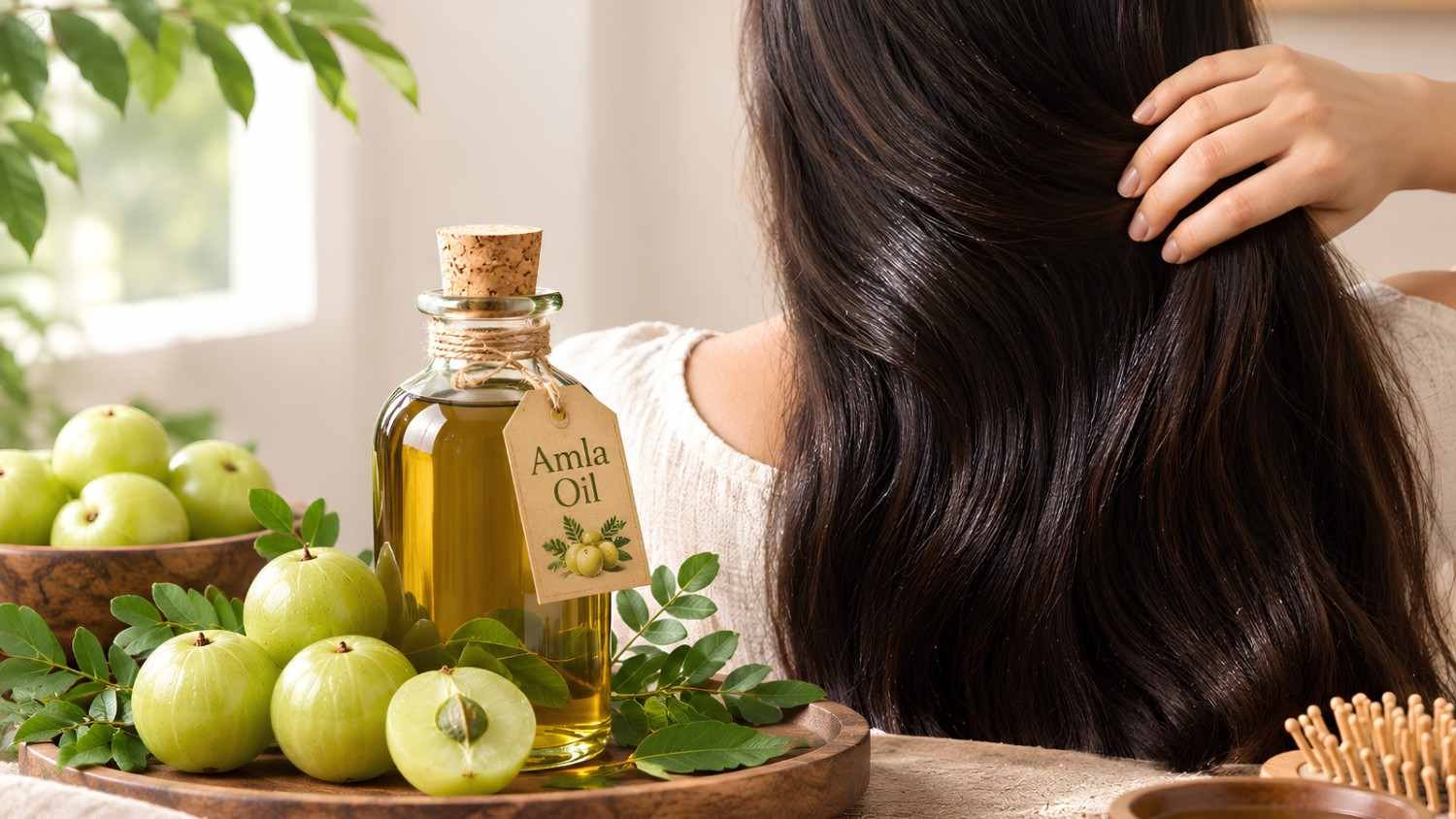
Brahmi amla oil combines two of Ayurveda’s most established hair care herbs: amla (Indian gooseberry) and brahmi (Bacopa monnieri), infused together into a carrier oil base.
While amla is best known for its vitamin C and antioxidant content, brahmi is traditionally valued for its calming, cooling effect on the scalp and its long-standing use in supporting mental clarity and nervous system health in Ayurvedic medicine.
Together, the combination is designed to do more than either herb manages alone, nourishing the hair shaft while also soothing an irritated or overactive scalp. This is part of why brahmi amla oil has remained a consistent presence in Indian households, sold under well-known names like Bajaj, Dabur, and Khadi.
What’s Actually Inside Brahmi Amla Oil?
Ingredient lists vary by brand, but most brahmi amla oils follow a similar core formula.
The base is typically a light mineral or coconut oil, into which amla and brahmi extracts are infused, sometimes alongside smaller amounts of other Ayurvedic herbs depending on the brand.
Bajaj Brahmi Amla Hair Oil, one of the most searched-for versions, generally lists amla and brahmi extract as its key active ingredients within a mineral oil base. It’s worth checking the label directly if you’re specifically trying to avoid mineral oil, since some formulations rely on it more heavily than others, and this is a common concern among ingredient-conscious buyers.
Brahmi Amla Oil Benefits
The appeal of this combination comes from how amla and brahmi complement each other rather than overlap.
Nourishes and Strengthens Hair
Amla’s vitamin C and gallic acid content is traditionally linked to strengthening the hair shaft and reducing breakage, the same core benefit found in standalone amla oils. Brahmi amla oil carries this benefit forward as its foundation.
Calms and Cools an Irritated Scalp
This is brahmi’s real contribution. It’s traditionally used for its cooling, calming properties, making brahmi amla oil a popular choice for people dealing with a scalp that feels overheated, itchy, or generally sensitive, particularly during hot weather.
Supports Healthy Hair Growth Conditions
Regular scalp massage with brahmi amla oil is believed to improve circulation, while brahmi’s traditional use in supporting the nervous system is sometimes linked to stress-related hair thinning, an area where standalone amla oil doesn’t offer the same targeted approach.
May Help With Premature Greying
Like most amla-based oils, brahmi amla oil carries amla’s traditional reputation for slowing premature greying, thanks to its antioxidant content supporting the cells responsible for natural hair pigment.
A Calmer Alternative for Sensitive Scalps
Because brahmi is traditionally considered cooling and gentle, this combination is often recommended for people whose scalp reacts negatively to other, more stimulating hair oils.
Does Brahmi Amla Oil Cause Dandruff?
This is a common concern, and it’s worth addressing directly. Brahmi amla oil itself isn’t inherently linked to causing dandruff, but heavier, mineral-oil-based formulations can contribute to buildup if not washed out thoroughly, which may worsen dandruff in people who are already prone to it.
If you have an existing dandruff condition, it’s worth applying a smaller amount, washing it out within a day rather than leaving it in for extended periods, and watching how your scalp responds before committing to regular use.
How to Use Brahmi Amla Oil
Getting results from brahmi amla oil comes down to consistent, correct application rather than heavy, occasional use.
- Warm a small amount of oil between your palms for easier application.
- Massage into your scalp for 5 to 10 minutes using gentle, circular motions.
- Comb the remaining oil through your hair, focusing on dry or damaged ends.
- Leave it on for at least 30 minutes, or overnight for a deeper treatment.
- Wash out thoroughly with a mild shampoo to avoid residue buildup.
Some people also add a vitamin E capsule to their brahmi amla oil for extra conditioning, a common practice among users looking to boost the oil’s moisturizing effect. Using it two to three times a week is generally recommended for noticeable results over several weeks.
Comparing Popular Brahmi Amla Oil Brands
A few brands dominate this category, and each has a slightly different positioning.
Bajaj Brahmi Amla Hair Oil is one of the most widely recognized versions, known for its accessible pricing and straightforward amla-brahmi formula in a mineral oil base.
Dabur Brahmi Amla Hair Oil leans on Dabur’s long-standing reputation in Ayurvedic hair care, often marketed as a nourishing, everyday option similar in positioning to the brand’s standalone amla range.
Khadi Brahmi Bhringraj Amla Hair Oil typically expands the formula further, adding bhringraj, another Ayurvedic herb associated with hair growth, for a more multi-herb approach compared to the simpler two-ingredient focus of other brands.
Patanjali Brahmi Amla Hair Oil tends to appeal to buyers specifically seeking a more natural, Ayurvedic-positioned formulation, often with fewer synthetic additives than mass-market alternatives.
None of these are dramatically different in core effectiveness, since amla and brahmi remain the shared foundation. The differences mostly come down to formulation base, added herbs, and price point.
Brahmi Amla Oil vs Regular Amla Oil
If you’re deciding between the two, it comes down to what your scalp specifically needs. Regular amla oil focuses purely on strengthening and shine, while brahmi amla oil adds a calming, cooling element on top of those same benefits.
For a generally healthy scalp without irritation, either option works well. If you deal with an itchy, sensitive, or overactive scalp, brahmi amla oil’s added cooling properties make it the more targeted choice.
Can You Make Brahmi Amla Oil at Home?
Yes, though it takes more effort than buying a ready-made bottle. The traditional method involves gently heating a carrier oil, such as coconut or sesame oil, then adding dried amla pieces along with fresh or dried brahmi leaves, and letting the mixture simmer on low heat for 10 to 15 minutes before straining and cooling.
Homemade versions let you control exactly what goes into the oil, avoiding mineral oil or added synthetic fragrance, though they typically have a shorter shelf life than commercially preserved versions.
Final Thoughts
Brahmi amla oil earns its long-standing popularity by combining two well-established Ayurvedic herbs rather than relying on amla alone. Amla brings strength and shine, while brahmi adds a calming, scalp-soothing quality that makes this combination especially useful for people with sensitive or easily irritated scalps.
Whether you choose a trusted brand like Bajaj, Dabur, or Khadi, or prepare it yourself at home, the real results come from consistent use over several weeks, not a single application.
This article is for general informational purposes and isn’t a substitute for professional dermatological advice. If you have a scalp condition or known allergies, patch-test any new oil before regular use.