

The health benefits of castor oil have been celebrated for thousands of years — from ancient Egypt to modern wellness routines.
Pressed from the seeds of the Ricinus communis plant, this thick, pale yellow oil is packed with ricinoleic acid, a rare fatty acid responsible for much of its therapeutic power.
Whether you want relief from constipation, healthier skin, or longer hair, castor oil has gained a devoted following backed by both tradition and emerging science. In this article, we break down what castor oil really does, what the research says, and how to use it safely.
What Is Castor Oil?
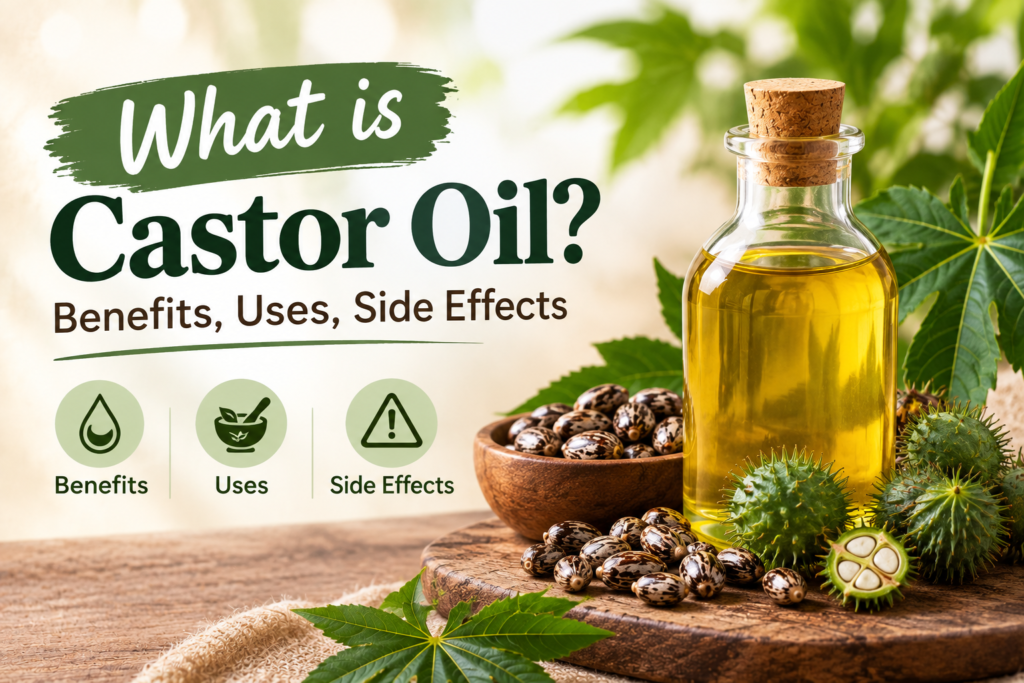
Castor oil is a vegetable oil derived by cold-pressing the seeds — commonly called castor beans — of the Ricinus communis shrub.
The plant is native to tropical regions of Africa and Asia but is now cultivated worldwide.
The oil has a very distinctive composition: approximately 85–95% of its fatty acid content is ricinoleic acid, a hydroxylated unsaturated fatty acid that is rarely found in other natural oils.
This unique chemistry gives castor oil its thick consistency, its high viscosity, and many of its bioactive properties.
Castor oil comes in several forms, including cold-pressed, Jamaican Black Castor Oil (JBCO, which is roasted before pressing), and hydrogenated castor oil used in cosmetics.
Some studies show, castor oil is good for eyebrows, eyelashes, hair growth, beard growth, constipation, skin, and face. But you must visit your consultant before using oil for any purpose.
For most health and topical uses, cold-pressed, hexane-free castor oil is the preferred choice.
What Are the Nutrition Facts of Castor Oil?
Castor oil is not a nutritional food oil in the traditional sense — it is not used in cooking due to its strong taste and laxative effect — but its chemical profile is worth understanding.
Per tablespoon (approximately 14 grams), castor oil provides:
- Calories: 120
- Total fat: 14 grams
- Ricinoleic acid: ~90% of total fatty acids
- Oleic acid: ~4%
- Linoleic acid: ~3%
- Vitamin E (tocopherols): trace amounts
Ricinoleic acid is the compound that binds to EP3 prostaglandin receptors in the gut and uterus, triggering muscle contractions — which explains why castor oil has been used as both a laxative and a labor inducer for centuries.
It also possesses notable anti-inflammatory and antimicrobial properties.
Health Benefits of Castor Oil
Below is a detailed look at the most researched and widely reported benefits of castor oil, covering both internal and topical uses.
Castor Oil for Constipation
One of the most clinically validated uses of castor oil is as a stimulant laxative. When consumed, ricinoleic acid is released in the small intestine and binds to prostaglandin E2 receptors, stimulating muscle contractions in the intestinal wall. This speeds up bowel movements and also reduces water absorption from the gut, softening stools.
Clinical studies, including a 2011 study published in the Journal of Geriatric Nursing, found that castor oil packs significantly reduced constipation symptoms — including straining, incomplete bowel movements, and hard stools — in elderly patients.
The FDA (Food and Drug Administration) has approved castor oil as an over-the-counter stimulant laxative.
The typical oral dose for adults is 15–60 mL taken on an empty stomach, and bowel movements typically occur within 2–6 hours.
It should not be used for chronic constipation, as it can lead to dependence and electrolyte imbalances over time.
Anti-Inflammatory Effects
Ricinoleic acid has demonstrated meaningful anti-inflammatory properties in laboratory and animal studies.
It inhibits the production of inflammatory prostaglandins and may reduce swelling and pain when applied topically.
Traditional practitioners have long applied castor oil packs to arthritic joints, sore muscles, and inflamed tissues.
Some small human studies suggest that topical ricinoleic acid can reduce pain and inflammation in conditions like knee osteoarthritis, though large-scale clinical trials are still limited.
Nevertheless, it remains a popular complementary remedy for inflammation-related conditions.
Castor Oil for Wound Healing
Castor oil creates a moist environment on the skin — a condition that research consistently associates with faster wound healing.
Venelex, a pharmaceutical product used to treat pressure ulcers and skin wounds, combines castor oil with Peru balsam.
The oil’s antibacterial properties may also help reduce infection risk in minor cuts and abrasions.
Its emollient nature prevents skin from drying and cracking, which can delay healing.
While it should not replace medical treatment for serious wounds, castor oil is a reasonable addition to a first-aid routine for minor wounds, dry skin cracks, and chapped lips.
Castor Oil Benefits for Skin
Castor oil is one of the most effective natural skin moisturizers available.
Its high ricinoleic acid content allows it to penetrate deeply into skin layers, hydrating from within rather than just coating the surface.
It is particularly beneficial for very dry, flaky, or cracked skin — including elbows, knees, and heels.
Additional skin benefits include its ability to reduce the appearance of scars and stretch marks over time, its antifungal properties (helpful for conditions like tinea pedis or ringworm), and its potential to slow the visible signs of aging through deep hydration and vitamin E content.
However, castor oil is comedogenic, meaning it can clog pores in some people — making it less suitable for oily or acne-prone facial skin unless diluted.
Castor Oil for Hair Growth
Hair growth is perhaps the most talked-about use of castor oil in popular culture. Proponents claim it thickens hair, prevents breakage, reduces dandruff, and even stimulates new growth.
While scientific evidence for directly stimulating follicle growth is still limited, castor oil does provide real benefits to hair health:
- Deep conditioning: its thick consistency coats the hair shaft, preventing moisture loss and reducing breakage.
- Scalp health: its antifungal and antibacterial properties may help manage dandruff (seborrheic dermatitis).
- Eyelash and eyebrow thickening: many users report noticeably thicker lashes and brows after consistent nightly application — though this may reflect improved hair shaft hydration rather than actual follicle stimulation.
Jamaican Black Castor Oil, produced from roasted castor beans, is particularly popular in the natural hair community for its higher ash content, which is said to open hair cuticles for deeper penetration.
Note: Every Hair oil is not suitable for every kind of hair, kindly consult a doctor before using any hair oil.
Are There Benefits to Putting Castor Oil in Your Belly Button?
This practice, rooted in Ayurvedic and folk medicine (particularly the Indian tradition of “Nabhi Chikitsa”), involves applying oils to the navel, supposedly to hydrate the skin, improve digestion, and even regulate menstrual cycles.
While the concept is culturally interesting, there is no scientific evidence that applying oil to the belly button delivers nutrients or therapeutic compounds into the body’s system.
The navel is not a transdermal absorption point of any significance. That said, applying castor oil around the navel as a topical moisturizer for dry abdominal skin is harmless and may offer local moisturizing benefit.
What Are Castor Oil Packs and Are There Benefits?
A castor oil pack involves soaking a piece of wool or cotton flannel in castor oil, placing it on the skin (usually the abdomen or liver area), and covering it with plastic wrap and a heating pad. The packs are kept on for 30–60 minutes and used repeatedly.
Proponents claim castor oil packs support liver detoxification, reduce inflammation, improve lymphatic circulation, relieve menstrual cramps, and ease constipation.
Some limited research supports the anti-inflammatory and bowel-stimulating effects.
A 2011 study found castor oil packs helpful for constipation in elderly nursing home residents. The 2023 study by Queen’s University researchers suggested castor oil packs may modestly reduce cortisol and improve sleep quality, though sample sizes were small.
Castor oil packs are generally safe when applied externally. They should not be used on broken skin, during pregnancy, or over active infections. The heat component may account for some of their pain-relieving effects independently of the oil.
Castor Oil Side Effects
While castor oil is widely regarded as safe for short-term use, it is not without risks. Here are the most important side effects and cautions to know:
Allergic Reaction
Some people are allergic to castor oil or the Ricinus communis plant. Reactions range from mild skin redness and itching to, in rare cases, anaphylaxis (a severe, life-threatening allergic reaction). Always perform a patch test on a small area of skin before applying castor oil widely, especially if you have known plant allergies.
Gastrointestinal (GI) Discomfort
When taken orally, castor oil commonly causes nausea, cramping, diarrhea, and vomiting — especially at higher doses. These effects are largely the mechanism by which it works as a laxative, but they can be uncomfortable or even dangerous if they lead to dehydration or electrolyte imbalance. It should not be used as a regular laxative solution.
Pregnancy Concerns
Because castor oil can stimulate uterine contractions, it should be avoided during pregnancy unless used under direct medical supervision to induce labor at term. Using it earlier in pregnancy carries a risk of inducing premature contractions or miscarriage.
Even at term, castor oil-induced labor is associated with increased risk of meconium aspiration (where the baby inhales the first stool) and fetal distress, so it remains controversial in obstetric practice.
Medication Interactions
Castor oil may interact with certain medications. Its laxative effect can reduce the absorption of oral medications if they are taken at the same time. It may enhance the effects of other laxatives, leading to excessive bowel stimulation.
People on blood thinners, diuretics, or heart medications should consult a healthcare provider before using castor oil internally.
Overdose Risk
Taking too much castor oil can cause severe diarrhea, dehydration, electrolyte disturbances, and abdominal pain. Doses above 60 mL are associated with significant adverse effects. It is critically important not to confuse castor oil with castor bean extract — the beans themselves contain ricin, one of the most toxic natural substances known.
Commercial castor oil does not contain ricin, as it is removed during processing, but crude or improperly processed preparations may still be hazardous.
Toxic to Pets
Both the castor plant and its seeds are highly toxic to dogs, cats, and other animals due to ricin content.
Even small amounts of ingested castor bean plant material can be fatal to pets. Keep castor oil products stored safely away from animals, and contact a veterinarian immediately if you suspect your pet has ingested any part of the castor plant.
Acne and Clogged Pores
Despite its antibacterial properties, castor oil is highly comedogenic (rated 1 on a 0–5 comedogenicity scale, but its density can still block pores in sensitive individuals). For people with oily or acne-prone skin, applying undiluted castor oil to the face may worsen breakouts. Always dilute with a lighter, non-comedogenic carrier oil like jojoba or grapeseed oil if using on the face.
Takeaways
Castor oil is a versatile, time-tested natural remedy with a range of well-supported uses. Here is what the evidence most clearly supports:
- It is an effective short-term laxative, FDA-approved for this purpose.
- It is an excellent skin moisturizer and emollient for dry, cracked skin.
- It supports hair and scalp health through conditioning and its antifungal properties.
- It has real anti-inflammatory and antimicrobial properties, particularly when applied topically.
- It is generally safe for short-term topical and internal use in healthy adults.
- It should be used cautiously by pregnant women, those on medications, and anyone with a known allergy.
Many of the more extravagant claims — liver detoxification via packs, growing hair dramatically faster, healing systemic diseases — lack robust clinical evidence. As with any natural remedy, approach castor oil as a complementary tool, not a cure-all, and consult a healthcare professional for serious health concerns.
Castor Oil FAQs
What is another name for castor oil?
Castor oil is also known as ricinus oil (from its botanical name, Ricinus communis) and is sometimes labeled as Oleum Ricini in pharmaceutical contexts.
Jamaican Black Castor Oil (JBCO) is a roasted variant with a distinct dark color and higher pH due to ash content.
What is the difference between coconut oil and castor oil?
Coconut oil is lighter, absorbs faster, and is rich in lauric acid with antimicrobial properties — it’s excellent for cooking and light moisturizing. Castor oil is much thicker, denser, and richer in ricinoleic acid. It provides deeper, longer-lasting moisture and is more effective as a laxative. Coconut oil is better for everyday skin and hair use; castor oil is better for targeted intensive treatment.
What is the best form of castor oil to buy?
For topical use (skin and hair), look for cold-pressed, hexane-free, 100% pure castor oil. Organic certification provides additional assurance of quality.
For internal use, pharmaceutical-grade (USP) castor oil is recommended. Avoid castor oil products with added fragrances or preservatives for sensitive skin applications.
Can castor oil grow eyebrows and eyelashes?
Many people report thicker-looking brows and lashes after regular castor oil application.
This is likely due to improved hydration of individual hair shafts, reducing breakage and making existing hairs appear thicker and more full.
There is no peer-reviewed evidence that castor oil directly stimulates dormant hair follicles, but conditioning the existing hair is a real and beneficial effect.
Can I use castor oil in my eyes?
Pharmaceutical-grade castor oil eye drops are an FDA-approved treatment for dry eye disease — specifically to address evaporative dry eye by reducing tear evaporation.
These are sterile, specially formulated products. You should never put regular over-the-counter castor oil directly in your eyes, as it may not be sterile and could introduce contaminants.
For eye-area use on lashes, apply carefully along the lash line only, avoiding direct eye contact.
Can I drink castor oil every day?
No. Castor oil is a stimulant laxative, and regular daily use is not recommended.
Chronic use can lead to dependency (where the bowel stops functioning normally without the stimulant), electrolyte imbalances (particularly low potassium), dehydration, and damage to the intestinal lining. It is intended for short-term, occasional use only.
If you have chronic constipation, speak with a doctor about safer long-term solutions.