How to Use Amla Oil
If you are wondering how to use amla oil for the best results, the short answer is simple: apply a small amount to your scalp and hair before washing, massage it in gently, leave it on for 30 minutes to a few hours, and wash it out thoroughly with shampoo. That one sentence covers the basics, but the details matter far more than most guides admit. The right amount, the right duration, and the right frequency all depend on your hair type, your scalp, and what you are trying to fix. Use too much and your hair looks flat and greasy for days. Use too little, or wash it out too soon, and you may conclude the oil does nothing. This guide walks through every practical decision so you can get the method right from your very first application.
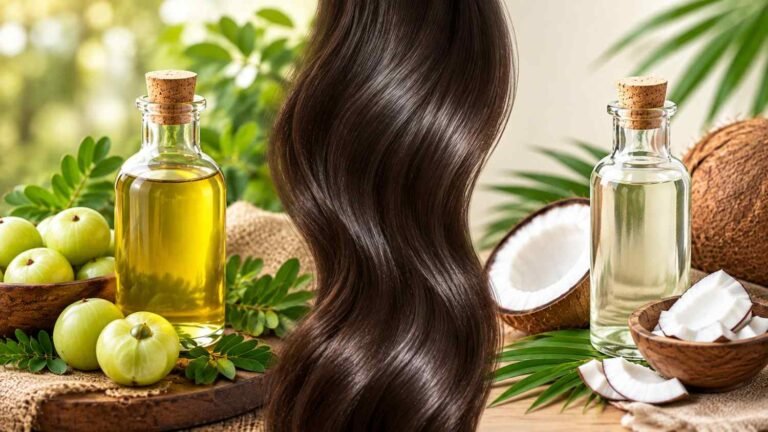
Amla oil is made by infusing amla, also known as Indian gooseberry, into a carrier oil such as coconut, sesame, or almond oil.
How to Use Amla Oil: The Short Answer
For most people, learning how to use amla oil comes down to a five-step routine you can repeat once a week. First, part dry, detangled hair into sections. Second, warm a small amount of oil between your palms. Third, massage it into your scalp with your fingertips and smooth what is left through your lengths and ends. Fourth, leave it on for at least 30 minutes, and up to two hours for a standard treatment. Fifth, shampoo thoroughly, rinsing and repeating only if your hair still feels coated. If you remember one thing, remember this: start with less oil than you think you need. You can always add more next time, but you cannot easily undo a heavy, greasy application without washing twice and losing the softness you were after.
If you want background on what the oil is supposed to do, read our guide to amla oil for hair first, then come back here for the method itself.
Before Your First Application: Patch Test and Strand Check
Before you learn how to use amla oil across your whole head, test it on a small area first. Dab a little oil on the skin behind your ear or on the inside of your forearm, leave it for 24 hours, and watch for redness, itching, or bumps. If anything flares up, stop and do not apply the oil to your scalp. This matters because amla oils vary widely: some are pure infusions, while others contain added fragrance, herbal extracts, or mineral oil, and any of those can bother sensitive skin even when plain amla oil does not.
Do a strand check at the same time, especially if your hair is blonde, light brown, grey, or color-treated. Some amla oils are dark green-brown and can temporarily tint very light hair or leave a faint cast on grey strands. Apply a little oil to a hidden section near the nape of your neck, leave it for your planned duration, wash it out, and check the result in daylight before committing to a full application.
How Much Amla Oil to Use
The most common mistake when people learn how to use amla oil is pouring far too much of it. Amla oil works as a thin coating, not a soak. Your hair should look lightly sheened and feel supple, never dripping or saturated. As a starting point, use about one teaspoon for short hair, one to two teaspoons for medium-length hair, and two to three teaspoons for long or very thick hair.
Apply the oil in stages rather than all at once. Pour the starting amount into your palm, rub your hands together to warm it, and work through one section at a time. If your lengths still look dry after the first pass, add half a teaspoon more rather than doubling the amount. Most people need the most oil on the mid-lengths and ends, which are the oldest and driest parts of the hair, and far less on the scalp itself. If your scalp gets oily quickly, keep the scalp portion light and put the rest on the lengths.
Step by Step: How to Use Amla Oil as a Pre-Shampoo Treatment
The pre-shampoo treatment is the default method for how to use amla oil, and it is the best place to start. It gives you most of the softness of a longer treatment without the risks of leaving oil on your scalp all night.
Part your hair into four to six sections, depending on thickness, and clip each section out of the way. Warm your measured amount of oil between your palms. Beginning at the front, use your fingertips to dot the oil along your part lines and massage it into your scalp with small, gentle circles for two to three minutes per section. Once the scalp is covered, smooth the remaining oil down the lengths of each section, paying extra attention to the last few inches of the ends. Then loosely braid your hair or twist it into a low bun, leave the oil on for at least 30 minutes, and ideally one to two hours, before washing. Wet your hair thoroughly, shampoo, rinse, and shampoo again only if your hair still feels coated. Finish with conditioner on the lengths and ends as usual.
How to Use Amla Oil on Your Scalp
Scalp application is where technique in how to use amla oil matters most, because the scalp is both the most sensitive area and the easiest to overload. If you want to know how to use amla oil on your scalp specifically, think fingertips and part lines, not palms and pouring. Pouring oil directly onto the crown creates a puddle in one spot that is hard to spread and even harder to wash out. Instead, dot small amounts along each part line, then massage with the pads of your fingers in slow circles, working section by section so the coverage is even.
Massage for about five to ten minutes in total when you learn how to use amla oil on the scalp. That is long enough to spread the oil evenly without overstimulating the skin or pulling at the roots. If you have a dry, tight-feeling scalp, a scalp-focused application once a week is a sensible starting point. If your scalp is already oily, acne-prone, or flaky in an oily, crusty way, keep scalp oiling light and infrequent, and put most of the oil on your lengths instead. If your scalp is irritated or painful, very flaky, or you notice sudden shedding, get the cause checked before adding any oil routine: oil can soften dry skin, but it does not diagnose or treat scalp conditions. For a fuller picture of what can go wrong, see our guide to amla oil side effects.
How to Use Amla Oil on Lengths and Ends Only
Not everyone learning how to use amla oil needs oil on the scalp. If your roots get greasy within a day of washing, or your scalp breaks out along the hairline, the ends-only method may suit you far better. Learning how to use amla oil on the lengths and ends only is simple: rub one to three drops, or up to half a teaspoon for long hair, between your palms and smooth it over the mid-lengths and ends, keeping it well away from the roots. You can do this as a pre-shampoo treatment, leaving it on for 30 minutes to two hours before washing, or as a light finishing step on dry ends after styling.
As a finishing step, less is everything. One drop too many turns shine into grease, especially on fine or straight hair. Start with a single drop, smooth it over the very ends, and add another only if the ends still look dry or frizzy. This method is particularly useful between wash days, when the ends look rough but the roots are still fine.
How Long to Leave Amla Oil On
Duration is the second decision that trips people up when they learn how to use amla oil. Longer is not automatically better. Thirty minutes is enough for the oil to coat the strands, add slip, and make detangling and washing gentler. One to two hours is the sweet spot for most people: enough time for a thorough treatment without the buildup and scalp discomfort that can come from leaving oil on all day. Overnight, roughly six to eight hours, is the longest version, and it suits only some hair types, as explained below.
Match the duration to your goal. If you want softer, easier-to-manage hair before a regular wash, 30 minutes to one hour is plenty. If your hair is very dry, coarse, or curly, or you are doing a weekly deep treatment, stretch it to two hours. If your scalp is sensitive, or you are trying a new oil for the first time, start at the short end, around 30 minutes, and build up only if your scalp stays comfortable and your hair washes clean.
How to Use Amla Oil Overnight Without the Mess
Overnight oiling has a loyal following, but in how to use amla oil it is the method most often misapplied. Knowing how to use amla oil overnight starts with knowing whether you are a good candidate. Thick, coarse, curly, or very dry hair tends to tolerate an overnight treatment well, because the hair absorbs more oil and the scalp is less likely to feel smothered.
If you do try it, use less oil than you would for a daytime treatment, not more. Massage a moderate amount in, smooth it through the lengths, braid your hair loosely or wrap it in a silk scarf or bonnet, and protect your pillow with an old towel or a pillowcase you do not mind staining, since dark amla oils can mark fabric. In the morning, wash with shampoo, rinse thoroughly, and shampoo a second time only if needed. If your scalp feels itchy or heavy the next day, or your hair still looks oily after two washes, overnight oiling is probably not your method: a one-to-two-hour daytime treatment will likely give you the same softness with far less trouble.
How to Use Amla Oil as a Pre-Poo Treatment
Pre-poo, short for pre-shampoo, deserves its own section in any guide to how to use amla oil because it is often confused with general scalp oiling, and the two are not quite the same thing. When people ask how to use amla oil as a pre-poo, they usually mean a protective treatment applied before shampooing specifically to reduce the drying, tangling, and breakage that washing itself can cause. The emphasis is on the lengths and ends rather than the scalp, and on detangling before the shampoo ever touches your hair.
Here is the method in practice. On dry hair, apply amla oil generously through the mid-lengths and ends, using only a light touch on the scalp if your scalp needs it at all. Gently detangle with a wide-tooth comb or your fingers, working from the ends upward, while the oil gives the strands slip. Once detangled, twist or braid the hair loosely and leave the oil on for 30 minutes to two hours, or overnight if your hair type suits it and you follow the overnight guidance above. Then wash gently: the point of a pre-poo is to protect the hair during washing, so avoid piling the hair on top of your head and scrubbing it roughly.
Pre-pooing is especially useful for curly, coily, and long hair, for hair that tangles badly, and for anyone whose shampoo leaves their hair feeling stripped and rough. For a comparison with another popular pre-wash oil, see our guide to amla oil vs coconut oil.
How Often to Use Amla Oil
Frequency is where most routines for how to use amla oil quietly go wrong. Using amla oil every day sounds dedicated, but for most people it leads to buildup, flat roots, and hair that is harder, not easier, to wash. A sensible starting frequency for how to use amla oil is once a week as a pre-shampoo or pre-poo treatment. That gives your scalp time to recover between applications, lets you judge the result on clean, dry hair, and is easy to sustain for months, which is what actually matters: consistency over weeks beats intensity over days.
From that once-a-week baseline, adjust by hair type. Dry, coarse, curly, or damaged hair often does well with one to two treatments per week. Oily scalps and fine hair usually do better with once a week or once every two weeks, with any extra care going to the ends only rather than the scalp. If your scalp starts feeling itchy or heavy, or your roots lose volume, that is your signal to cut back, not to push through.
How to Wash Amla Oil Out Properly
Washing the oil out is half of how to use amla oil, and it is where many good treatments are undone. Start by wetting your hair thoroughly with warm, not hot, water, and let the water run through for a full minute before you reach for the shampoo. Apply shampoo mainly to the scalp, massaging with your fingertips, and let the lather run down the lengths as you rinse rather than scrubbing the lengths themselves.
Most people learning how to use amla oil need either one thorough shampoo or two lighter ones. If your hair feels clean, soft, and light after one wash, stop there: overwashing strips away the very softness the oil provided. If it still feels coated, shampoo a second time, focusing again on the scalp. If your hair still looks oily after two shampoos, the problem is almost always that too much oil was applied, not that your shampoo failed: use less next time rather than washing a third time. That wash-out lesson is one of the most practical parts of learning how to use amla oil well.
How to Use Amla Oil on Different Hair Types
There is no single correct answer to how to use amla oil, because hair types respond differently to the same bottle. Fine, straight hair needs the lightest touch: a small amount, mostly on the lengths and ends, a shorter leave-on time of 30 minutes to one hour, and once a week at most. Any more, and the roots go flat and the hair looks unwashed by the next day.
Curly, coily, and very thick hair can handle, and often needs, more: a fuller application, a longer leave-on time of one to two hours or an occasional overnight treatment, and a proper pre-poo detangling step before washing. Low porosity hair needs a lighter oil and a lighter hand, since heavy oil is more likely to build up than to absorb; readers with this hair type may also find our guide to argan oil for low porosity hair useful for comparison. Color-treated, blonde, and grey hair need the strand check described earlier, because dark oils can tint light hair. If grey coverage is your main interest, our guide to amla oil for grey hair covers that topic separately, while this guide stays focused on the application method itself.
Choosing the Right Amla Oil for the Way You Plan to Use It
Choosing a bottle is part of learning how to use amla oil, because the base oil decides how the treatment feels and how easily it washes out. Read the ingredient list, not just the front label: the first ingredient is usually the main base oil. Coconut-based amla oils are rich and deeply conditioning, which suits dry, coarse, or curly hair, but they can weigh down fine hair and solidify in cold weather. Sesame-based oils are a traditional middle ground, warming and fairly rich. Almond-based oils are lighter and easier to wash out, which suits fine hair and anyone who dislikes residue.
Our guide to organic amla oil for hair explains what to look for on those labels, and if you want a widely available option to compare, our guide to Dabur amla hair oil uses covers that brand’s range. If you are deciding between oil and powder, our comparison of amla powder vs amla oil for hair lays out when each form makes more sense.
The 4-Week Calibration: Finding Your Personal Dose
Here is the angle most guides to how to use amla oil miss. Every competitor tells you a fixed frequency and amount, usually “two to three times a week” or “one to two teaspoons,” but nobody tells you how to discover your own numbers. Hair varies too much for a fixed prescription to work for everyone, so instead of guessing, run a simple four-week calibration when you learn how to use amla oil.
In week one, do a single baseline treatment: a moderate amount, a one-hour leave-on time, washed out with your normal shampoo. After your hair dries, write down three things: how easy it was to wash out, how your roots looked the next day, and how your scalp felt. If washing was easy, your roots kept their volume, and your scalp felt comfortable, your baseline is close to right. In week two, change only one variable: if your hair still felt dry, add a little more oil to the lengths; if it felt heavy, use less or shorten the time to 30 minutes.
In week three, test frequency: if week two went well, try a second treatment that week only if your hair is dry, coarse, or curly, and note whether the second wash felt as good as the first. In week four, lock in the combination that gave you the best result across all three notes and repeat it unchanged for a month. Once you know your own dose, the routine stops being a guess and starts being a habit you can trust. If you are also curious about unblended options while calibrating, our guide to pure amla oil is a useful reference.
Common Mistakes When You Use Amla Oil
Most disappointing results from how to use amla oil come from a short list of fixable mistakes. Using too much oil is first: if your hair looks greasy after washing, halve the amount next time before you blame the oil. Applying oil to soaking wet hair is second, since the water blocks even coverage. Scrubbing the scalp with nails, or rubbing the lengths roughly during washing, is third, because it causes the very breakage the oil is meant to reduce. Skipping the patch test is fourth, especially with a new brand. Leaving oil on overnight when your scalp is oily or acne-prone is fifth, and expecting instant transformation is sixth: softness and shine can improve quickly, but less breakage and better length retention take weeks of consistent care.
Another mistake is mixing up methods: using a heavy overnight scalp soak when all you needed was a few drops on dry ends, or using an ends-only finishing drop and wondering why your scalp still feels dry. Match the method to the problem. Dry scalp needs scalp application; dry ends need ends application; tangling before washing needs a pre-poo.
What Results to Expect and When
Set honest expectations before you start with how to use amla oil. After the first treatment, most people notice softer strands, smoother ends, and a little more shine, especially if the hair was dry or frizzy beforehand. After two to four weeks of weekly treatments, detangling usually gets easier and the hair feels more manageable on wash days. After six to eight weeks, you may notice less breakage during brushing and washing, which is how hair gradually holds onto more length.
Judge how to use amla oil is working by the three signals from the calibration section: wash-out ease, next-day root volume, and scalp comfort, plus how your ends look and feel. For the broader benefits picture, see our overview of the benefits of amla oil.
Frequently Asked Questions
Can I use amla oil every day?
Daily scalp oiling, for anyone learning how to use amla oil, is usually too much for most people and tends to cause buildup, flat roots, and harder washing. A weekly pre-shampoo treatment suits most hair, while a few drops on dry ends can be used more often because the amount is tiny and never touches the scalp. If you are learning how to use amla oil daily for a specific reason, keep it to the ends only and watch for buildup.
Should I apply amla oil before or after washing?
Amla oil goes on before washing, in almost all cases, and that timing rule anchors how to use amla oil. Amla oil works best as a pre-shampoo or pre-poo treatment that is washed out afterward. Applying a large amount after washing leaves the hair greasy, while a tiny amount smoothed over dry ends after styling is the only common exception, and that is a finishing step, not a treatment.
Is overnight oiling better than a short treatment?
Not necessarily, and this is a key judgment call in how to use amla oil. Overnight oiling suits thick, coarse, curly, or very dry hair, but a one-to-two-hour treatment gives most people the same softness with less risk of buildup and scalp discomfort. Longer contact does not automatically mean better results, so choose by your hair type and by how your scalp feels the next day, not by the assumption that more time is always better.
Will amla oil stain my hair or pillow?
Dark amla oils can temporarily tint very light, blonde, or grey hair and can mark pillowcases and towels, which is why a strand check and an old towel or pillowcase are worth the effort. Lighter-colored oils stain less, and thorough washing removes most surface color. If staining worries you, favor shorter treatments and lighter oils.
Learning how to use amla oil well is less about finding a secret technique and more about getting a few ordinary decisions right: a small, measured amount, a gentle massage, a sensible leave-on time, a thorough but not aggressive wash, and a frequency your scalp can sustain. Start with the once-a-week pre-shampoo treatment in this guide to how to use amla oil, run the four-week calibration to find your personal dose, and adjust one variable at a time from there.