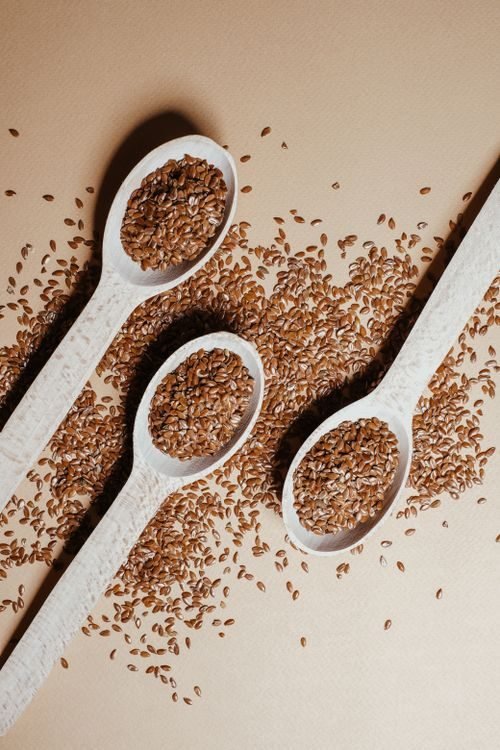
Flaxseed Oil for Hair Growth
Type flaxseed oil for hair growth into any search engine and you will find confident promises: thicker hair in weeks, regrown edges, faster growth by inches. It is tempting to believe them, especially when you are dealing with shedding or thinning and want something natural that actually works. This guide takes a different approach. It looks honestly at what flaxseed oil for hair growth can and cannot do, what the research really shows, what is merely plausible, and what is marketing dressed up as science, so you can decide whether it deserves a place in your routine and how to judge it fairly over time.
The short answer, stated upfront, is this: flaxseed oil for hair growth has no strong human clinical evidence proving that it directly speeds up hair growth or regrows lost hair. That does not make it useless. It can support the conditions under which hair grows best, namely a calm, well-moisturised scalp, less breakage, and healthier-looking strands that retain length. But supporting growth conditions and causing growth are different claims, and confusing them is how people end up disappointed after three months of faithful oiling. Keep that distinction in mind throughout this article, because it is the lens through which every claim below is judged.
What Flaxseed Oil for Hair Growth Is Supposed to Do
The usual story for flaxseed oil for hair growth goes something like this: flaxseed oil is rich in omega-3 fatty acids, particularly alpha-linolenic acid or ALA, plus vitamin E and plant lignans, and these nutrients nourish follicles, reduce scalp inflammation, improve circulation, and thereby encourage hair to grow faster and thicker. Each link in that chain sounds plausible on its own, and some links have support from nutrition or skin research in general. The problem is that the chain as a whole has not been tested for flaxseed oil for hair growth in people, and plausible is not the same as proven.
To understand why, it helps to separate three different routes by which flaxseed could theoretically influence hair. The first is topical: oil massaged into the scalp conditions the skin and may reduce dryness-related irritation. The second is dietary: eating ground flaxseed or taking flaxseed oil provides ALA and other nutrients to the body as a whole, which may support general health, including skin health. The third is direct follicle stimulation: a substance that switches follicles on, prolongs the growth phase, or blocks the hormonal signals behind pattern hair loss. Flaxseed oil for hair growth has reasonable support for the first, general nutritional support for the second, and essentially no direct evidence for the third. Most marketing quietly slides from the first two into the third without telling you it has done so.
That slide matters because hair growth is governed by powerful factors: genetics, hormones, age, nutrition, stress, illness, and medication. An oil applied to the surface of the scalp cannot override a genetic pattern of thinning or a hormonal condition on its own, any more than a good moisturiser can change your height. What flaxseed oil for hair growth can do is remove avoidable obstacles, such as a dry, irritated scalp and excessive breakage, so that the hair you do grow has a better chance of reaching its natural length and looking fuller.
The Honest Evidence Status of Flaxseed Oil for Hair Growth
When reviewers have searched specifically for studies of flaxseed or its lignans and hair growth, they have found no human trial demonstrating that flaxseed oil for hair growth increases growth rate, thickness, or density. What does exist is a small body of related evidence that is often cited as if it were direct proof, so it is worth looking at each piece and seeing what it actually shows. Animal studies have reported increased hair length and width with ground flaxseed supplementation or topical flaxseed oil, but animal results frequently fail to translate to people, and the doses and conditions in those studies do not match a typical home routine.
There is also a well-known twelve-week trial in women in which flaxseed oil improved skin hydration and reduced skin roughness and scaling. That is a genuine, interesting result, but it was about skin, not hair growth, and skin hydration is not the same as follicle activity. Similarly, research on omega-3 fatty acids in general, including fish-derived EPA and DHA, has explored links with hair health, but general omega-3 research is not specific evidence for flaxseed oil for hair growth, and plant ALA converts to EPA and DHA only inefficiently in the body. Citing these studies as proof that flaxseed oil for hair growth works is like citing a study on healthy soil as proof that a particular fertiliser doubles tomato yields: related, suggestive, but not the same claim.
None of this means flaxseed oil for hair growth is a scam or a waste of time. It means the honest label for it is a supportive scalp and conditioning oil with a plausible but unproven growth connection, not a growth treatment. That framing protects you in two ways: it stops you from delaying effective medical treatment for real hair loss while you wait for an oil to work, and it lets you judge the oil on what it can actually deliver, namely softer hair, less breakage, and a more comfortable scalp, rather than on a growth promise it was never proven to keep.
How Flaxseed Oil for Hair Growth Could Help Indirectly
The indirect case for flaxseed oil for hair growth is actually quite strong, provided it is stated correctly. Hair length is not just about how fast hair grows from the follicle; it is about how much of that growth you retain. Average hair grows roughly half an inch per month, but if the ends break off at a similar rate, your hair never appears to get longer. Anything that reduces breakage therefore helps you retain length, and flaxseed oil for hair growth, used as a conditioning and scalp-care oil, can reduce breakage by keeping strands supple and reducing friction during combing and styling. Over months, retained length can look like faster growth, even though the follicle rate has not changed.
Scalp comfort is the second indirect route. A dry, itchy scalp invites scratching, and scratching damages both skin and emerging hairs. Flaking and tightness can also make people wash more aggressively or avoid scalp massage altogether, which hardly helps. By moisturising the scalp surface, flaxseed oil for hair growth routines can break that cycle: a calmer scalp is scratched less, washed more gently, and generally treated better, which creates a friendlier environment for the hair that is already growing. This is not follicle stimulation, but it is a real, practical benefit that many users notice before anything else.
The third indirect route is routine itself. Committing to a regular scalp massage with flaxseed oil for hair growth means you are paying attention to your scalp twice a week, noticing changes early, and pairing the oil with gentler habits such as less heat, wider-tooth combs, and protective styles. Those habits, taken together, often matter more than any single product. If you want a broader framework for growth-supporting habits, our how to grow hair faster guide covers the factors that genuinely influence growth rate and retention, and argan oil for hair growth offers a useful comparison, since argan has a similar indirect profile but a more stable shelf life.
A Realistic Timeline for Flaxseed Oil for Hair Growth
One of the most useful things you can do before starting flaxseed oil for hair growth is to set a timeline based on hair biology rather than marketing. Hair grows in cycles: a growth phase lasting years, a short transition phase, and a resting phase before shedding. Because of that cycle, no topical product can produce visible density changes in a week or two, and anyone promising such speed is selling hope, not hair care. A fair trial of flaxseed oil for hair growth needs at least twelve weeks of consistent use, and even then you should expect subtle changes, not transformation.
In the first two weeks, the changes you are most likely to notice from flaxseed oil for hair growth are cosmetic: softer strands, better shine, and a scalp that feels less tight after washing. These are worth noting, because they tell you the oil suits your hair, but they are not evidence of new growth. Between weeks three and six, you may notice less breakage in your brush and fewer split ends forming, particularly if you have also reduced heat styling. This is the retention effect beginning to show, and it is a genuinely encouraging sign, even though it is not the same as faster follicle growth.
Between weeks six and twelve, you can start judging flaxseed oil for hair growth more meaningfully. Take a photo in the same light, with the same parting, at the start and at twelve weeks, and compare the hairline, part width, and overall fullness rather than relying on memory. Measure length from a fixed point, such as a marked spot on a shirt, rather than eyeballing it. If you see no change at all after twelve consistent weeks, that is useful information too: it suggests flaxseed oil for hair growth is not addressing your particular cause of thinning, and it may be time to look at other factors, including nutrition, stress, hormones, and medical advice.
Beyond twelve weeks, the question shifts from whether flaxseed oil for hair growth works to whether it is worth continuing as a maintenance habit. Many people continue because they enjoy the conditioning and scalp benefits even without dramatic growth changes, and that is a perfectly reasonable reason to keep using it. Others decide to redirect their effort and budget towards interventions with stronger evidence for their specific diagnosis. Both decisions are rational, provided they are based on your own twelve-week evidence rather than on a stranger’s before-and-after photo.
How to Use Flaxseed Oil for Hair Growth as a Routine
A growth-supporting routine built around flaxseed oil for hair growth should be simple enough to sustain for twelve weeks, because consistency matters more than intensity. Twice a week is a good starting frequency. Warm a teaspoon of cold-pressed flaxseed oil between your palms, massage it into your scalp with your fingertips for three to five minutes, using small circular motions and light pressure, then work any remaining oil through the lengths. Leave it for thirty to sixty minutes, then shampoo thoroughly. That is the core routine, and it is enough. Adding more steps, more products, or daily application does not make flaxseed oil for hair growth work faster; it mostly increases the risk of build-up and frustration.
Scalp massage deserves a specific note, because it is often credited with growth benefits that belong more to the massage than to the oil. Gentle, regular scalp massage may improve surface blood flow and certainly helps distribute oil evenly, and it feels good, which makes you more likely to stick with the routine. What it does not do is create new follicles or reverse pattern hair loss. When you read claims about flaxseed oil for hair growth and massage, mentally separate the two: the massage is a pleasant, low-risk habit, and the oil is a conditioning agent. Together they support scalp health, which is a worthwhile goal on its own.
Dietary flaxseed is a separate question from topical flaxseed oil for hair growth, and it is worth addressing because many readers do both. Eating ground flaxseed provides fibre, lignans, and ALA in a form the body can use systemically, and a diet rich in varied nutrients supports hair health in general. However, dietary flaxseed is not a targeted hair growth treatment either, and taking large amounts of flaxseed oil capsules without medical advice is not recommended, particularly if you take blood-thinning medication, diabetes medication, or are pregnant or breastfeeding. If you choose to eat flaxseed, ground seed stirred into oatmeal, yoghurt, or smoothies is generally more useful than whole seed, which can pass through undigested, but keep portions moderate and talk to a doctor about supplements.
Pairing flaxseed oil for hair growth with other proven habits will do more than any oil alone. Those habits include eating enough protein and iron, managing stress and sleep, avoiding tight hairstyles that pull on the hairline, reducing heat and chemical damage, and washing with a gentle shampoo rather than scrubbing aggressively. Our how to use hair oil guide covers application technique in general, and amla oil for hair growth provides a parallel example of another traditional oil whose growth claims also rest largely on indirect support rather than direct clinical proof. Reading those together gives a fairer picture than any single product page.
Flaxseed Oil for Hair Growth vs Other Growth Oils
Rosemary oil is the oil most often compared with flaxseed oil for hair growth, because rosemary has the strongest human evidence base among popular hair oils, including a trial comparing it with a standard topical treatment for pattern hair loss. That does not make rosemary a miracle either, but it does put it in a different evidence category from flaxseed. If your priority is the best-supported natural option for thinning, rosemary deserves consideration alongside flaxseed oil for hair growth, not instead of honest expectations about either. You can also read how rosemary compares with another stimulating oil in our peppermint oil versus rosemary oil comparison.
Pumpkin seed oil is another frequent comparison, and it illustrates an important distinction. Pumpkin seed oil has been studied in a trial for pattern hair loss in men, with modest improvements reported, which gives it a slightly stronger direct-evidence footing than flaxseed oil for hair growth currently has. Castor oil, by contrast, has almost no direct growth evidence either, despite its popularity, and its reputation rests mainly on its thick, coating texture and anecdotal reports. The lesson is not that one oil is magic and another is useless; it is that popularity and evidence do not always move together, and checking the evidence category before buying saves money and disappointment. Our pumpkin seed oil for hair growth guide explains that trial and its limits in detail.
Argan oil sits in a similar position to flaxseed oil for hair growth: excellent as a conditioning and shine oil, with indirect growth support through breakage reduction and scalp care, but without strong direct growth proof. Choosing between flaxseed and argan for a growth-supporting routine therefore comes down to practical factors: flaxseed is lighter and richer in ALA but spoils quickly, while argan is more stable and slightly heavier. Some people use both, flaxseed for scalp treatments and argan for ends finishing, and that combination is perfectly sensible provided you do not expect either to regrow hair on its own.
When Flaxseed Oil for Hair Growth Is Not Enough
There are situations where flaxseed oil for hair growth, however well used, is simply not the right tool, and recognising them early saves months of waiting. Sudden, heavy shedding, bald patches, a rapidly widening part, or hair loss accompanied by fatigue, weight change, or irregular periods should prompt a medical check rather than a new oil. Those patterns can signal thyroid problems, iron deficiency, hormonal conditions, medication side effects, or telogen effluvium after illness or major stress, and each needs its own assessment. An oil cannot diagnose or treat those causes, and delaying a check while hoping for a natural fix can allow a treatable condition to progress.
Pattern hair loss, the gradual thinning that runs in families, is another case where flaxseed oil for hair growth should be seen as a supporting player at best. Treatments with established evidence for pattern loss include topical minoxidil and, for appropriate patients under medical supervision, prescription options that address hormonal pathways. Those treatments carry their own side effects and commitments, which is why a doctor or dermatologist should guide the decision, but it is misleading to present flaxseed oil for hair growth as an equivalent alternative to them. If you use flaxseed oil alongside a medical treatment, tell your clinician, keep the routine gentle, and do not stop prescribed treatment in favour of oil alone without advice.
Storage and freshness also affect whether flaxseed oil for hair growth routines deliver even their indirect benefits. Flaxseed oil oxidises quickly, and rancid oil can irritate the scalp, which is the opposite of the calm environment you are trying to create. Buy small bottles, refrigerate after opening, sniff before each use, and discard oil that smells sharp or paint-like. Our full guide to flaxseed oil shelf life and storage covers the signs and timelines, but the practical rule is unforgiving: stale oil is worse than no oil, because it adds irritation to a routine meant to reduce it.
Frequently Asked Questions About Flaxseed Oil for Hair Growth
How long does flaxseed oil for hair growth take to work? Judge surface benefits such as softness and shine within two weeks, breakage reduction within six weeks, and any meaningful change in fullness or length retention only after twelve weeks of consistent twice-weekly use. If you see no change after twelve weeks, reconsider whether your cause of thinning is one that a conditioning oil can influence.
Can flaxseed oil for hair growth regrow a bald patch? There is no reliable evidence that it can. Bald patches, especially sudden ones, need medical assessment, since they can have causes ranging from alopecia areata to fungal infection. Using flaxseed oil for hair growth as a gentle scalp conditioner while you seek advice is reasonable; using it as a substitute for advice is not.
Should I take flaxseed oil capsules for hair growth instead of applying oil? Capsules and topical oil are different interventions with different risks. Capsules provide systemic ALA but can interact with medication and cause digestive upset, so they require medical advice first. Topical flaxseed oil for hair growth routines carry mainly local risks such as irritation or build-up. Neither has strong direct growth evidence, so the choice should be based on safety and your clinician’s guidance, not on which sounds more powerful.
Can I mix flaxseed oil for hair growth with rosemary or peppermint oil? Yes, many people do, and a few drops of a stimulating essential oil in a carrier base is a common pattern. Remember that flaxseed oil itself is a carrier oil, not an essential oil, so it can serve as the base. Essential oils must be properly diluted, patch-tested, and kept away from eyes, and our essential oil dilution calculator can help you get the proportions right. Mixing oils does not turn an unproven growth claim into a proven one, but it can make the routine more pleasant and better suited to your scalp.
Does flaxseed oil for hair growth work for men and women equally? The indirect benefits, conditioning, breakage reduction, and scalp comfort, apply broadly regardless of sex. The direct causes of thinning differ in emphasis between men and women, with hormonal pattern loss more prominent in men and a wider mix of nutritional, hormonal, and stress-related causes in women, so the limits of flaxseed oil for hair growth apply to both, for slightly different reasons. Anyone with progressive thinning should seek personalised advice rather than assuming a unisex oil will address a sex-specific pattern.
The Bottom Line on Flaxseed Oil for Hair Growth
The honest verdict on flaxseed oil for hair growth is neither enthusiastic hype nor outright dismissal. It is a light, omega-3-rich conditioning oil that can support the scalp environment and help you retain the length you grow, by reducing breakage and calming dryness. It is not a proven growth stimulant, it will not regrow bald areas, and it should never delay medical assessment for sudden or progressive hair loss. Used with those expectations, twice a week, fresh from a refrigerated bottle, alongside gentler styling and adequate nutrition, flaxseed oil for hair growth is a reasonable, affordable part of a broader hair health routine.
If you decide to try it, commit to a fair twelve-week trial, photograph your starting point, keep the routine simple, and judge the result on your own evidence. If your hair feels softer, breaks less, and your scalp feels calmer, that is a genuine win, even if your growth rate itself has not changed. And if twelve weeks pass with no meaningful difference, you will have learned something valuable about your own hair, which is a better outcome than spending another year chasing a promise that was never proven in the first place.