Rosehip Oil for Acne Scars and Dark Spots
Acne eventually clears for most people, but the marks it leaves behind can linger for months, and that is usually when rosehip oil for acne scars enters the conversation. Friends recommend it, skincare forums praise it, and the promise sounds perfect: a natural oil that fades dark marks while it moisturises. The truth about rosehip oil for acne scars is more measured than the hype, but it is still encouraging, provided you know which marks it can help, which it cannot, and how long honest improvement actually takes.
This guide separates the two kinds of post-acne marks, explains how rosehip oil for acne scars use works on each, gives realistic timelines, and walks through a routine that protects your progress instead of undoing it. It also says plainly where this oil reaches its limits, because knowing when to seek professional help is part of good skincare.
First, Which Marks Do You Have? Rosehip Oil for Acne Scars Depends on It
Not every mark left by acne is a scar, and rosehip oil for acne scars results depend heavily on which kind you are treating. The two main categories behave very differently, and confusing them is the biggest reason people feel disappointed.
Dark Marks and Red Marks: Post-Inflammatory Pigmentation
The flat dark or reddish marks that remain after a spot heals are usually post-inflammatory hyperpigmentation, or PIH for dark marks, and post-inflammatory erythema for red ones. These are not true scars. The skin surface is intact, but pigment or visible blood vessels linger where inflammation was. Rosehip oil for acne scars care is most useful here, because these marks fade naturally over time and anything that supports renewal, hydration, and barrier health can help that process along.
Dark marks tend to respond better than red ones, and marks on skin that tans easily can take longer to fade than marks on fair skin. That variation is normal and it is not a sign that rosehip oil for acne scars use has failed. It is simply how pigmentation behaves, and patience is part of the treatment.
True Scars: Indented, Raised, and Textured Marks
True acne scars change the texture of the skin itself. Indented scars, often called ice-pick, boxcar, or rolling scars, sit below the surrounding surface. Raised scars sit above it. Rosehip oil for acne scars routines cannot fill an indentation or flatten a raised scar, because no topical oil rebuilds lost collagen structure to that degree. The oil may improve the colour and softness of the skin around a true scar, making it slightly less noticeable, but anyone promising that an oil erases textured scarring is misleading you.
That distinction is not meant to discourage you. Many people have a mix of dark marks and mild textural change, and rosehip oil for acne scars care can genuinely improve the overall look of that mix. But if textured scarring is your main concern, professional options such as microneedling, chemical peels, or laser treatments are the routes with real evidence, and a dermatologist can advise which fits your skin and budget.
How Rosehip Oil for Acne Scars Works
Rosehip oil for acne scars use rests on a combination of ingredients rather than a single hero compound. Its linoleic acid supports the skin barrier, which matters because a healthy barrier recovers from inflammation more cleanly. Its carotenoids and vitamin E provide antioxidant support against the environmental stress that can worsen pigmentation. And its trace trans-retinoic acid, a vitamin A compound present in small amounts, gently encourages the skin renewal that gradually replaces pigmented surface cells with fresher ones.
None of this is dramatic on its own, and that is the point. Rosehip oil for acne scars care works the way good daily skincare works: quietly, cumulatively, and without irritating the skin into a new round of inflammation. Irritation is the enemy of fading marks, because fresh inflammation can create fresh pigmentation, so a gentle product that you can use consistently often beats a harsh one that you abandon after two weeks.
What the Evidence Actually Says About Rosehip Oil for Acne Scars
It is worth being honest about the evidence for rosehip oil for acne scars. Rosehip oil has been studied for general skin regeneration and for the appearance of scars, with some encouraging findings, but large, acne-specific clinical trials are limited. Much of the support comes from its known ingredients and from smaller studies on scar appearance rather than from definitive acne-mark trials. That does not make it useless, but it does mean you should treat confident claims with caution and judge it by your own results over a fair trial period.
This is also why rosehip oil for acne scars guides should never promise a cure. The honest claim is that it is a well-tolerated, barrier-supporting oil with plausible mechanisms for helping pigmentation fade, and that many people find it helpful as part of a broader routine that includes sun protection and patience.
Realistic Timelines for Rosehip Oil for Acne Scars
Timeline honesty is the unique angle of this guide, because most rosehip oil for acne scars articles either promise results in days or give no timeline at all. Here is a realistic picture.
In the first two weeks, expect only hydration and softness. Your skin may feel smoother and look a little more even because it is better moisturised, but pigmentation itself will not have changed much, and that is normal. Between four and eight weeks, early fading often becomes visible in photographs, especially for newer, lighter marks. Between eight and twelve weeks, most people who will benefit can judge whether rosehip oil for acne scars use is helping them, because the change, if it is coming, should be visible by then. Older, darker marks may need three to six months, and some marks, particularly deep or long-standing ones, may only soften rather than disappear.
Set a review date when you start. Take a photo in consistent, natural light on day one, use the oil as directed, and compare again at eight weeks and twelve weeks. Daily mirror checks will convince you nothing is happening, while dated photos tell the truth. If there is no change at all after twelve weeks of correct use, rosehip oil for acne scars care is probably not the right tool for your marks, and it is time to consider other options rather than persisting out of hope.
How to Use Rosehip Oil for Acne Scars, Step by Step
Routine matters more than product choice here, because rosehip oil for acne scars progress is easily undone by sun exposure and irritation.
Step One: Patch Test Before Treating Marks
Apply a small amount of rosehip oil for acne scars treatment to a discreet area, such as behind the ear or along the jawline, and wait at least a day or two before using it more widely. Skin that has recently had acne can be reactive, and a reaction will create exactly the kind of inflammation you are trying to fade. A structured patch-test timer routine can help you track that waiting period properly instead of guessing.
Step Two: Apply to Clean Skin, Once or Twice Daily
After cleansing, press two to three drops of rosehip oil for acne scars oil over the whole face, or dot a single drop directly onto marked areas if the rest of your skin does not need it. Evening application is the most popular choice, because the oil can work undisturbed overnight, but morning use is fine too as long as sunscreen follows. Use it on slightly damp skin for better spread and absorption.
Step Three: Sunscreen Every Single Day
This step is non-negotiable for rosehip oil for acne scars success. Ultraviolet exposure darkens pigmentation and can undo weeks of fading in a few sunny days, so broad-spectrum sunscreen is required daily, even when it is cloudy and even if you only go outside briefly. If you do nothing else in this guide, do this: no sunscreen, no fading. It really is that direct.
Step Four: Keep the Rest of Your Routine Gentle
While treating marks, avoid harsh scrubs, aggressive exfoliation, and picking or squeezing any new spots, all of which create fresh inflammation and fresh marks. Rosehip oil for acne scars care works best alongside a simple routine: gentle cleanser, the oil, moisturiser if needed, and sunscreen. You can add other brightening ingredients later, but introduce them one at a time so you know what is helping.
What Rosehip Oil for Acne Scars Does NOT Do
Honesty about limits is what makes rosehip oil for acne scars advice trustworthy, so here are the limits stated plainly. It does not erase indented or raised scars. It does not work in a week. It does not replace sunscreen, and it does not treat active acne on its own. If you still have frequent inflamed breakouts, treating those comes first, because new spots create new marks faster than any oil can fade old ones, and our guide to tea tree oil for acne covers a popular option for active breakouts.
Rosehip oil for acne scars care also does not suit everyone. Some people find any oil too heavy for their skin, and a small number react to rosehip itself. If you notice new breakouts, itching, or redness that lasts more than a day or two after starting, stop and reassess rather than pushing through. Good skincare should never require suffering.
Combining Rosehip Oil for Acne Scars With Other Ingredients
Once rosehip oil for acne scars use is established and tolerated, a few companions can support the fading process. Niacinamide is a gentle, well-studied option for uneven tone and pairs comfortably with the oil. Vitamin C serum used in the morning under sunscreen can complement the evening oil routine. Azelaic acid, available in some over-the-counter products, is another option people with post-acne marks often discuss with their dermatologist.
Be cautious with strong retinoids and exfoliating acids while using rosehip oil for acne scars treatment. You can use them in the same week on alternating nights, but layering everything at once is a reliable recipe for irritation, and irritation creates pigmentation, which defeats the purpose. Introduce one new product at a time, wait two weeks, and only then decide whether to add another.
A Sample Daily Routine With Rosehip Oil for Acne Scars
Morning: gentle cleanser, optional niacinamide or vitamin C serum, a light moisturiser if needed, and broad-spectrum sunscreen as the final step. Evening: gentle cleanser, rosehip oil for acne scars application pressed into slightly damp skin, and a plain moisturiser over the top if your skin feels dry. That is the whole routine, and its simplicity is a feature. Complicated routines with ten steps are harder to sustain, and sustainability is what fading marks actually requires.
If your skin is oily, you may skip the evening moisturiser and let the oil do that job alone. If your skin is dry, layering the oil under cream gives extra comfort without extra actives. Adjust the amount of rosehip oil for acne scars product to your skin’s response: two drops for most faces, three if your skin is dry, one if you are treating a small area only.
When to See a Dermatologist About Acne Scars
Consider professional advice if your marks are deeply indented or raised, if pigmentation has not changed after three months of consistent care, if you have ongoing severe acne, or if a mark changes shape, colour, or bleeds, which should always be checked promptly. A dermatologist can offer treatments with stronger evidence for textured scarring, prescription options for stubborn pigmentation, and reassurance when a mark is simply taking its time. Seeking help is not a failure of natural skincare; it is the sensible next step when a gentle approach has done all it can.
It is also worth checking safety guidance if you are pregnant or planning to be, because rosehip’s vitamin A connection raises questions that deserve a careful answer. Our guide on whether rosehip oil is safe during pregnancy covers that topic in full, and it is worth reading before you start any new vitamin A-related product in pregnancy.
Choosing a Good Rosehip Oil for Acne Scars Bottle
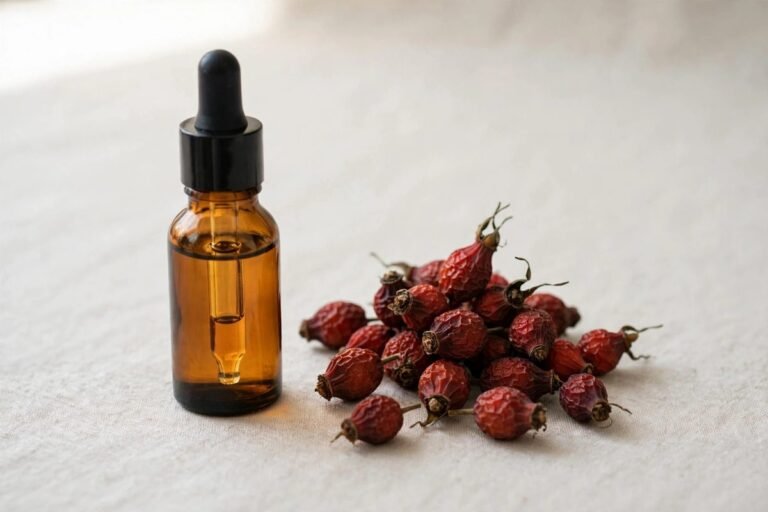
Choose cold-pressed, unrefined, single-ingredient rosehip seed oil in a dark glass bottle with a dropper, and store it cool and dark so its fragile fats do not oxidise. Oxidised oil smells sharp and stale and can irritate skin, which is the last thing you want when treating marks. A standard bottle lasts months at two to three drops a day, so rosehip oil for acne scars care is also one of the more affordable approaches to fading marks, especially compared with clinic treatments.
Be wary of products that promise scar removal in days or show dramatic before-and-after photos with no timeline. Real fading is slow and subtle, and any brand that hides that fact is telling you something about its honesty. The best rosehip oil for acne scars product is simply a pure, fresh oil used patiently, not a miracle blend with a miracle price tag.
Is Rosehip Oil for Acne Scars Right for You?
Rosehip oil for acne scars routines suit people whose main concern is flat dark or red marks left after spots have healed, who are willing to use sunscreen daily, and who can commit to at least eight to twelve weeks before judging results. They suit most skin types when introduced gently, including sensitive skin, provided patch testing comes first. They are less suited to textured scarring as a sole treatment, to anyone unwilling to use sunscreen, and to anyone with active, inflamed acne that needs addressing first.
The fair summary is this: rosehip oil for acne scars care is a gentle, affordable, well-tolerated supporter of fading marks, not a scar eraser. Used daily with sunscreen and patience, it gives many people visible, meaningful improvement. Used with unrealistic expectations, it disappoints, and that disappointment is usually about the promise, not the oil. Start with a patch test, take your day-one photo, and let twelve honest weeks decide.
Frequently Asked Questions About Rosehip Oil for Acne Scars
How long does rosehip oil for acne scars take to work?
Most people need eight to twelve weeks of daily rosehip oil for acne scars use before fading is clearly visible, with older or darker marks sometimes needing three to six months. Sunscreen daily is essential throughout.
Can rosehip oil for acne scars remove indented scars?
No. Rosehip oil for acne scars care can improve colour and softness around textured scars, but it cannot fill indentations or flatten raised scars. Those need professional treatments.
Should I apply rosehip oil for acne scars to active pimples?
It is better to wait until spots have healed before treating the marks they leave. Rosehip oil for acne scars treatment is for post-acne marks, and applying new products to inflamed skin risks further irritation.
Can I use rosehip oil for acne scars with vitamin C?
Yes, many people use vitamin C in the morning and rosehip oil for acne scars treatment in the evening. Introduce one at a time and watch for irritation before combining them regularly.