

Amla juice is made from amla, also known as Indian gooseberry (Phyllanthus emblica), a small green fruit that has been used in Indian food and traditional Ayurvedic practices for centuries. Its naturally sour and astringent taste may take some getting used to, but the fruit is valued for its vitamin C, antioxidants, fiber, and other plant compounds.
Today, people drink amla juice for many reasons, including immune support, digestion, heart health, blood sugar management, skin care, and hair health.
But how much of the hype is supported by research?
Studies suggest that amla and concentrated amla extracts may have several promising health effects. However, an important distinction is that some research has been conducted on amla extracts or animals rather than amla juice itself. More human research is needed for several of the commonly advertised benefits.
In this guide, we explain the potential amla juice benefits, its nutritional value, how to prepare it at home, how much you may need, possible side effects, and what the research actually tells us.
What Is Amla Juice?
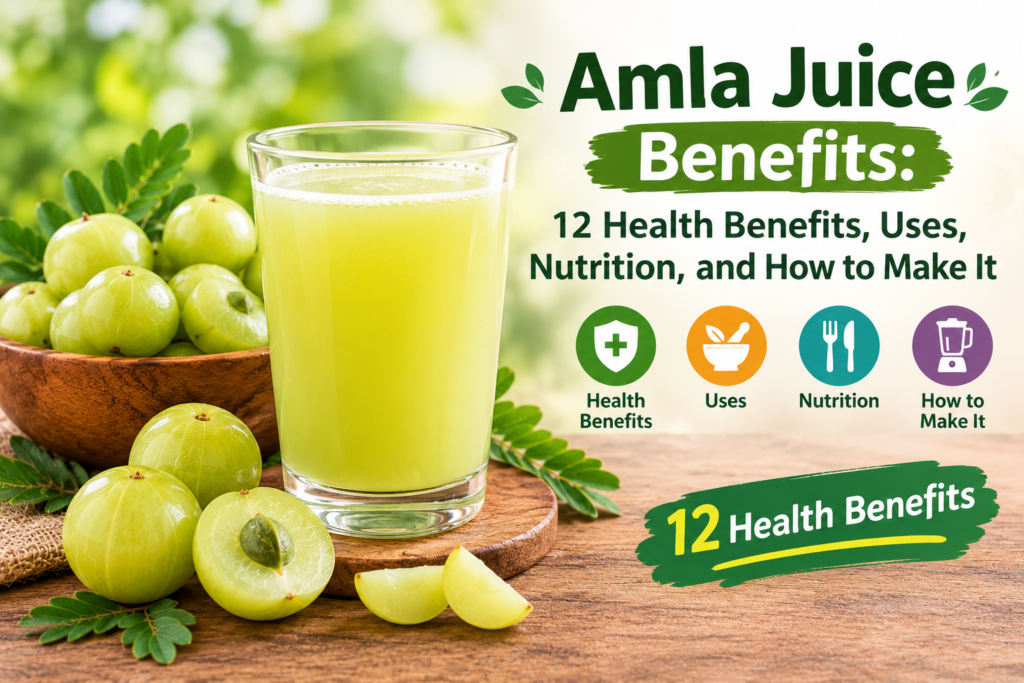
Amla juice is a drink made by extracting or blending the juice of fresh Indian gooseberries with water.
Amla is the fruit of the Phyllanthus emblica tree and is also known as Emblica officinalis. The fruit is small, green, and naturally sour, bitter, and astringent. It can be eaten fresh, dried, powdered, pickled, or prepared as juice.
Amla has a long history in Ayurvedic medicine, where it has traditionally been used as a food and herbal ingredient. Modern nutrition research has also investigated its vitamin C, polyphenols, flavonoids, and antioxidant properties.
Health Benefits of Amla Juice
Amla juice is often described as a superfood drink because the fruit contains several nutrients and bioactive plant compounds.
Below are 12 potential benefits associated with amla and amla preparations.
1. Amla Is Rich in Vitamin C
One of the best-known nutritional features of Indian gooseberry is its high vitamin C content.
Vitamin C is an essential nutrient and antioxidant that helps protect cells from oxidative stress. It also contributes to normal immune function and collagen production.
WebMD reports that fresh amla is particularly rich in vitamin C, while Healthline also identifies vitamin C as one of the main reasons amla is being studied for its potential health effects.
However, the exact amount of vitamin C in a glass of homemade amla juice can vary depending on the amount of fruit used, preparation method, storage, and dilution.
2. Promotes Immune Function
Amla juice may support normal immune function because of its vitamin C and antioxidant content.
Vitamin C is involved in the normal function of immune cells and helps protect cells from oxidative stress. This makes amla an interesting addition to an overall nutrient-rich diet.
However, drinking amla juice should not be viewed as a way to prevent or cure infections. Healthline notes that more research is needed to determine exactly how amla juice itself affects immune health in humans.
3. Amla Has Anti-Inflammatory Properties
Amla contains plant compounds that have demonstrated antioxidant and anti-inflammatory activity in laboratory and animal research.
These properties are one reason Indian gooseberry has attracted attention in nutrition and traditional medicine.
Some studies have investigated amla extracts in relation to inflammation, but evidence from laboratory or animal studies cannot automatically be applied to humans. For that reason, it is more accurate to say that amla has potential anti-inflammatory activity rather than claiming that amla juice treats inflammatory diseases.
4. Supports Healthy Digestion
Another commonly discussed benefit of amla juice is digestive health.
Amla contains fiber when the fruit and pulp are consumed, and its plant compounds have been studied for their potential effects on the digestive system.
Healthline cites a human study involving amla extract in people with gastroesophageal reflux disease (GERD). The study reported improvements in heartburn and regurgitation after four weeks, although the participants consumed amla extract tablets rather than ordinary amla juice.
WebMD also notes that the fiber in fresh amla may help regulate bowel movements and support digestion.
So, while amla juice for digestion may be a popular search topic, the strongest evidence does not yet prove that drinking the juice itself treats digestive disorders.
5. Amla May Support Healthy Metabolism
Amla is also being studied for its possible role in metabolic health.
Some animal research has reported reductions in body weight and abdominal fat after amla extract was administered. However, these findings do not establish that drinking amla juice causes weight loss in humans.
A healthy diet, regular physical activity, adequate sleep, and appropriate calorie intake remain much more important for sustainable weight management.
6. Helps Manage Blood Sugar Levels
Blood sugar is another area where amla has attracted scientific interest.
WebMD notes that the fiber in amla may slow sugar absorption, while some research has found improvements in blood glucose and lipid measurements among people with type 2 diabetes.
Other studies involving concentrated amla extracts have also reported potentially favorable metabolic effects.
However, these findings should not be interpreted as evidence that amla juice can treat diabetes.
If you have diabetes or take blood-sugar-lowering medication, discuss regular amla juice or concentrated amla supplements with your healthcare professional because combining them could potentially affect blood glucose levels.
7. Promotes Heart Health
Amla has also been investigated for cardiovascular health.
In one human study cited by Healthline, adults with abnormal blood lipid levels who consumed 500 mg of amla extract twice daily for 12 weeks experienced reductions in triglycerides, total cholesterol, and LDL cholesterol.
Another study reported improvements in cardiovascular risk markers.
The important detail is that these studies used concentrated amla extract, not ordinary homemade amla juice. Therefore, it is too early to claim that drinking a glass of amla juice will produce the same cholesterol-lowering effect.
8. Supports Liver Health
Amla juice is sometimes promoted as a natural liver-supporting or detox drink.
There is some interesting research behind this idea. Animal studies have found that amla extracts may help protect the liver from certain types of oxidative and metabolic damage.
However, human evidence is limited.
The word “detox” is also frequently used in marketing, but your liver and kidneys already perform the body’s major detoxification functions. It is more scientifically appropriate to describe amla as a nutrient-rich food that contains antioxidant compounds rather than claiming that it “flushes toxins” from the body.
9. Improves Kidney Health
Amla has also been investigated for kidney health.
Several animal studies have found that amla extracts may help protect kidney tissue from oxidative damage and preserve kidney function under certain experimental conditions.
But there is currently not enough human evidence to conclude that drinking amla juice improves kidney function or treats kidney disease.
If you have chronic kidney disease, kidney stones, or another kidney condition, talk to your healthcare provider before using concentrated herbal products.
10. Amla Juice Can Support Skin Health
The vitamin C and antioxidant compounds in Indian gooseberry make it an interesting food for skin health.
Vitamin C contributes to collagen production, which is important for normal skin structure. Antioxidants also help protect cells from oxidative stress.
Amla is therefore used in many traditional and modern beauty products.
Some sources describe amla juice as a way to improve skin hydration, pigmentation, wrinkles, and overall appearance. However, these claims should be interpreted carefully because evidence for drinking amla juice specifically for cosmetic skin benefits is limited.
A balanced diet that provides adequate protein, vitamin C, vitamin A, healthy fats, and other micronutrients is more important for long-term skin health.
11. Amla Juice May Support Hair Health
Amla is especially famous in Indian hair care.
Amla oil, amla powder, and other amla-based preparations have traditionally been used for scalp and hair care. The fruit contains vitamin C and antioxidant compounds, which may contribute to its appeal as a hair-health ingredient.
There is some research suggesting that topical amla preparations may influence hair growth and density. Healthline cites a study in which a serum containing amla along with other ingredients was used daily for 90 days and was associated with improvements in hair growth and density.
However, that does not prove that drinking amla juice will make hair grow faster.
More research is needed to understand the relationship between amla juice and hair growth.
12. Amla May Support Eye Health
Amla is also associated with eye health because the fruit contains antioxidant compounds and vitamin A-related nutrients.
WebMD notes that vitamin A is important for normal vision, while vitamin C contributes to antioxidant protection.
HealthShots also discusses amla in relation to eyesight and age-related eye conditions. However, drinking amla juice should not be considered a treatment for cataracts, macular degeneration, or other eye diseases.
If you notice changes in your vision, an eye examination is more appropriate than relying on a food or herbal drink.
Memory and Brain Health
Amla contains antioxidants and plant compounds that have attracted interest in relation to brain health.
WebMD notes that the phytonutrients and antioxidants in amla may help protect cells from oxidative stress and discusses its potential connection with memory and brain function.
However, research into drinking amla juice specifically for memory or cognitive performance remains limited.
It is best to think of amla as one nutritious food that can contribute to an overall healthy dietary pattern rather than as a brain-health treatment.
Does Amla Juice Reduce Stress?
Traditional Ayurvedic sources associate amla with general wellness and balance, and some modern wellness articles describe it as an adaptogenic food.
Jiva Ayurveda, for example, discusses amla from an Ayurvedic perspective and associates it with stress resilience and emotional well-being.
These traditional claims are interesting, but they should not be presented as established clinical effects.
If you experience persistent anxiety, severe stress, or sleep problems, speak with an appropriate healthcare professional rather than relying on amla juice alone.
Does Amla Juice Detoxify the Body?
“Detox” is one of the most common marketing terms associated with amla juice.
Amla does contain antioxidants and nutrients that contribute to normal health, but there is not strong evidence that drinking amla juice literally flushes toxins from the body.
Your liver, kidneys, lungs, digestive tract, and other biological systems already handle waste and potentially harmful substances.
Instead of thinking of amla juice as a detox treatment, it is more accurate to consider it a nutrient-containing beverage that can be part of a balanced diet.
Nutrients in Amla
Fresh amla contains relatively few calories and provides fiber along with several vitamins, minerals, and antioxidant plant compounds.
WebMD reports that a half-cup serving of fresh amla contains approximately:
- 36 calories
- Less than 1 gram of protein
- Less than 1 gram of fat
- 8 grams of carbohydrates
- 3 grams of fiber
- 0 grams of sugar
WebMD also identifies vitamin C, vitamin E, vitamin A, iron, and calcium among the nutrients found in amla.
Keep in mind that these figures refer to fresh amla berries, not necessarily a glass of strained amla juice. Once fruit is diluted, strained, sweetened, or processed, the nutritional profile can change.
How to Consume Amla Juice
There is no universally established medical dose of amla juice that applies to everyone.
Some commercial products provide their own serving recommendations, while traditional preparations can vary considerably.
A simple approach is to dilute a small amount of unsweetened amla juice with water rather than drinking a highly concentrated preparation.
Manipal Hospitals describes diluting amla juice with water and notes that some people add honey or lemon to improve the taste.
If you are using packaged amla juice, check the label for:
- Added sugar
- Artificial flavors
- Preservatives
- Serving size
- Concentration
- Other herbal ingredients
Healthline specifically recommends looking for amla juice without unnecessary added sugar, artificial flavors, and preservatives.
Should You Drink Amla Juice on an Empty Stomach?
Drinking amla juice first thing in the morning or on an empty stomach is a common recommendation in wellness and Ayurvedic content.
HealthShots and Manipal Hospitals both discuss morning or empty-stomach consumption.
However, there is not strong evidence showing that drinking amla juice on an empty stomach is universally better than drinking it with food.
If acidic drinks cause you stomach discomfort, taking a diluted serving with food may be more comfortable.
The most important factors are the overall quality of your diet, the amount consumed, and how your body responds.
How to Make Amla Juice at Home
Making fresh Indian gooseberry juice is relatively simple.
Ingredients
- 2–4 fresh amla fruits
- 1–2 cups water
- Small piece of ginger, optional
- A little honey, optional
- Lemon or black salt, optional
Method
- Wash the amla thoroughly.
- Cut the fruit into smaller pieces and remove the seeds.
- Add the amla and water to a blender.
- Blend until smooth.
- Strain the mixture if you prefer a smoother drink.
- Add ginger, lemon, or a small amount of honey if desired.
- Drink fresh.
Healthline recommends blending 2–4 Indian gooseberries with approximately 1–2 cups of water and notes that ginger, black pepper, honey, or sea salt can be added according to preference.
HealthShots uses a similar preparation method with amla, water, ginger, and honey.
Amla Ginger Immunity Drink
For a simple variation, blend fresh amla with a small piece of ginger and water. Strain if desired.
Remember that adding honey increases the sugar content, so people monitoring blood glucose may prefer an unsweetened version.
How to Prepare Amla Berries
You do not have to drink amla juice to enjoy Indian gooseberry.
Fresh amla can be:
- Eaten fresh
- Pickled
- Added to recipes
- Dried
- Ground into powder
- Used in chutneys
- Prepared as juice
WebMD recommends handling fresh amla similarly to other delicate fruits and notes that fresh berries can be refrigerated for around two weeks and can also be frozen.
Amla Juice for Weight Loss: Does It Work?
Amla juice is frequently promoted as a weight-loss drink, but the evidence does not support treating it as a magic fat-burning beverage.
Some animal studies have reported reductions in body weight and abdominal fat after amla extract was administered. However, these findings do not establish that drinking amla juice causes meaningful weight loss in humans.
If your goal is weight loss, focus on a sustainable calorie deficit, protein-rich foods, vegetables, whole foods, physical activity, and adequate sleep.
Unsweetened amla juice can fit into such a diet, but it should not replace those fundamentals.
Amla Juice for Diabetes and Blood Sugar
Amla has attracted research interest because of its possible effects on blood glucose and lipid levels.
Some studies involving amla or concentrated amla extracts have reported improvements in blood sugar-related measurements. WebMD also discusses potential effects on glucose and lipid levels in people with type 2 diabetes.
But amla juice is not a substitute for diabetes medication.
If you have diabetes, monitor your blood glucose as advised by your healthcare provider and discuss regular use of concentrated amla products with them.
Amla Juice for Hair Growth
Amla is traditionally associated with stronger hair, reduced hair fall, and healthier-looking hair.
There is some evidence for topical amla preparations, but evidence for drinking amla juice specifically to increase hair growth is much weaker. Healthline explicitly notes that it remains unclear whether drinking amla juice has the same effect on hair growth as topical preparations.
Therefore, if you are looking for amla juice for hair growth, keep expectations realistic.
Nutrition matters for healthy hair, but persistent hair loss can also result from genetics, hormonal changes, nutritional deficiencies, stress, medications, or medical conditions.
Precautions and Side Effects
Amla is commonly consumed as a food, but concentrated juices, extracts, powders, and supplements can behave differently.
Possible concerns include:
Stomach Discomfort
Highly concentrated or acidic preparations may cause stomach discomfort or worsen symptoms in people who are sensitive to acidic foods.
Blood Sugar Changes
Amla may influence blood glucose, so people taking diabetes medication should be cautious with concentrated preparations.
Allergic Reactions
Although uncommon, any food or herbal ingredient can cause an allergic reaction in susceptible individuals.
Medication Interactions
If you take prescription medication or have a chronic health condition, speak with a healthcare professional before adding concentrated amla supplements or large amounts of amla juice to your routine.
Who Should Be Careful With Amla Juice?
You may want professional advice before regularly consuming concentrated amla juice if you:
- Have diabetes or take glucose-lowering medication
- Have a chronic kidney or liver condition
- Have significant digestive problems
- Take several prescription medications
- Have a known allergy to amla or related ingredients
- Are pregnant or breastfeeding and are considering concentrated supplements
For most healthy people, eating amla as part of a varied diet is different from taking high-dose extracts or supplements.
The Ayurvedic Perspective on Amla
Amla has an important place in Ayurvedic medicine and has been used traditionally for centuries.
Ayurvedic sources describe amla in terms of traditional concepts such as doshas, agni, and rasayana. Jiva Ayurveda, for example, describes amla juice as a tridoshic food and discusses traditional uses related to digestion, hair, immunity, and general wellness.
These traditional concepts are an important part of the cultural history of amla, but they should be distinguished from modern clinical evidence.
A balanced article about amla should therefore acknowledge both its traditional use and the limitations of current scientific research.
Amla Juice vs. Fresh Amla
Fresh amla and amla juice come from the same fruit, but they are not nutritionally identical.
Whole amla provides fiber and requires chewing, while juice is easier to consume and may be more convenient.
If the juice is strained, some of the fruit’s fiber is removed. If sugar or sweeteners are added, the drink can also contain substantially more sugar.
For everyday nutrition, whole fruit can be a valuable option when available and practical.
Amla Juice vs. Amla Supplements
Amla is available as juice, powder, capsules, extracts, and other supplements.
These products should not automatically be treated as interchangeable.
The human studies discussed by Healthline, for example, often involve specific doses of concentrated amla extract, rather than the amount found in an ordinary glass of homemade juice.
This is an important evidence-based distinction when evaluating health claims.
Frequently Asked Questions About Amla Juice
Can you have amla juice every day?
Some people consume amla juice daily, but there is no single daily amount proven to be ideal for everyone. If you choose to drink it regularly, use a moderate amount and follow the serving instructions of the product you are using.
How much amla juice can you have every day?
Serving sizes vary between products and preparations. HealthShots cites 30 mL as a commonly recommended maximum in its article, while Manipal Hospitals discusses 10–20 mL diluted with water.
Because there is no universally established medical dose for ordinary amla juice, follow the product label or ask a healthcare professional if you have a medical condition.
What is the best time to drink amla juice?
Morning consumption, particularly on an empty stomach, is common in Ayurvedic and wellness routines. However, there is limited evidence that an empty stomach provides special benefits for everyone.
If amla juice causes acidity or stomach discomfort, try taking it diluted or with food.
Does amla juice help with weight loss?
Amla extract has shown weight-related effects in some animal studies, but there is not enough human evidence to say that amla juice itself causes weight loss.
Does amla juice improve hair growth?
Amla has a long history in hair care, and some research suggests benefits from topical amla preparations. However, evidence that drinking amla juice directly increases hair growth is limited.
Is amla juice good for skin?
Amla provides vitamin C and antioxidant compounds that are relevant to normal skin health. However, claims that drinking amla juice will eliminate wrinkles, pigmentation, or acne require stronger clinical evidence.
Is amla juice good for digestion?
Amla contains fiber when the fruit pulp is consumed, and amla extracts have been studied for digestive symptoms. However, evidence for ordinary amla juice is still developing.
Can people with diabetes drink amla juice?
People with diabetes should be cautious with concentrated amla products because amla may affect blood glucose. If you take diabetes medication, discuss regular consumption with your healthcare professional.
Conclusion
Amla juice is a convenient way to consume Indian gooseberry, a nutrient-rich fruit known for its vitamin C, antioxidants, fiber, polyphenols, and other plant compounds.
The potential amla juice benefits include support for normal immune function, digestion, cardiovascular health, and overall nutrition. Amla is also widely used in traditional hair and skin care.
At the same time, not every claim associated with amla juice has been proven in humans. Some promising research has involved concentrated extracts, animals, or laboratory models rather than ordinary amla juice. This is particularly important when evaluating claims about weight loss, detoxification, hair growth, liver health, and kidney health.
For most people, the simplest approach is to treat amla as a nutritious food rather than a cure-all. Choose an unsweetened product or make fresh amla juice at home, consume it in moderation, and focus on your overall diet and lifestyle.
If you have diabetes, kidney disease, liver disease, digestive problems, take prescription medication, or plan to use concentrated amla supplements, speak with a qualified healthcare professional first.