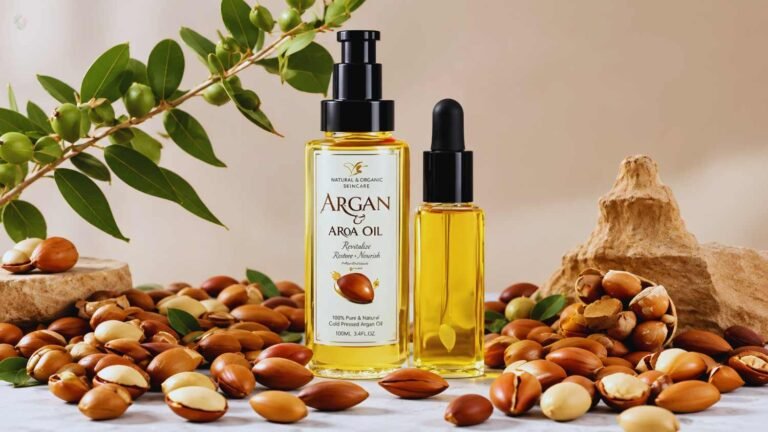
Argan Oil for Different Hair Types: A Hub That Sends You to the Right Guide
Most hair advice treats argan oil as if one routine fits everyone. It does not. The same few drops that leave curls glossy can leave fine hair flat by lunchtime, and the same weekly mask that rescues thick, dry hair can coat low porosity hair until it looks dull. The oil is rarely the problem. The dose, the placement, and the step it sits in are.
This page is a hub: each section gives the short version, then links to the detailed guide for that hair type.
Start Here: Pick Your Guide in Under a Minute
Two facts decide almost everything about how argan oil will behave on your hair: texture, meaning how straight or coiled your strands are, and porosity, meaning how readily your hair takes in and holds water.
First, texture. Look at how a strand falls when it dries on its own. Mostly straight means straight. A gentle S-shape means wavy. Defined spirals mean curly. Tight coils or zigzags mean coily. Texture decides how much oil your lengths need, because scalp oil travels easily down a straight strand and barely reaches the ends of a coiled one.
Second, porosity. The quickest clue is how your hair behaves in the shower. If it takes a long time to get fully wet and products sit on top, it is probably low porosity. If it soaks instantly and dries fast, it is probably high porosity. Otherwise, call it medium and use the standard doses below. Low porosity hair needs very little oil, on warm, damp hair; high porosity hair usually needs a little more, sealed over a water-based leave-in.
Third, format. Fine or easily weighed-down hair should start with the lightest format — a gentle wash or a serum finish — and add pure oil only if the ends still feel dry. Thick, coarse, or very dry hair will get more from pure oil or a weekly mask than from any wash-off product.
Note: your answers will change — bleach, heat, hard water, and seasons all shift porosity and oil tolerance. If a routine stops working, re-check before buying something new.
Why Argan Oil Works Across So Many Hair Types
Argan oil, pressed from the kernels of Morocco’s argan tree, is mostly unsaturated fat — oleic and linoleic acid — with vitamin E and antioxidants. That is why it feels lighter than heavy butters: it smooths the surface and seals in moisture without a waxy feel.
For the full background on the bottle, including how to spot a diluted blend, read our complete guide to argan oil for hair. Key point: argan oil seals and smooths; it is not a moisturizer. Oil holds no water, so it cannot hydrate dry hair alone. Apply after water or a leave-in, on damp hair, mid-lengths to ends.
Straight Hair: Light Touch, Ends Only
Straight hair has the easiest journey for scalp oil, which slides down the strand with nothing to slow it. It rarely needs oil at the roots, and adding it there is the fastest way to a greasy look. The ends are a different story, especially on long or heat-styled hair. Use one drop, warmed between your palms, smoothed over damp ends after washing. Short or fine straight hair can skip wash-day oil entirely.
Wavy Hair: Enhance the Wave, Do Not Flatten It
Wavy hair’s biggest frustration is inconsistency: some days the wave holds, other days it falls flat or frizzes out. Heavy oil is usually the culprit on flat days; dryness on frizzy ones. Use one to two drops on damp mid-lengths and ends, scrunched upward rather than smoothed downward, so you encourage the wave instead of pulling it out. Fine waves need the lower dose, kept from the roots.
Curly Hair: Moisture First, Oil Second
Curly hair is naturally drier than straight hair because every bend slows scalp oil’s journey down the strand, leaving ends dry even when roots feel fine. The bends also lift the cuticle slightly, letting moisture escape faster. So curls need moisture first and oil second, every time: condition well, apply a water-based leave-in to damp hair, then warm two to three drops between your palms and scrunch from mid-lengths to ends. On refresh days, use a single drop on dampened hands, pressed over frizzy areas.
For the full routine — pre-wash treatments, layering order with gel and cream, climate adjustments, and the mistakes that leave curls limp — read our guide to argan oil for curly hair.
Coily and 4C Hair: Seal Generously, Section by Section
Coily hair, including 4C hair, loses moisture faster than any other texture: the tightest coils give scalp oil the longest, most winding journey to the ends, and each bend is a weak point where dry hair breaks more easily. Argan oil earns its place here as a sealant after moisturizing, not as the moisturizer itself. Wash, condition, apply a leave-in to damp hair section by section, then smooth a few drops through each section from mid-length to ends. Very dry hair may benefit from a cream or butter on top to seal further.
Gentle detangling, a satin bonnet, and scheduled clarifying matter just as much. For natural, relaxed, braided, and heat-styled textured hair, scalp care, and porosity differences within textured hair, read our guide to argan oil for Black hair. One honest note: argan oil can help you keep the length you grow by reducing breakage, but it does not make hair grow faster.
Fine Hair: Nourishment Without the Weight
Fine strands have less volume to carry oil, so the margin between “soft and shiny” and “flat and greasy” is small. The rule is simple: fewer drops, ends only, never roots. Start with one to two drops on damp ends after washing; if hair falls flat by evening, halve the dose before changing anything else. Lighter formats — a gentle shampoo or serum — suit fine hair better; skip overnight treatments and heavy masks unless ends are genuinely damaged.
Thick Hair: You Can Afford a Richer Routine
Thick hair can handle more oil than fine hair, and usually needs it: there is more hair to coat, and dense hair often feels dry on the outer layers while inner layers stay untouched. Work in sections so the oil reaches all of the hair, not just the top layer. Three to five drops for mid-back lengths is a reasonable starting point, adjusted by how hair feels on day two. Thick hair is also where a weekly mask earns its place, since twenty to thirty minutes of contact time beats anything a daily conditioner can do.
Low Porosity Hair: Less Oil, Warm and Damp Application
Low porosity hair has tightly packed cuticle layers that lie flat. Water and products struggle to get in, but once moisture is in, it stays. Signs: water beads on the hair, products sit on top, and hair takes a long time to dry. The common mistake is adding more oil to hair that feels dry, when the real problem is that water has not gotten in yet.
Apply a water-based leave-in first, on warm, damp hair, then seal with just one to two drops. Heavy oils and butters tend to sit on the surface and build up, so a lighter oil in a small amount performs better. Never apply oil before your leave-in, because oil first can block moisture from entering at all. If hair starts feeling coated or stiff, clarify once and halve the dose.
High Porosity Hair: More Sealing, More Often
High porosity hair has a raised, open cuticle, often from color, heat, or chemical processing. It drinks up moisture quickly and loses it just as fast, so it can feel dry again hours after a wash that seemed to fix it. Use the higher end of the dose range, with a cream or butter on the very ends after the argan oil to seal properly. Frequency matters too: a light reapplication between washes — a drop or two on dampened ends — often helps, but it also means clarifying washes once or twice a month matter more, so buildup does not dull the hair.
Color-Treated Hair: Protect Shine, Do Not Expect Repair
Colored or bleached hair is more porous and loses moisture quickly, so it behaves much like high porosity hair even if your natural texture is fine or straight. A few drops on damp ends before heat styling reduces rough texture and helps keep shine, and a weekly mask does more than any daily product. Pair the oil with a color-safe, sulfate-free shampoo, since oil does not replace one. Be realistic: oil can make color look glossier for longer, but it cannot repair bleach damage or stop fading — gentler washing and less heat matter more.
Oily Scalp: Oil the Lengths, Leave the Roots Alone
An oily scalp does not mean your whole head is oily. Often the roots are greasy while the ends are dry, especially on longer hair. Keep argan oil from mid-length down, and skip scalp massage unless your scalp itself feels dry. If roots get greasy within a day of washing, check whether you are over-washing or using a harsh shampoo, and whether conditioner or styling products are creeping up to the roots. A gentle shampoo plus oil kept on the lengths usually solves oily roots and dry ends without any special product.
Locs: Lighter Oil Wins, and Buildup Is the Enemy
Locs deserve a special note because the wrong oil choice is harder to undo here than on loose hair: residue builds up inside a loc and is very hard to remove. Heavy butters and thick oils are therefore a poor daily choice, even though locs dry out easily. Jojoba oil is usually the better everyday option — light, close to the skin’s own oil, and leaving far less behind.
Argan oil still works as a finishing oil for shine on the lengths, used lightly on damp hair. But for the regular routine — scalp care between washes, sealing after misting, and keeping mature locs soft without lint and residue — follow our guide to jojoba oil for locs, which covers starter versus mature locs, how often to oil, and the mistakes that cause buildup.
Frizzy Hair: Fix the Moisture Balance, Not Just the Flyaways
Frizz is not a hair type on its own — it is a symptom that can appear on any texture — but it is the reason many people reach for argan oil. Frizz happens when the cuticle lifts and dry or damaged hair pulls moisture from the surrounding air, swelling unevenly. That is why the same hair can look smooth in cool weather and frizzy in humidity.
Oil helps frizz when the hair underneath is hydrated: a drop smoothed over flyaways on damp, conditioned hair seals the cuticle. It helps little when hair is dry underneath, because it only coats the dryness. If frizz is your main frustration, start with the full routine — gentle cleansing, conditioning every time, microfiber drying, and a leave-in — with argan oil as the sealing step. Our guide to fixing frizzy hair covers that routine in full.
Choosing the Format: Pure Oil, Shampoo, Serum, or Mask
Pure oil is the most versatile and concentrated option: pre-wash treatment, post-wash sealant, and finishing drop in one bottle, and the best choice for thick, coarse, dry, or coily hair. The catch is dosing — pure oil is dosed by the drop, and using too much is the most common mistake across every hair type.
An argan oil shampoo is a gentler everyday cleanser, not a treatment: it touches hair for a minute or two and rinses away, so judge it by what it does not strip rather than what it deposits. An argan oil hair serum is a formulated blend, often built around silicones, designed for fast, lightweight smoothing — the better daily choice for fine or oily hair and quick touch-ups. An argan oil hair mask is the weekly deep step: twenty to thirty minutes, once or twice a week for most hair, less often for fine or oily hair. Build it in layers — hydration first, then oil, then a sealing layer only for coarse, curly, or very dry hair.
Who Should Be Careful
Tree nut allergy? Patch test first: argan comes from a fruit kernel, not a true nut, but test on the inner arm a day before scalp use. Dandruff is not cured by oil, and oil can worsen some scalp conditions, so persistent flaking, redness, or soreness deserves a doctor or dermatologist rather than a stronger product. For children, use very little and patch test. For sudden, patchy, or heavy hair loss, see a professional — no oil treats hormonal, stress-related, or nutritional hair loss.
Your Hair Type Is Not Fixed: Re-Check Monthly
Porosity and oil tolerance shift with hard water, heat, bleaching, and seasons. Monthly, check three things: do strands absorb water fast or bead up? Does oiled hair feel coated rather than soft — if so, cut the dose? And does the season demand a change — less oil in humidity, more sealing in dry air? Mineral buildup can mimic low porosity, so a clarifying wash once or twice a month often fixes what extra oil cannot. Run these checks before buying anything new.
Quick Answers
Can I use argan oil every day?
On the ends, a drop a day suits thick or very dry hair. Most people need only wash day plus a light refresh; fine hair, once or twice a week.
Should argan oil go on wet or dry hair?
Damp hair is best for sealing moisture, since water hydrates and oil seals. Dry hair suits one finishing drop for shine.
Does argan oil help hair grow?
No solid evidence it speeds growth from the follicle. It reduces breakage, letting you keep more length you already grow — retention, not regrowth.
Where to Go Next
Pick the guide that matches your hair: curly, Black hair, frizz, locs, or the argan oil overview for format decisions. Start small, check monthly, and let results decide your dose.
This article is for general informational purposes and is not a substitute for professional dermatological advice. If you have a scalp condition or a known allergy, patch test any new product before regular use.