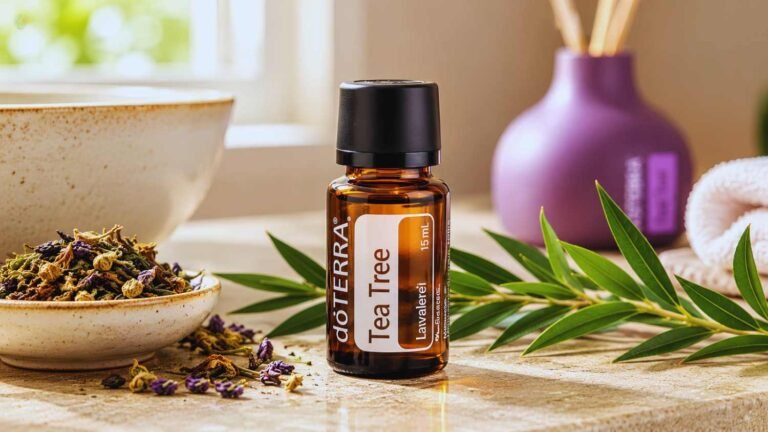
Tea Tree Oil for Dandruff
If you have ever brushed dark clothing and watched a snowfall of white flakes land on your shoulders, you know how frustrating dandruff can be. It is common, it is stubborn, and it has a way of returning just when you think you have beaten it. That is why so many people turn to tea tree oil for dandruff, hoping a natural remedy can succeed where ordinary shampoo has failed. The good news is that tea tree oil for dandruff is one of the few natural remedies with real clinical evidence behind it. The important caveat is that it works for a specific kind of dandruff, and only when it is used correctly. This guide explains what the science actually says, how to use tea tree oil for dandruff safely, and when a different approach will serve you better.
What Causes Dandruff in the First Place
Dandruff is not simply dry skin, although dry skin can look similar. Most true dandruff is driven by an overgrowth of Malassezia, a yeast that lives normally on everyone’s scalp. Problems begin when this yeast multiplies beyond its usual numbers. As Malassezia feeds on the natural oils of the scalp, it produces byproducts that irritate the skin, speed up skin cell turnover, and cause the visible clumps of flakes, itching, and redness that define dandruff. Oily skin, hormonal shifts, stress, illness, cold dry weather, and infrequent washing can all tip the balance in the yeast’s favor. Understanding this mechanism matters because tea tree oil for dandruff works mainly by targeting that yeast, not by moisturizing the scalp. If your flakes come from simple dryness rather than yeast overgrowth, you need a different strategy, and we will help you tell the difference later in this guide.
How Tea Tree Oil for Dandruff Works on the Scalp
Tea tree oil is distilled from the leaves of Melaleuca alternifolia, a tree native to Australia. Its best-studied active compound is terpinen-4-ol, which can disrupt the cell membranes of fungi and bacteria. When applied to the scalp in a proper formulation, tea tree oil for dandruff reduces the Malassezia population, calms the inflammation that makes the scalp itch, and helps restore a healthier balance of microbes on the skin. Unlike a plain moisturizing oil, which may feed the yeast by adding more oil to the scalp, tea tree oil for dandruff actively works against the organism driving the problem. That antifungal and anti-inflammatory combination is exactly why dermatology researchers have taken it seriously enough to test it in clinical trials rather than dismissing it as folklore.
What the Research Says About Tea Tree Oil for Dandruff
The most cited study on tea tree oil for dandruff is a randomized, double-blind, placebo-controlled trial published in the Journal of the American Academy of Dermatology in 2002. In that trial, 126 adults with mild to moderate dandruff used either a shampoo containing 5 percent tea tree oil or a placebo shampoo every day for four weeks. By the end of the study, 41 percent of the tea tree group showed improvement in their overall dandruff severity score, compared with only 11 percent of the placebo group. Itchiness and greasiness also improved more in the tea tree group. That result is genuinely encouraging, but honesty requires the full picture. The study tested a finished 5 percent shampoo, not drops of pure oil added at home. It lasted four weeks, so it tells us little about long-term maintenance. And 41 percent improvement is not a cure. Still, for a natural ingredient, this level of evidence is rare, and it justifies tea tree oil for dandruff as a reasonable option for mild to moderate cases rather than a miracle cure.
The Benefits of Tea Tree Oil for Dandruff
People who respond well to tea tree oil for dandruff usually notice several changes together. Flaking decreases, often within two to four weeks of consistent use. Itching eases, which matters more than comfort alone, because scratching damages the scalp barrier and can worsen shedding and irritation. Greasiness often improves, since a calmer scalp tends to feel less oily. Some users also find that their scalp simply feels cleaner and fresher between washes. These benefits build gradually rather than overnight. Anyone promising that tea tree oil for dandruff will clear flakes in a single wash is overselling it. The realistic expectation is steady improvement over a month, followed by ongoing maintenance to keep the yeast population in check, because dandruff is a chronic tendency, not a one-time infection.
How to Use Tea Tree Oil for Dandruff: The Shampoo Method
The easiest and safest way to use tea tree oil for dandruff is the shampoo method. Take your normal amount of a gentle, sulfate-free shampoo in your palm, add two to three drops of tea tree oil, mix briefly, and massage it into your scalp with your fingertips. Here is the step most people get wrong: rinse it straight off. Shampoo is designed to be rinsed away, and with it goes most of the active ingredient before it has time to work on the yeast. Instead, let the lather sit on your scalp for three to five minutes before rinsing. That dwell time is the difference between a pleasant scent and a real treatment. Use this method every time you wash, or at least three to four times per week, for the first month. If you prefer a ready-made option, choose a shampoo that lists tea tree oil among its active ingredients at around 5 percent, and apply the same dwell-time rule.
How to Use Tea Tree Oil for Dandruff: The Scalp Oil Treatment
For a stronger, leave-on approach, dilute tea tree oil for dandruff in a carrier oil before it ever touches your scalp. Never apply undiluted tea tree oil directly to the skin. A safe scalp dilution is 1 to 2 percent, which means roughly 6 to 12 drops of tea tree oil per 30 milliliters (about two tablespoons) of carrier oil. Jojoba oil is an excellent carrier here because it closely resembles the scalp’s natural sebum and is light rather than greasy. Part your hair in sections, massage the diluted mixture into the scalp with your fingertips, and leave it on for 20 to 30 minutes before shampooing it out thoroughly. Do this one to two times per week. Longer is not better: leaving diluted essential oil on the scalp overnight increases the risk of irritation without meaningfully improving results.
Tea Tree Oil for Dandruff: A Simple Weekly Routine
Consistency beats intensity when you use tea tree oil for dandruff. A practical weekly routine looks like this. On wash days, use the shampoo method with a three to five minute dwell time. Once or twice a week, add the diluted scalp oil treatment before your wash, leaving it on for no more than 30 minutes. On non-wash days, leave the scalp alone rather than adding more product. Wash your pillowcases, hats, and hairbrushes regularly, since flakes and yeast can linger on them and re-seed the scalp. Avoid heavy styling products that build up on the scalp, and resist the urge to scratch, which breaks the skin barrier and invites more irritation. Track your progress with a simple weekly note or photo of your part line and shoulders, so you judge results by evidence rather than by how your scalp feels on any single day.
Tea Tree Oil for Dandruff vs Medicated Shampoos
How does tea tree oil for dandruff compare with the medicated shampoos on pharmacy shelves? Ketoconazole, zinc pyrithione, selenium sulfide, and coal tar shampoos all have stronger and larger bodies of evidence, and for moderate to severe dandruff or seborrheic dermatitis, they are usually the better first choice. Tea tree oil for dandruff sits best as a gentler option for mild cases, as a maintenance step between medicated washes, or as an alternative for people who find medicated shampoos too drying or irritating. The two approaches can also be combined sensibly: for example, a ketoconazole shampoo twice a week with a tea tree shampoo on other wash days. Do not layer multiple strong antifungal treatments on the same day, and if your dandruff does not improve after four to six weeks of consistent use, move up to a medicated option or see a dermatologist rather than doubling your tea tree dose.
Tea Tree Oil for Dandruff vs Other Natural Remedies
Many natural oils are suggested for dandruff, but they do not all work the same way. Coconut oil moisturizes well, yet on its own it has little antifungal power and its fatty acids can actually feed Malassezia in some people, so it is a poor solo choice for yeast-driven dandruff. Argan oil for dandruff is gentler and rich in vitamin E, making it a good supporting carrier or conditioning oil, but it is not a strong antifungal on its own. Apple cider vinegar rinses can help remove buildup and temporarily shift scalp pH, but they do not reliably reduce yeast populations. Aloe vera soothes itching but does not treat the underlying overgrowth. Tea tree oil for dandruff stands out among natural options precisely because it targets the yeast itself. Pairing it with a light carrier such as jojoba gives you both the antifungal action and the conditioning benefit, which is a smarter combination than any single oil alone.
Choosing a Good Tea Tree Oil Product
Quality matters enormously with tea tree oil for dandruff, because a weak or oxidized product will disappoint you and may irritate your scalp. Look for oil labeled 100 percent pure Melaleuca alternifolia, ideally with a terpinen-4-ol content of at least 30 percent, which reputable brands state on the label or website. Choose a dark glass bottle, buy the smallest size you will use within six to twelve months, and store it tightly closed in a cool, dark place. Tea tree oil oxidizes when exposed to air and light, and oxidized oil is far more likely to trigger allergic reactions. If your oil smells sharp, stale, or resinous rather than fresh and medicinal, discard it. For ready-made shampoos, check that tea tree oil appears near the top of the ingredient list rather than as a trace fragrance ingredient, and be wary of products that promise instant or permanent cures.
Common Mistakes When Using Tea Tree Oil for Dandruff
Most failures with tea tree oil for dandruff come from avoidable mistakes. The first is applying undiluted oil to the scalp, which can cause burning, redness, and chemical irritation. The second is rinsing shampoo off immediately, giving the active ingredient no dwell time to work. The third is using it once, seeing no miracle, and quitting before the four-week mark when studies show results appear. The fourth is overuse: daily leave-on treatments or high concentrations do not speed results and raise the risk of allergic sensitization, a reaction that can develop even after months of trouble-free use. The fifth is ignoring the rest of the scalp routine, such as infrequent washing, heavy product buildup, or unwashed hats and pillowcases that keep reintroducing flakes. Correct these five mistakes and tea tree oil for dandruff has a fair chance to show what it can do.
When Tea Tree Oil for Dandruff Will Not Help
Tea tree oil for dandruff is not a universal fix, and recognizing its limits saves you months of frustration. If your flakes are fine, white, and powdery, your scalp feels tight, and the problem worsens in winter, you may have simple dry scalp rather than yeast-driven dandruff, and an antifungal will not address the root cause. Thick, silvery scales, well-defined red patches, or scales on the elbows and knees may point to psoriasis. Greasy yellow scales, redness along the eyebrows, nose folds, or behind the ears, or severe inflammation suggest seborrheic dermatitis that needs medical treatment. Hair loss in patches, broken hairs, sores, swelling, or dandruff that spreads to the face or body are all reasons to see a dermatologist promptly. Children, pregnant women, and people with eczema should also get professional advice before starting tea tree oil for dandruff, since sensitive skin reacts more easily.
A New Angle: The Two-Wash Method and Dwell Time
Here is an angle most guides on tea tree oil for dandruff overlook: the two-wash method. Your first wash removes sebum, styling buildup, and loose flakes, but it also washes away before any antifungal can act. Your second wash, done immediately after on an already clean scalp, delivers tea tree oil for dandruff directly to the skin with far less interference from oil and debris, and then you let it dwell for three to five minutes. This matters because Malassezia lives in the oily layer on the scalp surface, and a single quick wash mostly cleans hair shafts rather than treating skin. Think of the first wash as clearing the field and the second wash as the treatment itself. Many people who say tea tree oil for dandruff did nothing for them were effectively rinsing the treatment down the drain in under thirty seconds. Try the two-wash method for four weeks before concluding that it does not work for you, and keep everything else in your routine unchanged so you can judge the change fairly.
Tea Tree Oil for Dandruff and Hair Health
A healthier scalp often means healthier-looking hair, and that connection explains much of the enthusiasm for tea tree oil for dandruff. Constant itching leads to scratching, which damages the scalp barrier, breaks hairs, and can increase shedding. By calming itch and reducing flakes, tea tree oil for dandruff helps break that cycle, so hair is less disturbed and looks fuller and shinier over time. Be clear about what this does and does not mean: tea tree oil for dandruff does not make hair grow faster or create new follicles. What it does is protect the hair you already have by improving the environment it grows in. For readers interested in genuine growth support, our guide to argan oil for hair growth explains which claims hold up and which do not, and how to fix frizzy hair covers the conditioning side of the routine.
Frequently Asked Questions About Tea Tree Oil for Dandruff
How long does tea tree oil for dandruff take to work? Most people who respond notice less itching within one to two weeks and visibly fewer flakes by four weeks. Give it a full month of consistent use before judging it.
Can I leave tea tree oil for dandruff on my scalp overnight? No. Even diluted oil left on overnight raises irritation risk without better results. Keep leave-on treatments to 20 to 30 minutes.
Is tea tree oil for dandruff safe for color-treated hair? Diluted tea tree oil and tea tree shampoos are generally compatible with color-treated hair, but always patch test first and use a sulfate-free, color-safe shampoo to limit fading.
Can I mix tea tree oil for dandruff into my whole shampoo bottle? It is better to mix drops into the dose in your palm each time. Pre-mixing a whole bottle makes dosing imprecise and lets the oil oxidize faster once the bottle is repeatedly opened.
What should I do if tea tree oil for dandruff irritates my scalp? Stop using it, rinse thoroughly with lukewarm water, and avoid further essential oils until the irritation settles. If redness, blistering, or swelling develops, or the reaction spreads, seek medical advice.
The Bottom Line on Tea Tree Oil for Dandruff
Tea tree oil for dandruff earns its reputation honestly, but narrowly. It is a well-supported option for mild to moderate yeast-driven dandruff, backed by a real randomized trial, provided you dilute it properly, give it dwell time on the scalp, and use it consistently for at least four weeks. It is not a cure, it will not fix dry scalp or psoriasis, and it should never be applied undiluted. Used with those limits in mind, tea tree oil for dandruff can reduce flakes, calm itching, and leave your scalp meaningfully more comfortable. If it does not help within six weeks, or if your symptoms are severe, step up to a medicated shampoo or a dermatologist rather than persisting with a remedy that is not matched to your condition. For a broader picture of what this oil can and cannot do, see our complete guide to the benefits of tea tree oil, and for safe use across every application, read our guide to oil side effects and safe use before you begin.