Avocado Oil vs Coconut Oil for Hair
Avocado oil vs coconut oil is one of the most searched hair-oil comparisons, and it is also one of the most misleading, because most guides try to crown a single winner. The honest answer is that neither oil wins for everyone. Coconut oil has stronger evidence for protecting the hair fibre from protein loss, while avocado oil is often easier to use, feels lighter, and suits hair that coconut oil leaves stiff or coated. This guide compares avocado oil vs coconut oil fairly, explains the science in plain language, and then gives you a decision framework based on your hair type, so you can choose for your own hair rather than following a generic verdict.
Both oils are carrier oils, which means they are plant oils used directly on hair and skin, as opposed to essential oils, which must be diluted. Both have long histories of use, both are affordable, and both can improve how hair looks and feels. The differences lie in their fatty-acid profiles, their textures, how they interact with the hair shaft, and how different hair types respond to them. Understanding those differences is more useful than any list of benefits, because it explains why your friend swears by coconut oil while it makes your hair feel like straw, or vice versa. That distinction is central to the avocado oil vs coconut oil decision.
Avocado Oil vs Coconut Oil: What Each Oil Is Made Of
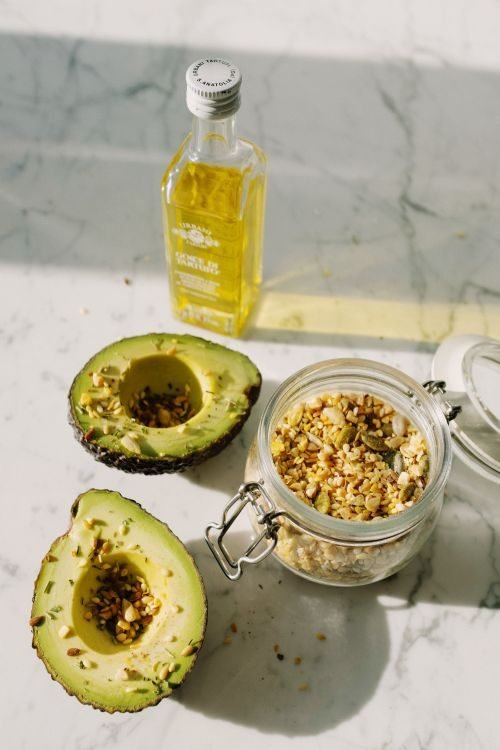
Avocado oil is pressed from the pulp of the avocado fruit and is dominated by monounsaturated fat, chiefly oleic acid, which makes up roughly two-thirds of its fatty acids. It also contains palmitic acid, a saturated fat, smaller amounts of linoleic acid, and vitamin E, vitamin D, potassium and plant sterols. That profile gives it a fluid, spreadable texture that stays liquid at room temperature and a faint nutty scent that fades as it absorbs. Keep that evidence in mind when weighing avocado oil vs coconut oil for your own hair.
Coconut oil is pressed from coconut flesh and is dominated by saturated fat, chiefly lauric acid, which makes up roughly half of its fatty acids. Lauric acid is small and straight-chained, which turns out to matter a great deal for hair. Coconut oil also contains myristic and palmitic acids, and it has a distinctive coconut scent that some people love and others find overpowering. It solidifies below about twenty-four degrees Celsius, so in a cool bathroom it may need warming before use, and it can set again on the hair if the room is chilly. It is one more reason the avocado oil vs coconut oil choice is personal, not universal.
That composition difference is the root of almost everything that follows in the avocado oil vs coconut oil debate. Saturated, straight-chained fats behave differently from monounsaturated, kinked fats, both in how they enter the hair and in how they feel on it. Neither profile is inherently better; they are suited to different jobs, and the rest of this guide maps those jobs to real hair.
Avocado Oil vs Coconut Oil for Hair Penetration and Protein Loss
This is where coconut oil has its clearest advantage, and a fair comparison should say so plainly. A well-known hair-fibre study found that coconut oil, applied before washing, reduced protein loss in both damaged and undamaged hair, and the explanation given was that lauric acid, being small and straight, could penetrate the hair shaft rather than merely coating it. That finding has been replicated in spirit by later work, and it is why coconut oil is often recommended as a pre-wash treatment for damaged, bleached or frequently washed hair. That practical point often settles the avocado oil vs coconut oil question faster than theory.
Avocado oil vs coconut oil on penetration is less clear-cut than older guides suggested. For years, avocado oil was described as a surface-only oil, but laboratory work published in recent years has found that avocado-oil triglycerides can penetrate and interact with the hair cortex as well. The evidence is newer and thinner than the coconut-oil evidence, and it does not yet show the same protein-protection effect, so it would be wrong to claim the two oils are equal on this point. The fair summary is that coconut oil has the stronger, longer-standing evidence for protein protection, while avocado oil shows promising penetration behaviour but should not be chosen primarily for protein retention.
In practical terms, that means if your main problem is breakage from chemical damage, frequent washing or bleaching, coconut oil as a pre-wash treatment is the better-studied choice. If your main problem is dryness, tangling, dullness or frizz, avocado oil vs coconut oil becomes a closer contest, because surface lubrication, softness and shine matter more than protein loss for those problems, and avocado oil excels at lubrication. Our broader comparison of hair oils compared side by side places both oils alongside argan, jojoba and castor oils on the same criteria, if you want a wider view.
Avocado Oil vs Coconut Oil: Texture, Feel and Ease of Use
Texture is where avocado oil pulls ahead for many people, and it is often the deciding factor in daily use. Avocado oil is liquid, fluid and easy to spread, so a few drops warm quickly in the palms and glide through the hair evenly. Coconut oil, by contrast, is solid in a cool room, needs warming, and can feel waxy or heavy if too much is applied. In warm climates or warm bathrooms, coconut oil stays liquid and the difference shrinks, but in cooler conditions the practical gap is real. Remember that trade-off whenever you revisit avocado oil vs coconut oil.
Feel on the hair also differs. Avocado oil tends to leave hair feeling soft, flexible and smooth, with a natural shine that does not look wet. Coconut oil can leave hair feeling stronger and more coated, which some people like, especially for very thick or coarse hair, but which others experience as stiffness, especially on fine or low-porosity hair. That stiffness is sometimes described as protein overload or coconut sensitivity, although the mechanism is debated; what is not debated is that a significant minority of people find coconut oil leaves their hair feeling dry and rigid rather than soft, even when they use a small amount. This is where the avocado oil vs coconut oil comparison becomes genuinely useful.
Scent is a smaller but real factor. Avocado oil has a mild, nutty, grassy scent that fades quickly, while coconut oil has a strong, sweet coconut scent that lingers. If you layer other scented products, or if you are sensitive to fragrance, avocado oil is the less intrusive choice. If you love the coconut scent, that alone may tip the balance, and there is nothing wrong with choosing an oil partly because you enjoy using it, since enjoyment is what makes a routine sustainable. That experience is worth more than any generic avocado oil vs coconut oil verdict.
Avocado Oil vs Coconut Oil for Hair by Hair Type
For thick, coarse, curly and coily hair, both oils can work, and the choice often comes down to what the hair needs most that week. Coconut oil is a strong pre-wash treatment for this hair type, because thick hair can absorb a richer oil without looking weighed down, and the protein-protection benefit is valuable if the hair is colour-treated or heat-styled. Avocado oil is a strong finishing and sealing oil for the same hair type, because it adds softness and shine without stiffness and works well after a leave-in conditioner. Many people with curly hair end up using both, for different steps, which is a perfectly sensible outcome of the avocado oil vs coconut oil question.
For fine hair, avocado oil usually has the edge as a leave-in, because it can be used in drops on the ends without weighing the hair down as easily as coconut oil can. Coconut oil can still work for fine hair as a pre-wash treatment, where any excess is washed out, but as a leave-in it needs a very light hand and often leaves fine hair looking flat or greasy. If your fine hair feels stiff after coconut oil, that is a signal to try avocado oil, not a sign that you are using hair oil wrong. Use that observation to guide your own avocado oil vs coconut oil choice.
For low-porosity hair, where the cuticle lies flat and resists absorption, both oils need a light hand, but avocado oil is often better tolerated than coconut oil, because it spreads more thinly and is less likely to sit as a visible coating. Our guide to argan oil for low-porosity hair covers the same principle with a lighter oil, and our hair porosity test can help you confirm your porosity before choosing. For high-porosity hair, where the cuticle is raised and the hair absorbs and loses moisture quickly, coconut oil as a pre-wash treatment can help reduce protein loss, while avocado oil as a sealing step can help lock in moisture after washing, so the two oils complement each other well. It is a good reminder that avocado oil vs coconut oil is about fit, not fashion.
For chemically treated, bleached or relaxed hair, coconut oil has the evidence advantage for pre-wash protection, and it is the oil to try first if breakage is your main concern. Avocado oil still has a role as a finishing oil for softness and shine, and for hair that feels stiff after coconut oil, switching the finishing step to avocado oil while keeping coconut oil for pre-wash use can give the best of both. For natural, untreated hair that is simply dry or frizzy, avocado oil alone is often enough, and there is no need to add coconut oil unless you want its specific pre-wash benefit. That is the kind of evidence that makes the avocado oil vs coconut oil decision easier.
The Hair-Type Decision Framework for Avocado Oil vs Coconut Oil
This framework is the unique angle of this guide, and it replaces a single winner with a set of questions you can answer in a minute. Start with your main problem. If your main problem is breakage, split ends that travel, or hair that feels weak after bleaching or frequent washing, choose coconut oil first, as a pre-wash treatment, and judge it over a fortnight. If your main problem is dryness, tangling, frizz or dullness, choose avocado oil first, as a finishing or pre-wash oil, and judge it the same way.
Next, consider your hair texture and porosity. If your hair is fine or low-porosity, lean towards avocado oil, used in drops on the ends, because it is less likely to weigh the hair down or leave a stiff coating. If your hair is thick, coarse or high-porosity, either oil can work, and you can afford to experiment with both, using coconut oil before washing and avocado oil after. If you are unsure about your hair type, our guide to determining your hair type will help you answer this step accurately rather than guessing.
Then consider your scalp. If your scalp is oily, acne-prone or easily congested, keep both oils off the scalp and use them on the lengths only, but be aware that coconut oil is more commonly reported to aggravate scalp congestion and fungal issues than avocado oil, because it is heavier and more occlusive. If your scalp is dry and comfortable with oil, either oil can be used for a short scalp massage, but keep it to twenty or thirty minutes and wash thoroughly afterwards. If your scalp is inflamed, itchy or flaking heavily, neither oil is the answer until the cause is diagnosed, and our guide to hair oil side effects explains why.
Finally, consider practicality and preference. If you live in a cool climate, dislike warming solid oil, or want an oil you can grab and apply in seconds, avocado oil wins on convenience. If you love the coconut scent, already have a jar in the kitchen, or want the most-studied pre-wash treatment, coconut oil wins on familiarity and evidence. If you try one oil for a fortnight and your hair feels worse, switch to the other rather than assuming hair oil is not for you, because the avocado oil vs coconut oil difference is often exactly the variable that matters.
For many people, the final answer is not either-or but both, used at different steps. Coconut oil before washing for protection, avocado oil after washing for softness and shine, is a routine that plays to each oil’s strength and avoids each oil’s weakness. That combination is more useful than a forced verdict, and it is the routine this guide recommends if you are happy to keep two bottles. If you prefer one bottle, choose by your main problem using the framework above, and revisit the choice if your hair changes with seasons, colouring or ageing.
Avocado Oil vs Coconut Oil for the Scalp
On the scalp, the avocado oil vs coconut oil comparison tilts towards avocado oil for most people, but with important caveats. Avocado oil is lighter, less occlusive and less likely to leave a heavy residue, so a short scalp massage with avocado oil is generally better tolerated. Coconut oil, being heavier and solid at room temperature, can trap residue on the scalp, complicate the distribution of medicated treatments, and in some people aggravate fungal scalp conditions, because certain scalp yeasts can feed on its fatty acids. That does not mean coconut oil causes dandruff in everyone, but it does mean that if you have dandruff or an itchy scalp, coconut oil is a riskier first choice than avocado oil.
Neither oil should be used on an inflamed, infected or broken scalp, and neither is a treatment for hair loss, dandruff or psoriasis. If scalp oiling makes itching, flaking or redness worse, stop and seek advice rather than trying a different oil, because the underlying cause needs attention. For a dry scalp without inflammation, a short, gentle massage with a small amount of either oil, followed by thorough washing, is reasonable, and avocado oil is the gentler starting point.
It is also worth noting that both oils can be used as carriers for essential oils, but only with proper dilution and patch testing. If you want to blend, use our essential oil dilution calculator, and read our guide to essential oil safety before applying any blend to the scalp. Our piece on mixing coconut oil with Jamaican black castor oil shows how coconut oil is often used in blends, while our guide to hair care guide covers avocado oil’s own benefits in more depth.
Avocado Oil vs Coconut Oil: Cost, Storage and Buying
On cost, coconut oil is usually cheaper and more widely available, especially in larger jars, because it is produced at scale for cooking as well as cosmetics. Avocado oil is typically a little more expensive per millilitre, partly because avocados yield less oil than coconuts and partly because cold-pressed, unrefined avocado oil is a smaller market. Both are affordable compared with boutique hair oils, and price alone should not decide the comparison, because a bottle that suits your hair and gets used is better value than a cheaper bottle that sits unused.
On storage, coconut oil is more stable and less prone to rancidity, because saturated fats oxidise more slowly than monounsaturated fats. Avocado oil, especially unrefined, should be kept in a cool, dark place, in a dark glass bottle, and used within a few months of opening. Coconut oil can sit longer without going off, although it should still be kept clean and dry, and any oil that smells sharp, stale or sour should be discarded. For both oils, choose a product with the oil as the only ingredient, avoid added fragrance unless you have deliberately chosen a scented blend, and prefer cold-pressed or virgin versions where available.
Buying advice is simple. If you are choosing between the two for the first time, buy a small bottle or jar of each, rather than a large container of one, and test each for a fortnight on its own. That experiment costs little, takes a month in total, and gives you a personal answer that no guide can provide. Keep notes on how your hair combs, feels and looks after each oil, because memory is unreliable and a short note will make the comparison clear.
Avocado Oil vs Coconut Oil: What About Other Oils
It is worth placing avocado oil vs coconut oil in a wider context, because neither oil is the only option and sometimes a third oil is the best fit. Argan oil is lighter than both, absorbs quickly, and suits fine or low-porosity hair that finds even avocado oil heavy. Our comparison of argan oil versus coconut oil covers that trade-off, and our comparison of amla oil versus coconut oil covers a very different oil with its own tradition. Jojoba oil, which mimics skin sebum, is another light alternative, covered in our guide to jojoba oil benefits and uses.
The point is not to collect oils but to match one oil to one need. If avocado oil vs coconut oil leaves you undecided, it may be because neither is quite right for your hair, and a lighter oil such as argan or jojoba may be the answer. Conversely, if one of the two clearly suits you, there is no need to keep searching. Hair care is full of products that promise transformation, but the most effective routine is usually the simplest one you can sustain, with one or two oils you trust and a washing and styling routine that protects the hair between treatments.
Avocado Oil vs Coconut Oil: Common Myths
One myth in the avocado oil vs coconut oil debate is that coconut oil penetrates and avocado oil does not. As discussed, newer evidence suggests avocado oil can interact with the hair cortex too, so the old binary is too simple, even though coconut oil retains the stronger protein-protection evidence. Another myth is that avocado oil is always better for curly hair and coconut oil is always better for straight hair. In reality, curl pattern alone does not decide the winner; porosity, thickness, damage and scalp condition matter more, which is why the decision framework above asks about those factors rather than curl type alone.
A third myth is that one oil can repair split ends or regrow hair. Neither oil can do either. Split ends need trimming, and hair loss needs diagnosis, not conditioning. What both oils can do is reduce further breakage, improve softness and shine, and help you keep the length you grow, which are valuable outcomes that should not need exaggeration to sound worthwhile. A fourth myth is that natural means safe for everyone. Both oils can cause allergic reactions, scalp congestion or irritation in some people, and patch testing remains wise for both, especially if you have an avocado, coconut or latex allergy.
Avocado Oil vs Coconut Oil: A Two-Week Test You Can Actually Do
If the framework above still leaves you undecided, a short personal test settles the avocado oil vs coconut oil question better than any article can. Use one oil at a time, for a fortnight each, in the same way, and keep a few notes. That discipline matters, because switching oils every wash, changing shampoo at the same time, or trying a new styling product mid-test makes it impossible to tell which change caused the result. For the avocado oil vs coconut oil test, keep everything else in your routine constant and change only the oil.
Start with coconut oil if breakage is your main worry, or avocado oil if dryness and frizz are your main worries, following the framework earlier in this guide. Use it as a pre-wash treatment once a week and as a finishing oil in drops on the ends after washing, and note three things after each wash: how easily the hair combs, how soft the ends feel on day two, and whether the hair looks shiny or greasy. Those three observations capture almost everything the avocado oil vs coconut oil comparison is really about, without needing laboratory equipment or a second opinion.
After a fortnight, switch to the other oil and repeat the same routine for another fortnight. At the end of the month, compare your notes rather than your memory, because memory favours the most recent week. If one oil clearly combs easier, feels softer and looks better on day two, that is your answer to avocado oil vs coconut oil for now, even if it contradicts a guide you read. Hair changes with seasons, colouring and age, so revisit the test in six months if your hair changes, but do not keep retesting every week.
Pay attention to the scalp during the test as well, because the avocado oil vs coconut oil difference often shows up there before it shows up on the lengths. Note any itching, new bumps along the hairline, or a coated feeling that was not there before, and if either oil causes scalp trouble, drop it from scalp use even if the lengths liked it. Lengths-only use is always an option, and it often rescues an oil that failed as a scalp product. The goal of the avocado oil vs coconut oil test is a routine you enjoy and can sustain, not a loyalty to one bottle.
Final Verdict on Avocado Oil vs Coconut Oil for Hair
So, avocado oil vs coconut oil: which should you choose? If your priority is protecting damaged, bleached or frequently washed hair from protein loss, choose coconut oil first, as a pre-wash treatment. If your priority is softness, lubrication, shine and frizz control, or if coconut oil leaves your hair stiff or coated, choose avocado oil first, as a finishing or pre-wash oil. If your hair is thick or high-porosity, consider using both, coconut before washing and avocado after, to play to each oil’s strength. If your hair is fine or low-porosity, lean towards avocado oil in small amounts on the ends.
Whichever you choose, use it consistently for a fortnight, in the right amount, on the lengths rather than the scalp unless the scalp needs it, and judge it by how your hair combs, feels and holds up between washes. That personal test, guided by the framework in this article, will give you a better answer than any generic verdict, including this one. The best oil is not the one with the best marketing or the longest list of claimed benefits; it is the one your hair actually likes, used in a routine you will actually keep.