Hemp Seed Oil for Hair
If your hair feels dry no matter how much conditioner you use, or your scalp feels tight and itchy by wash day, hemp seed oil for hair is worth a serious look. It is not a miracle product, and it will not transform your hair overnight, but it is one of the lightest, most forgiving plant oils you can put on your strands. Pressed from the seeds of the hemp plant, it sinks in fast, leaves very little greasy residue, and works especially well for people who hate the heavy, coated feeling that thicker oils leave behind. In this guide, you will learn exactly what hemp seed oil for hair can and cannot do, how its unusual fatty acid balance relates to your scalp, and how to use it in a way that actually shows results.
The first thing to understand about hemp seed oil for hair is what it is not. It is not CBD oil. CBD oil is extracted from the flowers and leaves of the hemp plant and sold for its cannabinoid content, while hemp seed oil for hair comes from cold-pressing the seeds, which contain essentially no CBD. That distinction matters because a lot of hair products trade on cannabis associations they have not earned. If a bottle lists hemp seed oil in the ingredients but talks about cannabinoid benefits on the front, you are paying for a story, not a substance. What hemp seed oil for hair genuinely offers is much simpler and, frankly, more useful: a light, nutrient-rich oil that conditions the surface of the hair and supports a comfortable scalp.
What Is Hemp Seed Oil for Hair, Exactly?
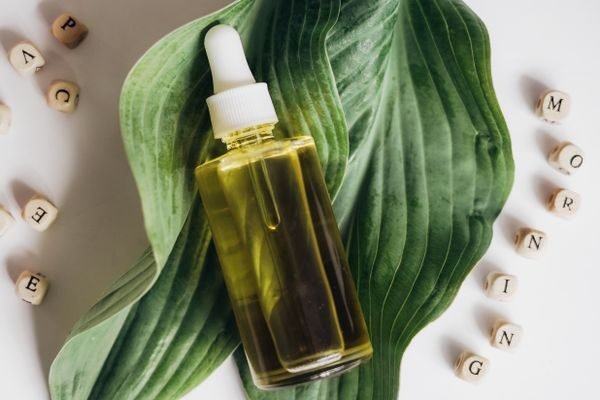
Hemp seed oil for hair starts life as a food oil. The same green-gold, nutty-smelling oil sold in supermarkets for salad dressings is the oil people smooth onto their ends. It is cold-pressed from the seeds of Cannabis sativa varieties grown for fibre and food, which are bred to contain only trace amounts of THC. The oil itself will not get you high, will not show up as anything on a drug test in any meaningful sense, and has been used as a food ingredient for a very long time. When it is sold for beauty use, the only real difference is the packaging and the price, so buying a food-grade, cold-pressed, unrefined bottle is often the smartest move.
What makes hemp seed oil for hair interesting is its fatty acid profile. Roughly half to three-fifths of the oil is linoleic acid, an omega-6 fatty acid, with around a sixth to a fifth alpha-linolenic acid, an omega-3, plus a small amount of gamma-linolenic acid, or GLA. That gives an omega-6 to omega-3 ratio of roughly three to one, which is unusually balanced for a plant oil. It also contains vitamin E in the form of gamma-tocopherol, along with plant sterols and other minor compounds. None of this makes it magic. What it does explain is why the oil feels the way it does on hair: light, fast-absorbing, and softening rather than heavy and sealing.
It also helps to place hemp seed oil for hair in the right category. It is a carrier oil, not an essential oil. Essential oils are concentrated plant extracts that must be diluted before they touch skin, while hemp seed oil for hair can be applied directly, in the same way you would use argan or jojoba oil. If you want to add a few drops of rosemary or lavender essential oil to your hemp seed oil for a scalp massage, hemp seed oil works beautifully as the base, but you should still respect dilution guidance. Our essential oil dilution calculator takes the guesswork out of that step if you ever blend the two.
Why the Omega-6 to Omega-3 Ratio Matters for Your Scalp
Here is the angle most hemp hair guides skip, and it is the one that explains why this oil suits so many people. Your scalp is skin, and like the skin on your face, it relies on a barrier of lipids to hold moisture in and keep irritants out. Linoleic acid is one of the building blocks of that barrier, and it plays a role in ceramide production, the waxy lipids that glue skin cells together. When that barrier is compromised, whether by harsh shampooing, hot water, overwashing, or cold winter air, the scalp tends to feel tight, flaky, or itchy, and hair loses moisture faster because the whole environment around the follicle is drier.
Hemp seed oil for hair is relevant here because it delivers linoleic acid in a light, easily spread form, alongside a meaningful share of omega-3. Most kitchen oils lean heavily one way: olive oil is mostly monounsaturated, coconut oil is mostly saturated, and many seed oils are overwhelmingly omega-6 with very little omega-3 to balance them. Hemp seed oil for hair is closer to balanced, and that balance is plausibly part of why people with reactive scalps often tolerate it well. To be clear, this is a conditioning and barrier-support story, not a medical claim. No one should expect hemp seed oil for hair to treat eczema, psoriasis, or any diagnosed scalp condition, and if your scalp is inflamed, cracked, or losing hair in patches, a dermatologist is the right next step, not a new bottle of oil.
There is also a practical side to the scalp-barrier angle. A scalp that holds moisture better tends to flake less, itch less, and feel more comfortable between washes, which means you are less likely to scratch, pick, or overwash, all of which damage hair indirectly. Think of hemp seed oil for hair as part of a gentler routine rather than a treatment: a way to keep the scalp environment calm and hydrated so that the hair growing out of it has the best possible start. That framing also keeps expectations honest. The oil works on the surface and on the scalp environment; it does not rewrite your genetics, change your growth rate, or repair a damaged follicle from the outside.
What Hemp Seed Oil for Hair Actually Does
Used consistently, hemp seed oil for hair softens the hair shaft, adds slip, and makes detangling easier, which is where most of its real value lives. Hair breaks when it is dry, tangled, and forced through a brush or a tight style, and anything that reduces friction during those moments helps you keep length. People with fine hair often notice the difference first, because heavier oils flatten their hair or leave it looking stringy, while hemp seed oil for hair adds softness without that weighed-down feeling. People with thick, coarse, or coily hair notice it too, but usually as a layering oil: something that adds softness and shine under or over a heavier butter without adding more weight.
Hemp seed oil for hair also tames frizz, though it is worth being precise about how. Frizz is usually hair that is reaching for moisture in humid air, or a raised, rough cuticle scattering light instead of reflecting it. A thin coat of hemp seed oil for hair smooths that cuticle layer temporarily and slows moisture exchange, so hair looks smoother and shinier for a day or two. It will not permanently seal the cuticle the way a silicone serum can appear to, and it will wash out, which is fine. The goal is manageable, soft hair between washes, not a permanent transformation, and on that measure hemp seed oil for hair performs very well for its price.
For the scalp, hemp seed oil for hair offers a similar, modest story. Massaged in before washing, it can loosen flakes, ease that tight feeling after a clarifying shampoo, and leave the scalp feeling more comfortable. Some people with mildly dry or flaky scalps find that a weekly hemp seed oil for hair scalp massage reduces visible flaking over a few weeks, and that is consistent with what a light, linoleic-rich oil should do for a dry skin barrier. What it will not do is cure dandruff, which is driven by yeast and skin cell turnover and usually needs an antifungal shampoo, or regrow hair, which is a follicle question with its own answers. Keeping those boundaries clear is what separates a trustworthy guide from a sales page.
How to Use Hemp Seed Oil for Hair: Four Methods That Work
The best method depends on your hair type and what you are trying to fix, so here are the four ways people actually use hemp seed oil for hair, with honest guidance on each. Start with one method for a few weeks before adding another, so you can tell what is actually helping.
1. Hemp Seed Oil for Hair as a Pre-Wash Treatment
This is the most useful method for most people, and the best place to start with hemp seed oil for hair. On dry or slightly damp hair, warm a teaspoon or two of oil between your palms and work it through the mid-lengths and ends, where damage concentrates. If your scalp is dry, massage a little into the scalp too, using your fingertips rather than your nails. Leave it for twenty to thirty minutes, or up to an hour if your hair is very dry, then shampoo as usual. Because hemp seed oil for hair is light, one shampooing is usually enough, though very thick hair may need a second pass on the lengths. Used once a week, this pre-wash routine is often enough to notice softer, easier-to-detangle hair within a month, and it is far more effective than pouring oil on already-clean hair and hoping for the best.
2. Hemp Seed Oil for Hair as a Leave-In on Damp Ends
After washing, when your hair is damp but not dripping, rub two or three drops of hemp seed oil for hair between your palms and smooth it over the ends only. This is where the oil earns its reputation as a lightweight finisher: it adds shine and slip without the greasy curtain that heavier oils leave, and it works under styling products without pilling. Fine hair does best with just a drop or two, while thick or curly hair can handle a little more. The common mistake is applying hemp seed oil for hair to the roots as a leave-in, which makes even clean hair look unwashed by lunchtime, so keep leave-in use to the lower half of your hair unless your scalp is genuinely dry and you are deliberately treating it.
3. Hemp Seed Oil for Hair as a Scalp Massage Oil
Once a week, section your hair and massage hemp seed oil for hair into your scalp with the pads of your fingers for three to five minutes. The massage itself matters as much as the oil: it increases blood flow to the scalp surface, helps you notice tenderness, bumps, or flaking you might otherwise miss, and turns a chore into a ritual you will actually repeat. Leave the oil on for at least thirty minutes before washing it out, or overnight if your scalp is very dry and you can protect your pillow with a towel or a satin cap. If you want to add essential oils to your scalp massage, keep the blend gentle and check your dilution first with our essential oil dilution calculator, and always patch test a new blend before using it all over your scalp.
4. Hemp Seed Oil for Hair Mixed Into Products You Already Own
If you do not want another step in your routine, stir hemp seed oil for hair into what you already use. A teaspoon mixed into your regular conditioner boosts slip and softness, a few drops added to a hair mask make the mask easier to distribute, and a drop or two in your leave-in conditioner can rescue a formula that feels too light on its own. This is also the easiest way to test whether hemp seed oil for hair suits you, because you are not changing anything else. If your hair feels softer and looks shinier after two or three weeks of this, you can graduate to a dedicated pre-wash or scalp routine; if nothing changes, you have lost nothing and learned something useful about your hair.
Hemp Seed Oil for Hair by Hair Type
Fine, straight hair is where hemp seed oil for hair shines most, because the oil is light enough not to collapse volume. Use tiny amounts, focus on the ends, and avoid the roots except for a deliberate pre-wash scalp treatment that you will shampoo out. Wavy hair benefits in a similar way, and a drop smoothed over the canopy on damp hair can calm frizz without dragging waves straight. If you are unsure where your hair falls, our guide to determining your hair type walks through the differences in plain language.
Curly and coily hair can absolutely use hemp seed oil for hair, but usually as one layer rather than the whole routine. Curls need water first and oil second: oil seals in moisture that is already there, but it cannot create moisture on dry hair. So apply your leave-in or cream to damp curls, then smooth a little hemp seed oil for hair over the top to lock it in and add shine. For braids and protective styles, a light daily application of hemp seed oil for hair along the parts and on the lengths keeps hair supple without the buildup that heavier oils cause under a style you cannot wash for weeks. If your curls seem to repel every product you try, take our hair porosity test before blaming the oil, because low-porosity hair behaves very differently from high-porosity hair, and the fix is usually about technique, not switching oils.
Damaged, bleached, or heat-styled hair needs a slightly different approach to hemp seed oil for hair. This hair has a rougher, more porous cuticle, so it drinks oil up fast and still feels dry an hour later. A pre-wash treatment left on for a full hour, followed by a proper conditioner, works better than a few leave-in drops, and pairing hemp seed oil for hair with a richer oil or a mask gives the lengths something to hold onto. Our guide on how to use hair oil covers the general method in more detail, and our hair mask guide for dry, damaged and frizzy hair is a good next step if your hair needs more than oil alone.
Hemp Seed Oil for Hair vs Other Oils
Compared with coconut oil, hemp seed oil for hair is lighter and less penetrating. Coconut oil has real evidence behind it for reducing protein loss during washing, because its small, straight-chain molecules can enter the hair shaft, but that same quality makes it heavy and, for some people, stiffening or even drying with repeated use. Hemp seed oil for hair does not have that penetration evidence, and you should be suspicious of any guide that claims otherwise, but it also does not leave the coated, waxy feeling coconut oil can leave on fine hair. If coconut oil makes your hair feel crunchy, hemp seed oil for hair is a sensible swap.
Against argan oil, the comparison is closer. Both are light, fast-absorbing, and good finishers, and many people would be happy with either. Argan oil tends to feel slightly richer and silkier on the surface, while hemp seed oil for hair feels a touch drier and more matte, which suits people who dislike any hint of grease. Argan also has a much longer shelf life, which matters if you use oil slowly. For a fuller comparison of how argan behaves across hair types, see our argan oil guide for different hair types and our general argan oil for hair guide. Against jojoba oil, hemp seed oil for hair is the more conditioning of the two, since jojoba is technically a wax ester that mimics skin sebum and excels at scalp balance, while hemp seed oil for hair brings more softening fatty acids to the lengths. Our jojoba oil benefits guide explains that distinction well.
Castor oil sits at the opposite end of the spectrum from hemp seed oil for hair: thick, sticky, and sealing, excellent for coating coarse hair or protecting ends, but far too heavy for most people as a daily oil. A useful trick is blending the two, using mostly hemp seed oil for hair with a small amount of castor oil stirred in for extra grip on very dry ends. That blend gives you castor’s sealing power without its gloopy texture, and it is a good example of why no single oil has to do everything. If you want a broader side-by-side view, our hair oil comparison guide puts the common oils next to each other in plain terms.
Buying and Storing Hemp Seed Oil for Hair: The Freshness Problem
Here is the part of hemp seed oil for hair that most guides gloss over, and it is the reason some people try it once, hate the smell, and never come back. Hemp seed oil for hair is rich in polyunsaturated fats, and polyunsaturated fats oxidise. That means the oil goes rancid faster than almost any other hair oil you own, sometimes within a few months of opening if it sits in a warm bathroom. Rancid hemp seed oil for hair smells sharp, paint-like, or like old crayons, and it can irritate a sensitive scalp, so freshness is not a nicety here, it is the whole game.
Buy hemp seed oil for hair in a dark glass bottle, not clear plastic, and check for a pressing or best-before date if the brand prints one. Cold-pressed and unrefined is what you want, since refining strips out some of the compounds that make the oil interesting, and the green colour is a good sign: fresh hemp seed oil for hair is green-gold, not pale yellow. Buy a small bottle unless you use it daily, keep it in a cool, dark place, and consider refrigerating it if your bathroom runs warm, especially in summer. A bottle that lives on a sunny windowsill above a radiator will turn on you fast, and no amount of fragrance will save it. If your hemp seed oil for hair smells sharp or stale, throw it away. It is cheap enough that replacing it beats putting oxidised oil on your scalp.
Price is another place where hemp seed oil for hair rewards a clear head. Because it is also a food oil, you do not need to pay beauty-brand prices for it. A plain, food-grade, cold-pressed bottle is chemically the same oil as the one in the fancy amber dropper bottle, and it often costs a third as much. What you are paying for in beauty packaging is a dropper, a nicer label, and sometimes a blend with other oils, which is fine if you value convenience, but do not let a high price convince you the oil itself is more potent. Read the ingredients instead: you want to see Cannabis sativa seed oil at or near the top of the list, and nothing else you cannot pronounce.
Mistakes to Avoid With Hemp Seed Oil for Hair
The most common mistake with hemp seed oil for hair is using too much. Because it feels light, people pour out a generous puddle, and even a light oil looks greasy in excess. Start with less than you think you need, especially as a leave-in, and add more only if your hair still feels dry after it has dried. The second mistake is expecting hemp seed oil for hair to fix breakage on its own. Breakage usually comes from a combination of heat, chemical processing, rough handling, and infrequent trims, and oil can reduce friction but cannot glue split ends back together. If your ends are splitting, a trim plus gentler handling will do more than any oil, and hemp seed oil for hair works best as the maintenance step after that trim, not as a substitute for it.
The third mistake is skipping a patch test because hemp seed oil for hair is natural. Natural does not mean non-allergenic, and hemp seed allergy, while uncommon, is real. Dab a little oil on the inside of your forearm or behind your ear, wait a full day, and watch for redness, itching, or bumps before you massage it all over your scalp. Our patch test timer helps you track that waiting period properly, and our hair oil side effects guide covers what to do if a reaction does appear. The fourth mistake is leaving hemp seed oil for hair on unwashed, product-heavy hair for days at a time. Oil on top of buildup traps dirt and styling residue against the scalp, which is the opposite of the calm, clean scalp environment you are trying to create, so always start a scalp treatment on reasonably clean hair.
How Long Before Hemp Seed Oil for Hair Shows Results?
Softness and shine can show up immediately with hemp seed oil for hair, because those are surface effects, and you should notice easier detangling after the very first pre-wash treatment if your hair was dry. Scalp comfort takes longer: give a weekly scalp massage routine three to four weeks before judging it, since skin barrier changes are gradual and flaking does not vanish overnight. Length retention, the real long-term prize, takes months to judge, because you are measuring breakage you did not have rather than growth you can see. Take a photo of your ends in the same light once a month if you want an honest record, and compare how your hair behaves when you brush it, not just how long it looks in the mirror.
If after six weeks of consistent use hemp seed oil for hair has changed nothing, that is useful information, not failure. It may mean your hair needs a richer oil, a protein treatment, a different washing frequency, or a trim, and switching is smarter than doubling down. It may also mean the bottle was stale, which is worth checking before you blame the oil itself. And if your goal is actually faster growth rather than healthier-looking hair, read our companion piece on growth evidence separately, because the honest answer there is more complicated than any single oil can cover, and you deserve that nuance before you spend money on growth promises.
Frequently Asked Questions About Hemp Seed Oil for Hair
Is hemp seed oil for hair the same as CBD oil?
No, and this is the single most important distinction in this guide. Hemp seed oil for hair is pressed from seeds and contains negligible CBD, while CBD oil is extracted from flowers and leaves and sold for its cannabinoid content. They come from the same plant but are different products with different prices and different purposes, and a hair product that blurs that line is one to be cautious about.
Will hemp seed oil for hair make my hair grow faster?
There is no reliable evidence that hemp seed oil for hair increases your growth rate. Hair grows from the follicle at a genetically set pace, and oil applied to the lengths cannot change that pace. What hemp seed oil for hair can do is reduce breakage, so you keep more of the length you grow, which looks like faster growth over time even though the follicle is working at the same speed. That distinction matters, and any brand that promises new growth from a bottle of seed oil is overselling.
Can I use hemp seed oil for hair every day?
You can, but most people do not need to. A weekly pre-wash treatment plus a few drops on the ends after washing is plenty, and daily scalp application can lead to buildup if you are not washing regularly. If you do use hemp seed oil for hair daily, keep the amount tiny, keep it off the roots unless you are treating a dry scalp, and shampoo thoroughly a couple of times a week so residue does not accumulate.
Does hemp seed oil for hair work for oily scalps?
Surprisingly often, yes, because it is light and non-greasy, and a small amount massaged into an oily scalp before washing does not add to the problem the way a heavy oil would. The trick is to always wash it out rather than leaving it on, and to use it once a week rather than daily. If your scalp is very oily and also flaky, that combination deserves a proper look, since it may be seborrheic dermatitis rather than simple oiliness, and that responds to medicated shampoo rather than carrier oil.
Is hemp seed oil for hair safe for colour-treated hair?
Generally yes. Hemp seed oil for hair does not strip colour the way harsh clarifying treatments can, and it can actually help colour-treated hair feel softer, since that hair is usually drier and more porous. Use it as a pre-wash treatment rather than a leave-in on freshly coloured hair for the first few washes, just to avoid any transfer onto clothes or pillowcases, and remember that no oil can prevent colour fading entirely, especially with frequent washing or hot water.
The bottom line on hemp seed oil for hair is refreshingly simple. It is a light, affordable, fast-absorbing oil with a genuinely interesting fatty acid profile, a real talent for softening hair and calming a dry scalp, and one serious weakness, which is how quickly it goes rancid if you store it badly. Use it fresh, use it sparingly, keep your expectations honest about growth, and it earns its place in a routine. If you pair it with gentle washing, regular trims, and a patch test before you start, hemp seed oil for hair is one of the lowest-risk experiments in hair care, and for a lot of people, it becomes the bottle they reach for most.