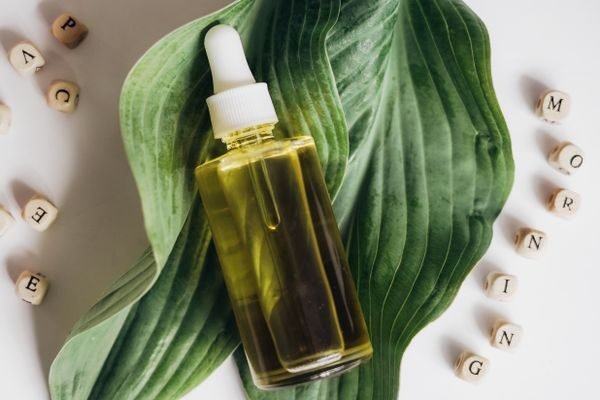
Hemp Seed Oil for Hair Growth
Search for hemp seed oil for hair growth and you will find two kinds of article. The first promises thicker, faster-growing hair from a bottle of oil. The second dismisses the whole idea in a paragraph. Neither is honest enough to be useful, so this guide takes the middle path that the evidence actually supports. Hemp seed oil for hair growth is a question with three separate parts: what the oil does to your scalp, what it does to the hair you already have, and whether any of that adds up to more hair on your head. Answering those parts separately is the only way to avoid fooling yourself, and it is also the only way to use hemp seed oil for hair growth sensibly if you decide to try it.
The short answer, up front, is this. There is no reliable evidence that hemp seed oil for hair growth increases the speed at which your hair grows, and anyone selling you that promise is ahead of the science. What does have support is a narrower, more useful claim: hemp seed oil for hair growth routines can improve the condition of your scalp and reduce breakage, which means you keep more of the length your follicles already produce. That distinction, between growing more hair and losing less of it, is the key to this entire article, and once you understand it, every growth claim you ever read becomes much easier to judge.
What Hair Growth Actually Is, and Why Oil Cannot Speed It Up Directly
Hair growth happens in the follicle, a tiny structure buried in your scalp that builds hair from living cells, fed by your bloodstream. The visible hair shaft, everything from the scalp surface outward, is not alive. It cannot be fed, repaired, or stimulated by anything you rub on it, because it has no metabolism. That single fact sets the limits for hemp seed oil for hair growth, and for every other oil that claims to grow hair. Oil applied to the lengths can condition, protect, and reduce friction, but it cannot signal the follicle to produce hair faster, because the shaft and the follicle are different things, and oil on one does not instruct the other.
Growth rate itself is largely set by genetics, age, hormones, and overall health, and it averages roughly half an inch per month for most people, with wide individual variation. The follicle cycles through growth, transition, and resting phases, and at any given time most of your follicles are in the growth phase while a minority rest and shed. No topical oil has been shown to extend the growth phase or speed the rate of production in a well-designed human trial, and hemp seed oil for hair growth is no exception. That does not make the oil useless for people who want longer hair, but it does mean the mechanism is indirect, and any honest discussion of hemp seed oil for hair growth has to start there.
What oil can influence is the environment around the follicle and the survival of the hair once it emerges. A scalp that is dry, inflamed, or flaky is a worse environment for follicles than a calm, well-moisturised one, and hair that is constantly snapping at the ends never gets long no matter how fast the follicle works. Hemp seed oil for hair growth is best understood as a tool for those two indirect jobs: keeping the scalp comfortable and keeping the lengths intact. Both matter, and both are worth doing, but neither is the same as regrowing hair, and confusing them is how people waste months and money.
Hemp Seed Oil for Hair Growth: What the Evidence Actually Shows
The evidence base for hemp seed oil for hair growth is thin, and saying so plainly is part of this guide’s job. There are no large, well-controlled trials testing hemp seed oil for hair growth in healthy adults with ordinary thinning or slow growth. What exists is a small collection of studies on related questions, and each one needs to be read for what it actually tested, not for what a marketing page claims it tested.
The most directly relevant study is a small clinical trial on alopecia areata, a patchy, autoimmune form of hair loss, in which twenty patients applied hemp seed oil to affected areas nightly for two months. After eight weeks, five patients showed marked regrowth, eight showed moderate improvement, two showed mild improvement, and five showed no response, with improvement notably stronger between weeks four and eight than in the first month. That is an encouraging signal for that specific condition, but it is a tiny, unblinded study without a control group, and alopecia areata is not the same as ordinary thinning, male or female pattern loss, or slow growth. Extrapolating from twenty alopecia patients to everyone searching for hemp seed oil for hair growth would be a serious overreach, and this guide will not do it.
The second study people cite is actually about something else, and it is important to name that clearly. A widely shared case series on hair regrowth used a hemp extract high in CBD and related cannabinoids, applied daily for six months to people with pattern hair loss, and reported increased hair counts. That product was a cannabinoid extract, not hemp seed oil, and hemp seed oil contains negligible CBD. Citing that study as evidence for hemp seed oil for hair growth is a category error, the same one that confuses hemp seed oil with CBD oil throughout the beauty industry. If you take one evidence lesson from this article, let it be this: always check whether a study used seed oil or cannabinoid extract, because the two are different products and their results do not transfer.
Beyond those studies, the case for hemp seed oil for hair growth rests on plausibility rather than proof. The oil is rich in linoleic acid and alpha-linolenic acid, which support skin barrier function, and it contains gamma-linolenic acid and vitamin E, which are associated in laboratory research with calmer inflammatory signalling. A healthier scalp environment is plausibly better for follicles, and reduced breakage is mechanically certain when hair is conditioned and handled gently. But plausibility is not evidence of regrowth, and the gap between a plausible mechanism and a proven result is exactly where most growth marketing lives. If you want a fuller picture of how growth actually works and what else influences it, our guide to growing hair faster covers the broader factors, from nutrition to handling, without singling out any one product.
Retention vs Regrowth: The Distinction That Changes Everything
Here is the most useful idea in this article, and the one that will save you the most disappointment. Most people who think their hair is not growing are actually experiencing a retention problem, not a growth problem. Their follicles produce hair at a normal rate, but the ends break off almost as fast as new length appears, so the total length never increases. From the mirror, slow growth and high breakage look identical: hair that never seems to get longer. From the follicle’s point of view, they are entirely different problems with entirely different solutions.
Hemp seed oil for hair growth helps with the retention side of that equation, and it helps in a straightforward, mechanical way. Conditioned hair has a smoother cuticle, slides past itself with less friction, detangles with less force, and survives brushing, styling, and pillow friction with fewer snapped ends. Over months, that adds up to visibly longer hair, not because the follicle worked faster, but because less of its output was lost. If your hair is dry, bleached, heat-styled, or frequently tangled, retention is very likely your real problem, and hemp seed oil for hair growth as a conditioning routine is a sensible, low-cost part of fixing it.
Regrowth is the harder problem, and it is where hemp seed oil for hair growth reaches its limits. If your hairline is receding, your part is widening, or you have smooth, shiny patches where hair used to grow, that is a follicle problem, and no seed oil has been shown to reverse it. Pattern hair loss, scarring hair loss, and hair loss driven by hormones, illness, or medication need proper diagnosis, and the effective treatments for them are medical, not cosmetic. Using hemp seed oil for hair growth in that situation is not harmful in itself, and it may make your remaining hair look better, but it should never be the reason you delay seeing a clinician, because some causes of hair loss are time-sensitive and early treatment matters.
A Realistic Timeline for Hemp Seed Oil for Hair Growth
If you decide to try hemp seed oil for hair growth as a scalp and conditioning routine, here is what a realistic timeline looks like, based on how hair and skin actually change rather than on marketing promises. In the first two weeks, expect only surface changes: softer hair, easier detangling, and a scalp that feels less tight after washing. These are conditioning effects, and they are real, but they are not growth, and they will fade if you stop using the oil. Do not judge the routine on these weeks, because they tell you nothing about retention or regrowth.
Between weeks three and eight, you can start judging scalp comfort honestly. If your scalp was dry or flaky, a weekly hemp seed oil for hair growth scalp massage should have made a noticeable difference by now, with less visible flaking and less itching between washes. This is also the window in which the small alopecia study saw its clearest improvements, which is a useful reminder that scalp changes take weeks, not days. If your scalp feels no better after eight consistent weeks, the oil is probably not addressing your scalp issue, and the cause may be something a shampoo or a clinician needs to look at instead.
Between months three and six, retention becomes measurable. This is the honest window for hemp seed oil for hair growth as a length-keeping routine. Take a photo of your ends in the same light and at the same length reference, like a fixed point on your back or a shirt seam, once a month, and compare breakage rather than length alone. Count the short, snapped hairs on your brush and pillow if you want a concrete measure, and note whether detangling takes less force. If your hair is measurably longer at six months with less breakage, the routine is working for you, even though your follicles are growing at the same rate they always did. If nothing has changed after six months of consistent use, hemp seed oil for hair growth has done what it can, and it is time to look elsewhere.
What you should not expect at any point is new hair appearing where follicles have stopped producing it, a sudden acceleration in growth rate, or a transformation in density. Hair density is set by the number of active follicles and the thickness of each shaft, and neither is changed by a seed oil. Products that promise density from hemp seed oil for hair growth are usually describing the cosmetic fullness that comes from conditioned, less broken hair, which is real but temporary, or they are simply exaggerating. Holding that line is what keeps a growth routine honest and keeps you from chasing one bottle after another.
How to Use Hemp Seed Oil for Hair Growth as a Routine
The routine itself is simple, and it overlaps with general hair oiling, but with a scalp-first emphasis that suits a growth goal. Once a week, section your hair and massage hemp seed oil for hair growth into your scalp with your fingertips for three to five minutes, working a little through the mid-lengths and ends as well. Leave it for thirty minutes to an hour, or overnight if your scalp is very dry and you can protect your bedding, then shampoo thoroughly. On wash days between treatments, a few drops on damp ends keeps the lengths conditioned without adding buildup to the scalp. That is the whole routine, and adding more steps usually reduces consistency rather than improving results.
A few practical details make the difference between a routine you keep and one you abandon. Buy a small, dark-glass bottle of cold-pressed, unrefined hemp seed oil for hair growth use, because this oil oxidises fast and a rancid bottle will irritate your scalp and undermine the whole point. Store it cool and dark, or refrigerated if your bathroom runs warm, and discard it if it smells sharp or paint-like. Patch test before your first full scalp application, using our patch test timer to track the waiting period, and keep the amount modest: a teaspoon or two for the whole scalp and lengths is plenty, and more oil does not mean more benefit. If you want to blend in essential oils for your scalp massage, check your dilution with our essential oil dilution calculator first, since an irritated scalp is the opposite of a healthy growth environment.
It also helps to pair hemp seed oil for hair growth with the habits that actually protect length. Reduce heat styling where you can, or use a heat protectant when you cannot, and detangle gently from the ends upward with a wide-tooth comb rather than tearing through knots from the roots. Sleep on a satin or silk pillowcase if your hair tangles overnight, and get regular small trims to remove split ends before they travel up the shaft. None of these habits is glamorous, and none of them will be featured on a product label, but together they do more for visible length than any single oil. Our guide to using hair oil covers the general technique, and our hair care guide puts these habits into a full routine.
What about combining hemp seed oil for hair growth with other growth oils? It can be sensible, as long as you keep the roles clear. Rosemary oil has the strongest, though still modest, evidence among plant oils for supporting hair fullness, and it is often used diluted in a carrier oil, for which hemp seed oil is an excellent base. Argan oil is a good alternative carrier if you prefer a richer finish, and our argan oil for hair growth guide covers its evidence with the same honesty this article applies to hemp. The mistake is stacking five growth products at once, which makes it impossible to tell what is helping, and which usually means at least one of them is irritating your scalp. Pick one routine, run it for three months, and judge it on the timeline above.
When Hemp Seed Oil for Hair Growth Is Not Enough: Red Flags
Some hair loss needs a clinician, not a cosmetic routine, and knowing the difference is the most important part of any honest hemp seed oil for hair growth guide. See a doctor or dermatologist promptly if you notice sudden or patchy hair loss, smooth bald patches, a rapidly widening part or receding hairline, scalp pain, redness, scaling, or scarring, or hair loss that starts alongside a new medication, a major illness, or significant weight change. These patterns can indicate conditions that respond to treatment, and some, particularly scarring hair loss, cause permanent follicle damage if treatment is delayed. Spending three months on a hemp seed oil for hair growth routine while a treatable condition progresses is the one real risk in this whole topic, and it is easily avoided by getting checked early.
It is also worth checking the basics before blaming your oil routine. Iron deficiency, thyroid problems, and major stress or illness can all shift large numbers of follicles into the shedding phase at once, a pattern called telogen effluvium, and no topical product fixes a systemic cause. If your shedding increased suddenly a few months after an illness, childbirth, surgery, or a period of intense stress, that timeline points to a systemic trigger, and blood tests are more useful than a new bottle. Hemp seed oil for hair growth can still be part of your routine while you address the underlying cause, keeping your remaining hair conditioned and your scalp comfortable, but it should be the supporting act, not the main treatment.
Frequently Asked Questions About Hemp Seed Oil for Hair Growth
Does hemp seed oil for hair growth actually regrow hair?
There is no reliable evidence that hemp seed oil for hair growth regrows hair or speeds the follicle’s growth rate. The honest benefit is indirect: a calmer scalp and less breakage, which lets you keep more of the length you grow. A small study on patchy alopecia showed improvement in some patients, but that was a tiny, uncontrolled trial on a specific condition, and it does not justify a general regrowth claim.
How long should I try hemp seed oil for hair growth before deciding?
Give hemp seed oil for hair growth a full three months of weekly use before judging retention, and six months before a final verdict on length. Scalp comfort can be judged sooner, at around eight weeks. Anything that promises visible regrowth in two weeks is not being honest about how hair grows, and you should discount the rest of its claims accordingly.
Is hemp seed oil for hair growth better than CBD oil for growth?
They are different products, and the comparison is mostly a labelling trap. Hemp seed oil contains negligible CBD, while CBD oil is a cannabinoid extract. The one case series often cited for growth used a cannabinoid extract, not seed oil, so it is not evidence for hemp seed oil for hair growth at all. Choose based on what you actually want: conditioning and scalp comfort points to seed oil, while anything cannabinoid-related is a separate decision with its own evidence and cautions.
Can I use hemp seed oil for hair growth every day?
Daily scalp application is unnecessary and can cause buildup. A weekly scalp massage plus a few drops on damp ends after washing is the right frequency for hemp seed oil for hair growth for most people. More frequent use does not speed anything up, because the follicle does not respond to oil quantity, and excess oil on the scalp traps residue and can make flaking worse rather than better.
The bottom line on hemp seed oil for hair growth is measured but genuinely positive. It will not make your follicles grow faster, and no honest guide should tell you otherwise. What it will do, used fresh and consistently, is keep your scalp comfortable and your lengths intact, and for the large number of people whose real problem is breakage rather than slow growth, that is exactly what longer-looking hair requires. Pair hemp seed oil for hair growth with gentle handling, realistic timelines, and a prompt clinical check if you see red flags, and you have a routine that is honest, affordable, and worth the small effort it takes.