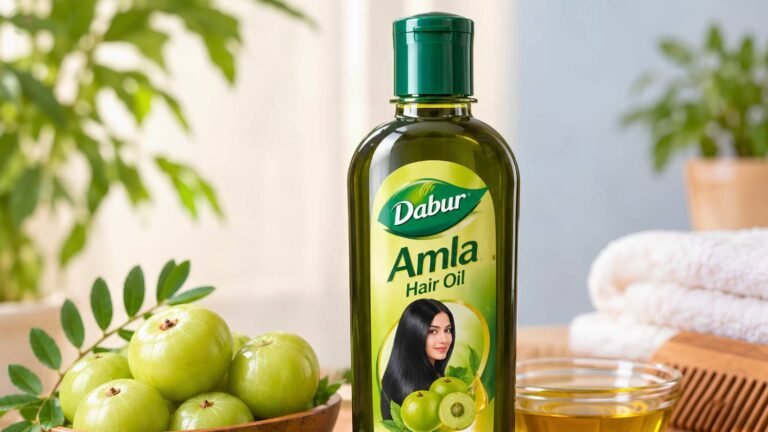
Amla oil has been a hair care staple across South Asia for centuries, but it’s increasingly showing up in American bathroom cabinets too.
If you’ve seen it recommended online and wondered whether an oil designed for a completely different climate and hair type actually works for you, you’re asking a fair question.
Here’s an honest look at how amla oil for American hair care routine works, from climate differences to hair type considerations to where you can actually buy it.
Why Climate Actually Matters With Amla Oil
Most traditional amla oil routines were developed in South Asia’s humid, tropical climate, which behaves very differently from much of the United States. Many parts of the U.S. deal with dry winters, forced-air indoor heating, and far lower ambient humidity, all of which strip moisture from hair more aggressively than a humid climate does.
This actually makes amla oil more relevant for a lot of Americans, not less. Dry indoor heat during winter months is one of the most common causes of brittle, static-prone hair in the U.S., and amla oil’s moisturizing, antioxidant-rich properties can help offset some of that seasonal dryness.
Hard Water: A Bigger Factor Than Most People Realize
One difference that rarely gets mentioned is water quality.
A significant portion of American households deal with hard water, meaning water with a higher mineral content, which is known to leave mineral buildup on hair over time and contribute to dullness and dryness.
Amla oil doesn’t remove hard water buildup directly, but its conditioning properties can help counteract some of the dryness and dullness that hard water tends to cause, particularly when used as a pre-wash treatment before showering.
Amla Oil for American Hair, does it work, and Types?
American hair care routines cover an unusually wide range of hair types and textures, from straight and fine to curly and coily, often more diverse within a single country than in the regions where amla oil originated. The good news is that amla oil’s core benefits, scalp nourishment, reduced breakage, and added shine, aren’t limited to one specific hair type.
For Curly and Coily Hair
Curly and coily hair types are naturally more prone to dryness, since the hair’s shape makes it harder for natural scalp oils to travel down the length of the strand. Amla oil’s moisturizing, antioxidant-rich formula can be layered under heavier butters or creams as part of a broader moisture-focused routine, which is common practice in curly hair care already.
For Fine or Straight Hair
Fine, straight hair types need to be more careful about product buildup, since heavier oils can weigh hair down quickly. A lighter application of amla oil, focused on the scalp and ends rather than the full length, tends to work better for this hair type.
For Color-Treated or Chemically Processed Hair
Color treatments and chemical processing, both common in American hair care routines, can weaken the hair shaft and strip natural moisture. Amla oil’s traditional use for strengthening and conditioning makes it a reasonable addition to a post-color care routine, alongside protein treatments when needed.
Is Amla Oil Easy to Find in the U.S.?
Amla oil has become significantly easier to find in American stores over the past several years, no longer limited to specialty international markets. Here’s where it typically shows up:
- Online marketplaces like Amazon, which carry the widest range of brands, from budget options to premium cold-pressed versions.
- Health food and natural grocery stores, particularly larger chains with a dedicated natural beauty section.
- Beauty supply stores, especially those catering to textured and curly hair care, often stock amla oil alongside other natural hair oils.
- South Asian and international grocery stores, which typically carry well-known brands at a lower price point than specialty beauty retailers.
If you’re new to it, starting with a smaller bottle from a well-reviewed brand is a practical way to test how your hair responds before committing to a larger purchase.
A Few Practical Adjustments for U.S. Routines
Traditional amla oil routines often assume daily or near-daily use, which doesn’t always translate well to typical American hair care habits, where washing frequency and styling routines tend to differ. A more realistic approach for most people is applying amla oil two to three times a week, ideally the night before a wash day, rather than trying to follow a routine built around different hair-washing habits.
It’s also worth pairing amla oil with a leave-in conditioner or heat protectant if you regularly use heat styling tools, since amla oil alone doesn’t offer the same heat-shielding properties as products specifically formulated for that purpose.
Regulatory Note: What “Natural” Actually Means on U.S. Labels
In the United States, cosmetic ingredients, including oils like amla oil, aren’t required to go through the same pre-market approval process as drugs. This means terms like “natural” or “pure” on a bottle aren’t strictly regulated in the same way “organic” is.
If purity matters to you, look for products that list amla as one of the only one or two ingredients, rather than relying solely on marketing language on the front label.
Final Thoughts
Amla oil isn’t limited to the climate or hair types it originated with. Its core benefits, moisture, scalp nourishment, and antioxidant support, translate well to the dry winters, hard water, and wide range of hair types common across the United States.
The main adjustments worth making are practical ones: choosing the right amount for your specific hair type, being mindful of application frequency that fits your routine, and reading ingredient labels carefully rather than relying on front-of-bottle claims.
This article is for general informational purposes and isn’t a substitute for professional dermatological advice. If you have a scalp condition or known allergies, patch-test any new oil before regular use.