Best Amla Oil for Hair: How to Choose the Right One
Searching for the best amla oil for hair usually starts with a simple hope: one bottle that will suit your hair, feel good to use, and be worth the money. The shelves make that search harder than it should be, because bottles that all say amla oil on the front can be very different products inside. Some are close to a pure amla oil, some are amla infused into coconut or sesame oil, and some are mainly mineral oil with a small amount of amla extract and a strong fragrance. All of them can be sold under a similar name, and none of them is automatically the best amla oil for hair for every person.
This guide does not rank bottles we have not covered and does not pretend there is a single winner. Instead, it teaches you how to judge a bottle for yourself: what pure, infused, and blended really mean, how cold-pressed differs from heat-infused and mineral-oil blends, how to read an ingredient list in under a minute, how to match an oil to your hair type, and how to spot a diluted product before you buy it twice. If you already know the basics of amla, our overview of amla oil for hair and our guide to the benefits of amla oil are useful background, but this article stands on its own as a buying guide. That is a practical test to apply when choosing the best amla oil for hair.
Keep one principle in mind throughout. The best amla oil for hair is the one whose ingredients, weight, and base oil suit your scalp and your routine, and which you will actually use consistently. A highly praised oil that feels too heavy, smells unpleasant to you, or leaves your roots limp will not stay in your routine, and an oil that stays in the cupboard cannot help your hair, however good its label sounds.
What Best Really Means When Choosing the Best Amla Oil for Hair
Best is a personal judgement, not a laboratory score. For one person, the best amla oil for hair is the lightest oil that does not weigh down fine hair. For another, it is the richest oil that finally softens coarse, dry lengths. For a third, it is the simplest oil with the shortest ingredient list, because a sensitive scalp reacts to fragrance and additives. A buying guide that names one bottle as best for everyone ignores those differences, so this guide frames best as a match between product and person.
That match has four parts. First, the amla content and how it was extracted: is amla the main story of the bottle, or a minor note? Second, the base oil: coconut, sesame, almond, mineral oil, or a blend, each with a different weight and feel. Third, the extras: other herbs, fragrance, preservatives, and colour, which may help or irritate depending on your scalp. Fourth, the practical side: bottle size, packaging, storage, and whether the oil is easy to apply without waste. Judge all four, and you will choose far better than by following a single online ranking. Keep that test in mind when you choose the best amla oil for hair.
Choosing the Best Amla Oil for Hair: Pure vs Infused vs Blended
Most bottles fall into one of three kinds, and recognising which kind you are holding is the fastest way to narrow the choice. A pure amla oil is presented as amla oil itself, often cold-pressed, with amla as the named oil and few or no other ingredients. It tends to be the most concentrated in character, sometimes thicker or more strongly scented, and it suits readers who want the simplest product and are comfortable judging quality from the label. Our page on pure amla oil explains that category in more detail. It is a useful check on the road to the best amla oil for hair for your routine.
An infused amla oil is made by soaking dried or fresh amla in a carrier oil, such as coconut or sesame oil, so the carrier takes up compounds from the fruit. This is the traditional form, and it is also the most common form on the market. Infused oils vary widely: some are made with a generous amount of amla and a slow infusion, while others use a small amount of amla in a large volume of carrier. The label rarely tells you the exact ratio, so you must judge by the ingredient order, the maker’s transparency, and how the oil performs on your hair. That detail can change which bottle is the best amla oil for hair for you.
A blended amla oil combines amla with other herbs, such as brahmi or bhringraj, or with several carrier oils. Blends can be excellent, because complementary herbs and oils may suit a particular goal, such as scalp comfort or extra conditioning. They can also be confusing, because a long herbal list makes it harder to know which ingredient is doing the work, and harder to identify the cause if your scalp reacts. If you have a sensitive scalp, a simpler oil is usually the safer starting point, and a blend is something to try once you know plain amla suits you. Use it as a filter when searching for the best amla oil for hair.
When you are choosing the best amla oil for hair for your own routine, ask which kind fits your temperament as well as your hair. If you like simple, transparent products, lean toward pure or clearly infused oils. If you enjoy traditional herbal blends and your scalp tolerates them, a blend may feel richer and more satisfying. Neither preference is wrong; the mistake is buying a blend while expecting a pure oil, or buying a pure oil while expecting the gentleness of a light blend.
Cold-Pressed vs Heat-Infused vs Mineral-Oil Blends for the Best Amla Oil for Hair
Extraction and processing language is where many buyers get lost, so it is worth separating three terms that are often used loosely. Cold-pressed means the oil was extracted without high heat, which is valued because heat can degrade delicate compounds and change scent and character. For a pure amla oil, cold-pressed is a meaningful quality signal, although it does not by itself guarantee a good product, and it usually comes with a shorter shelf life and a need for careful storage. That is exactly the kind of detail that decides the best amla oil for hair for one person over another.
Heat-infused, or traditionally prepared, amla oil is made by heating amla in a carrier oil, sometimes over a long, slow process. This is a legitimate traditional method, not a defect, and many well-regarded amla oils are made this way. The heat helps the carrier absorb compounds from the fruit, and the finished oil often has a deep colour and a strong herbal scent. When a label says infused or traditionally prepared, it is usually describing this method, and it should not be treated as inferior to cold-pressed; it is simply a different route to a different kind of oil. Bear it in mind next time you compare bottles for the best amla oil for hair.
Mineral-oil blends are the category to examine most carefully. Mineral oil, also listed as paraffinum liquidum, is a common, inexpensive base that coats the hair and can make it look shiny. It is not inherently harmful in a cosmetic product, but it is not amla oil, and a bottle that is mainly mineral oil with a small amount of amla should not be judged as if it were a pure or richly infused amla oil. If mineral oil appears first or near the top of the ingredient list, the bottle’s conditioning effect may come mainly from the mineral oil coating rather than from amla, and the product will feel and wash out differently from a plant-oil-based amla oil. It belongs on any shortlist for the best amla oil for hair.
The best amla oil for hair is therefore not automatically the one that says cold-pressed on the front, nor automatically the one with the longest tradition story. It is the one whose method matches what you want: cold-pressed for a simple, heat-free pure oil; traditionally infused for a rich herbal oil; and a mineral-oil blend only if you understand what you are buying and you like how it feels on your hair. Transparency matters more than any single buzzword.
How to Read an Ingredient List for the Best Amla Oil for Hair
Ingredient lists are written in descending order by weight, so the first few ingredients tell you most of the story. That single fact turns label reading from a chore into a quick check. Start at the top of the list and ask three questions. What is first? Is amla, or amla extract, near the top? And what else is in the first three ingredients besides the base oil? That is a practical test to apply when choosing the best amla oil for hair.
If amla, amla extract, or Phyllanthus emblica appears early, the product is at least presenting amla as a major ingredient. If it appears near the end, after several carriers, fragrances, and additives, amla may be present only in a small amount, and the bottle’s effect will come mainly from its base oils. That does not make it a bad product, but it should change your expectations and your willingness to pay a premium for the amla name. Keep that test in mind when you choose the best amla oil for hair.
Next, look at the base. Coconut oil, sesame oil, almond oil, and similar plant oils each have a different weight and feel, and the base often decides whether an oil suits fine or thick hair. Then look for fragrance, listed as parfum or fragrance, and for colour. A strong fragrance may be pleasant, but it can irritate a sensitive scalp, and added colour tells you nothing about quality. Preservatives and antioxidants are normal in a commercial oil and are not a reason to reject a bottle on their own, but a very long list of additives in a product sold as pure should prompt a question. It is a useful check on the road to the best amla oil for hair for your routine.
Finally, check for words that sound reassuring but mean little on their own. Natural, herbal, ayurvedic, and premium are marketing terms unless they are backed by a clear ingredient list and, where claimed, a certification. Organic certification, where present, is more meaningful, because it refers to how ingredients were grown and handled, but it still does not tell you the amla concentration or whether the base suits your hair. The ingredient list, not the front of the bottle, is the document to trust. That detail can change which bottle is the best amla oil for hair for you.
The 60-Second Shelf Test for the Best Amla Oil for Hair
Most buying guides stop at the label, but a bottle can pass the label test and still disappoint in use. Here is a short check, not covered by most competitor guides, that you can run at home before committing to a full routine with a new oil. It takes about a minute, it costs nothing, and it catches problems that the label cannot show: rancidity, excessive fragrance, unexpected weight, and poor wash-out. Use it as a filter when searching for the best amla oil for hair.
First, smell the oil from the bottle, then on the back of your hand. Fresh amla oil smells herbal and earthy; a sharp, stale, crayon-like, or unusually sour smell suggests the oil has gone off or has been stored badly. Second, look at the colour and consistency in good light. A very pale oil sold as a rich herbal infusion, or an oil with sediment that was not described, deserves a second look. Third, rub a single drop between your fingers and then wash your hands with your usual hand soap. If the oil feels pleasant and rinses reasonably, it is likely to behave well on hair; if it feels sticky, waxy, or impossible to rinse, expect the same on your scalp. That is exactly the kind of detail that decides the best amla oil for hair for one person over another.
Fourth, patch test a small amount on the inner forearm and wait a day before full use, even if the oil passed the smell and feel checks. A patch test catches sensitivity that no shelf check can predict. This 60-second shelf test does not replace label reading, but combined with it, it gives you two independent checks: what the maker claims, and what the bottle actually does. If a new oil fails either check, return to a simpler product rather than trying to rescue it with more shampoo or a stronger routine. Bear it in mind next time you compare bottles for the best amla oil for hair.
Matching the Best Amla Oil for Hair to Your Hair Type
Hair type matching is where the best amla oil for hair becomes a personal answer. For fine hair, weight is the main enemy. Choose a lighter base, such as a light almond-based or diluted blend, use a small amount, and focus on the mid-lengths and ends rather than saturating the roots. A rich coconut-based amla oil can still work on fine hair if used sparingly, but used generously it will flatten the roots and make second-day hair look limp.
For thick, coarse, or very dry hair, weight is usually a friend. A richer coconut or sesame-based amla oil, used as a longer pre-wash treatment, can soften roughness and reduce friction between strands. Curly and coily hair often benefits from the same richness, because curls tend to be drier along the lengths and need more conditioning to keep their shape without frizz. Apply the oil in sections so it distributes evenly, rather than pouring it onto the crown and hoping it spreads. It belongs on any shortlist for the best amla oil for hair.
For an oily scalp, keep oil off the roots on most days and treat the lengths instead, or use amla oil as a pre-wash treatment that is fully washed out, rather than as a leave-in. For a dry or flaky scalp, a gentle scalp massage with amla oil may feel soothing, but persistent flaking, itching, or soreness should not be treated with oil alone. For colour-treated hair, choose a simpler oil with fewer additives and no strong fragrance if possible, patch test carefully, and watch for any change in colour or texture over the first few washes. Our guide to how to use amla oil gives amounts and timing that you can adjust to your type. That is a practical test to apply when choosing the best amla oil for hair.
Porosity adds a further layer. Low-porosity hair, whose cuticle lies flat, can feel coated quickly and may prefer a smaller amount of a lighter oil, applied to damp hair where it spreads more easily. High-porosity hair, whose cuticle is more open, often drinks up oil and may welcome a richer treatment. If you are unsure about your porosity, start with a small amount and increase gradually; hair tells you quickly whether it wants more oil or less. Keep that test in mind when you choose the best amla oil for hair.
What the Live Brand Pages Cover: A Framework Summary
Readers often ask how the well-known amla oils on this site compare, and this section summarises, at framework level only, what our existing brand pages already cover. It is not a new ranking, and it does not review bottles we have not covered. Think of it as a map to the detailed pages, so you can read the one that matches the kind of product you are considering. It is a useful check on the road to the best amla oil for hair for your routine.
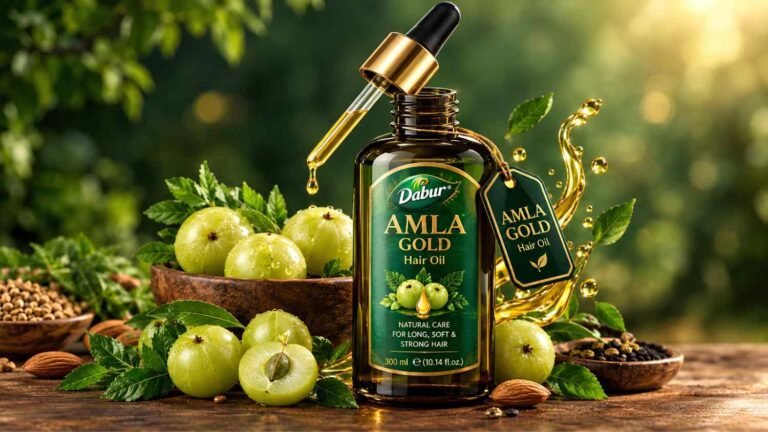
Our page on Dabur Amla Oil covers one of the most widely recognised amla hair oils, including its traditional positioning and usual uses. It is useful background if you are considering a mainstream, widely available amla oil and want to understand what kind of product it is before you judge it against a pure or small-batch alternative. Our page on Bio Amla Hair Oil covers a different widely sold amla oil, with its own formulation story and positioning, and it helps to show how two mainstream amla oils can still differ in base, extras, and intended use. That detail can change which bottle is the best amla oil for hair for you.
Our page on Brahmi Amla Oil covers a blended herbal oil in which brahmi sits alongside amla, which is a good example of the blended category described earlier. Reading it helps you understand what a herbal blend adds, and what it complicates, compared with a simpler amla oil. Our page on pure amla oil covers the simplest category, where amla itself is the story and the ingredient list should be short. Together, these four pages illustrate the range from mainstream to blended to pure, and they are the right place to go for brand-level detail. Use it as a filter when searching for the best amla oil for hair.
No ranking is offered here, deliberately. A mainstream oil may be the best amla oil for hair for a reader who wants easy availability and a familiar routine, while a pure oil may be best for a reader who wants the shortest ingredient list, and a blend may be best for a reader who enjoys herbal formulations. Judge each page’s product by the framework in this guide — amla position in the list, base oil, extras, and weight — rather than by assuming that familiarity, price, or popularity equals suitability. No prices, stock, or availability claims are made here, because those change and because this guide is about choosing well, not about where to buy.
How to Spot a Diluted Product When Seeking the Best Amla Oil for Hair
Dilution is not always dishonest; a light blend can be a legitimate product. Misleading dilution is different: a bottle that presents itself as a rich amla oil while its ingredient list shows amla near the end, mineral oil at the top, and fragrance doing most of the sensory work. The signs are consistent, and once you know them, they are easy to spot. That is exactly the kind of detail that decides the best amla oil for hair for one person over another.
First, check the ingredient order as described above. Amla near the end is the clearest sign of a low amla content. Second, check the base: mineral oil first, with amla far down the list, usually means the bottle is mainly a coating oil. Third, be wary of front-label claims that the ingredient list does not support, such as pure or 100 percent amla on a bottle whose first ingredient is a different oil. Fourth, watch for very long fragrance and colour lists in a product sold as simple or natural; fragrance is not proof of dilution on its own, but it can mask a thin formulation. Bear it in mind next time you compare bottles for the best amla oil for hair.
Other warning signs are practical. A bottle with no ingredient list at all, or a list hidden behind a sticker, should not be bought on trust. A bottle whose oil smells only of perfume, with no herbal character, may still be a pleasant hair oil, but it is not evidence of a rich amla content. And a bottle sold at a premium on the strength of a single buzzword, without transparency about base, method, or concentration, is asking you to pay for a story rather than a formulation. When in doubt, choose the bottle with the clearer label, even if its story is less exciting. It belongs on any shortlist for the best amla oil for hair.
Storage and Shelf Life for the Best Amla Oil for Hair
Storage is unglamorous, but it protects the money you spent on a good bottle. Keep amla oil in a cool, dark place, away from direct sunlight and away from the shower’s steam and heat. Keep the cap tightly closed, and avoid leaving the bottle open while you massage the oil in, because air and moisture speed up degradation. A dark glass bottle helps, but it does not make an oil indestructible, and a clear plastic bottle left on a sunny shelf will age faster than the same oil stored properly. That is a practical test to apply when choosing the best amla oil for hair.
Shelf life varies by formulation. Pure, cold-pressed oils tend to have shorter lives than heavily preserved commercial blends, and infused oils sit somewhere in between. Follow any date or period-after-opening symbol on the bottle, and if there is none, use your senses: a sharp, stale, or sour smell, a change in colour, or a sticky, unusual texture are all reasons to discard the oil. Do not try to rescue a rancid oil by mixing it with a fresh one; rancidity is not diluted away, and it can irritate the scalp. Keep that test in mind when you choose the best amla oil for hair.
Using the Best Amla Oil for Hair Well
Choosing well is only half the work; using the oil well is the other half. Warm a small amount between your palms, massage it into the scalp with fingertips rather than nails, and work the remainder through the lengths. Leave it for thirty minutes to a few hours as a pre-wash treatment, or overnight if your hair is dry and your scalp tolerates it. Wash with a mild shampoo, rinse thoroughly, and repeat once or twice a week to start. Adjust the amount before you adjust the frequency: most problems with a new oil are amount problems, not oil problems. It is a useful check on the road to the best amla oil for hair for your routine.
Patch test every new bottle, even if you have used amla oil before, because formulations differ and a new base or fragrance can be the irritant, not the amla itself. Our article on amla oil side effects, hair loss and allergy sets out warning signs to watch for. If you have a sensitive scalp, start with a shorter leave-on time and a smaller amount, and build up gradually. If you use other scalp products, introduce the new oil on its own for a few weeks so you can judge it fairly, rather than changing several products at once. Our step-by-step guide to how to use amla oil covers amounts, timing, and washing in detail. That detail can change which bottle is the best amla oil for hair for you.
Frequently Asked Questions
Is the best amla oil for hair always a pure, cold-pressed oil?
Not always. A pure, cold-pressed oil suits readers who want the simplest product, but a traditionally infused or blended oil may suit dry, thick, or curly hair better, and a mainstream oil may suit a reader who wants familiarity and easy availability. Judge by ingredient list, base, weight, and your hair type, not by a single label word.
How can I tell if an amla oil is diluted?
Check the ingredient order: if amla appears near the end and mineral oil or another carrier dominates the top of the list, the amla content is likely low. A clear label, a herbal scent, and a sensible price for the formulation are better guides than front-label claims alone.
Does a higher price mean a better amla oil?
Not necessarily. Price reflects branding, packaging, import costs, and marketing as well as formulation. A moderately priced oil with a clear ingredient list and a base that suits your hair can outperform an expensive oil whose base is wrong for your type. Judge the bottle, not the price tag.
Can I use amla oil on colour-treated hair?
Many people do, but choose a simpler oil, patch test, and watch the first few washes for any change in colour, texture, or scalp comfort. If you are unsure, ask your colourist, because individual colour treatments vary and general advice cannot cover every formulation.
How long should a bottle last?
That depends on how often you oil and how much you use, but a bottle should be finished while it still smells fresh and feels normal. Store it cool and dark, keep the cap closed, and discard it if it smells rancid or changes texture, even if there is oil left.
Final Checklist Before You Buy the Best Amla Oil for Hair
Before you buy, run through this short checklist, which summarises the whole guide. Is amla near the top of the ingredient list, or near the end? What is the base oil, and does its weight suit your hair type? Is the product pure, infused, or blended, and does that kind fit your scalp and your preferences? Are fragrance and additives acceptable to you, or would a simpler oil be safer? Does the bottle size match how often you will actually oil, and can you store it cool and dark? Use it as a filter when searching for the best amla oil for hair.
If you can answer those questions, you have already done more than most buyers, and you are far more likely to choose the best amla oil for hair for your own routine, rather than the best-marketed one. Start with one bottle, use it properly for several weeks, and judge it on scalp comfort, softness, breakage, and whether you enjoy using it. That evidence, gathered from your own hair, is worth more than any ranking, and it is the honest way to find an oil you will keep using.
For readers who want to go deeper, our pages on organic amla oil for hair and amla powder versus amla oil for hair cover neighbouring choices that sometimes confuse buyers, and our skin-focused guide to amla oil for skin is useful if you are also considering amla beyond hair care. Choose carefully, use consistently, and let your hair, not the label, make the final judgement. That is exactly the kind of detail that decides the best amla oil for hair for one person over another.