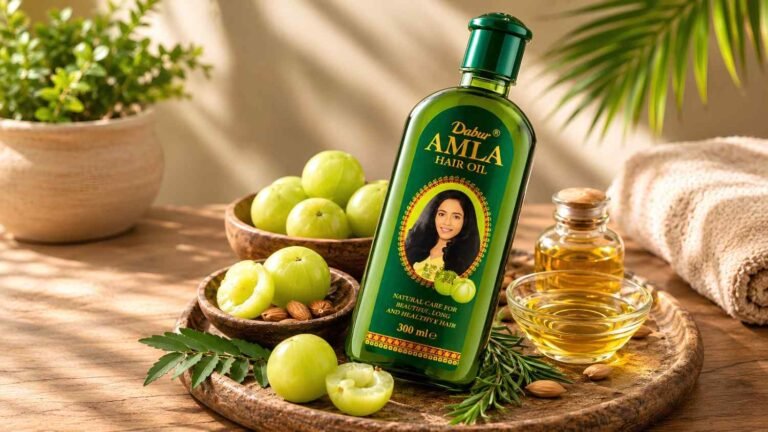
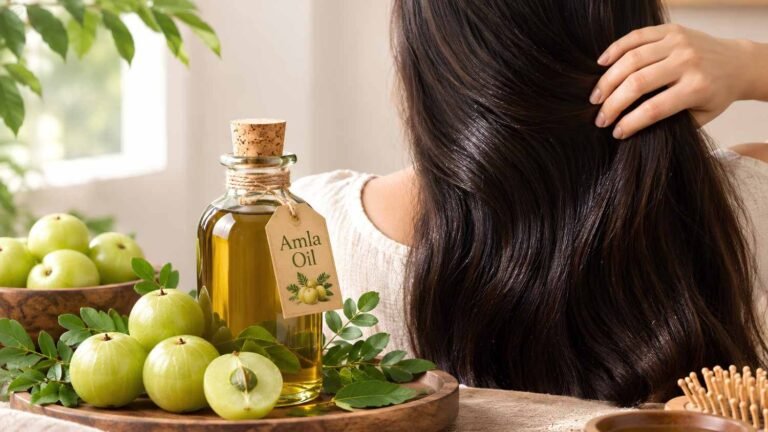
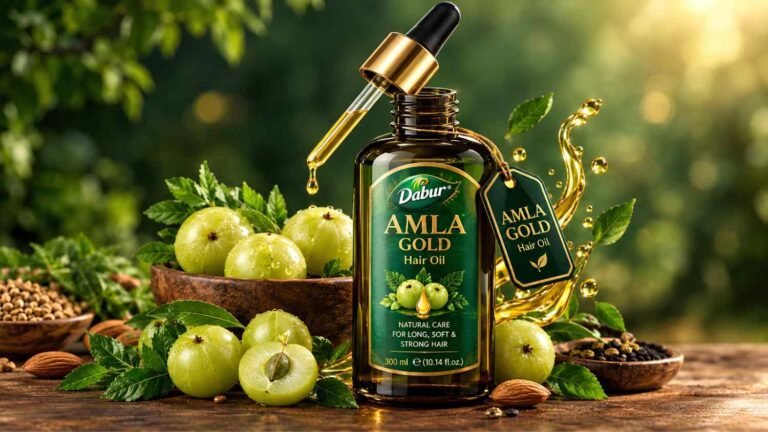
Amla Oil and Coconut Oil for Hair Growth: Blends, Masks and Porosity-Matched Ratios
Most hair oils are sold as solo heroes, but amla oil and coconut oil for hair growth have always worked better as a pair. Coconut oil is one of the few oils that genuinely penetrates the hair shaft rather than just coating it, while amla brings antioxidant and scalp support from the outside. Put them together and you get a two-layer routine: one oil working inside the strand and one supporting the scalp it grows from. That partnership is the whole point of this guide to amla oil and coconut oil for hair growth.
This article is a blends and mask recipe roundup with a routine attached, not another generic claim that a single oil regrows hair. It covers how amla oil and coconut oil for hair growth work together, how to infuse the blend at home, how to choose the ratio for your hair, three mask recipes worth trying, a weekly routine that fits real life, and the honest limits of what any oil blend can do. If you want the single-oil picture first, our guide to amla oil for hair and our guide to the benefits of amla oil are useful background.
How Amla Oil and Coconut Oil for Hair Growth Work as a Team
The reason amla oil and coconut oil for hair growth pair so well comes down to where each oil works. Coconut oil is rich in lauric acid, a fatty acid small enough to slip past the cuticle and into the hair shaft, where it reduces the protein loss that happens during washing and styling. That inside-the-strand action is unusual among plant oils and is the reason coconut oil has real research behind it for reducing breakage. Amla oil and coconut oil for hair growth therefore start from different places: coconut protects the strand itself, while amla supports the scalp environment around the follicle with vitamin C, antioxidants, and tannins.
That division of labour is also why amla oil and coconut oil for hair growth suit a routine better than either oil alone. Used alone, coconut oil can leave some scalps feeling heavy or, on very fine hair, weighed down, and it does little directly for scalp comfort. Used alone, amla oil conditions and supports the scalp but does not penetrate the shaft the way coconut oil does. Together, each covers the other’s gap, and the blend is usually easier to wash out than a heavy single oil because the amla fraction lightens the overall feel. Think of it as a team rather than a competition, and the routine below will make more sense.
One honest limit applies to amla oil and coconut oil for hair growth from the start. Neither oil creates new follicles, overrides genetics or hormones, or reverses a bald patch, and no blend changes that. What the pair can do, used consistently, is reduce breakage so you keep more of the length you already grow, keep the scalp comfortable enough to support steady growth, and improve shine and manageability along the way. That is retention and care, not regrowth, and judging the blend on retention is how you avoid both disappointment and overuse.
The Infusion: Making Amla Oil and Coconut Oil for Hair Growth at Home
There are two ways to make amla oil and coconut oil for hair growth at home, and they suit different kitchens. The first is the simple blend: warm a measured amount of plain coconut oil until liquid, stir in ready-made amla oil, and bottle the mixture. This takes minutes, needs no cooking, and is the best starting point because it lets you control the ratio precisely. The second is the traditional infusion: gently simmer dried amla pieces or amla powder in coconut oil on the lowest heat, then strain through muslin and bottle the result. The infusion takes longer and smells more herbal, but it gives a deeper amla character and is the method most traditional recipes describe.
Whichever method you choose for amla oil and coconut oil for hair growth, keep the heat low and the equipment dry. Coconut oil scorches easily and scorched oil smells harsh and can irritate the scalp, so if the mixture smokes, take it off the heat at once. Water is the enemy of any homemade oil: a damp bottle or damp amla shortens shelf life and can spoil the batch, so dry everything fully and bottle only when the oil is completely cool. Label the bottle with the date and the ratio you used, because that note is what lets you repeat a blend that worked or fix one that did not.
For a first batch of amla oil and coconut oil for hair growth, a small amount is smarter than a large one. Half a cup of coconut oil with two to three tablespoons of amla oil, or a small handful of dried amla pieces infused into the same amount, gives enough for several weeks of weekly use without sitting around long enough to turn. Our guide to amla powder versus amla oil for hair explains the difference between powder and oil forms if you are deciding which amla form to infuse with.
The Ratio Test: Matching Amla Oil and Coconut Oil for Hair Growth to Your Hair
Here is the angle most blend guides miss, and it is the most useful part of this article on amla oil and coconut oil for hair growth. Competitors hand you one fixed recipe, but the right ratio depends on your hair, and a blend that suits thick, dry hair will flatten fine hair. Use this ratio test instead of a single recipe. Start from a base of three parts coconut oil to one part amla oil, which suits most normal to dry hair, then adjust from there based on what your hair tells you over two weeks.
For fine or easily weighed-down hair, flip the emphasis in amla oil and coconut oil for hair growth toward the lighter side: one part coconut oil to one part amla oil, used sparingly on the mid-lengths and ends rather than the roots, and washed out the same day rather than left overnight. For thick, coarse, or very dry hair, go richer: two parts coconut oil to one part amla oil, used as a longer pre-wash treatment, because dense hair drinks up oil and needs the extra penetration. For an oily scalp, keep the blend off the roots entirely and treat the lengths, or use it as a pre-wash treatment that is fully washed out, since a blend left on an oily scalp will feel heavy by the next day.
Porosity adds the final adjustment to amla oil and coconut oil for hair growth. Low-porosity hair, whose cuticle lies flat, prefers a smaller amount of a lighter blend applied to damp, warm hair, where it spreads more easily. High-porosity hair, whose cuticle is more open, usually welcomes a richer blend and may benefit from a second light application between washes. The test is simple: if hair feels coated or stiff, the blend is too rich or too much; if it still feels dry an hour after washing, it is too light or too little. Adjust the ratio before you blame the oils.
Three Mask Recipes Using Amla Oil and Coconut Oil for Hair Growth
The first mask for amla oil and coconut oil for hair growth is the deep-conditioning mask for dry, brittle hair. Warm three tablespoons of coconut oil until liquid, stir in one tablespoon of amla oil and one teaspoon of honey, and mix until smooth. Apply to damp hair from mid-lengths to ends, with a smaller amount on the scalp, cover with a shower cap or warm towel, and leave for thirty to forty-five minutes before washing with a mild shampoo. The coconut fraction penetrates the shaft while the amla fraction supports the scalp, which is the two-layer repair this blend is built for. Use it once a week.
The second mask for amla oil and coconut oil for hair growth is the scalp-soothing mask for itchy or flaky scalps. Mix two tablespoons of coconut oil with one tablespoon of amla oil and one tablespoon of plain yogurt, and apply mainly to the scalp with gentle fingertip massage, working only the remainder through the lengths. Leave for twenty to thirty minutes, then wash thoroughly. The yogurt adds a light, cooling base that helps the blend spread on the scalp without heaviness, and the amla fraction gives the antioxidant support that a plain coconut mask lacks. If flaking is persistent, sore, or spreading, see a professional rather than masking harder, because no mask treats a scalp condition on its own.
The third mask for amla oil and coconut oil for hair growth is the shine and strength mask for dull, tired lengths. Combine two tablespoons of coconut oil with two tablespoons of amla oil, which is a richer amla share than the other two recipes, and apply to damp lengths, avoiding the roots unless your scalp is dry. Leave for forty-five minutes to an hour, then wash twice with a gentle shampoo if the hair still feels coated. This mask suits thick, coarse, or colour-treated hair best, and fine hair should use half the amount and skip the roots entirely. Our guide to a hair mask for dry, damaged and frizzy hair covers mask timing and washing in more depth if you are new to weekly masks.
Two practical notes apply to all three masks for amla oil and coconut oil for hair growth. First, always apply masks to damp hair, because oil seals moisture rather than creating it, and a mask on dry hair mostly coats dryness. Second, wash out with lukewarm water and a mild shampoo, and rinse a second time if the hair still feels heavy, since residue left behind dulls shine and can irritate the scalp over the week. A mask should leave hair softer, not coated, and that feeling is the test of whether the recipe and ratio suit you.
A Weekly Routine for Amla Oil and Coconut Oil for Hair Growth
A routine for amla oil and coconut oil for hair growth only works if it fits a normal week, so here is one that does. Once a week, do the full treatment: apply the blend as a pre-wash treatment, leave it for at least thirty minutes or overnight if your hair is dry and your scalp tolerates it, then wash and condition as usual. Once a week, do a mask from the recipes above instead of the plain treatment, rotating between them by what your hair needs that week. On the other wash days, use a single drop or two on damp ends as a finishing seal, and nothing more.
Frequency is where most routines for amla oil and coconut oil for hair growth go wrong. More is not better: daily heavy oiling builds up, dulls shine, and can irritate the scalp, while a steady weekly rhythm gives the oils time to work without residue. If your scalp feels itchy or your hair looks limp by midweek, cut the frequency before changing the blend, because amount and frequency are the usual culprits, not the oils themselves. And if you use other scalp products, introduce the blend on its own for a few weeks so you can judge it fairly rather than changing several things at once.
Washing out deserves attention in any routine for amla oil and coconut oil for hair growth. Coconut oil is famously stubborn if over-applied, so use a mild shampoo and lukewarm water, massage the scalp with fingertips rather than nails, and rinse thoroughly. If one wash leaves the hair coated, wash again rather than reaching for a harsh clarifying shampoo every time, and next time use less blend. Our guide to amla oil versus coconut oil compares the two oils head to head if you want to understand why the blend behaves the way it does.
Amla Oil and Coconut Oil for Hair Growth vs Each Oil Alone
Deciding between amla oil and coconut oil for hair growth and each oil alone comes down to what your hair needs most. Choose the blend when you want both penetration and scalp support in one step, when your hair is dry or damaged and needs a fuller treatment, or when you are masking weekly and want a complete recipe rather than a single ingredient. The blend is the better default for most people, because it covers more ground with no extra effort.
Choose coconut oil alone from amla oil and coconut oil for hair growth when your main problem is breakage and protein loss in the shaft itself, when your scalp is already comfortable and needs nothing extra, or when you want the simplest possible routine. Choose amla oil alone when your main concern is the scalp, when your hair is fine and coconut oil alone feels heavy, or when you are already using a penetrating treatment and only need scalp support on top. Mixing is also an option: some people use coconut oil as the weekly treatment and amla oil as the lighter finishing oil between washes, which gives both benefits without committing to one blend.
Other oils can join amla oil and coconut oil for hair growth, but keep additions modest. A small amount of castor oil thickens the blend for very dry ends, and a drop of rosemary or lavender essential oil can scent it, but essential oils must stay at a safe dilution and should never be applied undiluted. If you want to compare oil pairings more widely, our guide to mixing coconut oil and Jamaican black castor oil shows how a different pairing is judged, and the same questions apply here: what does each oil add, and does the blend still wash out cleanly?
Shelf Life and Rancidity: Keeping Amla Oil and Coconut Oil for Hair Growth Fresh
Homemade blends of amla oil and coconut oil for hair growth have no preservatives, so shelf life is shorter than a shop-bought bottle, and this is the part most blend guides ignore. A well-made, fully dry blend stored in a cool, dark place should stay usable for about three to six months, while a blend kept in a warm bathroom or in sunlight may turn sooner. Smaller batches used within a couple of months are the safest approach, and a small batch every few months beats one large batch that sits around.
Discard any blend of amla oil and coconut oil for hair growth without trying to rescue it if you notice a sharp, sour, or crayon-like smell that was not there when you made it, cloudiness or a colour change that appears over time, visible mould or slimy residue, or any scalp irritation that a previous batch did not cause. Coconut oil solidifies in cool weather, which is normal and not a spoilage sign: warm the bottle in warm water, never in a microwave, and use it once liquid again. Trust your senses here, because rancid oil can irritate the scalp and is never improved by mixing it with fresh oil.
What Amla Oil and Coconut Oil for Hair Growth Cannot Do
The limits of amla oil and coconut oil for hair growth deserve a plain statement, because blend guides often imply more than oils deliver. No blend regrows hair on a bald scalp, overrides genetics or hormones, reverses grey hair that is already there, or treats dandruff, eczema, or hair loss with a medical cause. If shedding is sudden, patchy, or heavy, or if the scalp is sore, red, or scaly, see a professional rather than masking harder, because the right help is diagnosis, not a stronger blend.
Patch testing applies to amla oil and coconut oil for hair growth as it does to any new product. Dab a small amount on the inside of your forearm, wait a full day, and watch for redness, itching, or swelling before using the blend on your scalp. This matters even if you have used each oil alone before, because a blend can behave differently and because homemade batches vary in strength. Our guide to amla oil side effects, hair loss and allergy sets out the warning signs to watch for, and they apply to blends exactly as they apply to single oils.
Frequently Asked Questions About Amla Oil and Coconut Oil for Hair Growth
Can I use amla oil and coconut oil for hair growth every day?
A light finishing drop on the ends can be daily, but a full scalp treatment is better weekly. Daily heavy oiling builds up, dulls shine, and can irritate the scalp.
Should I heat amla oil and coconut oil for hair growth before applying?
Warm the blend gently until liquid, never hot. Warm oil spreads better and feels more comfortable, but overheated oil can irritate the scalp and loses its pleasant scent.
Can amla oil and coconut oil for hair growth stop hair fall?
They can reduce breakage-related fall by strengthening the shaft and supporting the scalp, but they cannot stop shedding caused by hormones, illness, stress, or genetics. Persistent or heavy shedding deserves professional advice.
Will amla oil and coconut oil for hair growth darken my hair?
Amla can subtly darken hair over months of regular use because of its tannins. The change is gradual, not a dye effect, but it is worth knowing if you colour your hair.
How long should I leave amla oil and coconut oil for hair growth on?
Thirty minutes is enough for a pre-wash treatment, and overnight suits dry hair that tolerates it. Longer is not automatically better, and a blend left too long on an oily scalp can feel heavy.
Final Thoughts on Amla Oil and Coconut Oil for Hair Growth
Amla oil and coconut oil for hair growth work best when you treat them as a team with a job each, a ratio matched to your hair, and a weekly rhythm you can actually keep. Start with the three-to-one base blend, adjust by porosity and scalp, rotate the masks by what your hair needs, and judge the result on breakage and shine over two months rather than on promises of regrowth. Used that way, amla oil and coconut oil for hair growth earn their place as one of the most practical pairings in hair care: simple ingredients, a clear division of labour, and a routine that fits a normal week.