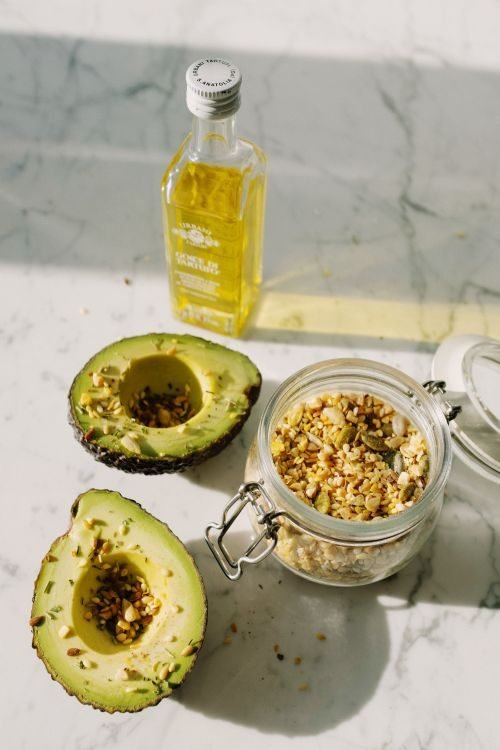
Avocado Oil for Hair
If your hair feels dry no matter how much conditioner you use, avocado oil for hair is worth a closer look. It is not a miracle growth treatment, and honest guides should say so up front. What it does well is simpler and, for many people, more useful: it coats and softens the hair shaft, reduces friction between strands, seals in moisture after washing, and leaves dull ends looking smoother and shinier. Used in the right amount, avocado oil for hair can turn a rough, flyaway wash day into hair that combs through easily and holds a style without feeling coated or sticky.
Avocado oil comes from the pulp of the avocado fruit, not the pit, which is one reason it feels richer than lighter seed oils. It is mostly monounsaturated fat, chiefly oleic acid, with smaller amounts of palmitic and linoleic acids, plus vitamin E, vitamin D, potassium and magnesium. That composition matters because it explains both what avocado oil for hair can do and where its limits lie. It is a conditioning oil, not a medicine, and its best role is protecting the hair you already have rather than regrowing hair that has been lost for other reasons.
What Makes Avocado Oil for Hair Different From Other Hair Oils
Most hair oils fall into two loose groups. Some, like coconut oil, are dominated by saturated fat and have been studied more for entering the hair fibre. Others, like jojoba oil, sit closer to the surface and act mainly as sealants. Avocado oil for hair sits in an interesting middle ground. Its monounsaturated fats give it a fluid, spreadable texture that does not solidify in a cool bathroom the way coconut oil does, and it spreads more evenly through thick or curly hair without needing to be melted first.
The texture alone changes how people actually use it. On a cold morning, coconut oil needs warming and can set again on the hair if the room is chilly. Avocado oil for hair stays liquid, so a few drops warm quickly between the palms and glide through mid-lengths and ends. For someone with wavy or curly hair who oils damp hair after a shower, that ease of use is not a small detail. It is often the difference between a routine that gets done three times a week and one that gets abandoned after a fortnight.
Avocado oil also carries a faint, nutty, almost buttery scent that fades as it absorbs. It is not perfumed in the way many commercial hair oils are, which suits people who are sensitive to fragrance or who layer other scented products on top. If you prefer a scented finish, avocado oil works well as a carrier for a drop or two of essential oil, provided you keep the dilution gentle and patch test first. Our guide to diluting essential oils safely for hair and scalp use can help you get the ratio right rather than guessing.
The Monounsaturated-Fat Angle: Why Avocado Oil for Hair Behaves Differently
Here is the angle most short guides skip, and it is worth understanding before you buy a bottle. Coconut oil is rich in lauric acid, a small, straight-chained saturated fatty acid that has been shown in hair-fibre studies to penetrate the shaft and reduce protein loss during washing. Avocado oil for hair does not have that same body of evidence. Its dominant fatty acid, oleic acid, is larger and kinked, so it behaves differently on and in the strand.
That does not make avocado oil inferior. It makes it different, and the difference points to its real strengths. Because oleic acid is fluid and flexible, avocado oil for hair excels at lubrication: it smooths raised cuticle edges, lets strands slide past each other instead of catching, and reduces the combing force that causes mechanical breakage. Think of it less as a deep-penetrating repair treatment and more as a protective polish that keeps the surface of the hair in good condition while you go about your week.
There is also newer laboratory work suggesting that avocado-oil triglycerides can interact with the hair cortex, so the old claim that avocado oil only sits on the surface is probably too simple. But the honest position is this: coconut oil has the stronger evidence for protein protection, while avocado oil for hair has a strong practical case for softness, flexibility, shine and manageability. If your main problem is stiffness, tangling or dullness rather than severe chemical damage, avocado oil may actually feel better on your hair than coconut oil does, even if the laboratory story favours coconut for protein retention.
This distinction also explains why some people love avocado oil and others find it underwhelming. If you expected it to rebuild bleached hair from the inside, you will be disappointed. If you wanted softer, easier-to-style hair with fewer snapped strands in the brush, avocado oil for hair is much more likely to deliver. Setting that expectation correctly is the whole game with hair oils, and it is where most marketing goes wrong.
Benefits of Avocado Oil for Hair
The most reliable benefit of avocado oil for hair is moisture retention. Hair loses water every time it is washed, dried and styled, and dry hair becomes brittle hair. A thin layer of avocado oil after washing slows that water loss, so hair stays supple for longer between washes. People with thick, coarse or curly hair usually notice this first, because their hair naturally loses moisture faster than fine, straight hair, and the ends are often the driest part of all.
Related to moisture is breakage. Dry, rough strands catch on each other, on brushes and on pillowcases, and each catch is a chance for a strand to snap. By lubricating the surface, avocado oil for hair reduces that friction. You may not see fewer hairs in the shower drain overnight, because shedding and breakage are different things, but you may notice fewer short, broken pieces on your shoulders and less frizz around the hairline. Over months, that adds up to hair that keeps more of its length.
Shine is another genuine benefit, and it follows naturally from a smoother surface. Light reflects evenly off a smooth cuticle and scatters off a rough one, which is why damaged hair looks dull even when it is clean. A light application of avocado oil for hair on the lengths gives that even reflection without the wet look that heavier oils can leave. The trick is amount: two or three drops for fine hair, a little more for thick hair, always worked through the ends first and only then lightly over the mid-lengths.
Frizz control works on the same principle. Frizz is often hair trying to absorb moisture from humid air through a raised, porous cuticle. A thin oil layer helps seal that surface, so humid days cause less swelling and puffing. It will not straighten curly hair or replace a proper styling product, but for wavy hair that goes fluffy by midday, avocado oil for hair can be the difference between a defined wave and a halo of flyaways. If frizz is your main struggle, our complete guide to fixing frizzy hair covers the washing and drying habits that matter alongside any oil.
Scalp comfort is a softer claim and should be treated carefully. Massaging avocado oil for hair into a dry scalp can feel soothing, and it can soften flakes caused by simple dryness so they brush away more easily. It is not a treatment for dandruff, psoriasis or seborrhoeic dermatitis, and oiling an inflamed or infected scalp can make things worse by trapping residue. If your scalp is itchy, red, sore or flaking heavily, get the cause checked before reaching for any oil, and read our guide to hair oil side effects and scalp warning signs first.
Avocado Oil for Hair and Hair Growth: What Is True
Let us be direct. There is no good evidence that avocado oil for hair makes hair grow faster or regrows lost hair. Hair growth happens in the follicle, under the skin, and an oil applied to the visible shaft cannot change the growth cycle in any meaningful way. Avocados contain biotin and other nutrients, but eating avocado supports general nutrition, while rubbing oil on your ends does not deliver those nutrients to the follicle.
What avocado oil for hair can do is help you keep the length you grow. If breakage is eating away at your ends as fast as your roots produce new hair, your hair will seem stuck at one length for years. Reducing breakage through lubrication and gentler combing lets that new growth actually show. That is a real, valuable outcome, and it is honest to describe it as length retention rather than growth stimulation. Anyone promising regrowth from a bottle of avocado oil is selling a story, not a result.
If growing longer hair is your goal, the unglamorous factors matter more than any single oil: regular trims to remove split ends before they travel up the shaft, gentle detangling, less heat, and a routine you can sustain. Our guide on how to grow hair faster puts those factors in order, and avocado oil for hair fits into it as a supporting player, not the star.
Who Avocado Oil for Hair Suits Best
Avocado oil for hair suits dry, coarse, thick, wavy, curly and coily hair especially well. These hair types tend to be drier at the ends, more prone to tangling, and more forgiving of a medium-weight oil. If your curls drink up conditioner and still feel rough by day two, avocado oil is a sensible next step. It also suits colour-treated or heat-styled hair that needs surface protection, and anyone whose ends split easily despite regular trims.
It can also suit straight hair, but the amount matters far more. Fine, straight hair shows oil quickly, and even a good oil looks greasy if overapplied. If that is your hair type, use avocado oil for hair only on the last few inches, only on damp hair, and only a drop or two at a time. You can always add more; you cannot easily take it back without washing again. Low-porosity hair, where the cuticle lies flat and resists absorption, also needs a light hand, because oil that cannot sink in will sit on the surface and attract dust and buildup. If you are unsure about your porosity, try our interactive hair porosity test before settling on an amount or frequency.
People with an avocado or latex allergy should be cautious. Avocado allergy is uncommon, but cross-reactivity with latex is documented, so anyone with a latex allergy should patch test carefully or skip avocado oil altogether. The same caution applies if you have a very oily scalp or acne along the hairline: oil on the scalp can aggravate both, and in that case avocado oil for hair is better used on the lengths only, well away from the roots.
How to Choose a Good Avocado Oil for Hair
Look for cold-pressed, unrefined avocado oil if you want the fullest nutrient profile, and check that avocado oil is the only ingredient on the label. Refined avocado oil is lighter in colour and scent and has a higher smoke point for cooking, but for hair the unrefined version is usually the better buy, and it is often a deep green colour. That green tint comes from chlorophyll and carotenoids, and it is normal; it does not stain hair in the small amounts used for styling.
Packaging matters more than people think. A dark glass bottle protects the oil from light, and a pump or dropper helps you dispense a small amount without pouring half the bottle into your palm. Store it in a cool, dark cupboard, keep the cap closed, and sniff it occasionally: fresh avocado oil smells mildly nutty and grassy, while rancid oil smells sharp, crayon-like or stale. Rancid oil should be thrown away, not used on hair or skin, and buying a smaller bottle you will finish in a few months is smarter than buying a litre that sits for a year.
Price is a poor guide to quality here. Expensive boutique bottles are not necessarily better than a plain cold-pressed oil from a reputable food or cosmetic supplier, as long as the label is honest and the oil is fresh. Avoid blends that list avocado oil third or fourth after cheaper carrier oils unless you are deliberately buying a blend, and avoid products that promise regrowth, repair of split ends or permanent damage reversal, because no oil can do those things.
Simple Ways to Use Avocado Oil for Hair
The easiest entry point is as a finishing oil. After washing and drying, warm two or three drops of avocado oil for hair between your palms and smooth them over the ends, then lightly over any frizzy sections. This is the lowest-risk way to start, because you can see immediately whether your hair likes it and you have not committed to a full treatment. If your hair looks shiny but not greasy and combs easily, you have found your amount.
A pre-wash treatment is the next step up. Apply avocado oil for hair to dry lengths and ends twenty to sixty minutes before shampooing, then wash as normal. This is especially useful before a clarifying wash or after a week of heat styling, because the oil layer reduces friction during washing itself, which is when wet, swollen hair is at its most fragile. You do not need to drench the hair; a light, even coating is enough, and the shampoo will remove the excess.
For very dry or curly hair, an overnight treatment once a week can help, but keep it to the lengths and ends rather than the scalp unless your scalp is genuinely dry and comfortable with oil. Braid or twist the hair loosely, cover the pillow with an old towel, and wash in the morning with a gentle shampoo. If your hair feels heavy or coated afterwards, you used too much or left it on too long for your hair type, so scale back next time rather than abandoning the oil entirely. A full step-by-step routine, including amounts by hair length, is covered in our companion guide on how to use hair oil correctly.
Common Mistakes With Avocado Oil for Hair
The most common mistake is using too much. Avocado oil for hair is a medium-weight oil, and a tablespoon on fine hair will look greasy no matter how good the oil is. Start with drops, not spoonfuls, and build up only if your hair still feels dry. The second mistake is applying it to the scalp by default. Scalp oiling suits some people, but for many it causes buildup, itchiness or breakouts along the hairline, and the lengths are where the benefit actually lies.
A third mistake is expecting it to fix damage. Split ends cannot be glued back together by any oil, and bleached or heat-damaged hair needs trims, gentler handling and time, not more product. Avocado oil for hair can make damaged hair look and feel better while it grows out, which is genuinely useful, but it cannot reverse the damage itself. Being clear about that saves money and disappointment.
Finally, do not mix avocado oil with every other oil you own in the hope of a stronger effect. Blends have their place, and our comparison of argan oil versus coconut oil shows how different oils complement each other, but a simple routine you can repeat beats a complicated blend you use once. Start with avocado oil alone for a fortnight, notice how your hair responds, and only then experiment with one addition at a time.
Avocado Oil for Hair by Hair Type
For curly and coily hair, avocado oil for hair works well as a sealing step after a water-based leave-in conditioner. Apply the leave-in first so the hair actually has moisture to seal in, then smooth a small amount of avocado oil over the curls to lock it down and reduce frizz as the hair dries. Scrunching the oil in, rather than raking it through, helps preserve curl definition.
For wavy hair, the risk is weighing the wave down, so keep avocado oil for hair to the ends and use it on damp hair rather than dry hair, when a little goes further. For straight hair, the same rule applies even more strictly: ends only, drops only, and preferably as a pre-wash treatment rather than a leave-in, so any excess is washed away. For chemically treated hair, avocado oil can soften the roughness that colouring and straightening leave behind, but pair it with regular trims and gentler heat, because oil alone cannot compensate for repeated chemical stress.
If you are still working out where your hair fits, our guide to determining your hair type and our piece on argan oil for different hair types both use the same framework, so you can compare oils on equal terms rather than guessing from marketing claims.
Avocado Oil for Hair: Safety and Patch Testing
Avocado oil is generally well tolerated, but patch testing is still worth the minute it takes. Dab a small amount on the inside of your forearm, leave it for twenty-four hours, and check for redness, itching or bumps before using it on your scalp or hairline. Our patch-test timer can remind you when the test period is up, so you do not have to remember. If you notice irritation, wash the area with a gentle cleanser and do not use the oil again.
Keep avocado oil away from the eyes, do not use it on broken or irritated scalp skin, and be cautious if you are prone to fungal scalp conditions, because heavy oiling can complicate treatment. If you use medicated scalp treatments, ask whether oil should be applied before or after them, or not at all during treatment, rather than layering products blindly. And if hair shedding suddenly increases, becomes patchy, or comes with scalp pain, see a clinician instead of trying another oil, because those patterns need diagnosis, not conditioning.
One more honest note: avocado oil for hair is sometimes mentioned for sun protection, because avocado oil has some UV-absorbing properties. That is not a reason to skip sunscreen or a hat, and it is not the focus of this guide. If you want the sun-protection angle in detail, see our separate article on avocado oil and sun protection, which covers that specific use on its own terms.
Final Thoughts on Avocado Oil for Hair
Avocado oil for hair earns its place in a routine not by promising miracles but by doing a few ordinary things well: softening dry strands, reducing tangling and breakage, adding shine, and taming frizz without the solid-at-room-temperature fuss of coconut oil. Its monounsaturated-fat profile gives it a fluid, spreadable character that suits thick, curly and dry hair especially well, and with a light hand it can suit finer hair too.
Start small, apply it to the lengths rather than the scalp, give it a fortnight of consistent use, and judge it by how your hair combs, feels and holds up between washes. If it helps, you have found a simple, affordable staple. If it weighs your hair down, you have learned something useful about your hair type, and a lighter oil may suit you better. Either way, you will have made the decision on evidence from your own hair, which is the only evidence that really counts.