Hair Color Chart: Levels 1 to 10, Tones, and How to Find Your Shade
Hair Color Chart: Levels 1 to 10, Tones, and How to Find Your Shade
A hair color chart looks simple at first glance, a neat row of swatches running from black to blonde, but it is really a small language, and once you can read it, choosing a shade stops feeling like a guess. The chart does two jobs at once. It tells you how light or dark a shade is, which colourists call its level, and it tells you what kind of warmth or coolness you will actually see in the hair, which they call its tone. Confusing those two jobs is the reason most disappointing colour results happen. A box can promise light brown and still turn out coppery, not because the chart lied, but because the level was right and the tone was wrong for the hair underneath. This guide to the hair color chart walks through levels one to ten in plain language, explains the little numbers after the decimal point, shows you how to find your own natural level at home, and helps you match a shade to your skin, your grey coverage needs, and how far your hair can safely be lifted.
What a Hair Color Chart Actually Shows
Think of a hair color chart as a map with two axes. The first axis is depth, running from the darkest black at one end to the palest blonde at the other. That depth is numbered, and every professional brand in the world uses essentially the same numbering, even if the names they print beside the numbers differ a little. The second axis is tone, the visible character of the colour once it is on the hair: golden and warm, ashy and cool, coppery and rich, or neutral and balanced. Tone is written after a decimal point or a slash in a shade code, and it is where the personality of a colour lives. A shade labelled 6.3 and a shade labelled 6.1 sit at the same depth, yet they look like different colours on the same head, because one leans gold and the other leans ash. Reading a hair color chart well means reading both parts together, never one alone, and then checking both against what your hair already is, because your starting point changes the result more than the swatch on the page does.
There is one more thing a chart cannot show you, and it is worth saying plainly before you fall in love with a swatch. A printed or on-screen swatch on a hair color chart is a single colour on a single strand of hair under studio light. Your hair is not a single strand. Roots, mid-lengths, and ends often sit at different levels, especially if you have coloured before, and porous ends grab colour differently from healthy roots. A chart gives you the target and the language to discuss it, but the final result is always filtered through your hair history, your porosity, and the light you stand in. That is not a reason to distrust a hair color chart. It is the reason to use them as a starting point for a decision, not as a promise.
The Hair Color Chart Levels 1 to 10, in Plain Language
The level scale runs from 1, the deepest black, to 10, the lightest blonde, and each step is one degree lighter than the one before it. Most people with natural, uncoloured hair fall somewhere in the middle of the scale, roughly levels 3 to 7, and that middle is where the most confusion happens, because everyday names like light brown and dark blonde overlap there. Brands sometimes disagree about where brown ends and blonde begins, which is exactly why colourists trust the number more than the name. Work through the hair color chart level by level and the pattern becomes easy to hold in your head.
Levels 1 to 3 are the dark end of the chart. Level 1 is black, the deepest depth, with almost no visible warmth when you look at it straight on. Level 2 is very dark brown, still reading as nearly black indoors but showing a brown edge in sunlight. Level 3 is dark brown, clearly brown rather than black, and it is the first level where warmth starts to show in a noticeable way when the hair is lifted. If your hair sits in this range on a hair color chart, you have a lot of pigment to work through, which is both a strength and a limit: dark hair covers grey well and holds rich colour beautifully, but lifting it several levels in one sitting asks a great deal of the hair, and the warmth hiding underneath will show itself as soon as you try.
Levels 4 to 6 are the middle browns, and this is where most of the population lives. Level 4 is medium brown, a true mid-brown that looks neither especially dark nor especially light. Level 5 is light brown, the level many people mean when they say they have brown hair without thinking much about it. Level 6 is dark blonde, and it sits right on the border where brown language and blonde language collide. In a salon, a colourist will call level 6 dark blonde, while at home the same depth is often sold as light brown, and that naming wobble causes more miscommunication than any other single thing on the hair color chart. If you are choosing between a brown and a blonde box, check the number first and the name second, and you will avoid the most common hair color chart surprise.
Levels 7 to 10 are the blondes, and each step gets paler and more delicate. Level 7 is medium blonde, a warm-leaning blonde that many colourists treat as a pivot point, because it is light enough to read as blonde in any light but still carries enough pigment to behave predictably. Level 8 is light blonde, clearly blonde and noticeably lighter than level 7, with the warmth starting to turn from orange toward yellow. Level 9 is very light blonde, pale and bright, with only a soft yellow cast remaining. Level 10 is the lightest blonde, sometimes called platinum range, pale and cool, with very little pigment left at all. Some brands extend the scale to 11 or 12 for ultra-lift blondes, but those are extensions of the same idea, not a different system, and for most at-home decisions the 1 to 10 hair color chart is all you need.
How to Read the Tone Code After the Number
Once you know the level, the tone code tells you what the colour will actually look like, and this is the part of the hair color chart that most at-home colour users skip. In a code like 6.3, the 6 is the level, dark blonde, and the 3 after the decimal point is the tone, gold in the convention most brands follow. A second digit, as in 6.13, refines the tone further, with the first digit after the point acting as the dominant tone and the second as a secondary reflect underneath. So 6.13 is dark blonde with an ash primary tone and a golden reflect beneath it, which reads cooler than 6.3 but not as flat as a pure ash. Different brands use slightly different letters and numbers, and some use letters such as A for ash, G for gold, or N for natural instead of decimals, but the principle is identical everywhere: the part before the separator is depth, and everything after it is tone.
The tone families you will meet most often are worth learning by feel rather than by memorising a table. Natural tones, usually written as .0, add no strong warmth or coolness and aim for a balanced, believable result. Ash tones, usually .1, are cool and are used to cancel warmth, which is why they are the first choice when brassiness is the enemy. Pearl or violet tones, often .2, are also cool but with a violet reflect that is especially useful against yellow. Gold tones, usually .3, add warmth and light, and they make a shade look sunny rather than flat. Copper tones, usually .4, bring a red-orange richness that suits people who want visible warmth rather than hiding it. Mahogany tones, usually .5, are a deeper red family that reads rich and dark rather than bright. Knowing these families means you can look at any hair color chart and translate a code into an expectation before you buy, and you can also explain to a colourist what you liked or disliked about a previous colour in terms they can act on.
Warm, Cool, and Neutral: Which Tone Family Suits You
Tone on a hair color chart is not only about the hair, it is about the face around it, and this is where a hair color chart meets your skin. Warm tones, gold, copper, and honey, tend to flatter warm skin undertones, the kind where veins look greenish and gold jewellery looks at home, and they can make a complexion look sunlit rather than washed out. Cool tones, ash, pearl, and icy blonde, tend to flatter cool undertones, where veins look bluish and silver jewellery sits more naturally, and they can calm redness in the skin rather than competing with it. Neutral tones sit in the middle and are the safest choice when you are unsure, because they neither add warmth nor fight it, and they are also the most forgiving when your hair has a mixture of tones from previous colour. If you have ever felt that a colour looked beautiful on the swatch but somehow wrong on you, the chances are that the level was fine and the tone family was fighting your undertone.
There is a simple at-home check for reading a hair color chart that helps more than staring at swatches under shop lights. Look at your skin in natural daylight, not bathroom light, and hold a piece of white paper beside your face. Warm undertones tend to make the skin look golden against the white, while cool undertones tend to make it look pink or rosy, and if you genuinely cannot tell, you are probably neutral, which is useful information in itself. Then look at your hair the same way, in daylight, because indoor lighting warms everything and makes ash shades look duller and gold shades look brassier than they really are. A hair color chart consulted in daylight, with your undertone in mind, will steer you far better than the same chart consulted under a yellow bulb at midnight.
How to Find Your Natural Level at Home
Finding your natural level is the single most useful thing you can do with a hair color chart, because every later decision, how far you can lift, which tone will behave, whether grey will be covered, depends on it. The best place to look is your virgin regrowth, the new hair growing in at the roots that has never been coloured, because that is your true starting depth. Stand in natural daylight, part your hair, and compare that regrowth against the chart, not against the coloured lengths, which may be several levels lighter or darker than your natural hair. If you have no virgin regrowth because you colour regularly, look at the hair closest to the scalp in the least processed area you can find, and be honest about the fact that you are estimating rather than measuring.
Roots, mid-lengths, and ends often tell different stories on a hair color chart, and a good assessment names all three. A common pattern is roots at level 6, mid-lengths at level 7 from a previous colour, and ends at level 8 or 9 where the hair is most porous and has lifted the most over time. If you colour the whole head with one shade, those three zones will not come out identical, and knowing that in advance lets you plan for it, either by accepting a little variation, by asking a colourist to formulate zone by zone, or by choosing a shade that sits close to your darkest zone so the variation stays subtle. Porosity matters here too: damaged, porous ends grab colour fast and can go darker than you expect, while healthy, resistant roots can come out lighter or warmer than the same formula. When in doubt, a strand test on a hidden section tells you more in twenty minutes than any hair color chart can tell you on paper.
What Happens Underneath When You Lift: Underlying Pigment
Every level hides a pigment, and that hidden pigment is what appears when you lighten hair. Dark hair hides deep red, mid-brown hair hides red-orange and orange, lighter browns hide orange-yellow, and blondes hide yellow and then pale yellow. This is why lifting dark hair to blonde is not a single step but a journey through warm stages, and why the same blonde formula can look golden on one person and brassy on another. The colour wheel is the colourist’s tool for managing this: blue cancels orange, violet cancels yellow, and green cancels red, which is why ash and pearl toners exist at all. If you understand underlying pigment, you stop being surprised by brassiness and start being able to plan for it, either by choosing a cooler tone from the hair color chart to begin with, or by planning a toner as part of the appointment rather than as a rescue afterwards.
Lift limits are the practical side of the same idea. Dye alone typically lifts hair only one to two levels safely, while bleach can move hair three to four levels in a single session depending on condition, and even then the result depends on how much pigment was there to begin with. That means going from level 3 dark brown to level 9 very light blonde in one afternoon is not a realistic at-home project, and anyone promising it without mentioning condition, porosity, and multiple sessions is selling a fantasy. A realistic plan on a hair color chart respects the ladder: lift in stages, tone between stages, treat the hair between appointments, and let the hair color chart mark the stages rather than pretending the ladder does not exist. Your hair will thank you for the patience, and the final blonde will look better for having arrived gradually.
Choosing a Shade for Grey Coverage
Grey hair changes how a hair color chart behaves, because grey hair has lost its pigment and therefore has nothing underneath to warm or cool the result. A shade that looks rich and dimensional on pigmented hair can look flat or translucent on grey, and a shade that covers grey well at the roots can look too dark or too solid on the lengths. The usual professional advice is to choose a natural tone, or a natural tone blended with a fashion tone, for the best grey coverage, because natural tones carry the pigment grey hair needs to grab onto. Pure ash tones on their own can struggle with resistant grey, and very light shades can leave grey looking washed out rather than blended. If your grey is scattered rather than solid, a shade close to your natural level with a natural or warm-neutral tone will blend it in rather than painting over it, which usually looks more believable and grows out more gracefully.
Grow-out is the other half of the grey decision that charts rarely mention. A shade two levels lighter than your natural level grows out softly, because the contrast at the root line stays low, while a shade several levels darker or lighter creates a hard line that needs frequent touch-ups. If low maintenance matters to you, and for most people it does, let that steer your choice on the hair color chart as much as the shade itself. A slightly less dramatic colour that you can live with for eight weeks beats a perfect colour that looks wrong after three, and it also means fewer colour sessions, which means healthier hair over the year.
Why the Same Chart Looks Different Across Brands
If you have ever compared two brands’ hair color chart versions side by side, you will have noticed that level 6 in one line does not look identical to level 6 in another, and that is normal rather than a sign that one brand is lying. Brands use the same level numbering as a shared language, but their swatches, their base pigments, and their tone conventions differ, and some extend the scale to 11 or 12 for high-lift blondes. The physical swatch book for the exact product line you plan to use is always more reliable than a generic hair color chart on the internet, because it shows the actual dye on actual hair swatches for that formula. Use the generic hair color chart to learn the language and narrow your choice to two or three candidates, then check those candidates against the brand’s own chart, and if you are going to a salon, bring photos of results you liked and disliked rather than only a number, because a photo shows tone and dimension in a way a number cannot.
Box photos deserve a special warning here. The model on the box is not showing you what the dye will do on your hair. She is showing you a finished, styled result on hair that may have started at a different level, been pre-lightened, toned, and photographed under professional light. Shade charts, used properly, give you a far more accurate prediction than box photos, because they force you to think in levels and tones rather than in faces. When a box and a chart disagree, trust the hair color chart, and when two hair color chart versions disagree, trust the chart belonging to the product you are actually buying.
How to Talk to Your Colourist Using the Chart
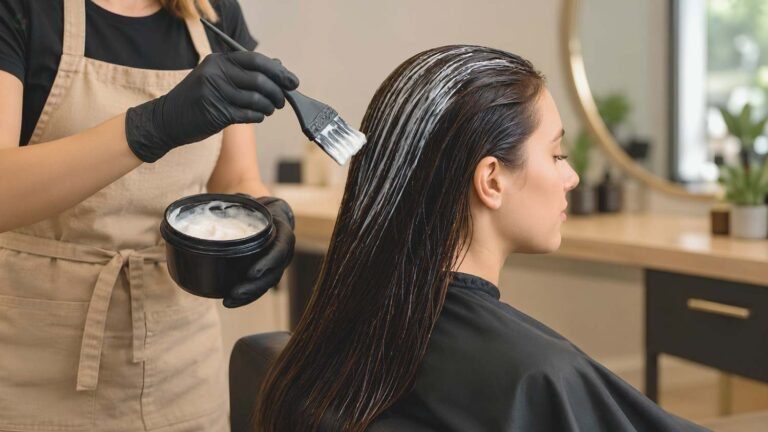
A hair color chart is also a communication tool, and using it well can transform a salon appointment. Instead of saying you want light brown, which could mean anything from level 5 to level 7 depending on who is listening, try saying you are naturally a level 6, you would like to stay around level 6 or 7, you prefer a neutral to slightly cool tone because gold turns brassy on you, and you want grey blending rather than solid coverage. That single sentence gives a colourist everything they need: your starting point, your target, your tone preference, and your maintenance goal. Bring the chart with you if it helps, and bring photos of hair you liked on people with a similar skin tone and starting depth to yours, because tone reads differently on different complexions.
Ask about the plan for underlying pigment and toning before the colour goes on, not after you see brassiness in the mirror. A good colourist will already be thinking about it, but asking shows that you understand the process and invites a real conversation about lift stages, toner, and aftercare. Ask, too, about how the colour will grow out and how often you will need to return, because a beautiful result that needs a salon visit every three weeks is a different commitment from one that lasts eight. The hair color chart gets you into that conversation with shared language, and shared language is what turns a vague wish into a result you can actually live with.
Common Hair Color Chart Mistakes to Avoid
The most common hair color chart mistake is choosing by name instead of by number, picking light brown when you meant dark blonde, or medium blonde when you meant light brown, and then being surprised by a result that was, by the chart, exactly what you asked for. The second mistake is ignoring your starting level, choosing a pale blonde swatch while standing at level 3 and expecting one box to carry you there. The third is choosing tone by the swatch alone without thinking about undertone, so a gold shade fights a cool complexion or an ash shade drains a warm one. The fourth is forgetting porosity and history, so porous ends go darker than roots and the result looks patchy. And the fifth is judging the result under bathroom light on the day, when the colour is still settling and the light is warming everything it touches. Give a new colour a few washes and a look in daylight before you decide you hate it, and if you do need to correct it, do it with a plan rather than with another box on top of the first one.
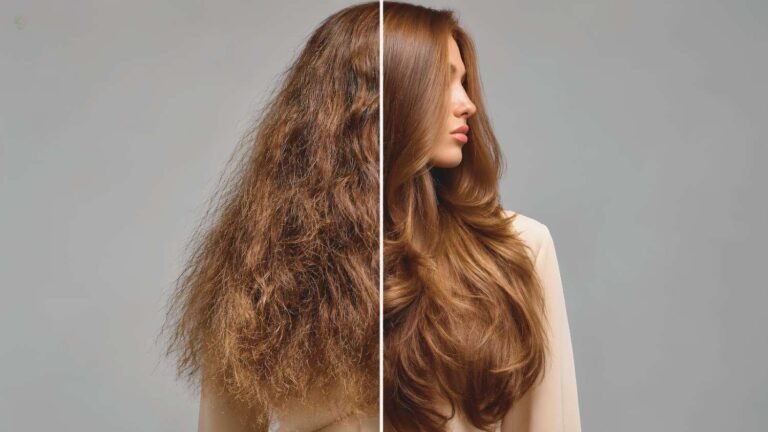
Aftercare is where a good colour result is kept or lost, and it is worth a short word here even though it is not strictly part of the chart. Coloured hair is more porous than virgin hair, it loses moisture faster, and it is roughed up more easily by heat, sun, and harsh washing. A gentle, colour-safe wash routine, a regular mask for dry or damaged lengths, and a light sealing oil on the ends will keep the tone truer for longer than any product claim on its own. If your coloured hair starts to feel dry or frizzy, that is a care signal before it is a colour signal, and fixing the care routine often fixes the way the colour looks. For a fuller routine, our guide to fixing frizzy hair and our hair mask for dry, damaged and frizzy hair cover the steps that matter most, and our argan oil shampoo guide explains how a gentle wash fits into coloured-hair care.
Frequently Asked Questions
Can a hair color chart predict my exact result?
No, and any chart that promises an exact result should be treated with suspicion. A hair color chart predicts the target level and tone, but your starting level, your previous colour, your porosity, and the product line you use all filter that target. Think of the chart as a map and your hair history as the terrain: the map tells you where you are heading, but the terrain decides how the journey goes. A strand test is the only way to see your personal result before committing the whole head.
Why does my hair look different from the box photo?
Because the box photo shows a finished result on different starting hair, under professional light, after styling, and often after pre-lightening and toning that the box itself does not mention. Your hair color chart level and tone, compared honestly against your own starting hair, will predict your result far better than a model’s photo. If the box and the chart disagree, trust the chart.
Do hair color chart levels differ by brand?
The numbering is shared, but the swatches are not identical. Level 6 means dark blonde everywhere, yet one brand’s level 6 may lean warmer and another’s may lean cooler, and some brands extend the scale to 11 or 12. Always check the chart for the exact product line you plan to use, and treat a generic hair color chart as a learning tool rather than a final authority.
What if my roots, mid-lengths, and ends are different levels?
That is normal, especially after previous colour, and it is the most common reason for patchy results. Assess each zone separately in daylight, choose a shade close to your darkest zone if you want an even result, or ask a colourist to formulate zone by zone. Colouring the whole head with one formula and expecting three different zones to come out identical is the mistake to avoid.
Which tone should I choose if I am unsure about warm or cool?
Choose neutral. A neutral tone on the hair color chart neither adds warmth nor fights it, it blends grey well, and it is the most forgiving choice when your undertone is unclear or your hair carries a mixture of tones from earlier colour. You can always move warmer or cooler next time, once you have seen how neutral behaves on you.
The Bottom Line
A hair color chart is worth learning because it replaces guessing with language. Learn the levels from 1 to 10, learn the tone families behind the decimal point, find your natural level in daylight from your regrowth, and match tone to your undertone and your grey coverage needs. Respect lift limits, expect brand variation, and use a strand test before a full application. Do those things, and the chart stops being a confusing row of swatches and becomes the most practical tool you own for choosing hair colour, whether you colour at home or walk into a salon knowing exactly what to ask for. If you want to go deeper into care after colour, start with our argan oil for different hair types guide and our benefits of argan oil guide, and compare wash options in our hair oils vs leave-in conditioner comparison.