How to Use Edge Control for Smooth, Laid Edges That Last
How to Use Edge Control for Smooth, Laid Edges That Last
If you have ever wondered how to use edge control without ending up with white flakes, a crunchy hairline, or swoops that lift before lunch, you are asking the right question. Edge control looks simple — a dab of gel, a brush, a scarf — but the difference between edges that stay laid all day and edges that fall apart by noon comes down to a handful of small choices: how much product you use, what your edges look like before you start, and how long you let the style set.
If you are learning how to use edge control for the first time, this guide walks through the whole process the way it actually works in real life, not the way it looks in a thirty-second video. You will learn what edge control is and which hold suits your hair, the exact steps to lay your edges, how to shape swoops that suit your face, and — the part most guides skip — how to keep those edges laid through sweat, humidity and a long day, and how to take the product out at night without pulling out baby hairs. No product roundup, no brand hype: just the method, the mistakes, and the edge-health rules that keep your hairline intact. By the end, you will know how to use edge control in a way that lasts all day and keeps your hairline healthy.
What Is Edge Control, Really?
Edge control is a styling product made for the short, fine hairs along your hairline — the baby hairs and edges that frame your face. It is thicker and stickier than regular hair gel, and it is designed to hold those short hairs flat and smooth in a shape you choose, whether that is a soft swoop, a tight swirl, or edges brushed straight back. Learning how to use edge control is a skill of its own rather than a smaller version of styling the rest of your hair, and the amount, the tools, and the setting step are what make it different. Most edge controls come as a gel or a pomade, and a few come as a wax. The gel type dries with a firmer hold and a bit of shine. The pomade type stays softer and more flexible, which suits looser styles. Wax gives the strongest grip but is the hardest to wash out, so it is the one to use sparingly.
Hold strength is the first thing to understand when you learn how to use edge control, before you buy anything. Light hold suits fine or straight hair that only needs a gentle nudge to stay in place. Medium hold works for most wavy and curly hair. Maximum hold is made for coarse, coily hair that springs back the moment you let go of the brush — but maximum hold is also the most likely to flake and the hardest to remove, so it should never be your default just because it sounds stronger. That is why the first question in how to use edge control is always about your hair, not about the jar. Choosing the right hold is one of the first decisions in how to use edge control, and the rule is simple: the right hold is the lightest one that actually keeps your edges down. If your edges stay put with medium hold, maximum hold buys you nothing except more residue.
Water-based edge control washes out with water and a little shampoo. Oil-based and wax-based formulas need a proper wash and can leave buildup if you keep layering them day after day. If you are new to learning how to use edge control, start water-based. You will make mistakes while you learn — everyone does — and water-based product forgives them. It rinses out cleanly, it does not fight with the leave-in conditioner underneath, and it will not turn into a sticky layer by Wednesday if you wore it on Monday and Tuesday too.
It helps to know what edge control is not. It is not a hair growth product, and it will not thicken thin edges or repair a damaged hairline. It is not a substitute for gel on the rest of your hair, and it is not a serum — a hair serum smooths and adds shine, while edge control grips and holds. Confusing the two is how people end up with greasy edges that still will not stay down. Edge control does one job: it holds short hair in place for a day. That distinction matters, because how to use edge control is a different routine from how to use gel — the amount is smaller, the tools are smaller, and the setting step is the whole game. Used that way, with the right amount and the right removal, it is a useful tool — and that is the real lesson of how to use edge control: the product is the smallest part of it. Used every day, in large amounts, and slept in, it becomes the reason edges start thinning — and that is the trade-off the rest of this guide is built around.
How to Use Edge Control: The Basic Method, Step by Step
Learning how to use edge control properly takes about ten minutes the first few times, and closer to five once your hands know the routine. The steps below are the whole method, and each one answers a small piece of how to use edge control. Nothing here is optional the first time you do it — every step exists because skipping it is what causes flakes, lift, or breakage later.
- Start with clean, dry edges. Wash your hairline or at least wipe the edges clean before you begin. Product left over from yesterday, sweat, and the natural oils from your scalp all stop edge control from gripping. If the edges feel tacky or coated before you start, wash them. Clean hair is the base the whole style sits on, and no amount of product fixes a dirty base — it is the first thing any honest guide to how to use edge control will tell you.
- Moisturise lightly first. Rub a drop of light oil or a little leave-in conditioner into the edges before any edge control touches them. This is the step most people skip, and it is the one that protects your hair. Edge control is a styling product, not a conditioner — it holds hair, it does not feed it. A thin layer of moisture underneath stops the product from drying your baby hairs out. If you already use a leave-in conditioner as part of your routine, a small amount on the edges is enough. Do not soak the hair; damp is fine, wet is not, because edge control slides off wet hair instead of gripping it. Getting that balance right is a quiet part of how to use edge control that beginners usually learn the hard way.
- Take a pea-sized amount. Scoop out about the size of a pea for one side of your hairline — less if your edges are fine or short. Warm it between your fingertips for a few seconds so it spreads evenly. This is the single most common mistake in how to use edge control: people use three times too much. Remember the first rule of how to use edge control — more product does not mean more hold. It means white flakes, a crunchy feel, and a hairline that looks coated instead of smooth. You can always add a little more. You cannot take it away once it is in.
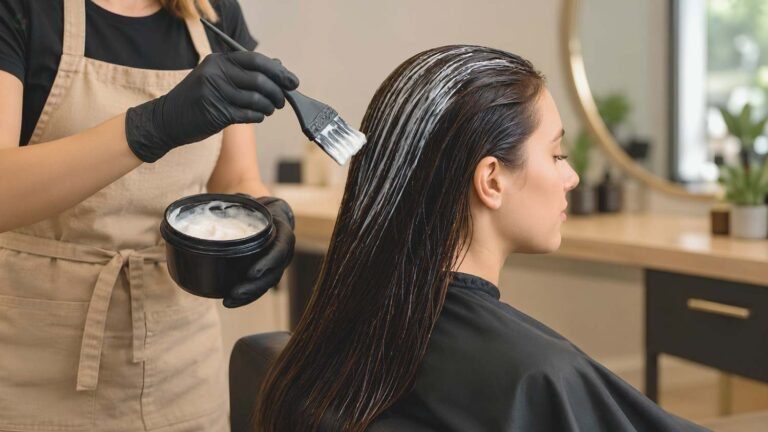
- Smooth it on with your fingers first. Press the product along the edges with your fingertips, following the direction you want the hair to lie. Fingers give you control over where the product goes and how much pressure you use. Do not scrape it on with the brush yet — the brush comes next, and if the product is already spread evenly, the brush only has to shape, not to distribute. That order — fingers first, brush second — is a small discipline in how to use edge control that keeps the application even.
- Shape with the brush. Take an edge brush or a soft toothbrush and sweep the hair into the shape you want, using short, gentle strokes. Work in small sections, and keep the pressure light — pressing hard does not make the hold stronger, it just pulls at the roots. For a smooth, straight look, brush the hair back in one direction. For swoops and swirls, guide the brush in a curve and let the hair follow. The brush is for shaping, not for forcing, and that is a rule worth repeating in any guide to how to use edge control.
- Tie it down with a silk or satin scarf. Wrap a silk or satin scarf snugly around your hairline and leave it for five to fifteen minutes. This is the step that makes the difference between edges that last and edges that lift. The scarf presses the hair flat while the product sets, and the smooth fabric does it without frizzing the hair the way cotton would. Five minutes is the minimum. Fifteen minutes is better if you have the time, especially with coarse or coily hair that resists lying flat. Do not skip this step and hope the product sets on its own — it will not, not properly. Anyone who explains how to use edge control without a scarf set is explaining how to get edges that lift by lunch.
- Check it, touch it up once, and leave it alone. Take the scarf off and look. If a few hairs have popped up, smooth them with the brush and a tiny bit more product — a tiny bit — and tie the scarf back on for two minutes. Then stop. The biggest enemy of laid edges is hands: touching, smoothing, and re-brushing them all day breaks the hold you just set and pushes the product into flakes. Once the edges are laid, let them be — the last instruction in how to use edge control is to stop touching them.
That is the full method of how to use edge control, and it works the same way every time. The rest of this guide is about making it work for your hair type, making it last all day, and making sure your edges stay healthy while you do it.
How to Use Edge Control on Different Hair Types
There is no single right way to learn how to use edge control, because there is no single hair type wearing it. The product, the amount, and the hold all change with the hair you have, and most of the frustration people feel comes from copying a routine made for someone else’s texture. Here is how the method shifts when you learn how to use edge control for your own texture.
Fine or straight hair needs the lightest touch. A light-hold, water-based edge control is usually enough, and the amount is closer to half a pea per side. Fine hair shows product fast — too much and the edges look wet and stringy instead of smooth. Use the brush gently, because fine baby hairs snap more easily than coarse ones, and tie the scarf on for five minutes. That is normally all it takes. If your edges are fine and you find yourself reaching for maximum hold, the problem is usually not the hold. When you are figuring out how to use edge control on fine hair, the answer is rarely a stronger product. It is the base: make sure the edges are clean and dry, and try a little less product before you try a stronger one.
Wavy hair sits in the middle. Medium hold works well, and the brush matters more than the product strength, because wavy baby hairs want to bend back into their wave pattern. Brush them in the direction of the shape and tie the scarf for ten minutes. Wavy hair also frizzes easily in humidity, so on damp days a medium hold with a good scarf set will outperform a stronger product applied in a rush. For wavy hair, how to use edge control comes down to the brush and the scarf more than to the jar. That is the same logic that runs through all of how to use edge control: match the method to the hair, not the hair to the method. Knowing your hair type before you choose products saves you from buying three jars to find the one that works — the same is true for oils, and the guide to argan oil for different hair types explains why matching the product to the texture matters across the board.
Curly hair needs medium to strong hold, and the scarf set is where the style is really made. Curly edges have a strong memory: they want to spring back into their curl, and the only thing that convinces them otherwise is time under the scarf. Ten to fifteen minutes is realistic. Work in smaller sections than you think you need, because a big section of curly edges will dry unevenly — flat at the roots, curly at the ends — and the curl will win by the afternoon. When you learn how to use edge control on curly hair, a pea-sized amount per side is still the right measure; the difference is not more product, it is more patience. For curly hair, a light oil underneath also helps the brush glide without snagging, which is one reason argan oil for curly hair is often part of the routine before any styling product goes on.
Coily hair, including 4C, is where edge control earns its reputation — and where the mistakes cost the most. Maximum hold is often the right call when you learn how to use edge control on coily hair, but it has to be used the right way: clean edges, a light moisturiser underneath, a pea-sized amount warmed between the fingers, short gentle brush strokes, and a full fifteen minutes under the scarf. Coily baby hairs are the most fragile of all, and they are also the ones people pull hardest on, because they spring back fastest. Do not fight them with force. The brush guides, the scarf holds, and time does the rest. If your edges lift within an hour even with maximum hold, check the base first — product from yesterday, a heavy oil underneath, or damp hair will all beat maximum hold. Fix the base before you blame the jar. That is a lesson that repeats through all of how to use edge control: the base decides the result.
The Tools That Actually Matter
You do not need a drawer full of gadgets when you learn how to use edge control. Four tools cover everything, and each one has a job the others cannot do as well.
The edge brush is the workhorse. It is a small brush with short, firm bristles, usually with a pointed rat-tail end for parting. It shapes better than a toothbrush because the bristles are stiffer and the handle gives you control, and it reaches the hairline cleanly without dragging the rest of your hair into the style. If you buy one tool, buy this one. It is the first tool most guides to how to use edge control will name, and for good reason.
A soft toothbrush is the backup and the detail tool. It is gentler than an edge brush, which makes it the right choice for very fine edges or for baby hairs that are already thin. It is also good for the tiny swirls at the temples, where a bigger brush is clumsy. Use a clean one, kept only for your hair, and replace it when the bristles splay — a splayed toothbrush drags instead of smoothing. A soft toothbrush is also the gentlest way to practise how to use edge control when your edges are thin or new to styling.
The rat-tail comb is for parting and for the first pass. Its pointed end parts the hairline cleanly and separates the edges from the rest of the hair before you start, which matters more than it sounds: if the edge control catches the longer hair behind the hairline, the whole section sticks together and the style looks heavy. A quick part with the tail, then fingers, then the brush — that order keeps the style clean, and it is a small piece of how to use edge control that beginners often miss.
The silk or satin scarf is not optional, and cotton is not a substitute. Cotton absorbs moisture and creates friction, which frizzes the edges you just smoothed. Silk and satin press the hair flat and let it set without stealing the moisture from underneath. Tie it snugly but not so tight that it hurts or leaves a line across your forehead. If you do not own a silk scarf, a satin bonnet pulled low over the hairline does the same job in a pinch.
One more tool deserves a mention because people reach for it constantly: your fingers. Fingers spread the product, feel how much is really there, and tell you whether the hair is coated or still dry in a way no brush can. The brush shapes. The fingers judge. Knowing when to use which is a quiet part of how to use edge control well, so use both.
How to Shape Swoops, Swirls and Baby Hairs
Once the method is solid, the shaping is where your own style comes in — and it is the fun part of learning how to use edge control. The shapes below all use the same base steps — clean edges, a little moisture, a pea-sized amount, brush, scarf — and differ only in the direction the brush moves.
The classic swoop is the most forgiving shape to learn. Brush the edges forward and to the side in one smooth curve, like a wave breaking toward your temple. It suits almost every face, it hides a slightly uneven hairline, and it is the easiest shape to keep neat through the day because the curve has somewhere to go when the hair relaxes. If you are learning how to use edge control, start here. Practise the curve on one side until it feels natural before you try the other.
The swirl is the swoop’s fancier cousin: a tight curl at the temple, brushed in a small circle. It looks beautiful and it is the hardest shape to keep, which is why most guides to how to use edge control mention it last: a circle has no slack, and the moment one part lifts, the whole swirl unravels. Use a soft toothbrush for the swirl itself, keep the product amount small so it does not clump, and give it the full fifteen minutes under the scarf. Swirls suit rounder faces and shorter styles, where they frame the face without overwhelming it.
Finger waves along the hairline suit longer edges and give a vintage, polished look. Comb the edges into a wave pattern with the tail of the comb, then smooth each ridge with the edge brush. This one takes practice and patience, and it rewards anyone learning how to use edge control beyond the basics. Learn it on a day when you are not in a rush. The waves look best with a medium hold — maximum hold makes the ridges look stiff instead of soft.
Edges brushed straight back are the simplest shape and the best choice when the rest of the hair is pulled back into a ponytail, bun or braids. Brush everything back from the forehead in one direction, tie the scarf, and let it set. It looks clean, it lasts the longest because there is no curve to unravel, and it is the shape most people should choose for long days, workouts, or humid weather. For anyone still learning how to use edge control, straight-back edges are also the most forgiving shape to practise first.
A word about face shape, because it matters more than most guides admit. Swoops and swirls draw the eye sideways and soften a long face. Straight-back edges lengthen a round face. None of this is a rule — it is a starting point. Try a shape for a full day before you decide it does not suit you, because the first hour of any new edge style looks odd to the person wearing it, and the mirror is not the best judge in that hour. That is the only honest way to judge how to use edge control for your own face. The best judge is a photo at the end of the day.
How to Make Laid Edges Last All Day
Here is the part almost no guide covers: the first ten minutes are easy. It is the next ten hours that test your edges. Sweat, humidity, rain, a workout, a long commute, a nap on the sofa — each one pulls at the hold you set in the morning, and most people blame the product when the style falls apart. Usually the product is fine. What is missing is a plan for the day itself. This is the all-day system, and it is the part of learning how to use edge control that actually decides whether your edges survive until evening.
Start with the set, because nothing later can rescue a bad one. The scarf is not a finishing touch, it is the step that locks the style in. Five minutes is the minimum and fifteen is better, and if you know the day will be hard on your hair — a humid day, a workout, a long event — give it the full fifteen and do not rush it. A rushed set lifts by mid-morning. A proper set holds through lunch and beyond. That is why the set is the first lesson in how to use edge control for a full day, not a finishing touch. The difference is ten minutes in the morning that you will not get back later.
Match the hold to the weather, not to your mood — that is another quiet rule of how to use edge control that lasts. On humid days, step up one level of hold from what you normally use, because moisture in the air softens edge control faster than anything else. On dry winter days, step down — cold dry air makes product brittle, and maximum hold in January is how you get flakes by noon. If you live somewhere humid and you fight frizz all summer, the same logic applies to the rest of your hair, and the guide to fixing frizzy hair explains how humidity changes what your hair needs from every product you use.
Plan for sweat instead of being surprised by it, because anyone learning how to use edge control for an active day has to solve sweat before it happens. If you work out, tie the scarf back on before the session and wear a sweatband over it. The sweatband catches the sweat before it reaches the hairline, and the scarf underneath keeps the edges pressed flat while you move. After the workout, do not brush the edges while they are damp with sweat. Let them dry, then smooth them once with the brush and tie the scarf for two minutes. Brushing wet, sweaty edges is how baby hairs snap.
Rain is the same problem with less warning. A hood or an umbrella is worth more than any product once the rain starts, because edge control is water-based in most cases and rain is water. If your edges do get wet, remember that knowing how to use edge control in the rain is mostly knowing what not to do: do not panic and do not pile on more product. Let them dry, brush them back into shape, and tie the scarf for a few minutes. The shape is still there underneath — the water only relaxed it.
The mid-day refresh is where most people go wrong when they are still learning how to use edge control, and it is a small thing done right. If your edges start lifting in the afternoon, do not add more product on top of dry, set product. That is the fastest route to flakes. Instead, dampen the edges very lightly with water on your fingertips — just enough to wake the product up — smooth them once with the brush, and tie the scarf for two minutes. The existing product reactivates, the shape returns, and you have not added a second layer. If you have a silk scarf in your bag, you have a refresh kit. If you do not, a clean hand and two minutes of gentle pressure will do most of the job.
Finally, know when the day is over. Edges that have survived ten hours have done their job. Do not try to stretch them into a second day by adding more product in the morning — that is buildup, and buildup is what flakes, itches, and eventually thins the hairline. One day, one application, then wash it out. The all-day system is about making one day last, not about making one application last a week — and that is the real meaning of learning how to use edge control for smooth, laid edges that last.
How to Use Edge Control Without Flaking, Buildup or White Residue
Flaking is the most common complaint about edge control, and it is almost always a technique problem, not a product problem. It is also the complaint that tells you the most about how to use edge control, because every cause of flaking points back to a step that was skipped. White residue appears when the product dries in a thick layer, when it is layered over old product, or when two products that do not mix meet on the hair. Each cause has a fix.
Too much product is the first cause, and it is the easiest to fix. If your edges look white or chalky once dry, use half as much tomorrow — that is the simplest correction in all of how to use edge control. A pea-sized amount per side is the ceiling, not the starting point. Fine hair often needs half of that. The right amount dries clear and leaves the hair smooth, not coated. If you can see the product once it dries, there is too much of it on the hair.
Layering over old product is the second cause. Edge control applied on top of yesterday’s edge control — or on top of a gel, a mousse, or a heavy oil — dries unevenly and flakes where the layers meet. Start clean every time; that is the second rule of how to use edge control without flakes. If you are refreshing in the afternoon, dampen and reactivate the existing layer instead of adding a new one, as described above. And if you have been wearing edge control for several days running without washing, stop and wash. The buildup underneath is already flaking, even if you cannot see it yet.
Mixing products that fight each other is the third cause. Some leave-in conditioners, oils and edge controls do not combine well, and the result is a white, gummy residue. The usual culprit is too much oil underneath: oil and water-based gel repel each other, and the gel dries in patches. Keep the moisturiser underneath light — a drop of oil, not a pool — and let it sink in for a minute before the edge control goes on. That small habit is what separates people who know how to use edge control from people who keep fighting flakes. If a particular combination keeps flaking no matter what you change, the combination is the problem, and one of the two products has to go.
Dirty edges are the fourth cause. Sweat, dust, and the natural oils from the scalp all sit on the hairline, and edge control applied over them grips the dirt instead of the hair. The product dries, the dirt moves, and the result is flakes by midday. Wash the hairline before you start, especially after a workout or a hot day. Clean hair is the cheapest fix in this whole guide to how to use edge control.
If you have fixed the amount, the layering, the mixing, and the cleanliness, and the product still flakes, then — and only then — it is the product. Some formulas genuinely dry chalky on some hair. Switch to a different formula, preferably a water-based one with a simpler ingredient list, and test it on a day when you are staying home. A product that flakes on a quiet day will only be worse on a long one.
How to Take Edge Control Out the Right Way
Removal is the half of the routine nobody photographs, and it is the half that completes how to use edge control properly — it decides whether your edges survive the year. Baby hairs are the finest, most fragile hairs on your head, and they are also the ones you are brushing, pressing, and holding all day. How you take the product out matters as much as how you put it in.
Never brush dried edge control out of dry hair. That is the first rule of how to use edge control safely, and it is also the most common mistake — the single most damaging thing you can do to your edges. Dry product makes the hair stiff, and a brush dragged through stiff hair snaps it. If you have ever found tiny broken hairs on your brush or on the bathroom counter after taking your edges down, this is why.
The right way to finish how to use edge control for the day is simple. At the end of the day, wash the edges with a gentle shampoo and warm water, massaging softly with your fingertips until the product dissolves. If you are not washing your whole head, a damp cloth or a little warm water on the hairline does the job — wet the edges, wait a few seconds for the product to soften, then wipe gently in the direction the hair lies. Water-based edge control melts away in seconds. Wax-based formulas take longer and need a little shampoo, which is one more reason to prefer water-based for everyday use.
Moisturise after removal, because the last step of how to use edge control is putting the moisture back. The edges have spent the day under a styling product, and they need moisture back before you sleep. A drop of light oil or a little leave-in, smoothed on with your fingers, is enough. This is also the right moment for a hair mask if the edges feel dry or rough — a mask on the hairline once a week keeps the baby hairs soft and flexible instead of brittle, and the guide to hair masks for dry, damaged and frizzy hair covers which kind of mask suits which hair. Then leave the edges alone overnight. Sleeping with them loose, on a satin pillowcase or with a bonnet, lets them recover. Sleeping with edge control still in is the fastest way to wake up to breakage.
How Often Should You Use Edge Control?
Knowing how to use edge control includes knowing when not to. The product is safe when it is used with rest days, and it becomes a problem when it is used every single day without a break. The rhythm that works for most people is one to two times a week, with at least a day or two in between when the edges are left completely alone. That rhythm gives the hairline time to breathe, to be moisturised, and to recover from the brushing and pressing.
Never sleep in edge control. Overnight, the product dries hard, the scarf or bonnet rubs against it, and the hair underneath breaks where it is stiffest. If you have been sleeping in it and your edges are thinning, that habit is the first thing to change — before you change the product, before you buy a growth oil, before anything else. Take it out at night, moisturise, and sleep with the edges free. That nightly habit is as much a part of how to use edge control as the morning application. The difference shows up within a few weeks.
Watch for the warning signs, and take them seriously. Edges that feel sore at the roots, baby hairs that are getting shorter instead of longer, a hairline that looks thinner than it did a few months ago, or small bald patches near the temples — these are all signs that the hairline is under too much stress. The stress usually comes from a combination: edge control every day, tight styles pulling the same hairs, and brushing that is too rough. The fix is to stop all three at once for a few weeks: no edge control, no tight ponytails or braids pulling at the hairline, and no brushing the edges at all. It is the hardest advice in this guide to how to use edge control, because it means not styling the edges at all. Moisturise the hairline daily, massage it gently with your fingertips for a minute, and let the hair rest. Castor oil is often used on the hairline during this kind of break because it is thick, moisturising, and easy to massage in — the guide to castor oil benefits, uses and side effects explains what it can and cannot do, and it is honest about the limits: no oil grows hair overnight, but a moisturised, rested hairline recovers far better than a dry, stressed one. The same honest caution applies to anything that claims to fix hair loss quickly, and the guide to amla oil side effects and hair loss is worth reading before you trust any product that promises fast regrowth.
If you want the edges to grow back stronger, the routine around the product matters more than any single product — that is the long view of how to use edge control without losing your hairline. A light oil massaged into the hairline a few times a week, a diet and hair-care routine that supports growth generally, and styles that do not pull — that is the whole system. The guide to using argan oil for hair growth covers how a light oil fits into a growth routine without weighing the hair down. None of this is instant. Baby hairs grow slowly, and a hairline that has been stressed for months needs months of gentle care to come back. The patience is the treatment, and it is the part of how to use edge control that no jar can replace.
Can You Use Argan Oil on Your Edges?
Yes — and a drop of argan oil is one of the best things you can put under edge control, as long as it is a drop and not a puddle. That is why it earns a place in any complete guide to how to use edge control. The oil does two jobs before the styling product goes on: it moisturises the baby hairs so the edge control does not dry them out, and it helps the brush glide without snagging. Warm one drop between your fingertips, smooth it along the edges, wait a minute for it to sink in, and then apply the edge control on top. The hold stays, the hair stays soft, and the edges do not feel stripped when you wash the product out at night.
The mistake is using too much, and it is the same mistake that shows up everywhere in how to use edge control: more is not better. Argan oil and water-based edge control do not mix — oil repels the gel, and a heavy layer of oil underneath makes the product slide off instead of gripping. If your edges will not stay down and you have been oiling them generously first, the oil is the reason. One drop, rubbed in until the hair feels soft but not greasy, is the measure. If your fingers come away shiny, you used too much.
Argan oil also works as the after-care, and that is the quiet end of how to use edge control — the moisture you put back after the style comes out. Once the edge control is washed out at night, a drop smoothed over the edges replaces the moisture the day took away. It is light enough not to weigh baby hairs down, and it does not leave the greasy film that heavier oils can leave on the forehead. Used that way, it is the gentlest companion to learning how to use edge control without drying the hairline out. If you want to choose a good one, the guide to the best argan oil for hair explains what to look for, and the general guide to argan oil for hair covers how it behaves on different textures. For Black hair specifically, where the hairline is often styled with edges as part of the look, the guide to argan oil and Black hair is the closest match to this routine, because it deals with the same combination of moisture, hold, and hairline care.
Mistakes That Ruin Laid Edges
Most bad edge days come from the same short list of mistakes, and every one of them is fixable the next time you do your hair. Knowing them is half of learning how to use edge control. Using too much product is first, and it causes half the other problems on this list — flakes, crunch, buildup, and a hairline that looks coated. A pea-sized amount is the ceiling. If you are unsure, use less.
Starting on dirty edges is second. Yesterday’s product, sweat, and scalp oil all stop the new product from gripping, and the result lifts within hours. Clean the hairline first, even if the rest of the hair is not being washed. It takes two minutes and it changes the whole result.
Skipping the scarf is third, and it is the most skipped step of all. People apply the product, brush the edges, look in the mirror, and walk out the door — and then wonder why the style fell apart by lunch. The scarf is what sets the style. Without it, the product dries in the air and the hair relaxes back to its natural pattern. Five minutes is the minimum, and skipping it is the most common regret in learning how to use edge control. It is the best five minutes you will spend on your hair all day.
Brushing too hard is fourth. Pressing the brush into the scalp does not improve the hold; it pulls at the roots and snaps the finest hairs. Short, light strokes do the shaping. If you have to press hard to get the hair to lie down, the problem is the base — the hair is too dry, too dirty, or the product amount is wrong — not the pressure.
Sleeping in edge control is fifth, and it is the one that costs you hair instead of just style. The product dries hard overnight, the pillow rubs against it, and the stiff hairs break. Take it out every night, no exceptions, even when you are tired. It takes two minutes with warm water and a cloth.
Using it every day is sixth. Daily use without rest days builds residue, dries the hairline out, and stresses the same short hairs again and again. One to two times a week is the rhythm, and it is the last rule of how to use edge control that protects the hairline. On the other days, let the edges be — brush them gently, moisturise them, and give them a break. Your hairline will thank you in a way you can see in the mirror within a month.
Frequently Asked Questions
How to use edge control on short hair?
Short hair works well with edge control because the baby hairs are the style. Use a light or medium hold, a soft toothbrush instead of a stiff edge brush, and a smaller amount — about half a pea per side. The scarf set still matters, and five minutes is usually enough. Short edges dry faster, so tie the scarf on immediately after brushing, before the product starts setting in the air. That is the short version of how to use edge control on short hair: less product, a softer brush, and the scarf on fast.
How to use edge control on wet or dry hair?
Dry or very slightly damp hair is best. Wet hair makes the product slide off instead of gripping, and the style will not set. If you have just washed your hair, let the edges dry most of the way — about eighty percent dry — then apply a drop of oil, then the edge control. If the edges are fully dry, a light mist of water from your fingertips is enough to wake the hair up without making it wet. That is the simple answer to how to use edge control on wet or dry hair — dry wins, slightly damp is fine, wet is not.
How to use edge control with braids or a wig?
With braids, lay the edges after the braids are finished, using the same steps — clean edges, a little moisture, a small amount of product, brush, and scarf. Be gentle around the braid bases, because the hair there is already under tension, and do not pull the edges into the braid style. With a wig, lay the edges before you put the wig on, or smooth them after the wig is secured, working carefully so the product does not get onto the lace. In both cases, take the product out at night and give the hairline a rest — braids and wigs already pull at the edges, and daily edge control on top of that tension is how thinning starts. The rule of how to use edge control stays the same either way: gentle pressure, a small amount, and the product out at night. The guide to jojoba oil for locs covers how to care for the hairline under protective styles, and the same rest-and-moisturise logic applies here.
How to use edge control without it flaking?
Use less product than you think you need, start with clean edges, keep the moisturiser underneath light, and never layer fresh product over dried product. If it still flakes, dampen the edges lightly and reactivate the existing layer instead of adding more. Flaking is almost always too much product or a dirty base, and both are fixed in a day — which is why learning how to use edge control without flakes is really learning to use less.
Does edge control cause hair loss?
Edge control itself does not cause hair loss, but the way it is often used can. Daily use, large amounts, sleeping in it, tight styles pulling the same hairs, and brushing dried product out of dry hair all stress the hairline, and stressed baby hairs break and thin over time. Used one to two times a week, taken out at night, and applied gently, edge control does not damage the hairline. If your edges are thinning, stop using it for a few weeks, moisturise the hairline daily, and let the hair recover before you start again.
How long does edge control last?
A good application lasts all day — eight to twelve hours — if the set was proper and the weather is kind. Humidity, sweat, and rain shorten it. The scarf set is what decides the duration more than the product strength: fifteen minutes under the scarf holds longer than five, every time. If your edges lift after two hours, the set was rushed, the base was dirty, or the hold is wrong for your hair type — in that order.
Laid edges are a small thing, but they change how the whole style looks, and they are worth learning properly. The method is simple once it is in your hands: clean edges, a little moisture, a pea-sized amount, a gentle brush, and the scarf. The all-day system keeps them there. The removal and the rest days keep your hairline healthy enough to do it again next week. Learn the steps, respect the limits, and your edges will stay smooth, laid, and — most importantly — still there. That is the whole point of learning how to use edge control.