Regenerative Walnut Oil: What It Means and Is It Worth Buying?

Regenerative walnut oil is starting to appear on the shelves of specialty shops, and the label raises an obvious question: how is it different from ordinary walnut oil? The short answer is that regenerative walnut oil is not a different kind of oil at all. It is walnut oil pressed from nuts grown under a farming approach that tries to rebuild soil health, rather than simply getting a crop out of the ground each year. This guide walks through what the word means, what it does not promise, and how to use the oil well once you bring it home.

What Does Regenerative Mean for Walnut Oil?
Regenerative agriculture is a farming approach that aims to rebuild soil health instead of just maintaining it. In a walnut orchard, that can include cover crops planted between the tree rows, less tilling so the soil structure is not constantly broken up, compost added back to the ground, reduced chemical inputs, and sometimes grazing animals to cycle nutrients through the field. The goal is healthier soil, more biodiversity above and below ground, and better water retention, so the orchard holds up better through dry spells and heavy rain alike.
So regenerative walnut oil is simply walnut oil pressed from nuts grown this way. The pressing method matters at least as much as the farming method for flavour and freshness: a carelessly pressed, badly stored bottle will taste worse than a well-handled ordinary bottle, whatever the farm behind it did. The word describes the farm, not a guarantee about the bottle in your hand.
Regenerative Walnut Oil vs Organic Walnut Oil
These terms are often mixed up, and the confusion is understandable because the two ideas overlap in practice. Organic is a regulated label that mainly limits synthetic pesticides and fertilisers, and it comes with a defined set of rules and inspections behind it. Regenerative focuses on soil outcomes and farming practices, and the term itself is far less standardised. Some products carry a named third-party certification for regenerative practices, while others use the word loosely on the front of the bottle with very little detail to back it up.
That difference matters when you are choosing. A bottle of regenerative walnut oil that also carries organic certification has passed a defined standard for one part of the story, but the regenerative claim may still rest only on the producer’s description. Look for a named certification or concrete farm details — where the orchard is, what practices are used, who verifies them — rather than relying on the word alone.
Does Regenerative Farming Change the Oil?
There is no strong evidence that regenerative farming changes the nutrition of the oil in a way you could feel. Any good walnut oil is rich in polyunsaturated fats, including the omega-3 alpha-linolenic acid walnuts are known for, and that profile comes from the nut itself. Nobody can honestly tell you a spoonful of regenerative walnut oil delivers a measurably different nutrient dose from ordinary cold-pressed walnut oil. The honest reason to buy regenerative is environmental: supporting farming that aims to leave soil better than it found it.
Quality depends heavily on pressing and storage. Choose cold-pressed, unrefined oil in a dark bottle, and check the pressing or best-before date if the bottle shows one. Fresh walnut oil smells nutty and clean, almost like a freshly cracked walnut; oil that smells flat or like old paint has gone off, and no farming claim rescues it. Our guide to culinary argan oil vs olive oil shows how much grade and handling matter there too.
How to Use Regenerative Walnut Oil in the Kitchen
The golden rule with walnut oil is simple: finish dishes, do not fry with it. Unrefined walnut oil has a low smoke point and turns bitter when heated, so it belongs at the end of cooking, not in a hot pan. That limitation is what makes it so good as a finishing oil, because its delicate, nutty flavour survives intact when never heated hard. Drizzle it over salads, where it pairs beautifully with bitter greens, roasted beets and goat cheese, stir it into oatmeal or over roasted vegetables just before serving, or whisk up a simple vinaigrette with lemon juice, mustard and a little honey.
A spoonful swirled into soup just before serving, or over grilled fish or roasted sweet potato, adds nutty depth without heaviness. Treat regenerative walnut oil like a condiment rather than a staple: the good bottle for salads and finishing, and a plain cooking oil for everything that needs heat.
Using Regenerative Walnut Oil for Skin and Hair
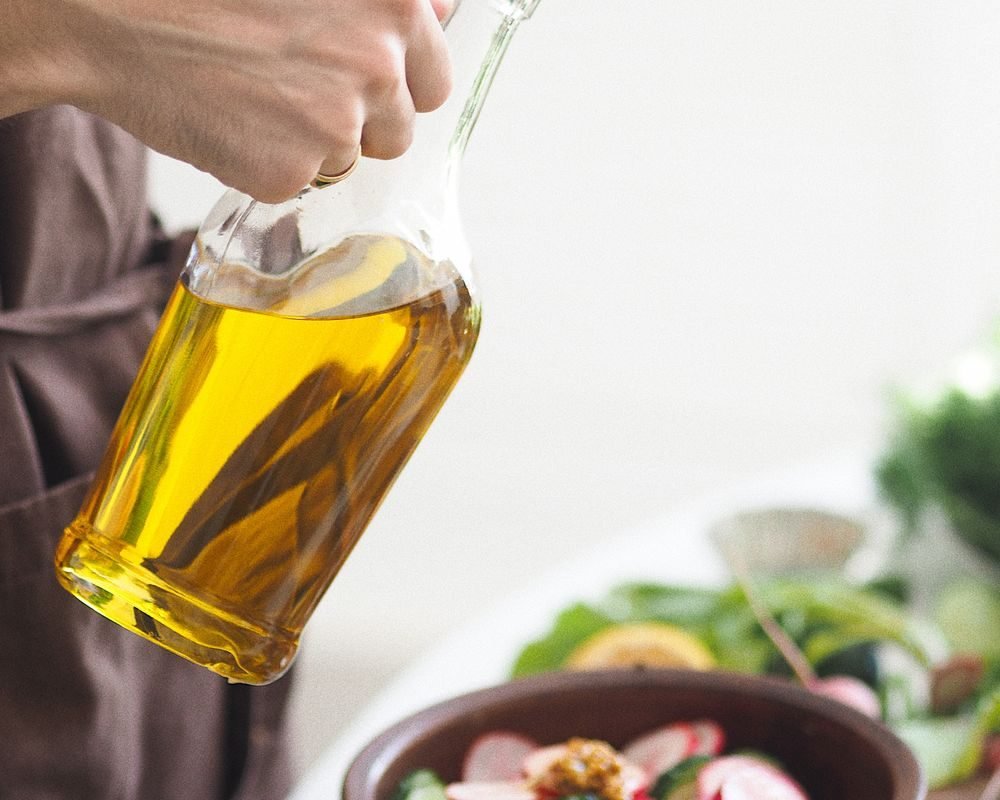
Walnut oil is light, absorbs well, and is sometimes used as a body or hair oil. It is a good option if castor oil feels too heavy, though it does not seal moisture as thickly. For hair ends, a few drops warmed between the palms is enough — more can make fine hair look limp rather than shiny. If shine and frizz control are your main goal, compare it with argan oil for hair and our benefits of argan oil guide.
On skin, walnut oil suits a light massage or body oil applied after a shower while skin is still slightly damp. Patch test first on the inside of your forearm and wait a day. One warning applies no matter how you use it: walnut oil can trigger reactions in people with tree nut allergy, whether eaten or applied to skin, so if anyone in the household has a nut allergy, keep the bottle out of shared routines and check with a doctor first. For a lighter carrier alternative, see our jojoba oil benefits and uses guide.
How to Store Regenerative Walnut Oil So It Stays Fresh
Walnut oil spoils faster than most oils because it is high in polyunsaturated fats, and that is true of regenerative walnut oil just as much as any other kind. Keep it in the fridge after opening, keep the cap closed tightly, and aim to use it within a few months rather than letting it sit for a year. Discard it if it smells like old paint, sharp, or stale — that smell is the oil telling you it has oxidised, and it will taste bitter as well as being past its best. The same rules apply as in our guide on how long flaxseed oil lasts, because flaxseed oil shares the same delicate, polyunsaturated character and the same short fresh life once opened.
Buying a smaller bottle is often the smarter move: a large bottle that goes rancid halfway through is worse value than a small bottle you finish while it still tastes good. Write the opening date on the label so you are not guessing three months later.
How to Choose a Good Bottle of Regenerative Walnut Oil
Shopping for regenerative walnut oil is less about finding a famous brand and more about reading the label carefully. Look for cold-pressed and unrefined on the label, a single ingredient — walnut oil, nothing else — and a dark glass bottle that protects the oil from light. Look for a pressing or best-before date, and be wary of bottles that say nothing about when the oil was made. Then look for the regenerative detail itself: a named certification, a named farm, or a description of the practices used. Vague wording with no detail behind it is the main red flag, because the word regenerative is not policed the way organic is.
Also consider how you will actually use it. If you cook salads most nights, a mid-sized bottle you will finish in two or three months makes sense; if you only want it occasionally, buy the smallest bottle you can find. Freshness beats bargain size every time with walnut oil.
Is Regenerative Walnut Oil Worth the Price?
Regenerative walnut oil usually costs more, and whether that premium is worth it depends on what you value. It makes sense if you care about how food is farmed, use the oil regularly while it is fresh, and the producer gives real detail about its practices rather than just a fashionable word on the label. Then you are paying partly for the oil and partly for the farming system behind it.
It makes less sense if you only want walnut flavour for the occasional salad, or a light skin oil you will use now and then. A good cold-pressed standard bottle does that same job and is less painful to throw away if it goes off first. Buy regenerative walnut oil because the farming story matters to you and you will use it fresh — not because the label implies a healthier oil, because that is not a claim the evidence supports.
Frequently Asked Questions
Is regenerative walnut oil the same as organic?
No. They overlap in some practices, but they are separate ideas and labels. Organic is a regulated standard focused mainly on limiting synthetic inputs, while regenerative walnut oil is defined by farming practices aimed at soil health, and the regenerative term itself is less standardised. A product can be one, both, or neither, so read the label rather than assuming.
Can I cook with regenerative walnut oil?
It is better for finishing than frying because of its low smoke point. Use regenerative walnut oil drizzled over finished dishes, in dressings, or stirred in just before serving. For frying or roasting at high heat, choose an oil made for that job instead.
Is walnut oil good for hair?
It can add light shine and softness, but it is not a proven growth treatment. A few drops on the ends is plenty, and heavier oils suit sealing better if your hair is very dry. Anyone with a tree nut allergy should avoid it on skin and hair as well as in food.
How long does walnut oil last once opened?
Keep regenerative walnut oil in the fridge after opening and aim to finish it within a few months. If it smells sharp, stale or like old paint, throw it away, even if the best-before date has not passed, because heat and light can spoil it early.
The Bottom Line
Regenerative walnut oil is about the farm behind the bottle. It is a fair choice if sustainability matters to you, as long as you buy it cold-pressed, check that the producer explains its practices, store it cold and use it fresh. If you just want walnut flavour or a light oil for skin and hair, an ordinary cold-pressed bottle does the same job for less — and the best bottle, regenerative or not, is always the fresh one you actually finish.