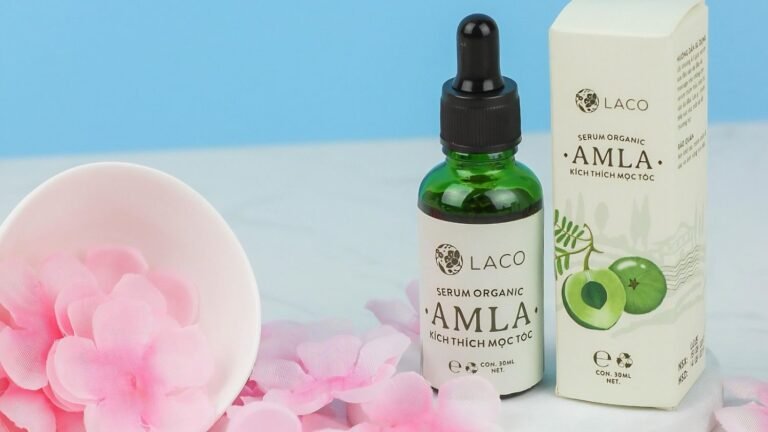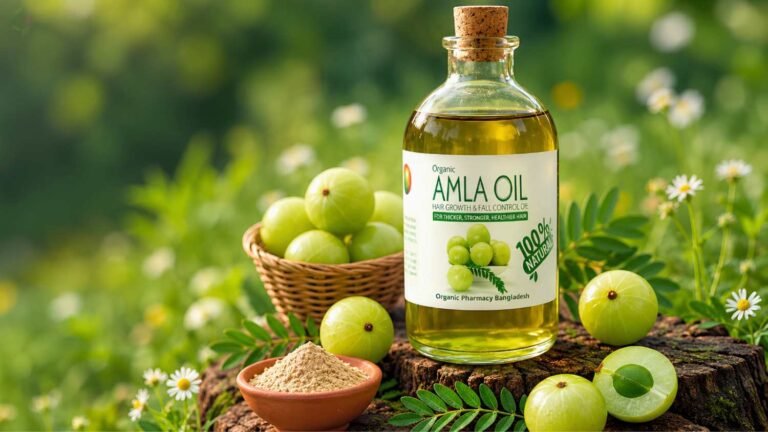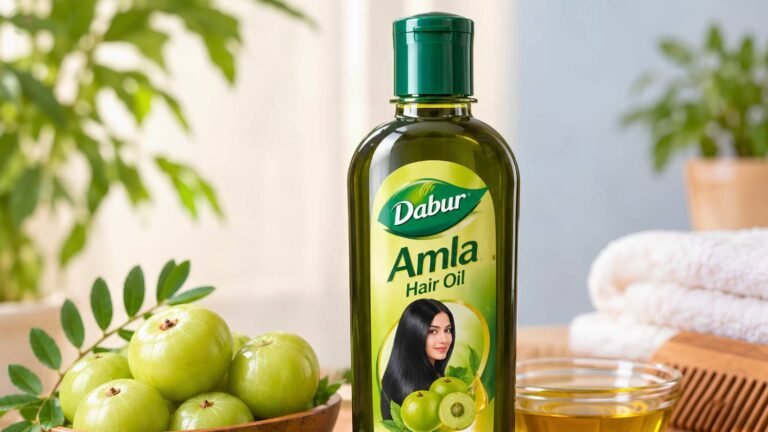
Both, amla powder vs amla oil for hair, come from the same fruit, both show up constantly in natural hair care routines, and both claim similar benefits. So which one actually deserves a spot in your routine, amla powder or amla oil?
The honest answer is that it depends on what you’re trying to fix, how much time you have, and how your scalp responds to each form. Here’s a clear, practical breakdown to help you decide.
What’s the Real Difference Between Amla Powder vs Amla Oil for hair?
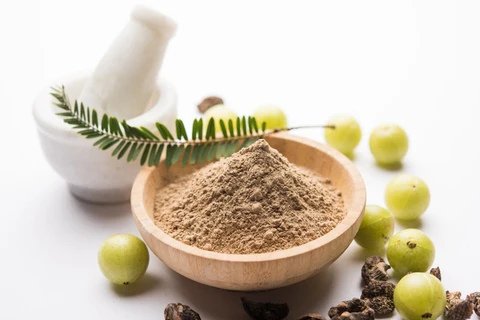
Amla powder is simply dried Indian gooseberry, ground into a fine powder that you mix with water, yogurt, or other ingredients to form a paste. Amla oil, on the other hand, is made by infusing that same fruit into a carrier oil, usually coconut or sesame oil, so the nutrients are delivered through an oil base instead.
The fruit behind both products, Phyllanthus emblica, is the same. What changes is how it’s processed, how it’s applied, and ultimately, how it behaves on your scalp and hair.
Nutrient Concentration: Does One Deliver More Than the Other?
This is where the two genuinely start to diverge. Amla powder, being closer to the whole dried fruit, generally retains a higher concentration of vitamin C, tannins, and gallic acid, since nothing has been diluted into a carrier substance.
Amla oil, by comparison, contains a smaller concentration of these compounds simply because they’ve been infused into a base oil rather than used in their more concentrated, powdered form.
That said, oil-based delivery has its own advantage: because it’s fat-soluble in nature, it can carry certain compounds more effectively into the scalp and hair shaft compared to a water-based powder paste.
In short, powder tends to win on raw nutrient concentration, while oil tends to win on delivery and absorption into the hair itself.
Ease of Use: Convenience Makes a Real Difference
Nutrient content matters, but so does whether you’ll actually use the product consistently, and this is where amla oil has a clear practical edge.
Amla oil requires no mixing, no waiting for a paste to set, and no clean-up involving stray powder residue in your sink. You simply apply it, massage it in, and rinse it out later.
Amla powder, by contrast, needs to be mixed into a paste, usually with water, yogurt, or another ingredient, before it can be applied. It also tends to be messier and can leave a mild residue if not rinsed out thoroughly, which some people find inconvenient for regular use.
Which One Works Better for Hair Growth?
Neither form dramatically speeds up hair growth in a literal sense, but each supports the process differently.
Amla oil is generally better suited for regular, low-effort scalp massage, which improves blood circulation, a factor commonly linked to healthier hair growth conditions over time.
Amla powder, used as an occasional intensive mask, delivers a more concentrated dose of nutrients directly to the scalp and hair shaft, which some people use specifically before a wash day for a deeper treatment rather than daily maintenance.
If consistency is your priority, oil is easier to stick with long-term.
If you’re looking for a more intensive, occasional treatment, powder offers a stronger concentrated dose.
Amla Powder vs Amla Oil for Grey Hair
Both forms are traditionally used to help slow premature greying, since the pigment-related benefits are linked to compounds present in the amla fruit itself, not the carrier used to deliver them.
That said, amla powder mixed with henna is one of the most common traditional methods specifically used to darken hair naturally while addressing grey strands.
Amla oil doesn’t offer the same dual benefit of natural tinting, but it can still be used consistently alongside a henna-and-amla-powder treatment as part of a broader routine.
Which One Is Gentler on Sensitive Scalps?
Amla oil tends to be the gentler option for sensitive or easily irritated scalps, since it’s diluted within a carrier oil and doesn’t require additional mixing with other potentially irritating ingredients.
Amla powder, especially when combined with ingredients like lemon juice or other acidic additions some recipes call for, carries a slightly higher risk of irritation for sensitive skin types.
If you have a reactive scalp, starting with plain amla oil is generally the safer first step before experimenting with powder-based masks.
Cost and Shelf Life Comparison
Amla powder is typically more affordable per use, since a small amount goes a long way in a single mask, and it tends to have a longer shelf life when stored properly in a cool, dry place.
Amla oil, particularly higher-quality cold-pressed versions, tends to cost more per bottle but requires no additional preparation.
Neither option is significantly more expensive over time when used as intended, though powder does offer slightly better value if you’re using it as an occasional treatment rather than a daily product.
Can You Use Both Together?
Yes, and many people already do without necessarily thinking of it that way. A common routine involves using amla oil for regular scalp massages a few times a week, then using an amla powder mask once every week or two for a deeper, more concentrated treatment.
This combination allows you to benefit from oil’s convenience and scalp-conditioning properties, alongside powder’s more concentrated nutrient delivery, without having to choose one exclusively over the other.
So, Which One Is Actually Better?
There isn’t a single correct answer, since it depends on your hair goals, scalp sensitivity, and how much time you’re willing to spend on your routine.
If you want something low-maintenance that fits easily into a regular hair care routine, amla oil is the more practical choice.
If you’re specifically targeting grey hair, want a more intensive treatment, or don’t mind the extra preparation time, amla powder, especially combined with henna, offers a more concentrated and traditional approach.
Final Thoughts
Amla powder and amla oil aren’t really rivals, they’re two different delivery methods for the same beneficial fruit, each suited to a slightly different need.
Oil wins on convenience and regular use, while powder wins on concentration and specific traditional treatments like grey hair coverage.
Rather than picking one permanently, most people get the best long-term results by understanding what each form does well and using them accordingly, sometimes even together, depending on what their hair needs at any given time.
This article is for general informational purposes and isn’t a substitute for professional dermatological advice. If you have a sensitive scalp or known allergies, patch-test any new product before regular use.