Argan Oil Hair Mask: The DIY Treatment Your Dry, Frizzy Hair Has Been Missing
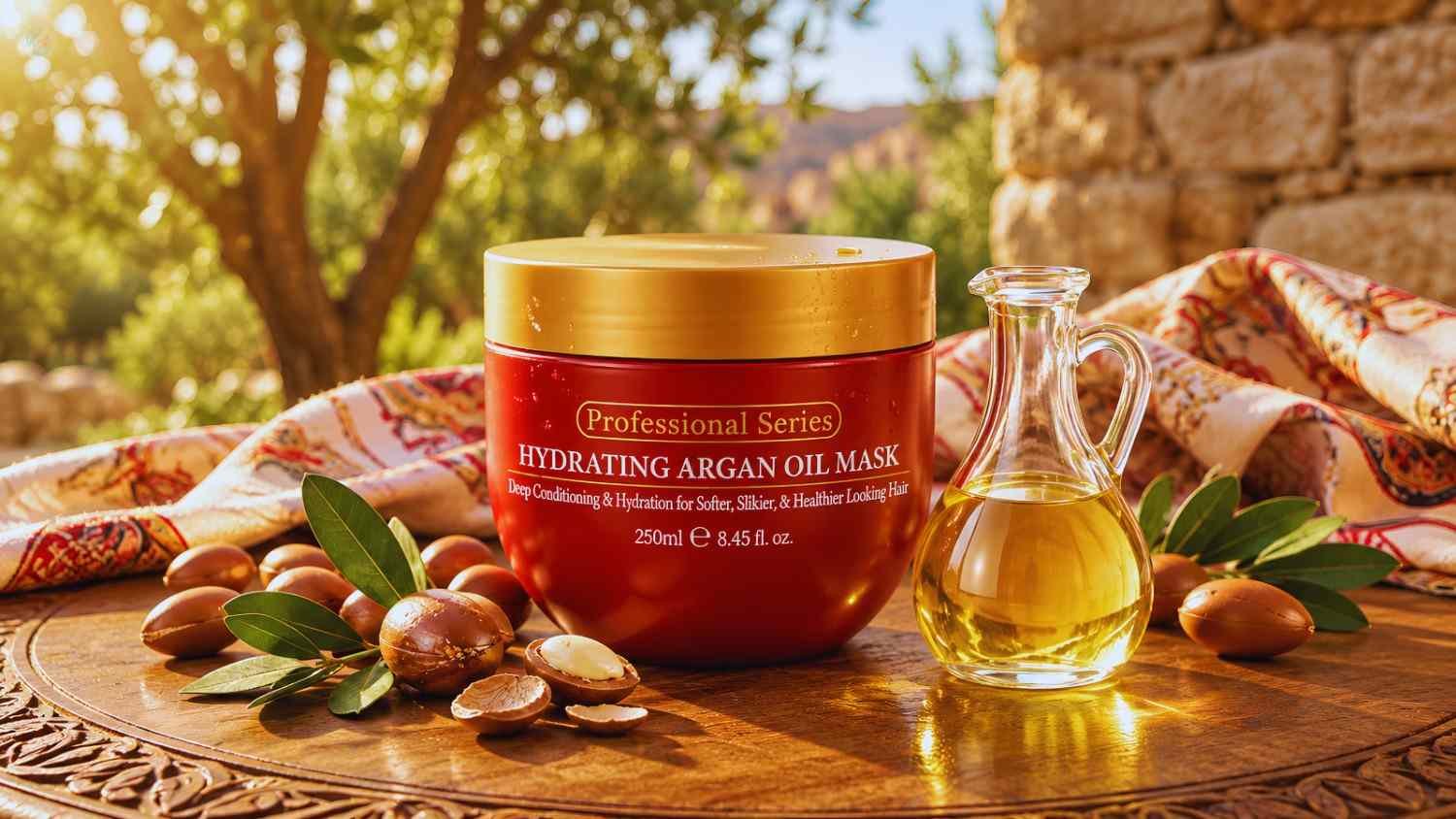
If your hair feels dry, frizzy, or just generally tired no matter what you try, an argan oil hair mask, a homemade version of this treatment, might be the simplest fix you have not gotten around to yet. It takes minutes to put together, uses ingredients you probably already have, and delivers a noticeably softer, shinier result without a trip to the salon.
The reason a mask works where a daily conditioner often does not is time and concentration. A conditioner touches your hair for a minute or two. An argan oil hair mask stays on for 20 to 30 minutes, or even overnight, giving the oil and its companion ingredients a real chance to absorb. That difference in contact time is the whole logic of masking, and it is why a weekly mask can change hair that daily products barely move.
What Makes Argan Oil the Right Base for a Hair Mask
Argan oil comes from the kernels of the argan tree, a species found almost exclusively in Morocco’s Souss Valley, a region protected under UNESCO Biosphere Reserve status. For hair care, the cold-pressed, unroasted version is used, prized for its concentration of vitamin E, oleic acid, linoleic acid, and antioxidant polyphenols.
These compounds are exactly why argan oil works so well as a mask base. Unlike heavier oils, it absorbs relatively quickly while still delivering deep conditioning, which is why it pairs well with other mask ingredients instead of overwhelming them. Heavier oils can dominate a mask and leave hair greasy. Argan oil is light enough to let honey, avocado, aloe, or yogurt do their own work alongside it, while still contributing its own moisture-sealing and antioxidant effect.
For the full background on the oil itself, see our overview of argan oil for hair, and if you are choosing between mask formats, our guide to argan oil conditioner benefits explains where a mask sits relative to a daily conditioner.
Basic Argan Oil Hair Mask Recipe
This simple version of an argan oil hair mask works as a solid starting point for most hair types. Make your argan oil hair mask fresh each time, since a homemade mask has no preservatives and does not keep well.
What you will need:
- 2 tablespoons pure argan oil
- 1 tablespoon honey
- 1 egg yolk, optional, for extra protein
How to make it:
- Warm the argan oil slightly between your palms or in a bowl of warm water. Do not microwave it, since overheating can degrade the oil.
- Mix in the honey until fully combined, adding the egg yolk if using it.
- Apply the mixture from mid-length to ends, avoiding the scalp if you have naturally oily roots.
- Cover with a shower cap or warm towel and leave it on for 20 to 30 minutes, then rinse thoroughly with a mild shampoo.
For an argan oil hair mask, two tablespoons is a starting point for medium-length hair. Short hair may need only one tablespoon of oil, while very long or thick hair may need three. The right amount of argan oil hair mask leaves your hair coated but not dripping; if the mask is running down your neck, you have used too much.
The 3-Layer Mask Method: A Smarter Way to Build Any Mask
Here is an approach most DIY mask guides never explain, and it will improve every recipe below. Think of an argan oil hair mask as three layers doing three jobs. The hydration layer brings water into the hair, using ingredients like aloe vera gel, yogurt, or coconut milk. The oil layer, argan oil itself, conditions and delivers fatty acids and antioxidants. The sealing layer locks the first two in, using a small amount of shea butter or a heavier butter, but only for coarse, curly, or very dry hair that needs it.
Most failed argan oil hair mask attempts fail because they contain only one layer. An oil-only mask on dry hair can leave it feeling coated but still thirsty, because there was no water to seal in. A water-only mask feels nice wet and then dries out, because nothing sealed it. Building your argan oil hair mask in layers, hydration first, then oil, then seal only if your hair type needs it, is the difference between a mask that feels good for an hour and one that still feels good on day two.
For fine or low-porosity hair, skip the sealing layer entirely. Two layers are plenty, and the third will only weigh your hair down. For coarse, curly, or high-porosity hair, the sealing layer is what turns a good mask into a great one.
Mask Variations for Different Hair Concerns
For Dry Hair
Combine argan oil with mashed avocado and a tablespoon of plain yogurt. The fatty acids in avocado, alongside argan oil’s moisture-sealing properties, make this combination especially effective for hair that feels straw-like or over-dried from heat styling. This is a two-layer argan oil hair mask in the method above: yogurt hydrates, avocado and argan condition.
For Frizzy Hair
For an anti-frizz argan oil hair mask, mix argan oil with aloe vera gel in equal parts. Aloe’s smoothing, hydrating properties work alongside argan oil’s cuticle-smoothing effect to calm flyaways, particularly useful in humid climates where frizz tends to return quickly. If frizz is your main battle, our guide to how to fix frizzy hair covers the full routine beyond masking.
For Curly Hair
For a curly-hair argan oil hair mask, blend argan oil with coconut milk and a small amount of shea butter for a richer, more intensive treatment. Curly and coily textures typically need more moisture than straight hair, since natural scalp oils travel less efficiently down a curved hair shaft. This is the full three-layer version: coconut milk hydrates, argan conditions, shea seals. For curl-specific routines, see argan oil for curly hair and argan oil for different hair types.
For Color-Treated Hair
For color-treated hair, an argan oil hair mask combines argan oil with a tablespoon of apple cider vinegar diluted in water. This helps restore shine dulled by coloring or chemical processing, while argan oil’s vitamin E content helps offset some of the oxidative stress that comes with these treatments. Keep the vinegar well diluted, since undiluted vinegar is too harsh for already-processed hair.
For Fine Hair: The Lighter Version
Fine hair is the variation most mask guides get wrong, because they hand it the same rich recipe as coarse hair. For a fine-hair argan oil hair mask, halve the oil to one tablespoon, skip the egg yolk and any butter, and apply only from mid-length to ends, never near the roots. Rinse a little earlier, after 15 to 20 minutes, and follow with a light conditioner rather than a heavy one. The result should be softness without flatness, which is the entire goal for fine textures.
For Damaged or Bleached Hair: Protein With Caution
Damaged hair often needs protein as well as moisture, which is where the optional egg yolk in the basic recipe comes in. But protein is easy to overdo: too much, too often, leaves hair feeling stiff and straw-like rather than stronger. Use the egg version of your argan oil hair mask at most once every two weeks, and alternate it with a protein-free argan oil hair mask on the other weeks, so your hair gets both moisture and strength without overload.
Should You Leave This Treatment on Overnight?
For an overnight argan oil hair mask treatment, apply a slightly more generous amount, focusing on dry ends, and cover your hair with a shower cap or old T-shirt to protect your pillow. This longer application time allows for deeper penetration, particularly useful for very dry or damaged hair that a 20-minute treatment does not fully address.
Just keep in mind that overnight treatments work best occasionally, once every week or two, rather than as a nightly routine, since daily heavy oiling can lead to buildup over time. An overnight argan oil hair mask also suits high-porosity and coarse hair far better than fine hair, which usually wakes up flat and over-conditioned from an all-night treatment.
How Often Should You Use an Argan Oil Hair Mask?
Once or twice a week is generally the sweet spot for most hair types. Using it too frequently, especially on fine or low-porosity hair, can leave strands feeling weighed down rather than nourished. If your hair tends to get oily quickly, focus the mask on your ends only and skip the scalp entirely, adjusting frequency based on how your hair responds over the first few weeks.
A simple frequency guide for an argan oil hair mask: very dry, coarse, or damaged hair can handle twice a week. Normal hair does well once a week. Fine or oily hair usually does best once every ten days to two weeks, and only on the lengths. Watch how your hair feels on the second day after masking. If it still feels soft and clean, your frequency is right. If it feels coated or limp, stretch the gap between masks before you change anything else.
The Rinse-Temperature Ladder
Another detail most mask guides skip is rinse temperature, and it quietly affects your result. Rinse the mask out with lukewarm water first, which removes the bulk of the product without stripping the moisture you just applied. Then finish with a brief cool rinse over the lengths. The lukewarm wash clears residue, while the cool finish helps the cuticle lie flatter, which reads as smoothness and shine.
Avoid very hot water at the rinse stage. Hot water can strip away some of the very moisture you just applied, undoing part of the mask’s work in the final minute. The ladder is simple: lukewarm to wash out, cool to seal, and never hot.
Pure vs Blended Argan Oil: Which Should You Use for a Mask?
For a DIY mask, pure, cold-pressed argan oil is generally the better choice over blended or fragranced versions, since you are already adding other ingredients and do not need extra additives competing for absorption. Organic argan oil, when genuinely certified, offers the added benefit of being free from synthetic pesticide residue, which matters more in a leave-on treatment than in a quickly rinsed product.
If you are comparing it to other base oils, argan oil tends to feel lighter than heavier options, while offering a different nutrient profile than something like jojoba oil, which is prized more for mimicking natural scalp sebum than for argan’s antioxidant content. For a ready-made alternative to DIY, see our argan oil and lavender hair mask guide, and for broader mask comparisons, hair mask for dry, damaged and frizzy hair.
Store-Bought vs DIY: When Each One Wins
DIY is not automatically better, and being honest about that helps you choose well. A homemade argan oil hair mask wins on freshness, cost, and control: you know every ingredient, you can adjust it to your hair type, and it costs far less per use than a salon product. It loses on precision: no pH testing, no preservatives, so it must be made fresh, and protein balance is guesswork rather than formulation.
A store-bought argan mask wins when you want a protein-balanced formula, a tested pH, convenience, or a product that keeps for months. It loses on price and on control, since you cannot remove an ingredient your hair dislikes. A practical rule: use DIY for your regular weekly moisture mask, where freshness and customization matter most, and keep a store-bought mask for damage repair or protein treatments, where formulation precision matters more. If you use an argan oil shampoo daily, the weekly DIY mask is the deeper step that shampoo cannot provide, and an argan oil hair serum on the ends between masks keeps the softness going.
Common Mistakes to Avoid
A few small errors can quietly reduce how effective your mask actually is. Using the oil cold rather than slightly warmed reduces absorption, and applying too close to the roots on already-oily hair can leave your scalp looking greasy rather than nourished. Rinsing with water that is too hot can also strip away some of the very moisture you just applied, so lukewarm water is the safer choice when washing the mask out.
Other mistakes worth avoiding: masking every day, which causes buildup rather than extra softness; leaving a protein mask on for hours, which can make hair stiff; and skipping the patch test on a new ingredient, especially egg or a new essential oil, before a full-head application. If any ingredient irritates your scalp, rinse it out and do not repeat it.
Final Thoughts
This kind of DIY treatment is one of the simplest, most adaptable options you can make at home, easily adjusted for dry, frizzy, curly, fine, or color-treated hair with just a few extra pantry ingredients. Whether you stick to the basic recipe or tailor it to your specific hair concern, consistency, using it once or twice a week, matters far more than any single application.
Build your argan oil hair mask in layers, match the richness to your hair type, rinse with the temperature ladder, and give the routine three or four weeks before judging it. That patience, more than any single ingredient, is what turns a one-time argan oil hair mask into genuinely healthier-feeling hair.
This article is for general informational purposes and is not a substitute for professional dermatological advice. If you have a nut allergy or sensitive scalp, patch-test any new ingredient before applying a full mask.