Argan Oil for Oily Hair: A Light, No-Grease Guide
Argan oil for oily hair sounds like a contradiction. If your roots turn greasy by the second day, the last thing you want is to add more oil to the picture. Yet many people with oily scalps still deal with dry, rough, or frizzy ends, because the natural oils from the scalp rarely travel all the way down the hair shaft. The trick with argan oil for oily hair is not to avoid oil altogether, but to put a very small amount exactly where it is needed and nowhere else. Used that way, it can soften ends, tame frizz, and add shine without making the roots look any greasier.
This guide explains how to use argan oil for oily hair safely and sensibly: where to apply it, how much to use, how to build it into a wash-day routine, how often to clarify, and which warning signs mean you should cut back. It also covers what to avoid, so you can enjoy the smoothing benefits of argan oil without the weighed-down, lank look that gives oil a bad name among people with oily scalps.
Why Argan Oil for Oily Hair Still Makes Sense
It helps to understand what oily hair actually is. An oily scalp produces sebum, the skin’s natural oil, and that sebum coats the roots and the first few centimetres of hair. But sebum does not travel well, especially on longer hair, so the mid-lengths and ends can be dry even while the roots look shiny. Colouring, heat styling, sun exposure, and frequent washing can dry the ends further. That mismatch, oily roots with dry ends, is extremely common, and it is exactly the situation where argan oil for oily hair earns its place.
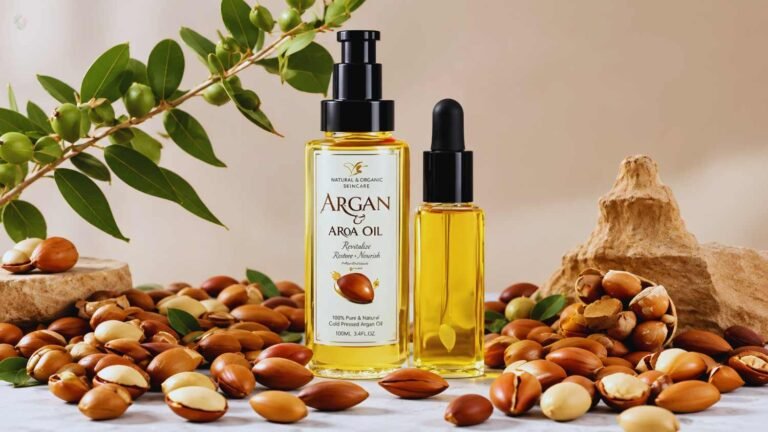
For readers new to argan oil for oily hair, it helps to know that argan oil is a light, fast-absorbing plant oil rich in fatty acids and vitamin E, and a drop or two smoothed over the ends can reduce friction between strands, soften roughness, and add shine. What it will not do is fix the oiliness itself. No honest guide should promise that argan oil reduces how much oil your scalp produces; scalp oil production is driven by hormones, genetics, and skin biology, not by a few drops of oil on the ends. Think of argan oil as a conditioner for the lengths, not a treatment for the scalp, and your expectations will stay realistic. For a general introduction to the oil itself, see the benefits of argan oil and argan oil for hair.
The Two-Zone Rule: Think of Your Hair as Two Different Hair Types
The single most useful idea for argan oil for oily hair is the two-zone rule: treat your roots and your ends as if they belonged to two different people. Zone one, the roots and scalp, already has all the oil it needs, so it gets shampoo, water, and nothing else. Zone two, the mid-lengths and ends, is where dryness lives, and that is the only zone that gets argan oil. Once you start thinking this way, most of the confusion disappears, because every decision becomes a zone decision: is this product, this amount, this technique for zone one or zone two?
This way of thinking also explains why generic advice about argan oil can feel so unhelpful for oily hair. Advice written for dry hair assumes the whole head needs moisture, so it tells you to massage oil into the scalp and leave it overnight. For oily hair, that advice backfires. The two-zone rule keeps the good part of the advice, oil for dry lengths, and drops the part that causes trouble, oil on an already-oily scalp, which is the central lesson of argan oil for oily hair. If your hair is a different texture in different places, our guide to argan oil for different hair types can help you fine-tune the approach for your own combination.
Where NOT to Apply Argan Oil for Oily Hair
If you remember one rule about argan oil for oily hair, make it this one: the roots are off-limits for leave-in argan oil when your scalp is oily. Oil applied to the roots flattens volume, makes hair look greasy within hours, and can trap styling residue against the scalp. The same goes for the first few centimetres of hair below the scalp: this section already receives sebum, and adding oil there only speeds up the greasy look.
The scalp itself is a different question, and the answer depends on what your scalp actually needs. If your scalp is oily but otherwise comfortable, it does not need argan oil at all, and adding it risks buildup and breakouts along the hairline. A scalp massage with oil is a treatment for a dry, tight scalp, and it is meant to be washed out, not left in. If you have oily flakes, yellowish scaling, persistent itching, or soreness, skip oil entirely and consider a professional opinion, because those patterns can point to dandruff or seborrhoeic dermatitis, conditions that oil does not treat and may aggravate. Our guide to argan oil for dandruff explains that distinction in more detail.
How Much Argan Oil for Oily Hair Is Enough
With argan oil for oily hair, less is genuinely more. Start with a single drop, warmed between your palms, and smoothed over the ends only. If your hair is fine or short, one drop may be all you ever need. Medium hair usually takes one to two drops, and thick or long hair two to three drops, always concentrated on the driest section, which is typically the last third of the hair. You should never see a greasy film after applying: if the hair looks wet or stringy, you have used too much, and the fix is to use less next time, not to wash it out immediately in frustration.
The palm-warming step matters more than it sounds. Rubbing the oil between your palms spreads it into a thin, even film, so it lands lightly instead of in one heavy spot. Apply to damp hair rather than dry hair when possible, because damp hair distributes oil more evenly and needs less of it. If you are unsure about amounts for your hair type, our step-by-step guide to how to use argan oil covers drop counts and application technique, and argan oil for low porosity hair is worth reading if your hair resists absorbing products.
Argan Oil for Oily Hair: A Wash-Day Routine That Works
A simple wash-day routine keeps argan oil for oily hair working for you instead of against you. Start by shampooing thoroughly, giving the scalp two gentle lathers if your shampoo is mild, and rinsing well. Follow with conditioner, but apply it from the mid-lengths down, not on the roots, since conditioner on oily roots adds the same weighed-down feeling as oil does. Rinse with cool or lukewarm water.
While the hair is still damp, warm one to two drops of argan oil between your palms and smooth them over the mid-lengths and ends, keeping your hands well away from the roots. Comb through gently with a wide-tooth comb to distribute the oil, then style as usual. If you heat-style, use a dedicated heat protectant as well, since argan oil alone is not a complete heat shield; our guide to argan oil as a heat protectant explains what it can and cannot do. On non-wash days, resist the urge to reapply: a half-drop smoothed over flyaways is plenty, and often nothing at all is needed.
The Ends-Only Check: Do Your Ends Actually Need Oil Today?
Here is an angle most guides on argan oil for oily hair skip: checking whether your ends need oil at all before you apply it. Many people oil their ends out of habit, even on days when the ends are already soft, and that habit is a quiet source of buildup. The ends-only check takes ten seconds and prevents it.
Take a small section of hair from the last few centimetres and run it between your thumb and finger. If it feels smooth and slips easily, it does not need oil today, so skip it. If it feels rough, catches, or looks dull and frayed, it will benefit from a drop. A second check is visual: hold the ends up to the light, and if they look matte and rough rather than simply unstyled, a little oil is justified. Making this check part of your routine means you oil on the days your hair asks for it, not on a fixed schedule, and that alone can cut buildup dramatically. Over time you will also learn your own pattern, such as ends needing oil after heat styling but not after an air-dried wash day, which lets you plan rather than guess.
How Often to Clarify When You Use Argan Oil for Oily Hair
Clarifying means using a shampoo designed to remove buildup, and it matters for anyone using argan oil for oily hair because sebum, styling products, and even light oils accumulate over time. If you use argan oil for oily hair a few times a week on the ends only, a clarifying wash every two to four weeks is a sensible starting point. If you also use heavy styling products, dry shampoo, or silicone-rich serums, you may need to clarify every one to two weeks instead.
Watch your hair rather than the calendar. If your usual shampoo stops lathering well, if the roots look dull or coated despite washing, or if your hair feels heavy even when freshly washed, those are signs that buildup has arrived and a clarifying wash is due. After clarifying, the ends may feel drier than usual, and that is the right moment for a slightly more generous drop of argan oil on the lengths, since clarifying shampoos strip moisture along with residue. Do not clarify more than once a week, though, because over-clarifying can dry the lengths and irritate the scalp, which may in turn make the scalp feel uncomfortable without solving the oiliness.
Signs of Buildup to Watch For
Buildup from argan oil for oily hair rarely announces itself loudly; it creeps in as a series of small changes. Hair that used to have volume at the roots starts lying flat. The scalp feels coated or itchy a day sooner than usual. Hair looks dull rather than shiny, even right after washing. A waxy or sticky feeling appears on the lengths, or your usual styling products stop working the way they did. White or greyish residue on a comb or brush is another clue.
If you notice two or more of these signs, the response is simple: pause the oil for a week, clarify once, and restart with half your previous amount, applied only to the ends. That reset usually restores the balance without any need for new products. If the signs persist after a reset, the problem may not be the oil at all, but a shampoo that is too mild for your scalp, a conditioner applied too high up the hair, or a styling product that does not suit you. Changing one variable at a time makes it possible to identify the real culprit instead of blaming the argan oil by default.
What to Avoid With Argan Oil for Oily Hair
Several common habits undermine argan oil for oily hair, and avoiding them is as important as the routine itself. Do not apply oil to the roots or scalp as a leave-in, do not use it daily on the whole head, and do not layer it over heavy styling products, since each layer adds weight. Avoid oils blended with heavy silicones or thick butters if your hair is fine, because those formulas are harder to wash out and more likely to build up, which defeats the purpose of argan oil for oily hair. Skip overnight oil soaks on oily scalps: an overnight soak is designed for dry hair and dry scalps, and on oily hair it usually ends with a greasy morning and an extra shampoo.
Be cautious with multi-purpose products that promise to treat the scalp and the lengths at once. A product designed for both zones usually serves neither well, and for oily hair the two-zone rule is a better guide than any all-in-one claim. If you have a tree nut allergy, note that argan oil comes from a tree nut kernel, so patch-test on the inner forearm first and ask a healthcare professional if you have ever had a serious nut reaction. Store your oil in a cool, dark place in a dark glass bottle, and discard it if it develops a sharp, waxy, or crayon-like smell, which signals that it has gone rancid.
Choosing the Right Argan Oil for Oily Hair
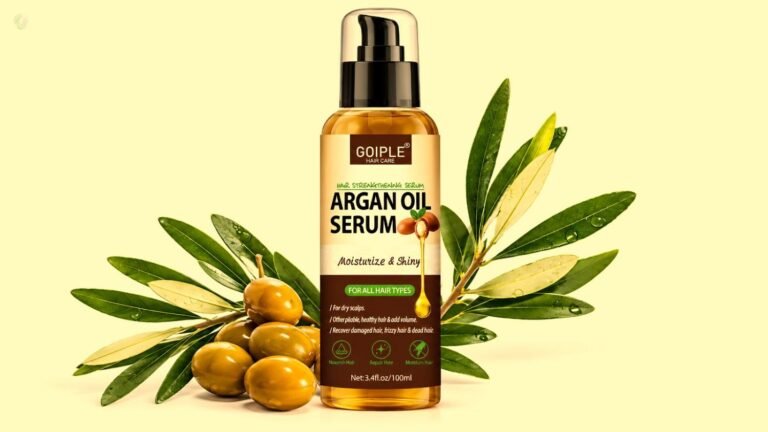
For anyone shopping for argan oil for oily hair, the best bottle is the simplest one: a bottle that lists 100 percent argan oil, or Argania spinosa kernel oil, as the main ingredient, preferably cold-pressed and sold in dark glass. Pure oil lets you control the amount precisely, which is exactly what oily hair needs. Blended oils and argan-infused serums can work too, but check the ingredient list, since some are mostly silicone with a small amount of argan oil, and those behave more like a serum than an oil.
Avoid large bottles if you use only a drop or two at a time, because a bottle that sits open for a year or more can go stale before you finish it. A small bottle used within a few months is a better buy. If you are comparing products, our guides to the best argan oil for hair and argan oil versus other oils explain how argan compares with alternatives such as jojoba, which some people with oily hair prefer for its lighter feel. Our comparison of argan oil versus jojoba oil is useful if you are deciding between the two.
Second-Day Refresh Without Re-Oiling
Second-day hair is where many oily-hair routines go wrong, because the instinct is to add more product to hair that already looks tired. With argan oil for oily hair, the better refresh uses no new oil at all. Lightly dampen your palms with water, rub them together, and smooth them over the lengths: the tiny amount of oil already on the hair redistributes, frizz settles, and the ends look tidier without any extra weight. A wide-tooth comb passed gently through the lengths achieves a similar effect by spreading existing oil more evenly.
If the roots look greasy on day two, that is a scalp issue, not an ends issue, and oil will not fix it. Dry shampoo, a light rinse of the roots only, or simply wearing the hair up are all better responses than adding oil near the scalp. Keeping the refresh oil-free also protects your wash-day balance: every drop you skip on day two is a drop that cannot build up by day three. If you use a leave-in product, our guide to argan oil leave-in conditioner explains how leave-ins differ from pure oil and when each makes sense.
When to Skip the Oil and Talk to a Professional
Argan oil for oily hair is a cosmetic routine, not a medical one, and there are situations where it should be paused. Persistent itching, redness, soreness, or scaling on the scalp, sudden or patchy hair shedding, or a scalp that becomes painful or inflamed are all reasons to stop using oil and seek professional advice. The same applies if you notice flaking that does not improve with regular washing, since that pattern may need a medicated treatment rather than a cosmetic oil.
There is no shame in a routine that works for the ends but not for the scalp, and no oil can correct a scalp condition on its own. A dermatologist or a pharmacist can tell you whether your scalp needs a different shampoo, a medicated product, or simply a lighter routine, and that advice is worth more than any number of home experiments. Once a scalp issue is under control, you can usually return to the ends-only routine described here.
Frequently Asked Questions About Argan Oil for Oily Hair
Will argan oil for oily hair make my hair greasier? Only if it reaches the roots or you use too much. Kept to the mid-lengths and ends in drop-sized amounts, it should not change how your roots look at all. If your roots look greasier after starting, check whether oil is travelling up the hair during application or sleep.
Can I use argan oil for oily hair every day? On the ends only, a tiny daily amount is fine for many people, especially if the ends are dry or heat-styled. But daily use is not necessary for most, and if buildup appears, cutting back to wash days only is the first step to try.
Is argan oil for oily hair better than jojoba oil? Both can work, and the choice is personal. Jojoba feels lighter to some people and is often recommended for oily scalps, while argan is slightly richer and better for rough ends. Trying each in drop-sized amounts on the ends is the simplest way to decide.
Should I apply argan oil before or after shampooing? For oily hair, after shampooing on damp ends is the most reliable method, because it targets the dry zone and washes nothing extra onto the scalp. A pre-shampoo treatment on the lengths is an option for very dry ends, but it should still stay off the roots.
Can argan oil for oily hair help with frizz? Yes, a drop smoothed over the ends can reduce frizz and flyaways, because it smooths the hair surface and reduces friction between strands. Keep the amount small, since too much oil turns frizz control into a weighed-down look.
Does argan oil for oily hair reduce oil production? There is no reliable evidence that it does, and you should be sceptical of any product claiming to rebalance or regulate your scalp’s oil output. Use argan oil for what it demonstrably does, softening and smoothing the lengths, and manage scalp oiliness with washing habits and, if needed, professional advice.
Final Thoughts
Argan oil for oily hair works when you respect the two-zone rule: nothing for the roots, a drop or two for the ends, and a quick check before each application to confirm the ends actually need it. Add a sensible clarifying rhythm, watch for buildup, and keep second-day refreshes oil-free, and you get the softness and shine of argan oil without the grease. Start with a single drop, adjust from there, and let your hair’s response guide you. For curly or textured hair, our guide to argan oil for curly hair offers texture-specific tips, and argan oil shampoo covers wash-day products that pair well with an ends-only routine.