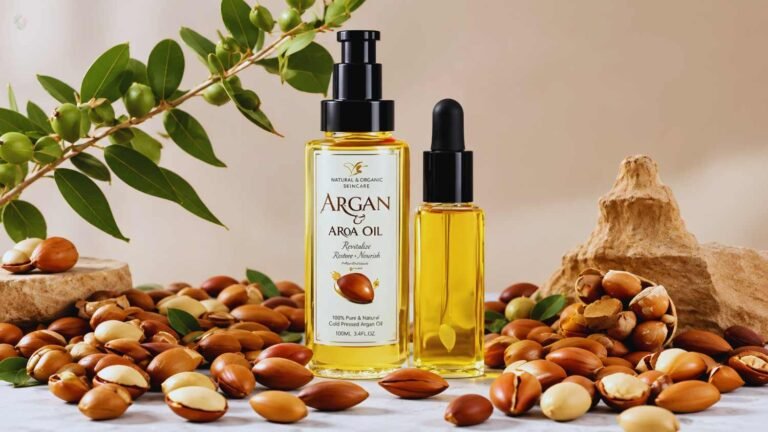
Argan Oil for Acne-Prone Skin: A Gentle, Honest Guide
If you have ever stared at a bottle of facial oil and wondered whether it would help your skin or set off a fresh breakout, you are not alone. Putting oil on skin that already breaks out feels counterintuitive, and much of the advice online swings between two extremes: either the oil is a miracle cure, or it is something to avoid completely. The truth, as usual, sits somewhere in the middle. This guide to argan oil acne prone skin use is built around that middle ground. Argan oil acne prone skin is best understood as a supportive moisturizer for skin that is prone to breakouts, not as an acne treatment, and the difference between those two roles matters a great deal. When you know what it can plausibly do, what it cannot do, and how to test it safely on your own skin, you can make a calm decision instead of a fearful or hopeful guess.
Argan oil comes from the kernels of the argan tree, which grows in Morocco, and cosmetic argan oil acne prone skin is the cold-pressed oil used on skin and hair. It is rich in vitamin E, plant sterols, and fatty acids, particularly oleic acid and linoleic acid. That fatty-acid balance is one reason it keeps appearing in conversations about argan oil acne prone skin care, because skin that is prone to breakouts is often described in research as having sebum that is relatively low in linoleic acid. That observation is interesting, but it is not proof that rubbing argan oil on your face will clear acne. It is a plausible mechanism worth understanding, not a promise, and this guide will keep that distinction in view throughout.
What “Non-Comedogenic” Actually Means for Argan Oil Acne Prone Skin Care
One of the first claims you will meet when researching argan oil acne prone skin routines is that argan oil acne prone skin is “non-comedogenic,” often with a rating of zero on a scale from zero to five. That rating traces back to a comedogenicity scale developed decades ago, in which ingredients were tested on rabbit ears and scored for how likely they were to block pores. Argan oil scored at the low end of that scale, which is why it is widely described as non-comedogenic. That is a useful piece of context, but it is not a guarantee, and it is worth understanding why before you trust the label on any product.
First, the original testing was done on animal skin under controlled conditions, not on human faces with their own mix of hormones, humidity, makeup, and existing skincare. A low score means an ingredient is considered unlikely to clog pores, not that it is physiologically incapable of ever contributing to a breakout in any person. Second, “non-comedogenic” is not a regulated term in most markets, so brands can use it without meeting a single agreed standard. Third, a finished product is more than one ingredient: a facial oil blend or moisturizer that contains argan oil acne prone skin may also contain heavier oils, waxes, or fragrances that behave very differently on breakout-prone skin. So when you see the claim in the context of argan oil acne prone skin products, read it as shorthand for “generally considered low risk for pore blockage,” and still judge the full ingredient list and your own skin’s response.
There is one more nuance that most guides skip, and it matters for a minority of readers. Some skin concerns that look like acne are actually driven by Malassezia, a yeast that normally lives on skin, and this condition is often called fungal acne even though it is not true acne at all. Certain plant oils can feed that yeast, and argan oil acne prone skin is sometimes flagged in ingredient-screening lists as a potential trigger for Malassezia-related breakouts. That does not mean argan oil causes fungal acne in most people, but if your breakouts are itchy, unusually uniform small bumps, concentrated on the forehead, chest, or back, and unresponsive to ordinary acne care, that pattern is worth mentioning to a dermatologist rather than experimenting further on your own. A thoughtful approach to argan oil acne prone skin care includes knowing when the usual advice may not fit your situation.
Can Argan Oil Help Acne-Prone Skin? What the Research Suggests
It is tempting to ask whether argan oil “works” for acne, but that is the wrong question, because argan oil acne prone skin is not an acne medication. No well-designed trial has shown that applying argan oil clears acne, and anyone who tells you otherwise is overstating the evidence. What the research does offer is a set of plausible, modest supporting roles, and understanding them helps you set realistic expectations for argan oil acne prone skin routines.
The most discussed idea is sebum balance. Several studies have found that the sebum of people with acne tends to be lower in linoleic acid than the sebum of people without acne, and that this imbalance may contribute to blocked pores and inflammation. Argan oil acne prone skin contains a meaningful proportion of linoleic acid, typically around a third of its fatty acids, and the theory is that supplying linoleic acid topically may help normalize the skin’s surface lipids over time. Some small studies of linoleic acid itself have reported reductions in small blocked pores, but those studies used linoleic acid preparations, not argan oil specifically, and their results cannot simply be transferred to a bottle of argan oil. Still, this is the most credible reason argan oil acne prone skin use is discussed with genuine interest rather than dismissed outright.
The second plausible role is barrier support. Many acne treatments, including benzoyl peroxide and retinoids, dry and irritate the skin, and a compromised barrier can itself make skin more reactive and more prone to breakouts. A light layer of argan oil acne prone skin may help reduce water loss from the skin’s surface and soften the dryness and flaking that strong treatments can cause, which in turn may help you tolerate your actual acne treatment more consistently. This is a supporting role, not a starring one, and it is most relevant if your skin feels tight, flaky, or irritated alongside breakouts. If your skin is very oily and never dry, this benefit may matter less to you.
The third idea often mentioned is anti-inflammatory and antioxidant activity. Argan oil contains vitamin E and polyphenols, plant compounds that have shown anti-inflammatory effects in laboratory studies. In plain terms, this means argan oil acne prone skin may help calm the look of redness and irritation around existing spots, but laboratory effects on cells in a dish are a long way from proven effects on a human face. It is reasonable to hope for softer, calmer-looking skin; it is not reasonable to expect argan oil to shrink an inflamed spot overnight. For a broader picture of how argan oil acne prone skin is used on skin generally, see our guide to argan oil for skin, which covers its moisturizing role beyond acne-prone concerns.
Argan Oil Acne Prone Skin Routines: Where It Fits in Your Day
Placement matters more than most people realize. Argan oil acne prone skin is a moisturizer and an occlusive-leaning emollient, which means it works best as one of the last steps in a routine, sealing in the water-based products underneath it. Used in the wrong order, it can sit on top of active treatments and change how they absorb, or it can trap other products against the skin in ways that feel heavy. A sensible approach to argan oil acne prone skin care starts with a gentle cleanser, then any water-based treatment your dermatologist or routine already includes, then a light moisturizer if you use one, and only then a small amount of argan oil if your skin still feels dry or tight.
Timing also matters. Many people with breakout-prone skin prefer to use argan oil only in the evening, when there is no sunscreen or makeup to layer over it and when any slight sheen does not matter. Nighttime use also gives the oil hours of undisturbed contact with skin. If you want to use it in the morning, keep the amount even smaller, give it several minutes to absorb, and blot gently before applying sunscreen. Sunscreen remains essential, and argan oil acne prone skin is not a substitute for it; some people worry that layering oil under sunscreen reduces protection, so if you use both, apply sunscreen as the final step and use the amount you would normally use. Our overview of the benefits of argan oil explains its general moisturizing properties in more detail.
Frequency is another place where patience pays. Rather than using argan oil twice a day from the start, begin with a few evenings a week and watch how your skin responds over two to three weeks. Breakouts take time to form, so a single day of use tells you very little, while a few weeks of consistent, careful use tells you much more. If your skin stays calm, you can increase to nightly use if you wish. If new breakouts appear in the exact areas where you applied the oil, that pattern is information, and it is worth pausing rather than pushing through in the hope that your skin will “get used to it.”
How Much Argan Oil to Use on Acne-Prone Skin
With facial oils, less is genuinely more, and this is especially true in argan oil acne prone skin routines. Two to three drops warmed between your fingertips is usually enough for the whole face, and one drop is often enough if you are only targeting dry patches or the cheeks. The goal is a thin, even film that absorbs within a few minutes, not a visible slick layer. If your face still looks shiny after ten minutes, you have almost certainly used too much, and that excess can trap sweat and debris against the skin, which is unhelpful for anyone prone to breakouts.
A useful technique is to press rather than rub. Warm the drops between your palms or fingertips, then press them gently onto slightly damp skin, focusing on areas that feel dry or tight and using whatever remains on your hands for the oilier areas like the forehead and nose. Damp skin helps the oil spread more thinly and evenly, which means you need less of it. Avoid massaging vigorously into active, inflamed spots, since friction and pressure can irritate them further. If you wear makeup, a smaller amount used at night is a better starting point than a morning application that has to sit under foundation all day.
It is also worth thinking about the rest of your routine when you judge the amount. If you already use a rich moisturizer, you may not need argan oil on top of it at all, and adding both can leave skin feeling heavy and congested. In that case, try using argan oil on nights when you skip the heavier cream, or use a single drop mixed into your regular moisturizer rather than layering two separate products. The aim of argan oil acne prone skin care is comfortable, balanced skin, not a longer routine for its own sake.
Patch Testing: The Step You Should Never Skip
Patch testing is the single most useful habit in this entire guide, and it is the one most often skipped. A patch test will not tell you everything, but it can catch an obvious sensitivity before it spreads across your whole face. Choose a discreet area that is still representative of facial skin, such as along the jawline or behind the ear, and apply a small amount of the exact product you plan to use, once a day, for at least five to seven days. Watch for redness, itching, burning, or new bumps in that spot. If any of those appear, stop and do not apply the product to your full face.
Keep in mind that a patch test has limits. A reaction can still occur on the face even if the jawline test was calm, because facial skin varies in sensitivity and because the face is exposed to more products, sun, and friction. Conversely, a single small bump during a patch test does not automatically prove the oil caused it, since breakouts can coincide with hormonal changes, stress, or other products. That is why a longer, careful observation period is more informative than a one-day test. If you are introducing argan oil at the same time as another new product, you will not be able to tell which one caused a reaction, so introduce one new product at a time and give each at least two weeks before adding the next.
People with eczema or very reactive skin should be extra cautious, since barrier-compromised skin can react to ingredients that calm skin tolerates. If you have a history of contact allergy, nut allergy, or eczema flare-ups, consider discussing new facial oils with a dermatologist first. Our article on argan oil for eczema discusses barrier care for reactive skin in more detail, and the cautious approach it describes applies equally here.
What to Pair With Argan Oil, and What to Avoid
Argan oil pairs most comfortably with gentle, hydrating products. A mild cleanser, a simple water-based moisturizer, and daily sunscreen are a solid foundation, and argan oil acne prone skin can sit on top of that foundation on days when skin feels dry. It also pairs reasonably with niacinamide, a water-based ingredient many people with breakout-prone skin already use, since niacinamide is generally well tolerated and does not compete with the oil’s moisturizing role. If you use a retinoid or benzoyl peroxide, argan oil acne prone skin is often used on alternate nights or as a buffer on dry areas, but check with your dermatologist if you are on prescription treatment, because layering can change how those treatments behave on your skin.
What should you avoid combining with it? First, avoid stacking multiple new oils or heavy butters at once. Coconut oil, cocoa butter, and very rich balms are heavier and more likely to feel congestive on breakout-prone skin, and layering several of them together makes it impossible to identify a culprit if breakouts follow. If you are curious about lighter alternatives, jojoba oil is often mentioned alongside argan oil because its texture is thinner and it absorbs quickly; our comparison of argan oil versus jojoba oil and our guide to jojoba oil benefits and uses can help you weigh that choice. Second, avoid applying argan oil over strong exfoliating acids on the same night if your skin is already irritated, since the combination can sting and increase redness. Third, avoid fragranced blends when you are testing pure argan oil, because fragrance is a common irritant and it muddies your test.
One practical caution concerns product quality. Argan oil is rich in unsaturated fatty acids, which means it can oxidize over time, especially if stored in heat or sunlight. Rancid oil smells off, feels heavier, and may irritate skin, so store your bottle in a cool, dark place with the cap tightly closed, and replace it if the scent turns sharp or unpleasant. Choose a product that lists argan oil, or Argania spinosa kernel oil, as the main ingredient, and be wary of blends that bury it far down the ingredient list while marketing themselves as argan oil products. For body use rather than facial use, our guide to argan oil body care covers where a richer application makes more sense.
The Two-Week Tolerance Journal: A New Angle for Argan Oil Acne Prone Skin Testing
Here is an approach most guides do not suggest, and it is the most practical idea in this article: instead of asking “does argan oil break me out?” as a yes-or-no question, keep a short two-week tolerance journal while you test it. The reason this matters is that breakouts have many triggers, and memory is unreliable. Without notes, it is easy to blame the newest product for a breakout caused by stress, a hormonal shift, a new laundry detergent, or a week of heavy makeup. A journal separates coincidence from pattern, and it turns an anxious guessing game into a calm experiment.
The method is simple. Before you start, write down your current routine, your skin’s baseline, and any active breakouts with their locations. Then apply argan oil to one zone only for the first week, for example the jawline and cheeks, while leaving the forehead untouched as a comparison area. Each evening, note in one line whether the test zone looks calmer, unchanged, or worse, and whether anything else changed that day, such as a new product, illness, or unusual heat and humidity. In the second week, if the test zone stayed calm, extend to the full face and continue noting. If the test zone broke out while the comparison zone stayed clear, that is a meaningful signal to pause. If both zones broke out together, the cause is more likely something else entirely, and argan oil may not be the culprit at all.
This zone-testing idea also protects you from the common mistake of overhauling your entire routine at once. Acne-prone skin rewards slow, single-variable changes, and a journal makes slow changes feel purposeful rather than frustrating. After two weeks you will have something far more valuable than an opinion from the internet: your own dated record of how your skin responded. That record is also genuinely useful if you later see a dermatologist, because it shows exactly what you used, where, and what happened, instead of a vague memory that you “tried an oil once and it didn’t work.”
When Argan Oil Is Probably Not the Right Choice
Honesty requires naming the situations where argan oil is a poor fit. If you have very oily skin that never feels dry, you may simply not need an additional oil, and adding one may leave you feeling greasy without any clear benefit. If your breakouts are severe, painful, cystic, or leaving scars, a moisturizer is not the right tool for the main problem, and delaying effective treatment while experimenting with oils can allow scarring to progress. If you suspect fungal acne, as described earlier, argan oil is worth avoiding until a dermatologist has assessed the pattern. And if you have already patch-tested argan oil and reacted, there is no reason to retry the same product in the hope of a different result; skin sensitivities rarely reverse themselves.
It is also worth stepping back if your routine has become a long list of oils, serums, and treatments all used at once. More products do not mean better skin, and an overloaded routine makes it impossible to know what is helping and what is harming. In that situation, simplifying to a gentle cleanser, one treatment, a moisturizer, and sunscreen, then reintroducing argan oil alone as a test, is a kinder and more informative approach than adding yet another product to an already crowded shelf. The goal of argan oil acne prone skin care is not to use argan oil at all costs; it is to find out, calmly, whether it earns a place in your routine.
When to See a Dermatologist
Some situations call for professional advice rather than further self-experimentation, and recognizing them early is part of good skincare. See a dermatologist if your acne is moderate to severe, painful, or cystic; if breakouts are leaving dark marks or scars; if over-the-counter care has not helped after several months; if your skin is suddenly much worse than usual; or if you notice signs of infection such as increasing pain, warmth, swelling, or pus. A dermatologist can also help distinguish ordinary acne from conditions that mimic it, including fungal acne, rosacea, and contact irritation, each of which needs different care.
It is also worth seeking advice before using argan oil if you are using prescription acne medication, have eczema or another diagnosed skin condition, or have a history of allergic reactions to plant oils or nuts. Bring your tolerance journal and the product itself, or a photo of its ingredient list, to the appointment. That preparation helps the dermatologist give you specific guidance instead of general advice, and it shows that you have already done the careful groundwork. Argan oil acne prone skin can be a pleasant supporting moisturizer for many people with breakout-prone skin, but it is never a substitute for medical care when medical care is what your skin actually needs.
Argan Oil Acne Prone Skin Quick Checklist
- Patch test first, because argan oil acne prone skin testing catches irritation early.
- Use two to three drops only; argan oil acne prone skin routines reward restraint.
- Apply last at night so argan oil acne prone skin layers seal in lighter products.
- Introduce one product at a time; argan oil acne prone skin journals stay interpretable.
- Skip fragranced blends while argan oil acne prone skin testing is under way.
- Store the bottle cool and dark; argan oil acne prone skin results depend on fresh oil.
- Pause if new breakouts match argan oil acne prone skin application zones exactly.
- Keep sunscreen daily; argan oil acne prone skin care never replaces sun protection.
- Ask a dermatologist before argan oil acne prone skin experiments alongside prescription treatment.
- Judge over weeks, since argan oil acne prone skin changes appear slowly, not overnight.
Frequently Asked Questions About Argan Oil Acne Prone Skin Use
Does argan oil cause acne? For most people, argan oil is widely described as non-comedogenic and unlikely to clog pores, but no oil is guaranteed breakout-free for everyone. Individual reactions, product quality, and the rest of your routine all matter, which is why patch testing and a gradual introduction are recommended.
Can I use argan oil if I have oily skin? You can, but you may need less of it, and only on areas that feel dry. If your skin is oily all over and never feels tight, a lighter moisturizer or no additional oil at all may suit you better.
Should I use argan oil instead of my acne treatment? No. Argan oil is a supportive moisturizer, not an acne treatment. If you use a prescribed or over-the-counter acne treatment, keep using it as directed and treat argan oil as an optional extra for dryness, not a replacement.
How long before I know whether it suits me? Give it at least two to three weeks of consistent, careful use, ideally with the tolerance journal described above. Breakouts form over days to weeks, so a single application tells you very little.
Is pure argan oil better than a blend? For testing purposes, yes. A pure, single-ingredient oil makes it much easier to identify whether argan oil itself suits your skin, whereas a blend introduces several variables at once. Once you know pure argan oil suits you, blends become easier to judge.
The bottom line is refreshingly undramatic. Argan oil is a gentle, well-tolerated moisturizer for many people with breakout-prone skin, with a plausible but unproven supporting role in sebum balance and barrier comfort, and no credible claim to treat acne itself. Used sparingly, patch-tested properly, layered sensibly, and judged with a short written record rather than hope or fear, it can earn a modest place in your routine. And if it does not suit your skin, that is useful knowledge too, not a failure. The calmest approach to argan oil acne prone skin care is also the most honest one: test slowly, observe carefully, keep what helps, and get professional advice when your skin asks for more than a moisturizer can give.