Argan Oil Keratin Hair Mask: The Complete Guide to Stronger, Smoother Hair
An argan oil keratin hair mask pairs two very different kinds of help in a single weekly treatment. The keratin side aims to reinforce weakened strands, while the argan oil side adds slip, softness and shine. Used well, an argan oil keratin hair mask can make damaged hair easier to detangle, less frizzy and less prone to snapping during styling. Used too often, or on hair that does not need extra protein, the same mask can leave strands feeling stiff and dry. This guide explains what an argan oil keratin hair mask actually does, how it differs from a salon keratin treatment, who benefits most, and how to build a routine that keeps protein and moisture in balance.
What Is an Argan Oil Keratin Hair Mask?
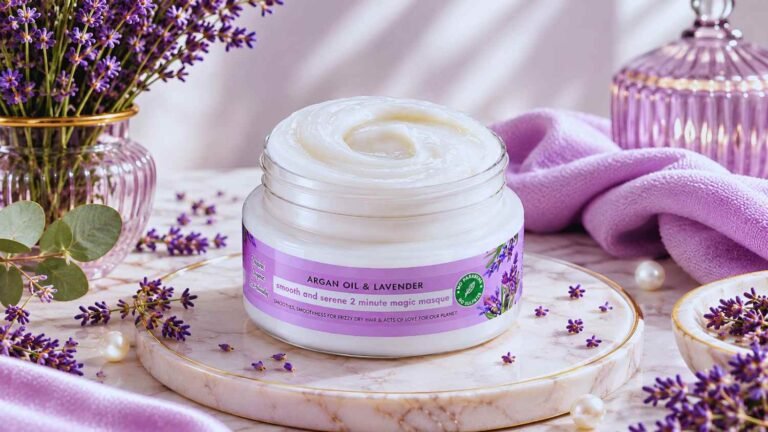
An argan oil keratin hair mask is a thick, rinse-out conditioning treatment that combines hydrolysed keratin, or another keratin-derived protein, with argan oil and other conditioning ingredients. Unlike a daily conditioner, which mainly smooths the surface of the hair for a few minutes, an argan oil keratin hair mask is left on for several minutes so the conditioning agents have time to coat and soften the hair shaft. The result is usually temporary: it lasts until the next few washes rather than changing the structure of your hair permanently.
Most formulas also contain fatty alcohols, humectants such as glycerin, and sometimes silicones or plant extracts. Those supporting ingredients matter, because they decide whether the mask feels rich and smoothing or heavy and coating. A well-balanced argan oil keratin hair mask should leave hair feeling both stronger and supple, not rigid. If a mask leaves your hair feeling hard or straw-like, that is useful information about the formula or the frequency, not a sign that you should simply push through and use it more often.
It helps to think of an argan oil keratin hair mask as a repair-and-condition hybrid rather than a miracle rebuild. Hair is dead tissue once it leaves the follicle, so no mask can truly regrow or permanently fuse a split end back together. What a good mask can do is patch rough areas of the cuticle, reduce friction between strands, and make fragile hair behave better while it grows out. That honest framing also sets realistic expectations: improvements in softness, manageability and breakage during styling are realistic goals, while a permanent change in curl pattern or texture is not.
How an Argan Oil Keratin Hair Mask Works: Keratin, Argan Oil and the Cuticle
Hair is made mostly of keratin, a tough structural protein. Bleaching, colouring, perming, repeated heat styling and even rough brushing wear away the outer cuticle layer and can leave the inner fibre more porous and fragile. The keratin in an argan oil keratin hair mask is usually hydrolysed, meaning it has been broken into smaller fragments that can spread more evenly over damaged areas and temporarily fill gaps in the cuticle. This patching effect can make strands feel thicker, smoother and more resistant to snapping when you comb or brush them.
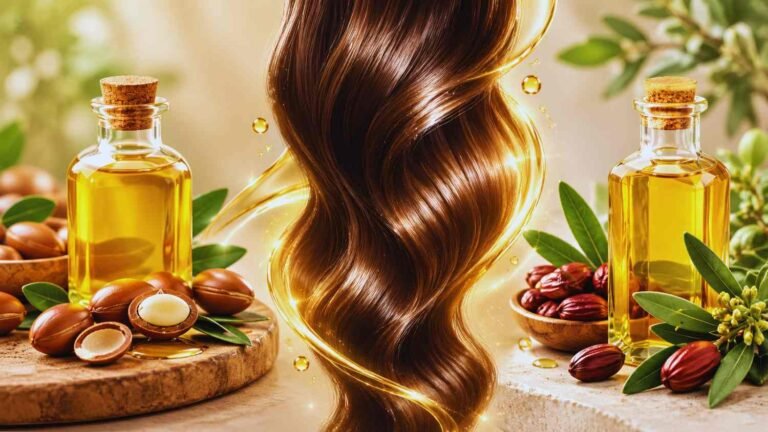
Argan oil plays a different role. Rich in fatty acids and vitamin E, argan oil helps lubricate the hair surface, reduce friction and add shine. In an argan oil keratin hair mask, the oil also softens the feel of the protein, which is important: protein alone can feel stiff, while oil alone may not give damaged hair enough structure. Together, they aim for a balance that many damaged-hair routines struggle to achieve with a single product. For a broader look at how argan oil behaves on its own, see our guide to using argan oil for hair.
Porosity shapes how much of this your hair will absorb. High-porosity hair, often the result of bleaching or chemical processing, tends to soak up a mask quickly and may benefit most from the filling effect of protein. Low-porosity hair, with a tightly closed cuticle, may find that a heavy argan oil keratin hair mask sits on the surface instead, leaving a coated feeling. If that sounds familiar, our guide to argan oil for low-porosity hair explains lighter application methods that may suit you better.
Argan Oil Keratin Hair Mask vs Salon Keratin Treatment: Do Not Conflate the Two
This is the most important distinction in the whole topic, and it is where confusion is most common. An argan oil keratin hair mask is a wash-out conditioning treatment you use at home. A salon keratin treatment, often called a keratin smoothing or Brazilian treatment, is a professional chemical service that uses heat, and historically formaldehyde-releasing chemistry, to reshape bonds inside the hair and produce straighter, smoother hair for months.
The two differ in almost every practical way. An argan oil keratin hair mask does not straighten your curl pattern, does not last for months, and does not require a flat iron to seal it in. A salon treatment does change texture for an extended period, carries a higher cost and a higher chemical exposure, and needs specific aftercare to maintain. An argan oil keratin hair mask, by contrast, is a low-commitment weekly treatment that you can stop at any time without growing out a chemical result.
That difference also changes the risk profile. Salon smoothing treatments raise questions about fumes, ventilation and long-term effects on texture that simply do not apply in the same way to a rinse-out argan oil keratin hair mask. If your goal is straighter hair for months, a mask will disappoint you. If your goal is stronger-feeling, smoother, easier-to-manage hair for the week ahead, an argan oil keratin hair mask is the more appropriate tool. Choosing the right tool for the right goal saves both money and disappointment.
It is also worth noting that some salon aftercare routines actually recommend gentle masks once a smoothing treatment has been done. If you have had a salon treatment, ask your stylist before adding an argan oil keratin hair mask to your routine, because your hair may already be protein-saturated and may need moisture-focused care instead. More protein on top of a recent chemical service is one of the fastest routes to stiffness.
Who Benefits Most from an Argan Oil Keratin Hair Mask?
An argan oil keratin hair mask tends to help most when hair shows clear signs of structural weakness. Bleached or highlighted hair, hair that has been coloured repeatedly, permed or relaxed hair, and hair that snaps easily when wet or dry are all strong candidates. So is hair that feels mushy, gummy or overly stretchy when wet, which often signals protein loss. In these cases, the protein in an argan oil keratin hair mask can add welcome structure, while the argan oil keeps the result from feeling harsh.
Heat-damaged hair is another good candidate. If daily straightening or curling has left your ends rough, frizzy and prone to splitting, a weekly argan oil keratin hair mask can improve manageability between trims. It will not repair split ends permanently, and regular trimming remains the only real fix for splits that have already travelled up the shaft, but a mask can reduce further breakage while new, healthier length grows in.
People with curly or coily hair can also benefit, provided they watch the protein-moisture balance closely. Curls need both strength and elasticity, and too much protein can reduce bounce. If your curls start feeling hard, stringy or less defined after using an argan oil keratin hair mask, that is a signal to space out treatments and bring in more moisture. Our guide to argan oil for different hair types can help you adjust the approach for your texture.
On the other hand, an argan oil keratin hair mask may be unnecessary for virgin, healthy hair that already feels strong and elastic. Fine, oily or low-porosity hair can also be weighed down by a rich mask, especially if it is applied to the roots. In those cases, a lighter conditioner or a plain argan oil finish may serve you better than a protein-heavy argan oil keratin hair mask used every wash.
How to Use an Argan Oil Keratin Hair Mask Step by Step
Getting the method right matters as much as choosing the mask. Start by shampooing as usual and rinsing thoroughly, so the mask meets clean hair rather than a layer of styling residue. Gently squeeze out excess water with a towel; hair that is dripping wet dilutes the mask, while hair that is merely damp lets the product spread evenly. This is the same preparation used for most deep treatments, including the classic argan oil hair mask routine.
Apply the argan oil keratin hair mask mainly to the mid-lengths and ends, where damage is usually worst. Avoid piling it onto the scalp unless the product directions specifically say otherwise, since scalp application can lead to buildup and a weighed-down feeling at the roots. Work it through with your fingers or a wide-tooth comb so every section is coated, then leave it on for the time stated on the packaging, typically five to fifteen minutes. For a deeper treatment, some people cover their hair with a shower cap or warm towel, which traps gentle heat and may help the conditioning agents spread.
Rinse thoroughly with lukewarm water. Rinsing with very hot water can strip away some of the smoothing benefit, while cold water alone may not remove a rich mask fully. After rinsing, detangle gently, starting from the ends and working upward, and style as usual. If you use heat tools, a heat protectant is still a good idea; a mask does not replace heat protection. Our guide to using argan oil as a heat protectant explains how to layer that protection without overloading your hair.
One common mistake is leaving an argan oil keratin hair mask on overnight in the hope of a stronger result. Longer is not automatically better with protein treatments. Overexposure can increase stiffness and buildup, and an overnight application also raises the chance of product transferring to your pillowcase and skin. Follow the directions on your specific product, and treat the recommended time as a genuine guideline rather than a minimum to exceed.
How Often Should You Use an Argan Oil Keratin Hair Mask?
For most people with damaged hair, once a week is a sensible starting point for an argan oil keratin hair mask. Severely bleached or chemically processed hair may tolerate twice a week for a short period, while fine, lightly damaged or low-porosity hair may do better with once every two weeks or even once a month. The right frequency depends less on a fixed rule and more on how your hair responds over several weeks.
Start conservatively. Use an argan oil keratin hair mask once a week for three or four weeks and observe: does your hair feel stronger yet still soft, or is it becoming stiff, tangled or harder to style? If the first, your frequency is probably right. If the second, you are likely overdoing the protein and should cut back. Remember that other products in your routine may also contain protein, including some shampoos, conditioners and leave-in treatments, so count those too when judging your total protein load.
Season and styling habits can shift the ideal frequency as well. Hair that faces more heat styling, swimming or sun exposure in summer may welcome a weekly argan oil keratin hair mask, while the same hair in a gentler period may need it less often. Let your hair’s condition, not the calendar alone, set the schedule, and be ready to adjust as damage grows out and new, healthier hair replaces the older lengths.
Protein Overload: Warning Signs and How to Restore Balance
Protein overload happens when hair receives more protein than it can use, leaving it rigid rather than resilient. The classic warning signs of overload after using an argan oil keratin hair mask too often include hair that feels stiff, straw-like or wiry, strands that snap rather than stretch, increased tangling, dullness, and curls that lose their bounce and definition. If several of these appear together after you increased mask frequency, protein overload is a likely explanation.
The fix is straightforward: pause the argan oil keratin hair mask and switch to moisture-focused care for a few washes. Use a protein-free, hydrating conditioner or a plain moisturising mask, avoid other protein-rich styling products for a while, and be extra gentle when detangling. Most people notice softness returning within one to three weeks, though very overloaded hair may take longer. Do not try to fix overload with yet another strong treatment; rest and moisture are the remedy.
Prevention is easier than recovery. Alternate protein and moisture treatments rather than stacking them: for example, use an argan oil keratin hair mask one week and a moisture-only mask the next, or use the protein mask weekly and a hydrating conditioner at every other wash. A light argan oil leave-in conditioner on non-mask days can add softness without adding more protein. Keeping a simple note of which weeks you used protein can also stop accidental overuse, especially if you rotate several products.
DIY vs Store-Bought Argan Oil Keratin Hair Mask: What to Know
A store-bought argan oil keratin hair mask offers a formulated balance of protein, oil and conditioning agents, plus a preservative system that keeps the product stable. You also get clear directions for timing and frequency, which removes much of the guesswork. The drawback is that you cannot control the exact protein strength, and some formulas are heavier or more fragranced than others. Reading the ingredient list helps: hydrolysed keratin near the top suggests a stronger protein dose, while a long list of heavy butters and silicones suggests a richer, potentially weighing-down formula.
A do-it-yourself version, typically made by mixing plain argan oil into a protein-containing conditioner or a simple homemade base, gives you control over the amount of oil and the richness of the mix. It can be a good option if you already own a conditioner you trust and want to add argan oil’s slip and shine. The limitation is that a home mix is not the same as a formulated argan oil keratin hair mask: the protein dose is harder to judge, the mixture may separate or spoil if stored, and kitchen ingredients such as egg are not a reliable substitute for hydrolysed keratin and carry their own hygiene concerns. If you go the DIY route, mix only what you will use that day and keep expectations modest.
Whichever route you choose, patch testing is wise, especially if you have sensitive skin or a history of reactions to hair products. Apply a small amount behind the ear or on the inner forearm, wait at least 24 hours, and check for redness, itching or irritation before a full application. Avoid getting mask residue on broken skin, and rinse promptly if the product contacts your eyes. These simple precautions cost little and prevent most avoidable discomfort from any argan oil keratin hair mask, homemade or store-bought.
The Wash-Day Sequence: A New Angle for Balancing Protein and Moisture
Most guides tell you how often to use an argan oil keratin hair mask, but few explain how to sequence it within a full wash day, and that sequencing is where many routines quietly go wrong. Here is a simple framework you can adapt: treat wash days as alternating protein days and moisture days, rather than trying to do everything in a single wash. On a protein day, shampoo, apply your argan oil keratin hair mask to the mid-lengths and ends, rinse, and finish with a light leave-in only. On a moisture day, shampoo, use a protein-free hydrating conditioner or moisture mask, and skip the protein entirely.
This alternation does two useful things. First, it stops the common habit of layering a protein shampoo, a protein conditioner and an argan oil keratin hair mask in one wash, which can overload hair in a single session. Second, it gives you a clean comparison: if your hair feels best after moisture days and stiff after protein days, you have clear evidence to reduce protein frequency. If it feels limp after moisture days and stronger after protein days, your current protein schedule is probably about right.
Add one more habit to make the sequence genuinely diagnostic: before each argan oil keratin hair mask, do a quick wet-strand stretch test on a single shed strand. Gently stretch it while wet. Healthy hair stretches a little and springs back. Hair that snaps immediately may welcome protein, while hair that stretches excessively without springing back may need more moisture first. Over weeks, this tiny test turns guesswork into a routine you can actually adjust, and it is the single most practical habit in this guide for anyone using an argan oil keratin hair mask regularly.
Finally, remember that a mask is only one part of damage care. Reducing heat, using a wide-tooth comb on wet hair, protecting hair from harsh sun and chlorine where practical, and trimming split ends regularly will do more for long-term hair health than any argan oil keratin hair mask used alone. The mask supports the routine; it does not replace it.
Common Mistakes to Avoid with an Argan Oil Keratin Hair Mask
The most frequent mistake is using an argan oil keratin hair mask at every wash. A mask is a treatment, not a daily conditioner, and daily protein quickly tips the balance toward stiffness. Another common error is applying the mask to the scalp and roots, which can cause buildup and flat roots, especially on fine hair. A third is expecting a mask to straighten curls or permanently repair splits; when those expectations are not met, people often overuse the product in frustration, which only worsens the problem.
Other mistakes are subtler. Skipping the shampoo step means the argan oil keratin hair mask sits on residue instead of hair. Rinsing too quickly cuts short the conditioning time. Combining a strong protein mask with a protein-heavy shampoo and conditioner in the same wash overloads hair without any single product being at fault. And ignoring early stiffness, hoping it will resolve with more treatment, delays the simple fix of pausing protein and adding moisture. Watch for these patterns and your argan oil keratin hair mask will serve you far better.
Frequently Asked Questions About Argan Oil Keratin Hair Mask
Can an argan oil keratin hair mask replace a salon keratin treatment? No. An argan oil keratin hair mask is a temporary, rinse-out conditioning treatment, while a salon keratin treatment is a chemical smoothing service that changes texture for months. They serve different goals and should not be treated as interchangeable.
How long should I leave an argan oil keratin hair mask on? Follow your product’s directions, usually five to fifteen minutes. Leaving it on much longer, including overnight, does not reliably improve results and may increase stiffness or buildup.
Can I use an argan oil keratin hair mask on colour-treated hair? In many cases, yes, and colour-treated hair is often a good candidate because colouring increases porosity. Start once a week, watch for stiffness, and ask your colourist if you are unsure, especially soon after a fresh colour service.
Is an argan oil keratin hair mask suitable for curly hair? It can be, provided protein is balanced with moisture. If curls feel hard or lose definition, space out treatments and add moisture-focused care between mask days.
What should I do if my hair feels stiff after using an argan oil keratin hair mask? Pause protein treatments, switch to a protein-free moisturising conditioner for a few washes, detangle gently, and reassess. Persistent stiffness, scalp irritation or hair loss should be discussed with a dermatologist or trichologist rather than treated with more products.
Final Thoughts: Is an Argan Oil Keratin Hair Mask Right for You?
An argan oil keratin hair mask is a genuinely useful tool for damaged, chemically treated or heat-stressed hair, as long as it is used as a treatment rather than a daily staple. Its strength lies in the pairing itself: keratin lends structure to weakened strands, while argan oil keeps the result soft, smooth and manageable. Keep the distinction from salon treatments clear, start with a weekly routine, watch for the warning signs of protein overload, and use the wash-day sequencing approach to keep protein and moisture in balance. Used that way, an argan oil keratin hair mask can help your hair look and feel stronger while healthier new growth replaces the damage over time.