Where to Buy Argan Oil
If you are wondering where to buy argan oil, the encouraging news is that pure, cosmetic-grade argan oil is widely available in the United States, both online and in stores. The harder part is not finding a bottle. It is finding a bottle that actually contains what the label promises. Argan oil is pressed from kernels that grow almost exclusively in southwestern Morocco, and that scarcity is exactly why diluted or mislabelled bottles are so common. This guide covers where to buy argan oil in the US, what to check on any label before you pay, which bottle size suits your routine, and the warning signs that should make you put a bottle back on the shelf.
Where to Buy Argan Oil: The Short Answer
For most US buyers, the best starting point when deciding where to buy argan oil is a retailer that lets you read the full ingredient list before you commit. That usually means a brand’s own website or an online marketplace listing with a clear photo of the back label, rather than a shelf where bottles are sealed and hard to inspect. Where to buy argan oil safely is a question of checks, not of stores. If you prefer to shop in person, beauty retailers, drugstores, and natural grocery stores are the most likely places to find argan oil, though selection varies by location, so check availability online before you travel. In short, where to buy argan oil matters less than how you check the bottle. Wherever you shop, the rules in this guide stay the same: one ingredient, cold-pressed from unroasted kernels, dark packaging, and a price that reflects a hand-harvested oil.
Where to Buy Argan Oil Online
Online shopping is where most people end up when they research where to buy argan oil, and for good reason. The selection is far wider than any single store, and you can compare ingredient lists, certifications, and bottle sizes side by side. The first route for shoppers asking where to buy argan oil online is large online marketplaces. These platforms list argan oil from many different brands and sellers in one place, which makes comparison easy, but it also means quality varies just as widely. The same product name can be sold by several sellers, and the bottle you receive depends on which seller fulfilled your order. That uncertainty is the main risk when you choose where to buy argan oil on a marketplace. Check the full ingredient list, look for a photo of the actual back label, and check the return policy for opened beauty products before you order, since you cannot smell or feel an oil until it arrives.
The second route is buying directly from a brand’s own website, often the simplest way to get clear information, because brands that sell a single-ingredient oil usually publish the full ingredient list, the extraction method, the country of origin, and the certification details on the product page. A third route is natural beauty and specialty online retailers: shops that focus on skincare, natural beauty, or carrier oils. Their catalogues are smaller, but their descriptions are often more detailed about extraction method and origin. Where to buy argan oil without a brand in mind? A specialty retailer is a good first stop. Whichever online route you choose when deciding where to buy argan oil, apply the same label checks, and do not let a low price or a dramatic product claim override a missing ingredient list.
Where to Buy Argan Oil in Stores
If you would rather see the bottle before you buy it, in-store shopping has one real advantage: you can inspect the packaging, check the colour of the oil through the glass, and read the ingredient list on the spot. When people ask where to buy argan oil near them, the most useful answer is to think in terms of store types rather than one specific shop, because stock varies by location and changes over time. Where to buy argan oil when local stores fail you? Online, with the seller checks in this guide.
If you are still deciding where to buy argan oil in person, specialty beauty retailers are usually the strongest option. Their haircare and skincare aisles tend to carry both pure argan oil and argan-infused styling products, so the key skill in these stores is telling the two apart. A pure oil will list a single ingredient, while a styling oil or serum may list silicones, fragrance, or other plant oils before or alongside argan oil. Both can be good products, but they are not the same purchase. Drugstores and general merchandise stores are the next place to look, though their beauty aisles commonly carry argan oil only in smaller bottles and as part of a haircare range, so read the bottle yourself rather than relying on shelf signage. Natural grocery and health food stores are another good option, particularly for certified organic oils, though they often place carrier oils near skincare or supplements rather than with haircare, so check both areas. Some also carry culinary argan oil in the food section, which is a different product, as explained below. Hair salons sometimes sell argan oil or argan-infused treatments at the counter, and the same rule applies there: confirm whether you are buying pure oil or a blended styling product. If local stores do not carry pure argan oil, ordering online is usually faster than visiting several stores hoping for different stock.
Where to Buy Argan Oil Direct From Morocco
A third option, for buyers who care about sourcing, is buying directly from Moroccan cooperatives or specialty sellers that source from them. Argan oil production has long been centred on women’s cooperatives in the Souss region of southwestern Morocco, where kernels are cracked by hand and pressed into oil. Buying from a cooperative or a seller that works directly with one can mean a shorter path from press to bottle and clearer information about origin. Where to buy argan oil with traceability in mind? A cooperative or direct seller. This route is one more answer to where to buy argan oil, not a requirement for getting good oil, since many reputable US-based brands source from the same region. It suits buyers who are comfortable ordering from an international seller and waiting longer for delivery. If traceability matters to you, look for sellers that name the region of origin, describe the cooperative relationship in specific terms rather than vague claims, and provide a batch number or pressing date. When weighing where to buy argan oil from a direct source, apply every label check in this guide just as strictly as you would for a domestic brand, because distance does not make a bottle more genuine on its own.
What to Check Before You Buy: The Label Checklist
No matter where to buy argan oil ends up taking you, the label is where a good purchase is decided. Run through these checks in under a minute, whether you are holding a bottle in a store or reading a product page online.
First, look for one ingredient. For cosmetic argan oil, the ingredient list should read Argania Spinosa Kernel Oil, and nothing else. If you see silicones such as dimethicone or cyclopentasiloxane, added fragrance or parfum, or another plant oil listed alongside argan oil, you are holding a blend. Blends are not necessarily bad products, but they are not pure argan oil, and they should not be compared or priced as if they were. This single-ingredient rule is the first filter wherever you are deciding where to buy argan oil.
Second, check the extraction method. Cosmetic argan oil should be cold-pressed from unroasted kernels. Cold pressing protects the oil’s fatty acids and vitamin E compounds, which are part of what makes the oil useful for skin and hair. Roasted kernels produce culinary argan oil, which is darker, strongly nutty in aroma, and meant for food. A label that says nothing about extraction method has not given you enough information, and a label that says refined or deodorized describes an oil processed to strip out colour and aroma, which also reduces some of its natural compounds.
Third, treat organic claims with healthy scepticism. In the US, a product labelled organic should name its certifying agent, with wording along the lines of certified organic by a named certifier. An organic claim with no certifier named is unverified, no matter how natural the packaging looks. Keep expectations realistic too: organic certification speaks to how the raw material was produced, not to whether the oil will work better for your hair or skin.
Fourth, check the origin and the packaging. Genuine argan oil comes from southwestern Morocco, and Morocco operates a protected geographical indication for argan oil from that region. A label that says the oil was bottled or blended in another country is not automatically a problem, but it adds a step where things can go wrong. On packaging, prefer dark amber glass or another opaque container, because argan oil is rich in unsaturated fatty acids that break down faster when exposed to light, heat, and air. Clear plastic bottles under bright store lights are the opposite of what you want.
Fifth, use your nose once the bottle is open. Fresh cosmetic argan oil has a faint, nutty, slightly earthy scent that fades quickly on the skin. A sharp, crayon-like, or fishy smell suggests the oil has gone rancid, a strong toasted aroma suggests culinary oil, a floral or perfumed smell means fragrance has been added, and a complete absence of scent can mean the oil was refined. Whatever outlet answers your question of where to buy argan oil, the price check stays the same: argan oil is expensive to make, which is why genuine oil is a known target for adulteration with cheaper oils such as sunflower, soybean, or sweet almond oil. A very large bottle at a very low price is a warning sign, not a bargain, though a high price does not guarantee purity either. Judge by the label, the certification, the freshness, and the packaging first, and let price be a supporting signal rather than the deciding one.
Cosmetic vs Culinary Argan Oil: Do Not Mix Them Up
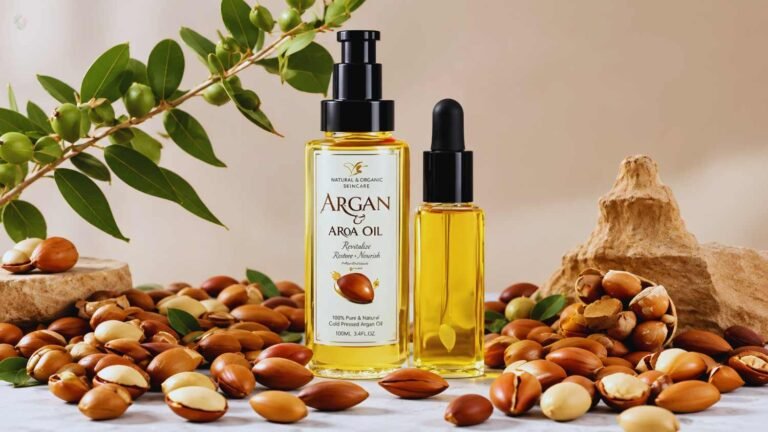
One of the most common buying mistakes is confusing cosmetic and culinary argan oil, and it is easy to see why, since both come from the same tree. Culinary argan oil is pressed from roasted kernels, giving it a deep golden-brown colour and a rich, toasted, nutty flavour, and it belongs in the kitchen. Cosmetic argan oil is pressed from raw, unroasted kernels, giving it a lighter golden colour and a faint scent, and it is made for skin and hair. This is a detail to settle before you decide where to buy argan oil, because the two oils look and smell different and serve different purposes. If you are shopping for a beauty oil, make sure the label describes cosmetic use, and if you are shopping for a cooking oil, make sure it is food-grade and labelled for culinary use. Our guide to the differences between culinary argan oil vs cosmetic argan oil explains this distinction in more detail.
Argan Oil Bottle Sizes: Which Size Should You Buy?
Bottle size is a more important buying decision than it first appears, because argan oil does not last forever once opened, and a bottle that sits half-used in a warm bathroom for a year is money wasted. When you are deciding where to buy argan oil, decide on the size at the same time, because the right size depends on how you actually use the oil, not on which bottle looks like the best deal.
Small bottles, around half an ounce to one ounce, are the best starting point if you have never used argan oil before. A small bottle lets you test the scent, the texture, and how your skin or hair responds without committing to a large amount, and it is also the sensible choice if you only plan to use a few drops on your face at night, since a little oil goes a long way. Where to buy argan oil for the first time? Start with a small bottle from a seller you can vet. A small bottle is also the lowest-risk answer to where to buy argan oil for the first time, because the commitment is small even if the product does not suit you.
Medium bottles, around two to four ounces, are the workhorse size for most regular users. If you use argan oil on your hair several times a week, smoothing it through the lengths and ends, or if you use it on both face and body, a medium bottle usually lasts long enough to be practical without sitting open so long that freshness becomes a concern. Many brands sell a four-ounce bottle with a glass dropper, which makes dosing simple and helps prevent spills. This is why medium bottles are the most common recommendation when people ask where to buy argan oil for regular hair use.
Large bottles, around eight ounces and above, make sense only for heavy, regular use, such as daily full-body application or frequent hair treatments for long, thick hair. The trade-off is freshness: the longer a bottle stays open, the more exposure the oil gets to light, heat, and air. Buying a large bottle to save money only saves money if you actually finish it while it is still fresh. Where to buy argan oil in bulk? Only once you know your usage and your seller. A practical rule of thumb is to buy the smallest size you will realistically finish within a few months of regular use, and to keep any unopened backup bottle sealed, cool, and dark until you need it. Also check the dispenser: droppers suit face use and precise dosing, pumps suit hair and body use and reduce mess, and a plain screw cap is fine if you pour carefully, but it lets in more air with each use. If you have not yet worked out how much oil your hair actually needs, our guide to argan oil for different hair types is a useful companion read before you choose.
Pure Oil vs Argan-Infused Products: Know What You Are Paying For
Scroll through a marketplace or walk down a beauty aisle, and you will find two very different kinds of product carrying the word argan on the front label. The first is pure argan oil, with a single ingredient. The second is a much larger category: shampoos, conditioners, serums, styling oils, and treatments infused with argan oil or featuring it as one ingredient among many. Both categories have their place, but confusing them is one of the easiest ways to overpay. Knowing where to buy argan oil is only half the task; knowing what kind of product you are buying is the other half.
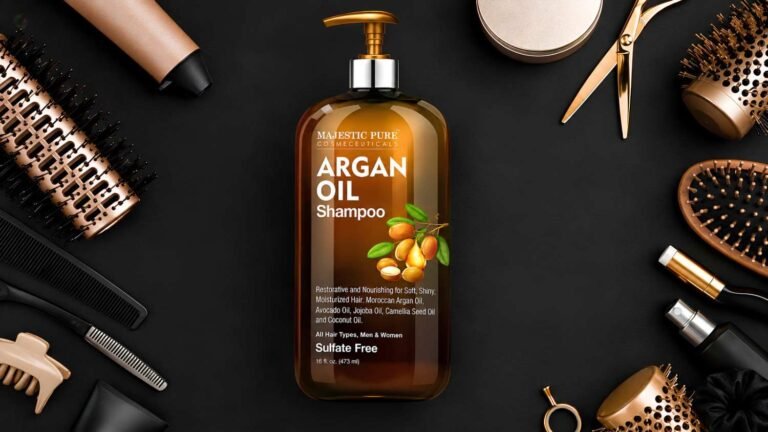
An argan-infused styling product may contain only a small amount of argan oil, with silicones, conditioning agents, and fragrance doing most of the visible work. That does not make it a bad product. A well-formulated serum can be excellent for smoothing frizz or protecting hair during heat styling, and our guide to using argan oil as a heat protectant covers that use in detail. But a styling serum should be judged as a styling product, not as a source of pure argan oil, and its price should be compared with other styling products, not with pure oil. Before you decide where to buy argan oil for a styling routine, be clear about which of the two you actually want. The same logic applies to branded argan products, which may be blends designed for a specific purpose such as smoothing or shine. Our guide to One N Only argan oil shows how one such branded product fits into a routine. There is nothing wrong with choosing a branded blend, as long as you know you are choosing a blend. The buying mistake is paying a pure-oil price for a blended product, or expecting a blended product to behave like pure oil.
A Check Most Guides Skip: Vet the Seller, Not Just the Bottle
Here is the angle most buying guides miss entirely. They teach you to vet the bottle, which matters, but when you shop online, especially on a marketplace, you are not really buying from a brand. You are buying from a seller. And the seller is the part of the transaction that can vary even when the product name stays exactly the same. This matters directly when you decide where to buy argan oil online, because it changes what you should check before you click buy.
On a large marketplace, the same argan oil can be listed by the brand itself, by an authorised retailer, and by several third-party sellers, all under listings that look nearly identical. The bottle in the product photo may be genuine, but the bottle that arrives depends on who fulfilled the order, how they stored it, and whether they are selling genuine stock or a convincing substitute. That is why the seller’s record deserves as much attention as the product description.
Start by checking who the seller actually is. Marketplace listings usually show the seller name and, in many cases, whether the order is fulfilled by the marketplace or shipped by the seller directly. A seller with a long history, a large number of completed sales, and a consistent record in beauty or personal care is a more reassuring sign than a brand-new seller with a handful of reviews. Next, read the seller’s recent reviews, not just the product’s star rating. Product reviews can be carried over from other sellers or older listings, while seller reviews tell you about shipping speed, packaging quality, and how problems were handled. Look for patterns rather than single complaints: repeated reports of leaking bottles, different packaging from the photos, or slow responses to questions are more informative than one unhappy review.
Then check the return policy for that specific seller, not just the marketplace’s general policy. Some sellers accept returns on opened beauty products, and some do not. Since you cannot smell or test argan oil until you open it, a seller that refuses returns on opened items leaves you with no recourse if the oil arrives rancid or clearly different from the listing. Where to buy argan oil that you can return if it smells off? A seller with a clear opened-product return policy. If the return terms are unclear, ask the seller a direct question before ordering, such as whether the bottle is the current packaging and whether the ingredient list matches the listing photo. A clear, specific answer is a good sign, and a vague or evasive reply is information too. Finally, compare the seller across listings. If one seller is offering the same oil at a price far below every other seller, treat that as a warning sign rather than a lucky find. And when your order arrives, do the repeat-bottle check: if you reorder the same product later, compare the new bottle with the old one. Differences in label wording, bottle shape, oil colour, or scent between two orders of the same product are worth investigating, because genuine products can change packaging over time, but unexplained changes are also how substituted stock shows up. Keeping your first bottle, or at least a photo of its label, gives you a reference point that no product description can provide. For anyone asking where to buy argan oil on a marketplace, this seller-first habit is the single most useful buying skill that bottle-focused guides never teach.
How to Test a New Bottle at Home
Once you have decided where to buy argan oil and your bottle has arrived, a few simple home checks can confirm you made a good choice. None of these tests can prove purity the way a laboratory test could, but together they catch the most common problems. First, read the label again, now that you hold the real bottle rather than a listing photo, and confirm the single ingredient, the extraction method, the origin, and any certification claim with its certifier named. Then look at the oil in daylight. Fresh cosmetic argan oil should be a clear, pale to medium gold, though some cloudiness in a cold room can happen with many plant oils, so do not treat that alone as proof of a problem. A water-clear oil or a deep copper colour should raise questions, since the first can suggest refining and the second suggests culinary oil. Next, smell it: a faint, nutty, slightly earthy scent that fades within minutes is what you want, while a rancid, sharp, or fishy smell means the oil has deteriorated, a strong perfume smell means fragrance was added, and a strong toasted smell means you may have culinary oil. Then rub a single drop between your fingers. It should feel silky and absorb within a few minutes, not sit on the skin as a slick, heavy film. Finally, patch test before using a new oil on your face, especially if you have sensitive skin, applying a small amount to a discreet area such as the inner arm and watching for redness, itching, or irritation over the next day or two. If a bottle fails several of these checks at once, you have learned something useful about where to buy argan oil next time: from a different seller.
How to Store Argan Oil So It Lasts
Where you keep argan oil after buying it matters almost as much as where to buy argan oil in the first place, because light, heat, and air are the three forces that degrade it. Store the bottle in a cool, dark place, such as a cabinet away from a sunny windowsill or a steamy bathroom shelf. Keep the cap or dropper tightly closed between uses, and avoid leaving the bottle open while you do the rest of your routine. Do not store it near a radiator, a hair styling tool, or any other heat source, and do not decant it into a clear container for display, however pretty that looks, since clear containers undo the protection that dark glass provides. It also helps to check for a batch number and a best-before or expiry date on the bottle, and to note when you opened it. If the scent has turned sharp or unpleasant, or the texture has changed noticeably, it is time to replace the bottle rather than finish it out of habit. Where to buy argan oil matters, but where you store it matters too.
Red Flags: How to Spot Fake or Diluted Argan Oil
Fake and diluted argan oil is a real problem, and it is worth knowing the warning signs before you decide where to buy argan oil, not after. The most common red flag is a price that does not make sense for a hand-harvested oil, particularly a large bottle sold very cheaply. Genuine argan oil cannot be produced at bargain-basement cost, and a price far below comparable bottles usually means the oil has been cut with a cheaper oil, refined, or replaced with a blend. Where to buy argan oil cheapest is the wrong question; the right question is where to buy argan oil that is genuine. Other red flags include an ingredient list that hides behind vague wording, such as a proprietary blend with no breakdown, or a front label that shouts pure or 100 percent while the back label lists several ingredients. Missing origin information is another warning sign, as is a complete absence of batch information or dates. Packaging is also telling: clear plastic bottles, flimsy caps, and labels with spelling errors or inconsistent branding all suggest a seller that is not investing in quality control. And be cautious with dramatic claims. An oil that promises to regrow hair, erase wrinkles, or transform your skin overnight is selling a fantasy, not a carrier oil. If several of these warning signs appear together, the safest move is to choose a different answer to where to buy argan oil.
Frequently Asked Questions About Where to Buy Argan Oil
Where to buy argan oil if I want the best quality?
Quality comes from the bottle and the seller, not from one magic store. When you are deciding where to buy argan oil for the best quality, prioritise sellers that show the full ingredient list, name the extraction method, state the Moroccan origin, name any organic certifier, and use dark glass packaging. A brand website or a specialty retailer often makes this easier to verify than a crowded marketplace listing.
Is it better to buy argan oil online or in a store?
Neither is automatically better. Online shopping gives you a wider selection and easier label comparison, while in-store shopping lets you inspect the bottle and read the label before paying. The best choice depends on what matters more to you: selection and convenience, or seeing the product first. In the end, where to buy argan oil comes down to which of those advantages matters more for your first bottle, and many buyers do both, researching online first and buying in store when a bottle passes their checks.
Does expensive argan oil always mean better argan oil?
No. A high price does not guarantee purity, and some expensive bottles are simply well-marketed blends. What matters is the label, the certification, the freshness, and the packaging. That said, a very low price for a large bottle is a common sign of dilution or refining, so price still works as a warning signal in one direction even though it is not proof of quality in the other.
Can I use the same argan oil for my face and my hair?
Yes. A pure, cold-pressed cosmetic argan oil works for both, and what changes is the amount you use rather than the oil itself. A few drops pressed into the face is usually plenty, while hair use depends on length and thickness, with a focus on the lengths and ends. Where to buy argan oil for face and hair at once? Any seller of pure, single-ingredient oil. If you are still deciding how argan oil fits your hair routine, our guide to argan oil for hair and our comparison of argan oil vs jojoba oil can help you work out whether argan oil, or a different oil, suits your hair best. For a direct comparison with another popular hair oil, see also our guide to argan oil vs coconut oil and argan oil vs castor oil.
Where to buy argan oil for sensitive skin or specific hair concerns?
If you have a specific concern, start with the pure, single-ingredient oil rather than a fragranced blend, since fewer ingredients mean fewer potential irritants, and always patch test first. For targeted concerns, it helps to read a guide on that concern before buying: our articles on argan oil for dandruff, argan oil for low porosity hair, and argan oil for eyebrows each explain how argan oil is used for that purpose, so you can buy with a clear plan rather than guessing. If you want a broader starting point, our guide to the best argan oil for hair and our explainer on what argan oil is are good places to begin.
Final Thoughts: Buying Argan Oil With Confidence
Knowing where to buy argan oil is ultimately less about memorising a list of stores and more about building a repeatable habit: read the ingredient list, confirm cold-pressed cosmetic oil from unroasted kernels, check the origin and any certification claim, prefer dark glass, vet the seller when you shop online, and choose a bottle size you will actually finish while it is fresh. Do those things, and you will avoid the most common buying mistakes, whether you shop on a marketplace, on a brand website, or in a store near you. Start small if you are new to the oil, test your first bottle with the checks in this guide, and once you find a bottle and a seller you trust, reordering becomes the easy part. That habit is the real answer to where to buy argan oil with confidence.