Argan Oil Hair Color: The Complete Guide to Dyeing and Caring for Colored Hair
If you are searching for argan oil hair color, you have probably noticed that the phrase means two different things, and that confusion is where most guides go wrong. Sometimes it refers to a box dye or salon color that lists argan oil among its ingredients. Other times it refers to pure argan oil used before dyeing, after dyeing, or as part of everyday care for colored hair. This guide to argan oil hair color covers both meanings honestly, separates what lab research actually supports from marketing claims, and shows you how to time argan oil around a color appointment.
Colored hair differs from virgin hair: it is more porous, loses moisture faster, and is roughed up more easily by heat, sun, and harsh washing. Argan oil can help with all three, but only at the right moment and in the right amount.
What Argan Oil Hair Color Actually Means
The first thing to settle is which kind of argan oil hair color you are dealing with, because the advice changes completely depending on the answer. A dye product marketed with argan oil is still a conventional dye at heart: an alkaline agent opens the cuticle and an oxidizer, usually hydrogen peroxide, develops pigment inside the shaft. The argan oil in the formula may add conditioning, but it does not change how the dye works, how long it lasts, or how much damage it causes.
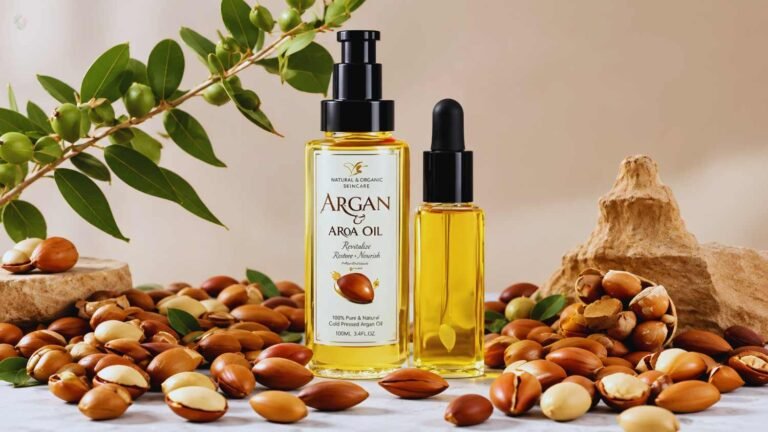
Pure argan oil, by contrast, is a single-ingredient treatment pressed from Moroccan argan kernels, containing no dye, detergent, or bleaching agent, so alone it cannot change, lighten, or strip your hair color. What it can do is support hair around coloring: smoothing the cuticle, replacing stripped lipids, and leaving lengths softer and shinier. When this guide talks about using argan oil before or after dyeing, it means pure oil used as a separate step. Keeping those two ideas apart will save you from most of the misleading claims in this space.
How Hair Dye Changes Your Hair
Permanent dyes and bleach rely on alkaline agents that swell the hair fiber and lift the cuticle scales, the tiny overlapping plates that form the hair’s outer layer. Once the cuticle is lifted, dye molecules can enter the cortex, where pigment lives, and the oxidizer develops the new color inside the shaft. That process strips away 18-methyl eicosanoic acid, a natural fatty layer that makes healthy hair water-repellent and smooth. Without it, freshly colored hair feels rougher, tangles more easily, and absorbs water faster. Bleach is the most aggressive version of this, and bleached hair ends up measurably more porous than virgin hair.
For argan oil hair color care, the key point is porosity: hair already colored, highlighted, or bleached absorbs the next round of color faster and less predictably than virgin hair. Our guide to argan oil for low porosity hair explains how hair that resists moisture behaves differently from hair that soaks everything up.
What the Research Says About Argan Oil and Hair Dye
The honest version of the science is encouraging but limited, and this guide will not dress it up as more than it is. Two laboratory studies are directly relevant, and both were done on hair tresses in a lab rather than on people’s heads in real life. In a 2022 Journal of Cosmetic Dermatology study, hair pretreated with argan oil before an oxidizing agent lost significantly less protein than untreated hair, whether the oil was wiped off or washed out first, and oil remained on the hair even after washing.
In an earlier 2013 study, dark brown hair lightened with oxidative dye and peroxide, then treated with conditioner containing argan oil, cupuassu butter, or both, showed lower protein loss than hair treated with base conditioner alone. Together, these studies support argan oil reducing some protein loss from coloring, but they do not prove longer-lasting or more vibrant color, since neither measured color appearance or longevity over time. That evidence is the foundation of sensible argan oil hair color care, but reduced protein loss is not the same as color protection.
One more honest limit: argan oil is not a bond builder. Salon bond treatments work on internal bonds bleach breaks, while argan oil works at the surface and in reducing protein loss, so treat it as a complement, not a replacement.
Argan Oil Hair Color Before Dyeing: How to Time It
Timing is where most people get argan oil hair color care wrong: the same oil that helps the night before can get in the way on the day itself if applied too heavily. The pretreatment research supports a light, targeted approach, not a full soaking. The night before your appointment, smooth a few drops over your driest, most processed mid-lengths and ends, which have the least natural protection left and benefit most from pretreatment.
In argan oil hair color prep, keep oil away from the roots and scalp before a root touch-up. A heavy layer of oil on sections that need to take color evenly can act as a barrier and lead to patchy or lighter-than-expected results at the regrowth line. If your dye’s instructions conflict with oiling, follow the dye instructions first. Tell your colorist too: many welcome a lightly pre-oiled head for bleaching, others prefer a clean canvas. If you are coloring at home, do a strand test on a hidden section, and always patch test the dye itself 48 hours beforehand, since sensitivity can develop even with a familiar product.
The Three-Zone Method: Timing Argan Oil Differently Across Your Hair
Here is the angle most color guides miss: they treat your head as one uniform surface, but colored hair has three zones with different histories, porosity, and needs, and argan oil hair color timing should differ in each. This three-zone approach explains contradictions you may have read elsewhere, such as one source saying oil before dyeing helps and another saying it blocks color. Both can be true, in different zones.
Zone one in argan oil hair color planning is the virgin roots, never yet colored. Its cuticle and natural lipid layer are intact, so it takes color predictably and needs no pretreatment. Keep argan oil off this zone before a color appointment so dye develops evenly to the line where previous color begins. After coloring, most people can skip the roots entirely.
Zone two is the previously colored mid-lengths, already through at least one round of dye, so its cuticle is somewhat lifted and it absorbs color faster than virgin hair. It benefits from a light pretreatment the night before, two to three drops through the lengths, since it is vulnerable to further protein loss but still needs to take color evenly. After coloring, a daily finisher earns its keep here: one or two drops on damp lengths smooth the cuticle and slow the moisture swings that dull color.
Zone three is the porous ends and any bleached or highlighted sections: the most fragile part of your head, most likely to snap during processing, and most likely to grab color too dark or fade too fast. It benefits most from pretreatment, and it is the one zone where a slightly more generous amount the night before is justified, combed through with a wide-tooth comb. After coloring, the ends need the most consistent care: a drop of oil after every wash, plus a weekly mask, to stop them turning straw-like.
The three-zone method also gives you a simple diagnostic: color fading fastest at the ends points to porous ends needing more sealing care, while patchy roots suggest oil or buildup near the scalp interfering with uptake. Matching treatment to the zone turns argan oil from a generic finishing product into a genuine color-care tool.
Argan Oil Hair Color After Dyeing: The First Wash and Beyond
Once your color has been rinsed and conditioned, argan oil becomes a finisher in your argan oil hair color routine. A drop or two smoothed over damp lengths helps compensate for the water-repelling lipid layer coloring strips away, and laboratory work on oil films shows they slow how fast hair takes on moisture from the air, which keeps an argan oil hair color result from looking frizzy and dull between washes.
For the first wash in argan oil hair color aftercare, keep things gentle. Wait at least 48 hours before shampooing if your colorist advises it, since the cuticle needs time to settle and the first wash loses the most surface pigment. When you do wash, use lukewarm water and a sulfate-free shampoo, since harsh detergents strip color fast. Condition every time, then finish with one or two drops of argan oil on damp lengths. Use a small amount: overloaded colored hair looks limp and can appear darker than it is.
Between washes in an argan oil hair color routine, a single drop warmed between your palms and pressed over mid-lengths and ends tames flyaways and adds shine. It will not replace a dedicated heat protectant, though: if you regularly blow-dry or flat-iron colored hair, read our guide to argan oil as a heat protectant before relying on oil alone, since processed hair is more fragile under heat.
Does Argan Oil Hair Color Fade or Lighten?
This is the question people ask most often about argan oil hair color care, and the short answer is reassuring: there is no evidence that pure argan oil fades permanent color. Argan oil contains no detergents, no bleaching agents, and nothing alkaline, which are the things that strip or lift dye. If anything, the limited laboratory evidence points the other way, since oils that coat the fiber have been shown in at least one study to offer some color protection, although that particular study tested a coconut-based oil rather than argan oil, so it should not be quoted as proof about argan oil specifically.
One genuine exception: people with vivid semi-permanent and direct dyes, such as bright pinks, blues, and purples, often report oils pulling pigment out faster. These dyes sit loosely in the hair and fade quickly on their own, so it is hard to tell how much fading the oil causes. The idea has not been tested in a study. If you wear a fashion argan oil hair color, try oil on a small hidden section first and watch how it fades over a week before committing to daily use.
What actually fades permanent color fastest is a familiar list: hot water, frequent washing, sulfate-heavy shampoos, sun, chlorine, and heavy heat styling. Argan oil helps indirectly by smoothing the cuticle and slowing moisture loss, but it cannot cancel out daily hot showers and maximum-temperature flat ironing. If your color fades fast, check washing habits before blaming the oil.
Argan Oil Hair Color Products: How to Read the Label
Walk down the argan oil hair color aisle and you will see argan oil advertised on many boxes. On cosmetics, the ingredient list generally runs from highest to lowest concentration, so where argan oil appears tells you roughly how much is actually in the formula. Near the end, after dyes, developers, and conditioning agents, it is a small amount contributing some conditioning at most. The dye chemistry is unchanged: still an alkaline agent plus an oxidizer, processing your hair like any comparable dye.
That does not make these products bad: a dye that conditions a little better during processing is a genuine, if modest, benefit. The mistake is choosing a dye for the argan oil on the label rather than for shade, results on your hair type, and scalp tolerance. For the benefits suggested by the research above, a separate pure argan oil used before and after coloring gives you control over amount and placement that no ingredient buried in a dye formula can offer. Ammonia-free formulas are often gentler on the scalp and on processed hair, though they may lift less and cover stubborn grey less completely.
Choosing a pure oil is simpler: look for cold-pressed, single-ingredient argan oil with no added fragrance, dyes, or silicones, so you know exactly what you are leaving on colored hair. Our guide to the best argan oil for hair explains what to check on a label, and the same principles apply to color care.
Natural Argan Oil Hair Color Options: Henna, Indigo, and Deposit-Only Color
Not every route to argan oil hair color involves a conventional dye. Henna, from the Lawsonia plant, deposits a reddish-orange pigment binding to keratin, producing copper and auburn tones alone. Indigo deposits a blue pigment that, layered over henna, gives brown to black shades. The classic two-step method, henna first then indigo, is the plant route most often used for darker results.
In natural argan oil hair color routines, the oil fits in two places. A small amount mixed into henna or indigo paste makes it easier to apply and leaves hair softer after rinsing, though a very oily paste may not grip hair as well. After rinsing, a few drops on the lengths replace moisture lost during processing and add shine while color settles. Plant color develops for up to 48 hours, so judge your final shade after that window, not immediately after rinsing.
Deposit-only and semi-permanent colors are the middle ground: they coat the shaft or penetrate only slightly, without lifting your natural pigment, so they cannot lighten hair but can add tone and shine with much less damage. Color-depositing conditioners are a good way to refresh faded color between salon visits; use the depositing product first, then seal lengths with a drop of oil once dry.
One caution: never use so-called black henna containing paraphenylenediamine (PPD) or other synthetic dyes. These products have caused severe allergic reactions and are not pure plant henna. Buy single-ingredient plant color and patch test it like any conventional dye.
Argan Oil Hair Color and Grey Coverage
Grey hair brings its own challenges to argan oil hair color. Grey strands have lost their melanin and are often coarser, drier, and more resistant to taking color than pigmented hair, which is why grey coverage sometimes comes out patchy: dye takes well on surrounding pigmented hair but sits unevenly on grey strands. Permanent color generally covers grey more completely than semi-permanent color, since it opens the cuticle and deposits pigment inside the shaft, while deposit-only color may only tint grey strands.
Argan oil’s role here is supportive: grey hair tends to be drier and frizzier, so a light pretreatment on the greyest sections the night before leaves them softer and less brittle during processing, and a daily finisher afterward keeps them from looking wiry. For a complementary angle from a different traditional oil, see our guide to amla oil for grey hair. A few practical points make argan oil hair color grey coverage more reliable: process for the full stated time, since resistant greys often need every minute; apply color to the greyest areas first, so they get the longest processing; and choose a shade close to your natural color, so regrowth blends gracefully.
Choosing a Shade: A Brief Note
Shade selection deserves its own treatment: skin undertone, natural base color, and warm, cool, and neutral shades each affect the result. As a starting point, stay within three shades of your natural color for the most predictable result and least damage, since bigger lifts need stronger peroxide. Cooler shades tend to suit pink or blue undertones, warmer shades golden or olive undertones, but the only reliable test is a strand test. A full shade-by-shade chart is covered in a separate companion article, so this argan oil hair color guide keeps the point brief.
Removing Argan Oil Hair Color: A Brief Note
Color removal is deliberately kept brief here. Permanent color cannot be washed out: it must be lifted with a color remover or lightener, or grown out and cut away, and both routes stress hair significantly. Semi-permanent and deposit-only color fades gradually with washing, and gentle clarifying washes can speed that fading. Argan oil itself does not remove color, and oiling will not strip a permanent dye. A full step-by-step argan oil hair color removal guide is a separate companion article, and this guide refers you there instead.
A Weekly Argan Oil Hair Color Care Routine
A good argan oil hair color routine is simple and fits around your normal washing schedule. On wash days, shampoo with lukewarm water and a sulfate-free shampoo, condition every time, then finish with one or two drops of argan oil pressed over damp mid-lengths and ends. That single habit smooths the cuticle after washing, slows moisture loss, and keeps color glossy rather than matte.
Once a week, give colored hair a deeper treatment: a generous amount of argan oil, or an argan oil hair mask, on mid-lengths and ends for at least 30 minutes under a shower cap, then wash and condition as normal. This is especially valuable for porous zone-three ends and bleached hair. If your scalp is dry or flaky after coloring, a small weekly scalp massage with oil can help, but keep it light so roots do not look flat.
Between washes, protect color from sun and water: wear a hat or scarf for long periods in strong sun, and rinse hair with fresh water before and after swimming, since chlorine and salt water strip color and dry hair. If you use heat tools, keep temperatures moderate with a dedicated heat protectant, and stretch the time between color appointments: dermatology guidance generally recommends spacing out chemical services and having only one at a time.
Mistakes to Avoid With Argan Oil Hair Color
Most problems with argan oil hair color care come from avoidable mistakes. The first is over-oiling before a color appointment: a heavy layer on roots or sections needing even uptake can block color and produce a patchy result blamed on the dye rather than the oil. Keep pretreatment light, off the roots, and on the lengths and ends where it helps most.
The second mistake is choosing a dye for the argan oil on its label rather than for shade and effect on your hair. Argan oil low down an ingredient list is a minor conditioning addition, not a transformation of the dye, so judge the product by shade, lifting strength, and scalp tolerance, and get oil benefits from a separate pure oil.
The third mistake is skipping the patch test and strand test. Dye allergies can develop suddenly, even with a familiar product, and only a strand test shows how your hair will take a new shade. The fourth mistake is washing colored hair too hot, too often, or with a harsh shampoo, then expecting oil to compensate; it cannot undo daily hot-water stripping. The fifth mistake is treating all your hair the same: roots, lengths, and ends need different timing and amounts, as the three-zone method sets out.
Finally, argan oil complements but does not replace the rest of a healthy color-care routine: regular trims remove the most damaged ends, and conditioner after every wash matters as much as any oil. For broader argan oil hair color grounding, see our guide to argan oil for hair, our comparison of argan oil versus coconut oil, and our guide to argan oil for different hair types. If dandruff or scalp irritation appears after coloring, see our guide to argan oil for dandruff rather than increasing oil use blindly, since an irritated scalp needs a different approach from dry lengths.
Frequently Asked Questions About Argan Oil Hair Color
Can I put argan oil on my hair before dyeing it?
Yes, lightly, and in the right places. A few drops on dry, damaged mid-lengths and ends the night before is reasonable, and a laboratory study found pretreatment reduced protein loss from oxidative damage. Avoid heavy oil on roots and sections needing even uptake, and follow your dye’s instructions or your colorist’s advice if they conflict.
Does argan oil fade hair color?
No evidence shows pure argan oil fading a permanent argan oil hair color result. It contains no detergents or bleaching agents. People with vivid semi-permanent fashion colors sometimes feel oils lift pigment faster, but that is unstudied, and those colors fade quickly on their own, so test on a hidden section first.
When can I use argan oil after coloring my hair?
Smooth a drop or two over the lengths once your color has been rinsed and conditioned, and wait at least 48 hours before the first shampoo if your colorist advises it. Follow any specific aftercare instructions from your colorist first.
Is argan oil good for bleached hair?
It can help bleached hair feel softer and look smoother, and lab studies suggest it reduces protein loss under oxidative stress. It cannot rebuild broken bonds, so very damaged hair may also need bond-building treatments, trims, and a break from further lightening.
Can argan oil change my hair color on its own?
No. Pure argan oil contains no pigment, developer, or lightening agent, so it cannot darken, lighten, or otherwise change your hair color. Any product claiming to color hair with argan oil alone is either a dye containing argan oil or a deposit-only product with added pigments, and the label will show which.
Should I use argan oil shampoo on colored hair?
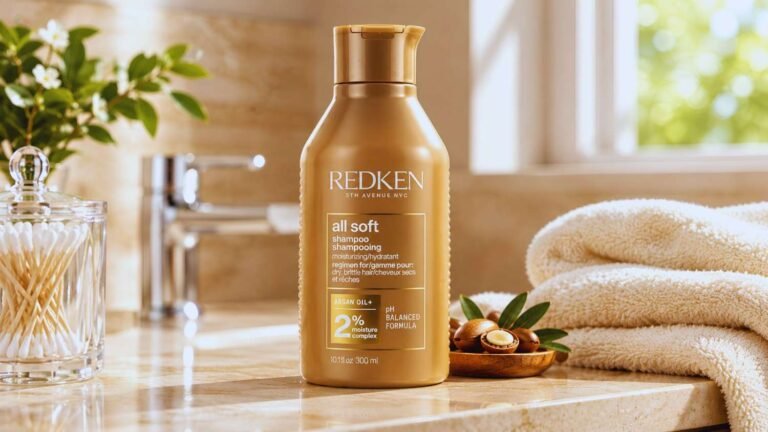
A gentle, sulfate-free shampoo is the priority for colored hair, whether or not it contains argan oil. An argan oil shampoo can be a good choice if sulfate-free and mild, but check the full ingredient list rather than the front of the bottle, and follow it with conditioner every wash.
Coloring your hair and caring for it afterward do not have to be at odds. The research supports a modest, honest role for argan oil: a light pretreatment before coloring, a finisher on damp hair afterward, and a weekly deeper treatment for porous sections, all timed differently across the three zones. Choose dyes for shade and results, not for the oil on the label, test before you commit, and wash gently. Done that way, argan oil hair color care is less about a miracle ingredient and more about a consistent, well-timed routine.