Argan Oil vs Rosemary Oil for Hair: Which One Does What?
If you are weighing up argan oil vs rosemary oil for your hair, the first thing to understand is that you are not really choosing between two versions of the same thing. Argan oil vs rosemary oil is a comparison between two completely different kinds of product: one is a gentle carrier oil you can smooth straight onto your hair, and the other is a concentrated essential oil that must always be diluted before it touches your skin. That single difference shapes almost every decision that follows, from how you apply each oil to which part of your hair it suits best.
Both oils in the argan oil vs rosemary oil debate have loyal fans, and both show up in countless hair routines online, which is why the choice can feel confusing. Some people praise argan oil for softness and shine, while others credit rosemary oil with transforming their scalp routine. In reality, they tend to do different jobs, and many people get the best results by giving each oil its own role rather than forcing one of them to do everything. This guide walks through that comparison honestly: what each oil is, where each one shines, where each one falls short, how to combine them safely, and what results are realistic to expect.
One promise to make upfront: neither oil will grow new hair on a bare scalp, and no honest guide should claim otherwise. What these oils may support, when used consistently and correctly, is a more comfortable scalp, hair that breaks less easily, and lengths that look smoother and feel softer. That is a worthwhile goal on its own, and it is the standard this article holds both oils to.
Argan Oil vs Rosemary Oil at a Glance: Two Very Different Jobs
The quickest way to grasp argan oil vs rosemary oil is to think of argan as the conditioner and rosemary as the scalp treatment. Argan oil, pressed from the kernels of the Moroccan argan tree, is rich in fatty acids and vitamin E, and it behaves like a light, silky conditioning oil. It coats the hair shaft, helps smooth the cuticle, and leaves hair looking glossier and feeling softer. It is the oil most people reach for when their ends feel dry, their frizz needs taming, or their hair needs a finishing touch after styling.
Rosemary oil, by contrast, is an essential oil distilled from the rosemary herb. It is highly concentrated, strongly scented, and designed to be used in small amounts mixed into a carrier oil. Its traditional role is at the scalp rather than along the lengths: massaged in diluted form, it is associated with a fresher-feeling scalp and a routine that supports the environment hair grows in. It does not condition the lengths in the way argan oil does, and on its own it would be a poor finishing oil.
Seen this way, argan oil vs rosemary oil stops being a contest with one winner and becomes a question of placement. Argan oil generally belongs on the mid-lengths and ends, where conditioning and shine matter most. Rosemary oil generally belongs at the scalp, diluted, where its stimulating, herbal character is most at home. People who try to use either oil in the argan oil vs rosemary oil pairing for the other’s job often end up disappointed: rosemary on dry ends can feel thin and drying, while argan massaged heavily into an already oily scalp can leave roots looking flat.
There is also a practical difference in how forgiving each oil is. Argan oil is straightforward: a few drops, smoothed through damp or dry hair, is hard to get badly wrong. Rosemary oil demands more care, because undiluted essential oil can irritate the scalp, causing itching, redness, or flaking that looks frustratingly like the very scalp trouble you were trying to soothe. If you remember only one safety rule from this guide, let it be this: rosemary oil must always be diluted, while argan oil can be used neat.
What Argan Oil Actually Is, and What It Does for Hair
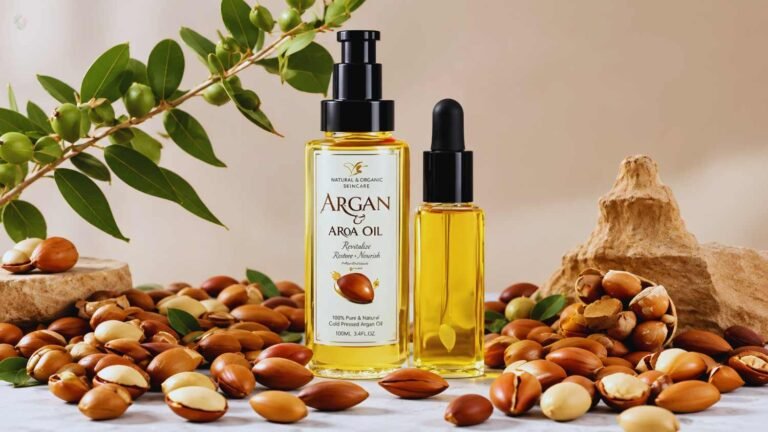
Argan oil is a carrier oil, which means it is a full, fatty plant oil rather than a concentrated plant extract. Cosmetic argan oil is usually cold-pressed and unroasted, giving it a light golden colour and a mild, nutty scent. Its fatty acid profile is dominated by oleic acid and linoleic acid, alongside vitamin E and plant sterols, and that balance is why it feels lighter than many other carrier oils. It sinks in reasonably well without the heavy, greasy film that thicker oils can leave behind.
For hair, in the argan oil vs rosemary oil comparison, argan oil’s strengths are conditioning, smoothing, and protection against everyday wear. When smoothed over the lengths, it helps the cuticle lie flatter, which is why hair often looks shinier and feels less rough after use. Smoother cuticles also snag less during brushing, which may mean less breakage over time for hair that is prone to snapping at the ends. People who use heat tools often value argan oil as a pre-styling step too, since a light coating can help hair feel more slippery and manageable, although it is not a substitute for a dedicated heat protectant product.
Argan oil also earns its place in scalp-adjacent routines, but in a supporting role. A small amount massaged lightly over a dry-feeling scalp can ease tightness and flaking linked to dryness, and readers dealing with that specific concern may find our guide to argan oil for dandruff and dry scalp care useful background. For a fuller picture of what this oil can and cannot do, see the benefits of argan oil explained in detail. The honest limit in argan oil vs rosemary oil is that argan oil is not a scalp stimulant: it nourishes and softens, but it does not tingle, wake up, or energise the scalp in the way rosemary oil is described as doing.
Another practical strength is versatility across hair types. Fine hair can usually tolerate a drop or two on the ends without collapsing, while thick, coarse, or curly hair may welcome a more generous amount. If you are unsure how much your hair type needs, our guide to argan oil for different hair types breaks it down by texture. That flexibility is one reason argan oil has become a default finishing oil in so many routines: it adapts to the hair you have, rather than demanding a particular hair type to work.
What Rosemary Oil Actually Is, and Why Dilution Is Non-Negotiable
Rosemary oil is an essential oil, and that category difference matters more than any brand claim. Essential oils are concentrated aromatic compounds, typically steam-distilled from plant material, and they are far stronger drop for drop than carrier oils. A single drop of rosemary oil carries a much higher concentration of active compounds than a drop of argan oil, which is exactly why it is used in such small quantities and why it must never be applied undiluted to the scalp.
The standard guidance for adults is a dilution of around 2 to 3 percent for regular scalp use, which works out to roughly 12 to 18 drops of essential oil per ounce (about 30 millilitres) of carrier oil. Many people start at the lower end, around 2 percent, and only increase if their scalp tolerates it comfortably over several weeks. Argan oil itself makes an excellent carrier for this purpose, which is one reason the two oils pair so naturally: the carrier you already trust does the diluting, and the essential oil adds the scalp-focused character.
What does rosemary oil actually offer at the scalp in the argan oil vs rosemary oil comparison? Its reputation rests largely on its traditional use and on one often-cited small trial in which rosemary oil, used consistently over six months, was compared with a standard topical treatment for pattern hair thinning. The results were modest and took months to appear, and they do not support claims that rosemary oil regrows hair quickly or works for everyone. A fairer summary is that rosemary oil is associated with improved scalp circulation in traditional and preliminary research, and with a fresher, more comfortable scalp feeling for many users, which may support a healthier environment for the hair you already have.
Safety deserves equal billing with benefits here in argan oil vs rosemary oil. Undiluted rosemary oil can cause irritation, itching, burning, or contact sensitivity, especially with frequent use or on sensitive skin. Anyone who is pregnant, has epilepsy, or has a sensitive scalp should be particularly cautious and consider speaking to a clinician before starting an essential oil routine. A patch test is simple and worth the patience in any argan oil vs rosemary oil routine: apply a small amount of your diluted blend behind the ear or on the inner arm, wait 24 to 48 hours, and only proceed if there is no redness or itching. If irritation appears, stop, wash the area gently, and do not push through it in the hope your scalp will adapt.
Argan Oil vs Rosemary Oil for the Scalp
When the question is argan oil vs rosemary oil for the scalp specifically, rosemary oil is usually the more purposeful choice, provided it is diluted correctly. A diluted rosemary blend, massaged into the scalp for a few minutes, gives the scalp-focused part of your routine a clear job: gentle stimulation, a fresh herbal scent, and a feeling of cleanliness that many people find encouraging enough to keep the routine going. Consistency is the real mechanism here, since scalp routines only show their value over weeks and months, and a routine you enjoy is a routine you actually repeat.
In argan oil vs rosemary oil for the scalp, argan oil at the scalp plays a quieter role. It can help when the scalp feels dry or tight, and a light massage with pure argan oil may ease flaking that comes from dryness rather than from an underlying skin condition. But it does not offer the stimulating character that draws people to rosemary, and heavy application at the roots can weigh fine hair down or make an oily scalp look greasier sooner. If your main complaint is an oily or congested-feeling scalp, argan oil alone is unlikely to be your answer, and a diluted rosemary blend, or simply a gentler washing routine, may suit you better.
It is also worth separating scalp comfort from hair growth claims, because the two are often blurred online. A scalp that feels comfortable, is not irritated, and is massaged regularly may shed less hair from breakage and handling, and hair that breaks less can appear fuller over time. That is a meaningful benefit, but it is not the same as growing new follicles or reversing pattern thinning. Anyone experiencing sudden shedding, patchy loss, or scalp pain should speak to a clinician or dermatologist rather than relying on either oil, since those symptoms can have causes that oils cannot address.
For readers who want an argan oil vs rosemary oil routine built specifically around this pairing, our guide to using argan oil and rosemary oil together for hair walks through a combined approach in more detail. The comparison in this article stays broader: it weighs the two oils against each other so you can decide which deserves the starring role in your own routine, and which should play support.
Argan Oil vs Rosemary Oil for the Lengths and Ends
Move away from the scalp and the balance of argan oil vs rosemary oil flips decisively. The lengths and ends are where argan oil earns its reputation. Dry, frizzy, or heat-styled ends respond to a few drops of argan oil smoothed through damp hair before drying, or over dry hair as a finisher. The result is usually visible at once: less frizz, more shine, and ends that feel softer to the touch. For damaged or split-prone ends, argan oil will not repair splits, nothing topical can glue a split end back together, but it can make ends look and feel smoother and may reduce further snagging and breakage while you grow the damage out and trim regularly.
In argan oil vs rosemary oil for lengths, rosemary oil has little to offer the lengths on its own. As a thin, volatile essential oil, it evaporates rather than coating the hair, so it does not deliver the lasting slip and softness that a carrier oil provides. Applying a rosemary blend along the lengths is not harmful if the blend is properly diluted, but it is largely wasted effort: you would be using a scalp ingredient where a conditioning ingredient is needed. If your ends are your main concern, argan oil, or another carrier oil suited to your hair type, is the sensible first choice.
The texture difference is easy to feel. Argan oil feels silky and slightly rich, and a little goes a long way. Rosemary oil feels light, almost watery, with a sharp herbal scent that fades as it evaporates. That sensory difference is a useful diagnostic: if an oil disappears within minutes and leaves no softness behind, it was probably never meant to condition your lengths. Conversely, if an oil leaves your lengths glossy and manageable for hours, it is doing a carrier oil’s job, whatever the label promised.
Fine hair deserves a special note here. Fine strands can be weighed down by almost any oil if too much is used, and argan oil is no exception, but it is still usually the safer bet for fine hair than heavier carrier oils, because a single drop can cover the ends without collapsing the roots. The trick is placement: keep argan oil on the lower two-thirds of the hair and away from the roots, and you get softness where it shows without flatness where it matters. Readers with fine or low-porosity strands may also want our notes on argan oil for low porosity hair, where absorption and build-up need extra attention.
Argan Oil vs Rosemary Oil for Different Hair Types
Hair type changes the argan oil vs rosemary oil equation in useful ways, so a one-size verdict would mislead. For fine or thin hair, the argan oil vs rosemary oil balance means rosemary blends at the scalp are often well tolerated because the diluted blend is light and rinses out cleanly, while argan oil should be used sparingly and kept to the ends. For thick, coarse, or curly hair, argan oil becomes more central: those textures tend to need more conditioning, and argan’s smoothing effect helps define curls and reduce the frizz that coarse hair is prone to, while rosemary at the scalp still plays its supporting role.
For curly and coily hair, the scalp-versus-lengths split is especially important. Coily hair is often drier along the lengths because natural scalp oils travel slowly down tight curls, so a carrier oil like argan is genuinely useful for sealing in moisture after washing. Rosemary blends, meanwhile, can be massaged into the scalp between washes without disturbing curl pattern, provided the blend is light and the massage is gentle. The two oils complement each other here rather than competing, which is a pattern you will see repeated across hair types.
For colour-treated or heat-damaged hair, argan oil is usually the priority in argan oil vs rosemary oil. Colour and heat both roughen the cuticle, and argan’s smoothing action helps restore a healthier look and feel while you protect new growth. Rosemary oil is not harmful to colour-treated hair when diluted, but it is not a repair treatment either, and strong essential oil blends left on for long periods may dry already stressed hair if overused. If your hair is both colour-treated and your scalp is your concern, use the rosemary blend at the roots only, and keep argan oil for the coloured lengths.
For oily scalps, the instinct to add more oil can feel counterintuitive, but a light, diluted rosemary scalp massage that is washed out afterwards is often better received than a heavy carrier oil treatment at the roots. For dry scalps, the reverse applies: pure argan oil, or a rosemary blend made with argan as the carrier, can ease tightness without the stripping effect of harsh clarifying washes. In both cases, frequency matters more than quantity: two to three scalp sessions a week is plenty for most people, and daily heavy oiling rarely improves results.
How to Combine Argan Oil and Rosemary Oil Safely
Combining the two oils is where argan oil vs rosemary oil becomes a partnership instead of a rivalry, and argan oil is the ideal carrier for the job. To make a scalp blend, start with about 30 millilitres (roughly two tablespoons) of pure argan oil and add 12 to 15 drops of rosemary essential oil for an approximately 2 to 2.5 percent dilution. Mix well in a clean, dry bottle, label it with the date, and store it away from heat and sunlight. Use it within a few months, and discard it if the scent turns stale or sharp in an unfamiliar way.
To apply your argan oil vs rosemary oil blend, part your hair in sections and use your fingertips, or a dropper, to place small amounts of the blend directly on the scalp rather than pouring it over the lengths. Massage gently for three to five minutes with the pads of your fingers, not your nails, working across the whole scalp. Leave the blend on for at least 30 minutes, or overnight if your scalp tolerates it and you protect your pillow, then wash it out with your usual shampoo. You may need two gentle washes to remove the residue fully, and that is normal.
A separate finishing step keeps the roles clear in any argan oil vs rosemary oil routine: after washing and drying, smooth one to three drops of pure argan oil over the mid-lengths and ends only. This way the rosemary blend has done its scalp work and been washed away, while the argan oil does its conditioning work where it can stay. Readers who want a fuller walkthrough of application technique will find it in our guide on how to use argan oil for hair, and those who like weekly treatments may enjoy our argan oil hair mask ideas for deeper conditioning sessions.
One caution applies to ready-made blends and rosemary shampoos: check that rosemary appears as a genuine ingredient rather than only as fragrance, and remember that a shampoo containing rosemary is not the same as a leave-on scalp treatment, since shampoo is rinsed away within minutes. If you buy a pre-made oil blend, check the ingredient list for the carrier oil and the dilution if stated, and patch test it just as you would a homemade blend. A product that lists rosemary oil first, ahead of any carrier, deserves scepticism, since a safe scalp blend should be mostly carrier oil.
The Two-Zone Routine: One New Angle Competitors Miss
Most comparisons of argan oil vs rosemary oil end with a verdict, as if one oil must win. The more useful approach, and the one competitors rarely spell out, is to stop treating your hair as one surface and start treating it as two zones with different needs: the scalp zone and the lengths zone. Your scalp is skin, and it responds to massage, stimulation, and a clean, comfortable environment. Your lengths are older, weathered fibre, and they respond to conditioning, smoothing, and protection from friction and heat. One oil cannot serve both zones equally well, which is why the two-zone routine works better than a single-oil routine for many people.
The two-zone routine for argan oil vs rosemary oil is simple. On scalp days, two or three times a week, you use the diluted rosemary-and-argan blend at the roots only, massage, leave it on, and wash it out. On lengths days, which can be every wash day or every other day, you use pure argan oil on the mid-lengths and ends after washing, with no rosemary involved at all. The zones never compete, because they are never treated at the same time with the same product. If your scalp feels irritated one week, you can pause the scalp zone without losing the conditioning your lengths rely on, and if your ends feel dry, you can add an extra argan finishing step without overloading your roots.
The second half of this argan oil vs rosemary oil angle is a four-week observation log, which replaces guesswork with evidence about your own hair. Once a week, note three things in a phone note or notebook: how your scalp feels (comfortable, itchy, oily, or dry), how your ends look and feel (smooth, frizzy, or brittle), and how much breakage you notice when brushing. After four weeks, the pattern is usually obvious: perhaps your scalp feels calmer but your ends still need more argan, or perhaps the rosemary blend irritates you and a gentler frequency suits you better. That personal log is more valuable than any generic verdict, because it reflects your hair, your water, your climate, and your styling habits, none of which a comparison article can know.
The two-zone idea also solves a common frustration: people who abandon rosemary oil because their lengths felt dry, or abandon argan oil because their roots looked flat, often blamed the wrong oil. In most cases the oil was fine and the placement was wrong. By giving each oil its own zone and its own day, you test each one fairly, and you keep the benefits of both without the compromises of forcing either to cover the whole head. If you compare argan oil vs rosemary oil by zone rather than by bottle, the supposed rivalry largely disappears.
Realistic Expectations: What Neither Oil Can Promise in Argan Oil vs Rosemary Oil Routines
Honest expectations protect you from wasting money when weighing argan oil vs rosemary oil and from blaming yourself when dramatic before-and-after photos fail to materialise. Neither argan oil nor rosemary oil can create new hair follicles, reverse genetic pattern thinning on its own, repair split ends, or change your hair’s natural texture. What they may do, with consistent use over weeks and months, is support a calmer scalp, reduce breakage so existing hair looks fuller for longer, and leave hair softer, shinier, and easier to manage. Those are real benefits, and they are enough to justify a routine, but they are quieter than most marketing suggests.
Timeframes matter in argan oil vs rosemary oil. Conditioning benefits from argan oil are often visible immediately, since smoother cuticles reflect light at once. Scalp benefits from a rosemary routine take far longer: the often-cited trial ran for six months before meaningful differences appeared, and most users should judge a scalp routine over at least eight to twelve weeks of consistent use, not after a handful of applications. If a product promises visible regrowth in two weeks, treat that promise as marketing, not evidence, whichever oil it names.
Other factors matter at least as much as oil choice. Gentle handling, less heat, regular trims, adequate sleep, and a balanced diet all influence how hair looks and how much it breaks. An oil routine layered on top of daily high-heat styling and rough towel-drying will struggle to show its value, while the same routine paired with gentler handling often looks impressive. When you judge argan oil vs rosemary oil, judge it as part of a whole routine, not as a miracle in a bottle.
Mistakes to Avoid When Comparing Argan Oil vs Rosemary Oil
The most common mistake in argan oil vs rosemary oil routines is using rosemary oil undiluted, whether neat on the scalp or in a homemade blend with far too many drops. Irritation from undiluted essential oil can set a routine back by weeks, since an inflamed scalp needs time to calm before any new product can be fairly tested. Always dilute, always patch test, and resist the idea that a stronger blend works faster; with essential oils, stronger usually means riskier, not more effective.
The second mistake is judging a scalp oil by how the lengths feel, or a conditioning oil by how the scalp feels. A rosemary blend that leaves your ends unimpressed has not failed, because conditioning was never its job, just as argan oil that leaves your scalp unstimulated has not failed either. Keep the two-zone distinction in mind when judging argan oil vs rosemary oil, and judge each oil on its own territory.
The third mistake in argan oil vs rosemary oil routines is switching products every week. Hair routines need time, and constant switching makes it impossible to know what helped or what irritated you. Pick one argan oil vs rosemary oil approach, follow it for at least a month, keep your simple weekly log, and only then adjust one variable at a time, such as frequency, dilution, or amount. That discipline is unglamorous, but it is how you end up with a routine that actually fits your hair.
The fourth mistake is buying on scent or colour rather than on the ingredient list. Pure argan oil should list argan kernel oil as the main ingredient, and a rosemary scalp blend should be mostly carrier oil with rosemary listed as a smaller component. Products padded with silicones, heavy fragrance, or mineral oil may feel silky at first while delivering little of the oil’s own benefit, so reading the label is worth the extra minute.
Argan Oil vs Rosemary Oil: Which Should You Start With?
If your main concern is dry, frizzy, or damaged-looking lengths, start with argan oil in argan oil vs rosemary oil. It is simpler, more forgiving, and its benefits show quickly, which makes it an encouraging first step. Smooth a few drops through the ends after washing, keep it away from the roots, and see how your hair responds over two to three weeks. If that alone satisfies you, there is no obligation to add rosemary at all, and many people stop happily here.
If your main concern in argan oil vs rosemary oil is your scalp, whether it feels dull, uncomfortable, or simply neglected, start with a properly diluted rosemary blend using argan oil as the carrier. That way you are testing the scalp approach while still using a carrier you can trust, and you can keep pure argan oil for the lengths as a separate step. Patch test first, use it two to three times a week, and give it at least eight weeks before judging it.
If you want both benefits, the two-zone routine described above is the natural next step, and it avoids the compromises of a single-product approach. For broader context on how argan oil compares with other carrier oils, our argan oil vs other oils comparison and our argan oil vs castor oil comparison place this pairing in a wider landscape. The short answer to argan oil vs rosemary oil, then, is not a winner but a division of labour: rosemary, diluted, for the scalp; argan for the lengths; and patience for both.
Frequently Asked Questions About Argan Oil vs Rosemary Oil
Can I use argan oil vs rosemary oil together every day? You can use pure argan oil on your ends daily in an argan oil vs rosemary oil routine if your hair tolerates it, but a rosemary scalp blend is better kept to two or three times a week. Daily essential oil use raises the chance of irritation without clearly improving results, and washing a scalp blend out after each session keeps build-up under control.
Is argan oil vs rosemary oil safe for sensitive scalps? In argan oil vs rosemary oil, argan oil is generally well tolerated, but any new product deserves a patch test. Rosemary oil needs extra caution on sensitive scalps: start at a 2 percent dilution, patch test, and stop if you notice redness, itching, or flaking that was not there before. Persistent irritation is a reason to see a clinician, not to increase the dose.
Will argan oil vs rosemary oil make my hair grow faster? Neither oil has reliable evidence for speeding up growth or creating new hair. What a consistent routine may do is reduce breakage and support a comfortable scalp, which can help existing hair look fuller over time. Claims beyond that should be treated with scepticism.
Can I mix rosemary oil into my shampoo instead? You can, but shampoo is rinsed away quickly, so the scalp contact time is short compared with a leave-on blend. A dedicated diluted scalp treatment, left on for 30 minutes or more before washing, gives the blend a fairer chance to work. If you do add drops to shampoo, keep the dilution low and watch for irritation.
Which oil is better for frizzy hair in argan oil vs rosemary oil? Argan oil, clearly. Frizz is a lengths problem, and argan oil’s smoothing, conditioning action addresses it directly, while rosemary oil is a scalp ingredient. For frizzy ends, a few drops of argan oil after washing will usually do more than any rosemary blend.
The bottom line on argan oil vs rosemary oil is refreshingly practical. Choose argan oil when your hair needs softness, shine, and manageability. Choose diluted rosemary oil when your scalp needs attention and you are willing to be patient. Choose both, in their own zones, when you want a routine that respects what each oil actually does. That division of labour, tracked honestly over a few weeks, will tell you more about your hair than any single verdict ever could.