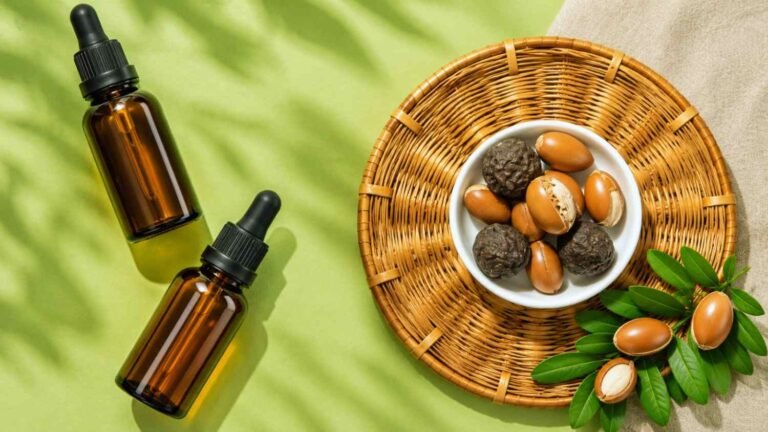
Argan oil for curly hair can be the difference between frizzy, tangled curls and soft, defined ones, but only when you use the right amount at the right step.
Curls are naturally drier than straight hair, so a few random drops rarely do the job.
This guide explains what argan oil actually does to curls, the real benefits (and the limits), how to use it before and after washing, the mistakes that leave curls limp or greasy, and one layering detail almost every other guide skips.
Learn about argan oil for different hair types.
Why Curly Hair Needs Extra Moisture
On straight hair, scalp oil (sebum) slides down the strand easily and coats it from root to tip. On curly hair, every bend and coil slows that journey, so the ends are often left dry even when the roots feel oily. The twists in a curl also lift the outer cuticle slightly at each bend, which lets moisture escape faster and makes the strand easier to snap.
The tighter the curl pattern, the more bends per inch, and the more noticeable this dryness becomes. That is why waves (2A to 2C) usually need light help, while coils (4A to 4C) often need richer care.
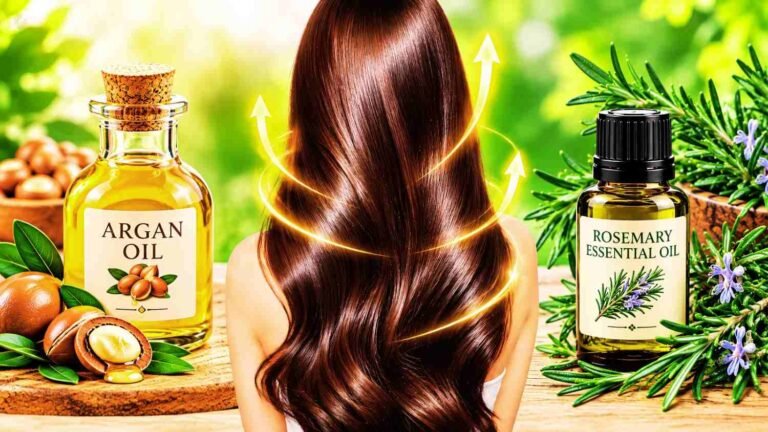
It also explains why argan oil for curly hair is so popular: it adds back softness and slip to the exact area, the mid-lengths and ends, that natural oils rarely reach.
What Is Argan Oil, Exactly?
Argan oil is pressed from the kernels of the argan tree (Argania spinosa), which grows mainly in south-western Morocco. Two versions exist, and the difference matters:
- Cosmetic argan oil: made from raw kernels, pale golden and nearly odorless. This is the one for hair.
- Culinary argan oil: made from roasted kernels, darker, with a nutty smell. It is meant for food. Read our breakdown of culinary vs cosmetic argan oil if you are unsure which bottle you own.
Chemically, the oil is mostly unsaturated fat: oleic acid (omega-9) and linoleic acid (omega-6), plus vitamin E (tocopherols), phytosterols and a small amount of squalene. Those ingredients are the reason the oil feels soft and lightweight on the hair rather than heavy and waxy.
How Does Argan Oil for Curly Hair Work?
Think of the outer surface of a curly strand as overlapping roof tiles. When those tiles lift, hair looks frizzy and snags on neighboring strands.
Argan oil is an emollient, which means it fills the tiny gaps and smooths the surface so light reflects more evenly and strands glide past each other instead of knotting.
It also reduces friction, and friction is a hidden cause of curl damage. Less friction means easier detangling, fewer broken ends and curls that clump together properly instead of splitting into frizz.
One honest note: you will often read that argan oil “penetrates deep into the hair shaft.” The strongest penetration evidence in hair research is actually for coconut oil. For argan oil for curly hair, the dependable benefits are surface smoothing, softness, shine and reduced friction. Those are exactly what most curls need, so the claim does not need exaggerating.
Is Argan Oil the Best Oil for Curly Hair?
There is no single best oil for every head of curls, but argan oil is one of the most balanced choices. It is lighter than castor oil and less sticky than many butters, so it is easier to dose on fine or loose curls. For very thick, coarse, high-density coils, some people prefer to pair it with a heavier sealing butter on the ends.
A practical way to decide: if your curls feel soft but look flat and greasy, your oil is too heavy or your dose is too high. If they look defined but feel rough and straw-like, you need more moisture, and an oil alone will not fix that. In both cases, argan oil for curly hair works best as part of a routine, not as a stand-alone fix.
Benefits of Argan Oil for Curly Hair
Reduces Frizz and Improves Curl Definition
By smoothing the cuticle, argan oil for curly hair helps each curl clump with its neighbors. Clumped curls look defined, while separated strands look frizzy. A tiny amount applied to damp hair is usually enough to see the difference.
You can read our article how to fix frizzy hair.
Adds Shine Without Heavy Greasiness
Because argan oil for curly hair is lightweight, it gives a glossy finish without the coated feel of heavier oils. The key word is tiny. Shine from argan oil for curly hair should look like healthy reflection, not wet shine.
Protects Against Heat Styling (With a Caution)
Argan oil for curly hair adds slip and smoothness, which helps when diffusing or flat ironing. However, it is not a replacement for a real heat protectant. Treat it as a supporting step, keep tool temperatures moderate and use a proper heat-protectant spray if you style with heat often.
Minimizes Breakage
Curly hair breaks mostly at the bends. Argan oil for curly hair leaves strands softer and better lubricated, so they bend more easily and snap less, so you lose fewer pieces while detangling. Over months this shows up as better length retention, not as hair that grows faster.
Shields Curls From Sun and Everyday Stress
Vitamin E and other antioxidants may help limit surface damage from sun, pollution and oxidation. This is not the same as sunscreen. Wear a hat in strong sun and think of the oil as a small extra layer of defense.
Boosts Deep Conditioning Masks
Adding a few drops of argan oil to your usual conditioner or mask makes it feel richer and helps the formula stay on the strand while you wait. It is one of the easiest upgrades for dry or color-treated curls.
How to Use Argan Oil for Curly Hair: Step by Step
Where you apply it matters as much as how much. These are the most reliable places in a wash routine.
Argan Oil for Curly Hair as a Pre-Shampoo Treatment
Apply 4 to 6 drops to dry mid-lengths and ends, leave it for 20 to 30 minutes, then shampoo as normal. This can make washing feel less stripping and leave curls softer. A small amount on the scalp is fine if it feels dry, but keep it light.
Using Argan Oil for Curly Hair as a Post-Wash Sealant
After conditioning, leave hair damp (not dripping). Apply your water-based leave-in first, then warm 2 to 3 drops of oil between your palms and glide them over the mid-lengths and ends. Water is what hydrates curls; oil only helps hold it in. That is why argan oil for curly hair works best on damp, not bone-dry, strands.
Styling and Frizz Control
Rub one drop between your palms and gently scrunch upward into curls once they are dry, or use it under a cream or gel as described in the layering section below.
Refresh Day Curls
On day two or three, dampen your hands, add one drop of oil and press it over frizzy areas. Skip the roots, which tend to carry more natural oil by this point.
Hair Mask Booster
Stir 3 to 5 drops into a spoonful of conditioner, apply from mid-length to ends, wrap in a warm towel and leave it on for 20 to 30 minutes before rinsing.
Suggested Starting Doses by Hair Length
- Chin length: 1 to 2 drops
- Shoulder length: 2 to 3 drops
- Mid-back length: 3 to 5 drops
Use fewer drops for fine, loose curls and slightly more for thick, dry coils. These are starting points, not rules. If curls look flat or coated, reduce the amount next time.
Does Argan Oil for Curly Hair Replace Moisturizer?
No. Moisturizing means adding water, and oil contains none. Water-based products such as oil vs leave in conditioner or a leave-in supply hydration, while argan oil seals and smooths. If you only apply oil to dry hair, you are coating dryness rather than treating it. The best order is always water first, oil second.
Can Argan Oil for Curly Hair Help With Hair Growth?
There is little solid evidence that applying argan oil makes hair grow faster. What it can do is keep hair from breaking, which lets you keep more of the length you already grow. A healthy, comfortable scalp matters too, but growth depends mostly on genetics, nutrition, hormones and overall health. If you notice sudden shedding, see a doctor or dermatologist rather than adding more products.
Common Mistakes to Avoid With Argan Oil for Curly Hair
- Using too much. More oil does not mean more moisture. It means weighed-down curls and visible greasiness.
- Applying to roots. Natural scalp oil already reaches the roots. Keep argan oil on the mid-lengths and ends.
- Skipping water first. Argan oil for curly hair applied to dry strands only coats them.
- Buying the wrong bottle. Choose pure cosmetic argan oil, pale golden in color, from a reputable seller. Heavily diluted or scented blends may not behave the same way.
- Never clarifying. Oil plus styling products can build up. Use a clarifying shampoo once or twice a month so curls do not go dull and limp.
- Judging too quickly. Give any new step two or three washes before deciding whether it works.
The Layering Detail Most Guides Skip: Position Changes the Result
Most articles tell you how many drops to use. Very few explain where in the sequence the oil goes, even though position changes how curls dry and how long definition lasts. If you use gel or cream, try these three placements:
- Oil mixed with leave-in (before styler): best for slip and detangling, but it can slightly soften hold.
- Oil between cream and gel: helps seal water under the gel cast, and works well when you want hold plus softness.
- Oil after gel dries (“scrunch out the crunch”): softens the cast and adds shine while keeping the clumps you built, which is why many people see the longest-lasting definition this way.
The easiest way to find your best position is a simple two-wash test: change only the placement, keep everything else identical, and take a photo at wash day, day two and day four. Curls are very personal, and a position that works for one curl pattern can flatten another. Treat argan oil for curly hair as a variable you can tune, not a fixed step.
Frequently Asked Questions About Argan Oil for Curly Hair
Can I use argan oil on curly hair every day?
You can use a very small amount on dry ends daily if your hair is thick and dry, but most people do well with it on wash day and as a light refresh in between. Fine curls often need it only once or twice a week.
Is argan oil for curly hair better on wet or dry curls?
Damp curls are best for sealing in moisture. Dry curls are best for a drop or less to smooth frizz and add shine.
Which curl types benefit most from argan oil for curly hair?
All of them can, but dosage differs. Waves and fine curls need a light touch, while coily and thick curls can usually take more.
How long does a bottle of argan oil for curly hair last?
Because the right dose is only a few drops, a small bottle can last months if stored in a cool, dark place with the cap closed.
Conclusion
Argan oil for curly hair is not a miracle, but it is a reliable, lightweight way to reduce frizz, add shine and protect curls from breakage when used on damp mid-lengths and ends. Start with a small dose, apply it after water-based products, and test where it sits in your routine. Small changes in position and amount usually make a bigger difference than switching products.