Amla Oil for Low Porosity Hair: A Practical Guide
If your hair takes a long time to get wet in the shower, stays wet for hours afterwards, and seems to shrug off conditioners and oils alike, you may have low porosity hair, and amla oil for low porosity hair needs a different approach from the generous oiling routines you see recommended everywhere else. This guide explains what low porosity actually means, why heavy oils tend to sit on this hair type instead of sinking in, how amla oil behaves on low porosity strands, and the light, warmth-assisted methods that give you the benefits without the coated, limp feeling. It also gives you a simple four-week test so you can judge, on your own hair, whether amla oil for low porosity hair deserves a permanent place in your routine.
A word of honesty first. No oil, including amla oil for low porosity hair, changes your hair’s porosity. Porosity is largely determined by the structure of your cuticle, the outermost layer of each strand, and while damage, heat, and chemical treatments can raise it over time, a cosmetic oil does not permanently open or close the cuticle. What a good routine can do is work with low porosity rather than against it: deliver moisture when the cuticle is most receptive, use small amounts of oil to seal that moisture in, and avoid the build-up that makes low porosity hair look dull and feel heavy. That is a worthwhile goal, and it is fully achievable, as long as expectations stay realistic.
What Is Low Porosity Hair, and Where Does Amla Oil for Low Porosity Hair Fit?
Low porosity hair has cuticles that lie flat and tightly packed, like shingles on a well-kept roof. Water and products bead on the surface rather than soaking in quickly, which is why this hair type can feel dry even though it is not necessarily damaged, and why it takes so long to dry. The classic home test is the float test, dropping a clean strand in a glass of water and watching whether it floats, but that test is unreliable, since residue, product build-up, and even the strand’s thickness affect the result. More reliable signs are behavioural: hair that resists wetting, products that seem to sit on top, a long drying time, and a tendency to build up quickly when heavy butters and oils are used.
Understanding that structure explains why amla oil for low porosity hair is a question of method, not just product. The oil itself is not the problem; the amount, the timing, and the state of the hair when it is applied are what decide the result. Used heavily on dry hair, amla oil for low porosity hair will mostly coat the surface and attract dust and residue. Used lightly on damp, slightly warm hair, after water has already entered the strand, the same oil can seal in moisture, smooth the cuticle, and support scalp comfort without weighing the lengths down. Readers who want the broader amla picture should start with our guide to amla oil for hair, while this guide stays focused on the low porosity adjustments.
Why Heavy Oils Sit on Low Porosity Hair
Every oil behaves differently on low porosity hair, and the difference comes down to how easily it spreads, how thick it feels, and whether the hair has any opening for it to enter. Heavy, thick oils and butters are made of larger molecules and dense textures that struggle to pass a tightly closed cuticle, so they remain on the surface. That surface layer is not useless, it can add shine and reduce friction, but too much of it makes hair look greasy, feel stiff, and resist the next wash’s moisture. It also traps residue underneath, which is why low porosity hair is so prone to build-up, and why clarifying washes matter more for this hair type than for others.
A second factor is dry application. Oil applied to completely dry, low porosity hair has nothing to seal in, because no water has entered the strand yet, so it simply coats the outside. This is the single most common reason people conclude that amla oil for low porosity hair does not work for them, when the real issue is sequencing: amla oil for low porosity hair needs water already in the strand before the oil goes on. Water first, oil second, is the principle that underpins every method in this guide. If you take only one idea from this article, take that one, because it changes the result of amla oil for low porosity hair more than any change of brand.
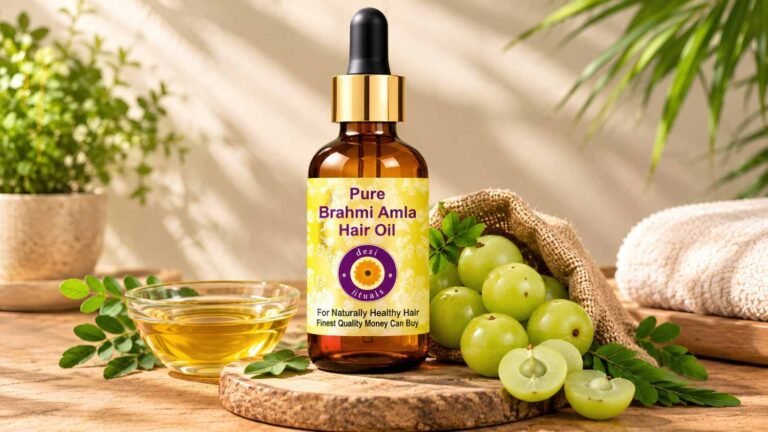
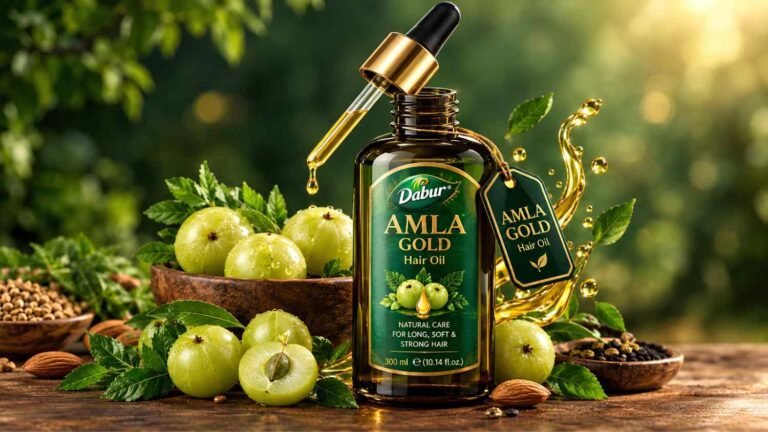
It also helps to know what amla oil for low porosity hair is competing with in your routine. Many commercial amla oils are built on a coconut oil base, which is rich and can feel heavy on fine, low porosity strands, while others use lighter carriers or are blended with mineral oil, which sits even more firmly on the surface. Checking the base oil on your bottle, and choosing a lighter one for this hair type, is a practical step explained in our guide to Dabur amla oil and in the label-reading section of the wider amla overview. If your current bottle feels heavy no matter how little you use, the base oil, not the amla, is the likely culprit.
How Amla Oil for Low Porosity Hair Behaves: Base Oil Matters Most
Amla oil for low porosity hair behaves as a medium-weight oil in most formulations, lighter than castor oil and shea butter, heavier than grapeseed or jojoba oil, and broadly similar to a light coconut oil blend. That middle position is both its advantage and its risk. It is light enough to work well as a scalp treatment and a light sealing oil, especially when warmed and applied sparingly, but it is not so light that it can be used carelessly in large amounts without build-up. Thinking of amla oil for low porosity hair as a sealing and scalp oil, rather than a soaking treatment, keeps expectations and amounts in the right range.
The amla component itself is worth separating from the base. Amla brings antioxidant compounds and a long tradition of scalp use, and those qualities do not depend on porosity; a scalp can benefit from a gentle massage with amla oil for low porosity hair just as any scalp can. What porosity changes is how the lengths respond, and that is where the light methods below matter. If your main goal is scalp comfort, you can be more generous on the scalp itself, provided you wash thoroughly afterwards. If your main goal is length conditioning, restraint is everything, and a few drops smoothed over damp ends will outperform a palmful worked through dry hair every time.
One useful comparison is with argan oil, which is widely regarded as one of the lighter oils for this hair type. Our guide to argan oil for low porosity hair describes a similar light, damp-hair approach, and readers who already use argan successfully can treat amla oil for low porosity hair as a complementary scalp treatment rather than a replacement: amla on the scalp before washing, argan in tiny amounts as a finisher afterwards, if your hair likes both. You do not need to choose a single oil for life; routines that mix a scalp oil and a finishing oil often suit low porosity hair better than any one product used for everything.
Amla Oil for Low Porosity Hair: The Light Application Method
The light application method for amla oil for low porosity hair has four rules, and they work as a set. First, apply to damp hair, not dry hair, so the oil seals in water that is already present. Second, warm the oil slightly, by rubbing it between your palms or standing the closed bottle briefly in warm water, because gentle warmth helps the cuticle relax and the oil spread more thinly. Third, use far less than you think you need: start with two to four drops for fine hair, or a small coin-sized pool for thick hair, and add more only if the lengths still feel dry after styling. Fourth, focus on the scalp and the ends, and keep the mid-lengths light, since those are the areas that show build-up first.
There are three variations worth trying, and each suits a different wash-day style. The pre-wash scalp treatment uses amla oil for low porosity hair on the scalp only, massaged in for a few minutes and left for thirty to sixty minutes before shampooing, with little or none on the lengths. The damp-seal method applies two or three drops to damp ends after conditioning, as the final step before styling, which suits people who wash frequently and want a light finish. The diluted method mixes a few drops of oil with a little water or a light leave-in conditioner in your palms before smoothing it over the hair, which spreads the oil more evenly and prevents the concentrated patches that cause a greasy look. Try one variation at a time for at least two washes before judging it, because switching methods every wash makes it impossible to tell what helped.
Heat is the optional extra that makes the biggest difference for stubborn cases. A warm towel wrapped around oiled hair for fifteen minutes, or a few minutes under a hooded dryer on a low setting, gently encourages the cuticle to lift and lets the oil distribute more evenly. This does not need to be a weekly ritual; even an occasional warm-towel session can show you what your hair feels like when the oil actually spreads, and that comparison helps you calibrate the lighter everyday method. Avoid high heat on oiled hair, which risks damage without adding benefit, and never apply oil and then use a flat iron on the same section.
Amla Oil for Low Porosity Hair Wash-Day Routine
A wash day built around amla oil for low porosity hair looks different from a traditional heavy oiling day, and walking through it step by step makes the adjustments concrete. Start by wetting the hair thoroughly with warm, not hot, water, and give it a minute longer than usual to absorb, since low porosity hair wets slowly. Shampoo gently, focusing on the scalp, and rinse. If you are doing a pre-wash treatment, that step comes before this wash, not after, with the oil massaged into the scalp on dry or slightly damp hair and left while you prepare, then shampooed out here.
After shampooing, apply conditioner mainly to the mid-lengths and ends, leave it for the time on the bottle, and rinse with warm water followed by a brief cool rinse, which many people with low porosity hair find helps the cuticle lie flat and the hair look smoother. Now, while the hair is still damp, is the moment for amla oil for low porosity hair as a sealing step: warm two to four drops between your palms and smooth them over the ends first, then lightly over the lengths, avoiding the roots unless your scalp is very dry. Style as usual, and resist the urge to add more oil later in the day; low porosity hair rarely needs a second application, and that second layer is usually what tips it into looking greasy.
Frequency matters as much as method. Once a week is a sensible starting point for amla oil for low porosity hair, either as a pre-wash scalp treatment or as a damp seal, but not both in heavy amounts on the same day. If your hair feels soft and looks shiny without residue, you can keep that rhythm. If it feels coated by the second day, reduce the amount before you reduce the frequency, since amount is usually the problem. A clarifying wash every two to four weeks, depending on how many products you use, removes the gradual build-up that low porosity hair accumulates, and it is worth keeping on the calendar even when your hair feels fine, because build-up creeps up silently.
Amla Oil for Low Porosity Hair: Scalp-First or Length-First?
One decision that simplifies everything is whether your priority is your scalp or your lengths, because amla oil for low porosity hair serves those two goals differently. A scalp-first routine treats the oil as a scalp treatment: a little more oil, massaged into the scalp, left before washing, and shampooed out thoroughly, with the lengths getting only whatever transfers during rinsing. This suits people whose main concerns are scalp dryness, tightness, or flaking, and it avoids the length build-up problem entirely, since the oil never sits on the lengths for long.
A length-first routine treats the oil as a sealing step: almost no oil on the scalp, and a few drops on damp ends after washing, to lock in moisture and reduce friction between strands. This suits people whose scalp is comfortable but whose ends feel dry, rough, or prone to splitting. Trying to do both at full strength on the same day is the most common way to overload low porosity hair, so pick the priority that matches your current concern, do that well, and let the other goal wait for a different wash day. Our general guide to how to use amla oil covers the standard methods, and the adjustment here is simply to halve the amount and move the application to damp hair.
What to Avoid With Amla Oil for Low Porosity Hair
The avoid list for amla oil for low porosity hair is short, but each item prevents a familiar disappointment. Avoid heavy overnight oiling, especially on dry hair, because eight hours of a thick layer on a closed cuticle mostly produces residue that needs aggressive washing to remove, which then undoes the conditioning you wanted. Avoid layering multiple heavy products on the same day, such as a butter, a thick cream, and an oil together, since low porosity hair cannot absorb that stack and will show it as dullness and limpness. Avoid applying oil to the roots as a daily habit if your scalp tends towards oiliness, because root build-up flattens volume and can make the scalp feel itchy.
Avoid judging the oil after a single use, in either direction. One good wash day may reflect the clarifying shampoo rather than the oil, and one greasy day may reflect too much product rather than the wrong product. Avoid also the temptation to switch to a heavier oil when a light application feels like it did nothing; the sensation of lightness is often exactly what healthy low porosity hair should feel like, and heaviness is not evidence of nourishment. If irritation, persistent itching, or unusual flaking appears, stop use and read our safety guide to amla oil side effects and allergy, and patch test any new bottle on the inside of your forearm for twenty-four hours before a full application, as our guide to pure amla oil also recommends for choosing a simple formula.
Amla Oil for Low Porosity Hair: A Four-Week Test
Here is the angle most low porosity guides miss: they tell you what to do, but not how to tell whether it worked. Porosity advice is full of confident claims and thin evidence, so a personal test beats another opinion. Use this four-week protocol for amla oil for low porosity hair, and keep everything else in your routine unchanged, so any change you notice can fairly be linked to the oil. In week one, do a clarifying wash, then use the light damp-seal method once, with two to four drops on damp ends, and note how your hair feels on wash day and on day three. In week two, repeat the same method and amount, and add a pre-wash scalp massage on one wash day if scalp comfort is a goal.
In week three, keep the method identical but try the warm-towel variation once, and compare it honestly with the previous weeks: did warmth change softness, shine, or drying time, or did it make no difference? In week four, do a second clarifying wash and review the whole month against four signs, not one. Healthy signs are ends that feel smoother without looking coated, hair that dries in its usual time rather than staying damp longer, less frizz on day two and three, and a scalp that feels comfortable rather than itchy or heavy. Warning signs are hair that looks greasy by the next morning, strands that feel stiff or sticky, increased flaking, or a scalp that itches more than before. If you see mostly healthy signs, amla oil for low porosity hair has earned a weekly place in your routine. If you see mostly warning signs, reduce the amount first, try the scalp-only variation second, and only conclude the oil does not suit you after both adjustments have been tried.
Keep a short note after each wash, even just a line on your phone, because memory is unreliable over a month and small improvements are easy to miss. A note such as soft ends, no residue, day three still fresh is worth more than a general impression at the end of the month. This test also protects you from the most common trap in hair care, which is changing three products at once and then crediting or blaming the wrong one. Readers exploring other oils can run the same protocol, and our comparison of amla oil versus coconut oil is a useful reference if you want to test a second oil afterwards under the same rules.
Final Thoughts on Amla Oil for Low Porosity Hair
Amla oil for low porosity hair works best when it is treated as a light, well-timed helper rather than a heavy treatment. Damp hair, gentle warmth, small amounts, scalp and ends as the focus, and a clarifying wash every few weeks will give most people with low porosity hair a better result than any change of brand. Give the four-week test a fair run, judge it on the four signs above, and keep the method that your own hair rewards. If amla oil for low porosity hair passes that test, it is a simple, affordable routine to keep. If it does not, you will at least know that you tested it properly, and you can move on to a lighter oil with confidence rather than guesswork.