Amla Oil vs Rosemary Oil for Hair: A Head-to-Head Guide
If you are weighing up amla oil vs rosemary oil for your hair, you are not choosing between a good oil and a bad one. You are choosing between two very different traditions, two different textures, and two different jobs on the scalp and along the lengths. Amla oil is a nourishing, conditioning hair oil rooted in Ayurvedic practice, while rosemary oil is usually a concentrated essential oil that must be diluted before it touches the scalp. That single difference shapes almost everything that follows: how each oil feels, how often you might use it, and what kind of result you can reasonably expect.
This guide compares amla oil vs rosemary oil side by side, without promising either one will grow new hair. Neither oil can be honestly presented as a regrowth treatment, and anyone who tells you otherwise is overselling what a cosmetic oil can do. What both oils can support, when they are used well and consistently, is a healthier-feeling scalp, less breakage from dryness and friction, and hair that looks smoother and better cared for. The right choice depends less on which oil is more popular online and more on your scalp, your hair texture, your routine, and how much effort you are willing to put into wash day.
Read this comparison as a practical decision aid. By the end, you should know which oil fits your main concern, when combining them makes sense, when it does not, and how to test one oil properly before you decide it is not for you. That distinction matters when weighing amla oil vs rosemary oil.
What Amla Oil vs Rosemary Oil Actually Are
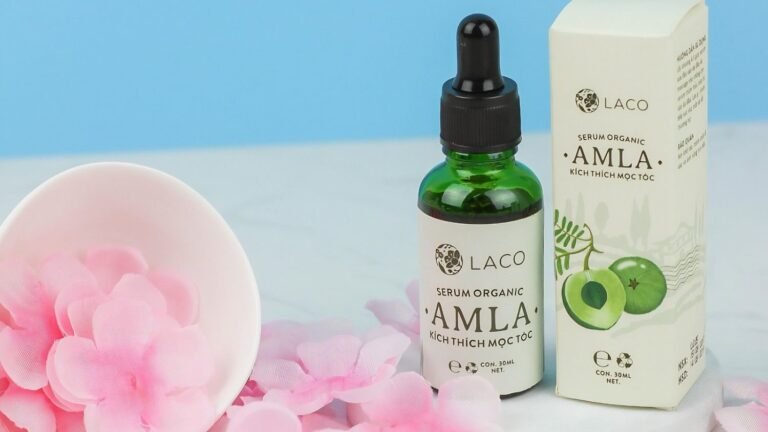
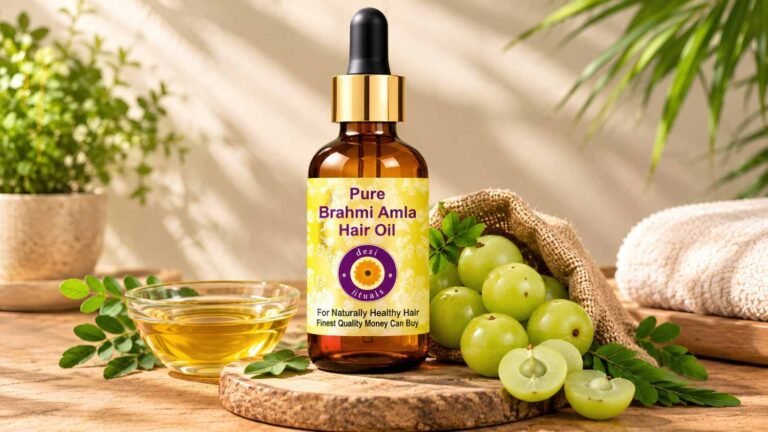
Amla oil starts with amla, the Indian gooseberry, a fruit long valued in Ayurvedic hair care for its vitamin C and antioxidant content. In most bottles sold as amla oil, dried or fresh amla has been infused into a carrier oil such as coconut oil or sesame oil, so the finished product is already a ready-to-use hair oil. You warm a small amount, massage it in, and wash it out. Some versions are closer to a pure, cold-pressed oil, while others are blends with additional herbs, and that variation matters when you compare bottles. Our guide to the benefits of amla oil explains that traditional background in more depth, and our overview of amla oil for hair sets out the usual ways it is used. Keep that point in mind in any amla oil vs rosemary oil comparison.
Rosemary oil, by contrast, is most often sold as rosemary essential oil, a highly concentrated plant extract. It is not a ready-to-use hair oil in the same sense. A few drops are normally diluted into a carrier oil, such as coconut, jojoba, or almond oil, or added to shampoo or conditioner, before application. Undiluted essential oil on the scalp can irritate, so dilution is not optional advice; it is the safe way to use it. There are also ready-made rosemary hair oils and scalp serums in which the rosemary has already been diluted by the maker, and those follow the maker’s own instructions instead. It is a useful check when deciding between amla oil vs rosemary oil.
That distinction explains a common point of confusion in the amla oil vs rosemary oil debate. People sometimes compare a ready-to-use amla hair oil with a neat essential oil as if they were the same kind of product, and then conclude that one feels heavier, smells stronger, or irritates more. A fairer comparison is amla hair oil against rosemary oil properly diluted in a carrier, used at a sensible frequency, and judged over several weeks rather than after a single application.
Tradition and Origin: Two Different Histories
Amla has been part of South Asian hair care for centuries, where oiling the scalp and lengths before washing is a normal, regular ritual rather than a special treatment. The practice is as much about the massage, the routine, and the conditioning as it is about any single ingredient. Amla oil sits naturally in that tradition: it is applied generously, left on for a period, and then washed out with a mild shampoo. If you grew up with hair oiling, or you enjoy a slow pre-wash ritual, amla oil will feel familiar. That detail can tip the balance in an amla oil vs rosemary oil choice.
Rosemary has a long history in Mediterranean herbal practice, where it was valued for its aromatic and stimulating qualities. Its modern hair-care reputation comes largely from interest in scalp circulation and from a small number of studies comparing diluted rosemary oil with conventional topical treatments for thinning hair. Those studies are often quoted more boldly online than their size and scope justify. They suggest rosemary deserves serious attention as a scalp-care ingredient, but they do not turn a bottle of essential oil into a guaranteed regrowth product, and results in a study setting do not transfer automatically to every scalp, every dilution, and every routine. Use it as a filter when comparing amla oil vs rosemary oil.
Amla Oil vs Rosemary Oil at a Glance
It helps to hold the whole comparison in your head before going into detail. Amla oil is generally the richer, more conditioning choice. It coats the hair, softens dry lengths, and suits a pre-wash treatment that you leave on for an hour or overnight. Rosemary oil, once diluted, is generally the lighter, more scalp-focused choice. It suits someone whose main concern is scalp comfort, shedding that seems linked to a tight or neglected scalp routine, or a desire for a stimulating massage oil without a heavy coating on the lengths. That is exactly the kind of detail that decides amla oil vs rosemary oil for one person over another.
On texture, amla oil often feels heavier, especially when its base is coconut or sesame oil, and it may need a thorough wash to remove. Diluted rosemary oil feels lighter because you control the carrier and the amount, and because only a few drops of essential oil are involved. On scent, amla oil tends to smell herbal and earthy, sometimes strongly so, while rosemary smells fresh, camphor-like, and herbal in a very different way. Scent matters more than people admit: an oil you dislike smelling will not stay in your routine, however good its reputation. Bear it in mind next time you weigh up amla oil vs rosemary oil.
How Each Oil Is Used in Practice
A typical amla oil routine is straightforward. Warm a small amount between your palms, massage it into the scalp with your fingertips, work what remains through the mid-lengths and ends, and leave it for at least thirty minutes, or longer if your hair is dry. Many people leave it for one to two hours, and some leave it overnight with the hair loosely covered. Wash with a mild shampoo, rinsing thoroughly, and repeat once or twice a week. If your hair is fine or your scalp turns oily quickly, use less oil, keep it off the roots on non-wash days, and shorten the leave-on time. Our step-by-step guide to how to use amla oil walks through amounts and timing for different hair types. It belongs on any shortlist when comparing amla oil vs rosemary oil.
A typical rosemary routine starts with dilution. A commonly suggested starting point is a few drops of rosemary essential oil mixed into a tablespoon or so of carrier oil, massaged into the scalp, left for thirty minutes to a few hours, and then washed out. Some people add a drop or two to a palmful of shampoo instead. Frequency is usually a few times a week rather than daily, and the scalp should be watched for itching, redness, or dryness. Because rosemary is stimulating and aromatic, a little goes a long way, and adding more drops does not make it work faster; it mainly raises the chance of irritation. That distinction matters when weighing amla oil vs rosemary oil.
The amla oil vs rosemary oil difference in routine is therefore a difference in mindset. Amla oiling is a conditioning treatment you can settle into. Rosemary application is a measured scalp treatment you handle with a little more precision. Neither routine is difficult, but the rosemary routine punishes carelessness more quickly, which is why beginners sometimes prefer to start with amla and add rosemary later, once they are comfortable with dilution and patch testing.
Scalp vs Lengths: Where Each Oil Does Its Best Work
Think of the scalp and the lengths as two separate jobs, and the comparison becomes clearer. On the scalp, rosemary oil has the more targeted reputation. Its stimulating, aromatic character, combined with regular massage, is why people with thinning-looking hair or a sluggish scalp routine reach for it first. Massage itself improves the feeling of circulation and helps distribute the oil, and that ritual may matter as much as the ingredient. If your main concern is the scalp, and you are willing to dilute carefully and use the oil consistently, rosemary is often the more interesting first choice. Keep that point in mind in any amla oil vs rosemary oil comparison.
On the lengths, amla oil has the clearer advantage. Its conditioning base coats the hair shaft, reduces friction between strands, and helps dry, rough-feeling ends look smoother and feel softer. That is breakage support, not regrowth: hair that is better conditioned snaps less during brushing and styling, so length is retained more easily over time. For dry, damaged, or frizz-prone lengths, amla oil is usually the more satisfying choice, and it pairs naturally with a gentle wash routine and a light leave-in approach on the ends. It is a useful check when deciding between amla oil vs rosemary oil.
Many people need both jobs done, which is why the question of amla oil vs rosemary oil so often ends in combination rather than a single winner. A scalp-focused rosemary blend plus a conditioning amla treatment on the lengths, used on different days or in different steps of the same routine, can cover both needs without forcing one oil to do a job it is not suited to. The sections below explain how to combine them without overloading the scalp.
Texture, Weight, Scent, and Wash-Out in Amla Oil vs Rosemary Oil
Texture is where personal preference decides a surprising number of comparisons. Amla oil, particularly a coconut-based version, can feel rich and heavy, and in cooler weather it may thicken in the bottle. That weight is a benefit on thick, coarse, or very dry hair, and a drawback on fine hair that goes flat easily. If your hair is fine, choose a lighter amla blend, use a smaller amount, focus on the mid-lengths and ends, and wash thoroughly. A heavy oil used sparingly can still work on fine hair; a heavy oil used generously usually cannot. That detail can tip the balance in an amla oil vs rosemary oil choice.
Diluted rosemary oil is easier to keep light because you choose the carrier. Jojoba or a light fractionated oil will feel less heavy than a rich coconut base, and because the application is scalp-focused, less oil reaches the lengths in the first place. That lightness makes rosemary blends popular with people who dislike the feeling of oiled hair or who wash their hair frequently. The trade-off is that a light scalp blend does little for very dry ends, so it may need a separate conditioner or a small amount of oil on the ends after washing. Use it as a filter when comparing amla oil vs rosemary oil.
Amla Oil vs Rosemary Oil: Who Suits Which?
If your main concern is dryness, roughness, or breakage along the lengths, start with amla oil. If your hair feels brittle after heat styling, colouring, or frequent washing, a regular amla pre-wash treatment is a sensible first step. People with thick, coarse, curly, or coily hair often appreciate amla oil’s weight and conditioning, and those who value a traditional oiling ritual will find it the more natural fit. That is exactly the kind of detail that decides amla oil vs rosemary oil for one person over another.
If your main concern is the scalp, start with diluted rosemary oil. That includes people who notice more shedding than usual, who feel their scalp routine has been neglected, or who want a stimulating massage oil without coating the lengths. People with fine hair or an oily scalp often prefer rosemary blends because the amount can be kept small and the carrier can be chosen to stay light. Our page on argan oil and rosemary oil for hair growth shows how rosemary is often paired with a light carrier, which is a useful model even though this article compares a different pairing. Bear it in mind next time you weigh up amla oil vs rosemary oil.
If your main concern is premature greying or maintaining natural colour, amla oil is the traditional choice, although expectations should stay modest and hedged. No cosmetic oil can be promised to reverse greying, and colour change, where people notice it, is usually about the hair looking darker, glossier, or better conditioned rather than pigment being restored. Our article on amla oil for grey hair takes a similarly cautious line. If your main concern is dandruff or flaking, neither oil is a treatment on its own; rosemary’s scalp focus may feel helpful, but persistent flaking, itching, or soreness deserves proper assessment rather than a stronger oil blend. It belongs on any shortlist when comparing amla oil vs rosemary oil.
Hair type alone does not settle the amla oil vs rosemary oil question. Porosity, scalp oiliness, styling habits, and even climate matter. Very porous hair drinks up oil and may welcome amla’s richness, while low-porosity hair can feel coated quickly and may prefer a lighter rosemary blend on the scalp plus a tiny amount of oil on the ends only. Readers with low-porosity hair may find our guide to argan oil for low porosity hair useful for the general principle of using less oil, even though the oil discussed there is different.
Can You Combine Amla Oil vs Rosemary Oil?
Yes, and for many people this is the most practical answer to the amla oil vs rosemary oil question, provided the combination is handled sensibly. The simplest safe method is to add a few drops of rosemary essential oil to a measured amount of amla oil just before use, so the amla oil acts as the carrier. That keeps the routine to one bottle plus a small essential-oil bottle, and it gives you the conditioning of amla with the scalp character of rosemary. Patch test the blend first, start with fewer drops than you think you need, and stop if the scalp feels irritated.
An alternative is to keep the two oils on separate days. Use amla oil as a longer pre-wash treatment once a week, and use a diluted rosemary scalp blend on a different day. This separation has a real advantage: if your scalp reacts, or your hair feels better, you know which oil to credit. Mixing everything together from the start makes it harder to learn what is actually helping. For anyone trying both oils for the first time, separate days for the first few weeks is the wiser approach, even if a combined blend is more convenient later. That distinction matters when weighing amla oil vs rosemary oil.
There are limits to combining. Do not add rosemary essential oil to a whole bottle of amla oil unless you are confident about the dilution and the shelf life of the blend, because essential oils and carrier oils age differently and a large pre-mixed batch can go off before you finish it. Do not use both oils heavily on the same day if your scalp is oily or sensitive, because layering treatments is a common cause of build-up, itching, and limp roots. And do not combine oils as a way of avoiding a decision about a persistent scalp problem; if shedding, soreness, or flaking continues, a clinician’s view matters more than another blend. Keep that point in mind in any amla oil vs rosemary oil comparison.
The Two-Week Swap Test: A New Way to Decide
Most comparisons tell you to pick an oil and stick with it for months, but that advice hides a problem: hair changes slowly, routines drift, and by the time you judge the result you have forgotten what the starting point felt like. Here is a simpler, fairer test that competitors rarely describe, and it is the angle this guide adds to the usual comparison. Run a two-week swap test, one oil at a time, with the same wash routine, the same shampoo, and the same styling throughout, so the only variable that changes is the oil. It is a useful check when deciding between amla oil vs rosemary oil.
In week one, use your first oil exactly as described above, on the same days, in the same amount, with the same leave-on time. Keep a short wash-day note after each wash: scalp comfort out of ten, how the lengths felt when damp, how they felt when dry, how easily the hair brushed through, and how the roots looked on the second day. Take a photo of the lengths in the same light if you like, but do not judge shine from a single photo; judge it from the notes across several washes. That detail can tip the balance in an amla oil vs rosemary oil choice.
In week two, swap to the second oil and repeat the same notes, without changing anything else. At the end of the fortnight, compare the notes rather than your memory. You may find that amla oil vs rosemary oil looks different on paper than it felt in the moment: perhaps amla won on softness but lost on root volume, or rosemary won on scalp comfort but left the ends wanting more. That split result is useful, because it points to a combined routine rather than a single winner.
Keep two rules during the test. First, do not introduce a new shampoo, mask, or styling product at the same time, or you will not know what caused any change. Second, do not extend the test into a contest where one oil must win outright. The goal is a routine you will actually keep, not a verdict you can post online. If neither oil feels good after two careful weeks, that is also a result: it suggests your main issue may be washing technique, heat damage, or a scalp concern that oil alone will not fix. Use it as a filter when comparing amla oil vs rosemary oil.
Realistic Expectations for Amla Oil vs Rosemary Oil
It is worth stating plainly, because so much online content blurs the line. Amla oil vs rosemary oil is a comparison of cosmetic hair-care oils, not medicines. Neither oil grows new hair on a bare scalp, reverses pattern hair loss, or restores pigment to grey hair on demand. Claims of that kind should be treated with scepticism wherever you read them. What oils can do, with regular use, is support the conditions in which existing hair looks and behaves better: a more comfortable scalp, less dryness, less friction, and therefore less breakage.
That breakage point deserves emphasis. Much of what people call slow growth is actually breakage: hair grows from the scalp at its usual rate but snaps before length is visible. A conditioning oil that reduces snapping can therefore make hair appear to grow faster, even though the growth rate has not changed. That is a genuine benefit, but it is not the same as creating new follicles, and honest content should keep the two ideas apart. Similarly, scalp massage and a comfortable scalp routine may support shedding that is linked to stress or neglect, but shedding with a medical cause needs medical attention, not a stronger blend. That is exactly the kind of detail that decides amla oil vs rosemary oil for one person over another.
Mistakes, Sensitivity, and Safety with Amla Oil vs Rosemary Oil
The most common mistake with amla oil is using too much and washing too harshly to remove it, which leaves the scalp stripped and the lengths dry again. Use less than you think, distribute it well, and wash gently. The most common mistake with rosemary oil is skipping dilution or adding extra drops in the hope of faster results. More essential oil does not mean more benefit; it means more risk of itching, redness, and dryness, especially on a sensitive scalp. Bear it in mind next time you weigh up amla oil vs rosemary oil.
Patch testing matters for both oils, and for any blend. Apply a small amount to the inner forearm or behind the ear, wait at least twenty-four hours, and watch for redness, itching, or soreness before using the oil on the full scalp. If you have a known plant allergy, a sensitive scalp, eczema, or a scalp condition, be extra cautious, and consider professional advice before starting a new oil. Our article on amla oil side effects, hair loss and allergy covers warning signs worth knowing, and the same cautious approach applies to rosemary. It belongs on any shortlist when comparing amla oil vs rosemary oil.
Other cautions are practical rather than dramatic. Keep essential oils away from the eyes, wash your hands after application, store oils away from heat and light, and discard any oil that smells rancid or sharply different from when you opened it. Pregnant readers, readers who are breastfeeding, and readers with medical scalp conditions should check with a clinician before using concentrated essential oils, because general hair-care advice is not a substitute for personal medical advice. If shedding is sudden, patchy, or accompanied by soreness, scaling, or broken skin, seek advice promptly rather than trying oil after oil. That distinction matters when weighing amla oil vs rosemary oil.
Frequently Asked Questions
Is amla oil vs rosemary oil a fair comparison if one is an essential oil?
It is fair only if you compare amla hair oil with rosemary oil properly diluted in a carrier. Comparing a ready-to-use amla oil with neat rosemary essential oil exaggerates differences in weight and irritation, because the two products are not in the same form. Judge diluted rosemary against amla, and the comparison becomes useful.
Which oil is better for hair fall?
There is no single answer, because hair fall has many causes. If breakage from dryness is the main issue, amla oil’s conditioning may help hair survive brushing and styling. If scalp neglect or a sluggish scalp routine seems more relevant, a diluted rosemary blend with regular massage may feel more helpful. Persistent or patchy shedding should be assessed rather than treated with oil alone.
Can I use amla oil vs rosemary oil every day?
Daily use is usually unnecessary for either oil and can lead to build-up, especially on fine hair or an oily scalp. Most people do well with one to three treatments a week, adjusted to hair type and scalp comfort. A tiny amount on the ends between washes is different from a full scalp treatment, and the two should not be confused.
Will rosemary oil or amla oil darken grey hair?
Should I buy a combined amla and rosemary oil instead?
Final Verdict: Amla Oil vs Rosemary Oil
There is no universal winner in the amla oil vs rosemary oil comparison, and a guide that declared one would be misleading you. Choose amla oil first if your priority is conditioning, softness, and a traditional pre-wash ritual, especially for dry, thick, or damaged lengths. Choose diluted rosemary oil first if your priority is a lighter, scalp-focused treatment, especially for fine hair, an oily scalp, or a routine you want to keep light between washes. Choose a careful combination if you need both jobs done, and let the two-week swap test, rather than online enthusiasm, tell you which balance suits your hair.
Whichever you choose, judge it on the right things: scalp comfort, breakage, texture, and whether you actually enjoy using it enough to keep going. An oil that stays in the cupboard helps no one, however impressive its reputation. Start with one oil, use it properly, note what changes, and adjust from evidence rather than from claims. That patient, honest approach is what turns a simple oil comparison into a routine that genuinely suits your hair. Keep that point in mind in any amla oil vs rosemary oil comparison.